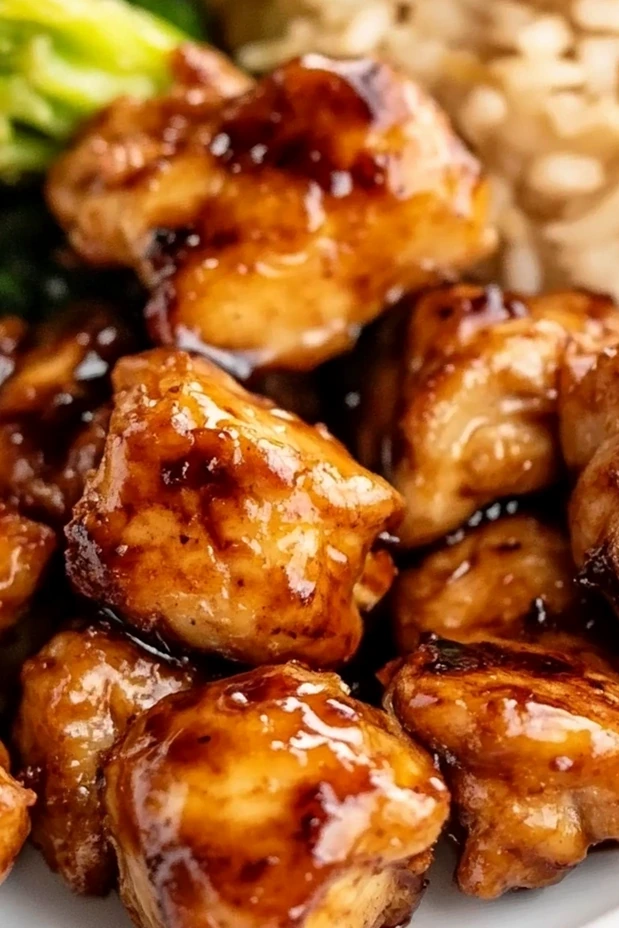
Bring the savory experience of a Japanese steakhouse to your own kitchen with this quick and flavorful chicken dish. It is designed for easy weeknight preparation while delivering professional results.
List of ingredients
- 2 large boneless skinless chicken breasts, cut into bite-sized cubes – ensures even cooking and maximum surface area for searing.
- 1 tablespoon vegetable oil – used for high-heat searing.
- 1 tablespoon sesame oil – provides the characteristic nutty aroma.
- 1 tablespoon soy sauce – adds saltiness and umami depth.
- 1 tablespoon butter – creates a rich glaze and adds creaminess.
- 1 teaspoon garlic, minced – delivers a fresh, pungent flavor.
- Salt and black pepper to taste – basic seasoning to enhance the natural flavor of the meat.
- 1/4 cup mayonnaise – the creamy base for the dipping sauce.
- 1 tablespoon ketchup – adds sweetness and a hint of tang to the sauce.
- 1 teaspoon sugar – balances the acidity in the dipping sauce.
- 1 teaspoon rice vinegar – provides a sharp, clean brightness.
- 1/2 teaspoon garlic powder – adds a concentrated garlic flavor to the sauce.
- 1 tablespoon water – used to achieve the perfect dipping consistency.
step-by-step instructions
- Heat the Pan: Place a large skillet or flat griddle over medium-high heat. Pour in the vegetable oil and sesame oil, heating them until they begin to shimmer to ensure a proper sear.
- Sear the Chicken: Season the cubed chicken with salt and pepper. Arrange the pieces in a single layer in the pan and leave them untouched for 2-3 minutes to develop a golden-brown crust.
- Cook Through: Stir the chicken pieces and continue cooking for another 3-4 minutes. The chicken should be nearly cooked through but still remain juicy.
- Glaze and Finish: Add the butter, minced garlic, and soy sauce to the skillet. Stir constantly for 1-2 minutes until the chicken is fully cooked and coated in a savory, buttery glaze.
- Prepare the Sauce: In a small bowl, whisk together the mayonnaise, ketchup, sugar, rice vinegar, garlic powder, and water. Mix until the sauce is completely smooth and serve it on the side.
Pro Techniques for the Perfect Sear
Preventing Pan Overcrowding to Ensure a Proper Sear
When you place too much chicken in the skillet at once, the temperature of the pan drops rapidly. This causes the meat to release its juices, which then pool at the bottom and steam the chicken rather than searing it. To avoid this, cook your chicken in smaller batches so each piece has enough space to brown properly.
Allowing Chicken to Reach Room Temperature for Even Cooking
Cooking meat straight from the refrigerator can lead to uneven results, where the outside is charred but the inside remains raw. Let the cubed chicken sit at room temperature for about 10 to 15 minutes before it hits the pan. This helps the heat penetrate the center of the meat more efficiently.
Using High Heat to Develop a Golden Crust
The signature hibachi flavor comes from the Maillard reaction, which occurs at high temperatures. Ensure your skillet is truly hot—look for the oil to shimmer or a drop of water to dance on the surface. This high heat creates the caramelized exterior that locks in moisture and adds depth to the taste.
Patting Meat Dry to Avoid Steaming
Surface moisture is the enemy of a good sear because the pan must first evaporate that water before it can begin browning the meat. Use a paper towel to pat the chicken cubes dry before seasoning them. This simple step ensures that the meat sears instantly upon contact with the oil.
Customizing Your Hibachi Chicken
Adding Red Pepper Flakes for a Spicy Kick
If you prefer a bit of heat, add a pinch of red pepper flakes or a teaspoon of Sriracha to the butter and soy sauce mixture at the end. The fat in the butter carries the heat evenly across the chicken. This creates a spicy contrast to the savory umami flavors.
Using Fresh Grated Ginger for a Brighter Flavor
For a more aromatic and zesty profile, stir in a teaspoon of freshly grated ginger along with the minced garlic. Ginger adds a sharp, clean heat that cuts through the richness of the butter. It is a great way to add a fresh element to the dish.
Switching to Teriyaki Sauce for a Sweeter Glaze
If you enjoy a thicker, sweeter coating, replace the soy sauce with a high-quality teriyaki sauce. Because teriyaki contains sugar, it will caramelize faster in the pan. Be careful to keep the heat slightly lower during the final glazing step to prevent the sauce from burning.
Substituting Chicken with Shrimp or Tofu
This cooking method works exceptionally well with other proteins. For shrimp, reduce the searing time to about 1-2 minutes per side to avoid toughness. For tofu, use extra-firm tofu and press out the excess water before searing to ensure it gets a crispy exterior.
Ideal Side Dish Pairings
Pairing with Hibachi-Style Fried Rice
The most classic accompaniment is fried rice made with day-old chilled rice. Sauté the rice with soy sauce, scrambled eggs, and chopped scallions in a hot pan. The cold rice grains stay separate and firm, absorbing the flavors without becoming mushy.
Adding Sautéed Zucchini and Onions
Sautéed vegetables add color and nutrition to the meal. Slice zucchini into rounds and onions into wedges, then sear them in the same pan used for the chicken. Use a bit of butter and salt to keep the flavors consistent with the main course.
Serving with Steamed Broccoli and Carrots
For a lighter side, steam fresh broccoli florets and sliced carrots until tender-crisp. A light drizzle of sesame oil and a sprinkle of salt over the steamed vegetables complement the rich glaze of the chicken. This provides a fresh, crunchy balance to the meal.
Pairing with Sesame-Scented Soba Noodles
Soba noodles made from buckwheat offer an earthy flavor that pairs well with the garlic-soy glaze. Toss the cooked noodles with a small amount of sesame oil and a splash of soy sauce. This creates a hearty base that carries the chicken and dipping sauce well.
Storage and Reheating Guidelines
Storing Leftovers in Airtight Containers
Store any remaining chicken in a sealed, airtight container in the refrigerator. The chicken will stay fresh and safe to eat for up to three days. Keep the dipping sauce in a separate small jar to prevent the chicken from becoming soggy during storage.
Reheating on the Stovetop to Maintain Texture
To keep the seared texture, reheat the chicken in a skillet over medium heat. Add a teaspoon of water or a splash of soy sauce to the pan to create a bit of steam that warms the meat through without drying it out. This method is far superior to the microwave for preserving the crust.
Using a Microwave for Quick Reheating
If you are short on time, you can use a microwave, but do so in short 30-second intervals. Stir the chicken between each burst to ensure even heating. Be mindful that microwaving can make the chicken slightly rubbery if overcooked.
Preparation and Meal Planning
Prepping Meat in Advance for Faster Cooking
You can save significant time by cubing and seasoning the chicken earlier in the day. Place the prepared meat in a bowl and cover it with plastic wrap in the fridge. When you are ready to eat, you can move straight to the heating and searing process.
Preparing the Yum Yum Sauce Ahead of Time
The dipping sauce actually tastes better when it has had time to chill. Whisk the ingredients together and store them in the refrigerator for 15 to 30 minutes before serving. This allows the sugar to dissolve fully and the flavors to meld together.
Organizing Hibachi Bowls for Meal Prep
For those who meal prep, this chicken is an excellent choice for bowls. Divide the chicken, a scoop of fried rice, and sautéed vegetables into separate containers. Keep the sauce in a small condiment cup on the side to be added just before eating.
Troubleshooting Common Issues
Fixing Rubberiness Caused by Overcrowding
If your chicken turned out rubbery or steamed instead of seared, it is likely because the pan was too full. Next time, ensure there is visible space between each piece of chicken. This allows steam to escape and the surface to brown properly.
Preventing Garlic from Burning in the Pan
Garlic has a very low burn point and can become bitter if added too early. Always add the minced garlic during the final stage of cooking, alongside the butter and soy sauce. This ensures the garlic mellows and fragrances the dish without scorching.
Adjusting the Viscosity of the Dipping Sauce
Depending on the brand of mayonnaise used, your dipping sauce may be too thick or too thin. If it is too thick, add water one teaspoon at a time until it reaches a pourable consistency. If it is too thin, whisk in an extra tablespoon of mayonnaise.
Frequently Asked Questions
Can I use chicken thighs instead of breasts?
Yes, boneless skinless chicken thighs are an excellent alternative. They have a higher fat content, which makes them more forgiving and generally juicier than breasts. You may need to increase the cooking time by a minute or two to ensure they are fully cooked through.
What is the best substitute for sesame oil?
If you do not have sesame oil, you can use an equal amount of vegetable or canola oil. To regain that toasted flavor, sprinkle toasted sesame seeds over the finished chicken before serving. This provides the same nutty aromatic quality.
How to make this recipe gluten-free?
To make this dish gluten-free, simply replace the standard soy sauce with tamari or coconut aminos. Both options provide the salty, savory profile of soy sauce without the wheat. Ensure your ketchup and mayonnaise are also certified gluten-free.
Can I double the recipe for a crowd?
You can certainly double the ingredients, but you must cook the chicken in multiple batches. Overcrowding a large pan with double the meat will inevitably lead to steaming. Use a large skillet and cook half the meat, remove it, and then cook the second half.
Which skillet is best for this dish?
A cast-iron skillet is the best choice because it retains heat exceptionally well, which is critical for a great sear. A large stainless steel skillet also works well. Non-stick pans are acceptable, but they may not produce as deep of a brown crust as cast iron.
Print
Juicy Hibachi Chicken
- Total Time: 25 minutes
- Yield: 4 servings 1x
- Diet: General
Description
This Juicy Hibachi Chicken brings the sizzling flavors of your favorite Japanese steakhouse right into your kitchen. It’s tender, garlicky, and infused with savory umami flavor, seared to perfection and ideal with a side of fried rice or sautéed vegetables.
Ingredients
- 2 large boneless skinless chicken breasts, cut into bite-sized cubes
- 1 tablespoon vegetable oil
- 1 tablespoon sesame oil
- 1 tablespoon soy sauce
- 1 tablespoon butter
- 1 teaspoon garlic, minced
- Salt and black pepper to taste
- ¼ cup mayonnaise
- 1 tablespoon ketchup
- 1 teaspoon sugar
- 1 teaspoon rice vinegar
- ½ teaspoon garlic powder
- 1 tablespoon water
Instructions
- Step: Heat a large skillet or flat griddle over medium-high heat. Add vegetable oil and sesame oil, allowing them to heat until shimmering.
- Step: Season the chicken with salt and pepper. Add the chicken to the skillet in a single layer and sear without moving for 2-3 minutes to develop a golden crust.
- Step: Stir and continue cooking the chicken for another 3-4 minutes until it is almost cooked through.
- Step: Add the butter, garlic, and soy sauce. Stir well to coat the chicken evenly and cook for another 1-2 minutes until the chicken is fully cooked and glazed in the sauce.
- Step: If using the dipping sauce, whisk together mayonnaise, ketchup, sugar, rice vinegar, garlic powder, and water until smooth. Serve on the side.
Notes
For extra juicy results, let the chicken rest briefly before slicing and cooking. This dish is best served hot off the skillet. Pair it with hibachi-style fried rice, grilled zucchini, or steamed broccoli for a complete meal.
- Prep Time: 10 minutes
- Cook Time: 15 minutes
- Category: Main Course
- Method: Searing
- Cuisine: Japanese-American
Nutrition
- Serving Size: 1 serving
- Calories: 360 kcal
- Sugar: 6 g
- Sodium: 680 mg
- Fat: 18 g
- Saturated Fat: 6 g
- Unsaturated Fat: 11 g
- Trans Fat: 0 g
- Carbohydrates: 12 g
- Fiber: 1 g
- Protein: 32 g
- Cholesterol: 115 mg