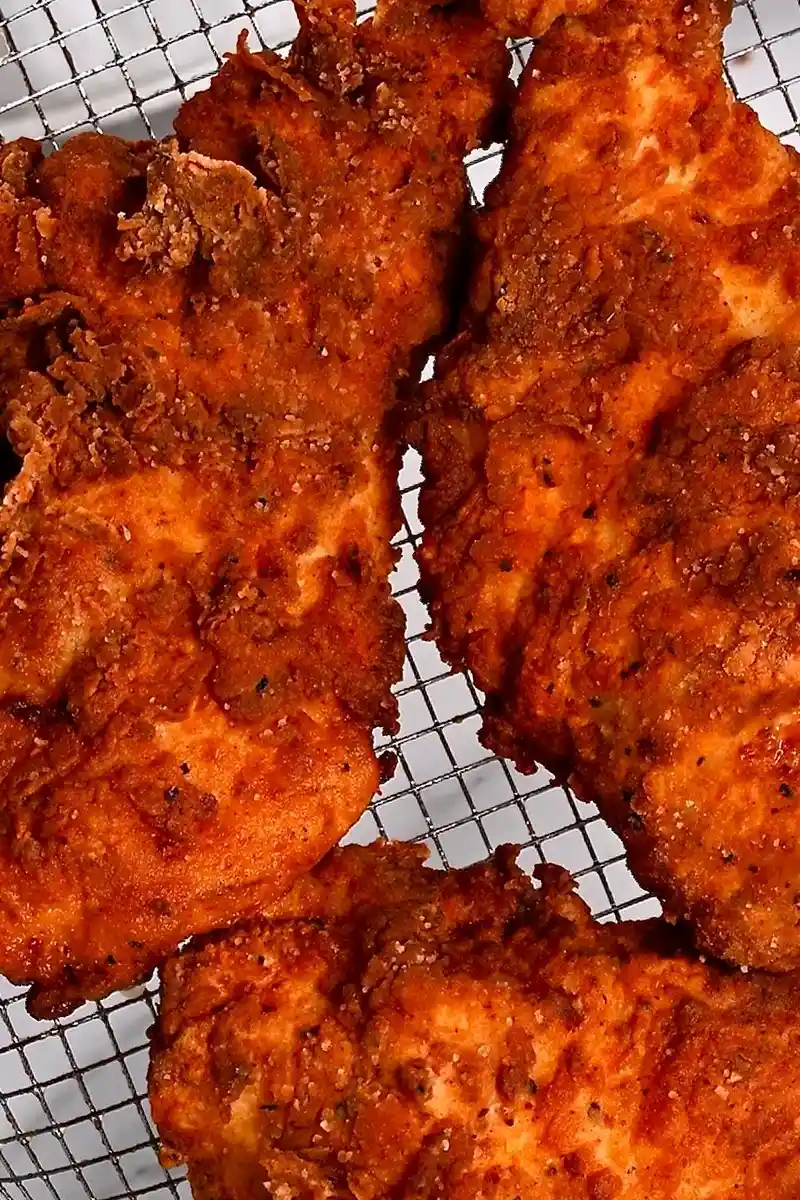
This recipe provides a reliable method for achieving a golden, crispy exterior and a tender, juicy interior. By combining a buttermilk marinade with a precise flour and cornstarch blend, you can create restaurant-quality fried chicken at home.
List of ingredients
- 13 oz chicken breast – boneless and skinless, sliced and flattened.
- 6 cups vegetable or canola oil – used for frying, adjust based on pot size.
- 1 Tbsp paprika – provides color and a smoky base.
- 1/2 Tbsp black pepper – adds a sharp, pungent heat.
- 1/2 Tbsp garlic powder – adds savory depth.
- 1 tsp dried oregano – introduces a subtle earthy aroma.
- 1/2 tsp chili powder – adds a mild warmth to the batter.
- 3/4 cup buttermilk – tenderizes the meat through acidity.
- 1 egg – binds the marinade and adds richness.
- 1 tsp salt – for the marinade to enhance overall flavor.
- 3.7 oz (1 cup) flour – all-purpose or a gluten-free alternative.
- 1.3 oz (1/3 cup) cornstarch – ensures a crunchier, lighter crust.
- 1 tsp baking powder – creates air bubbles for a fluffier texture.
- 1 tsp salt – for the dry batter to season the exterior.
step-by-step instructions
- Prepare the chicken: Slice the chicken breasts in half lengthwise to create thinner pieces. Use a meat mallet to flatten any uneven areas so they cook consistently.
- Marinate the chicken: Mix the paprika, black pepper, garlic powder, oregano, and chili powder in a bowl. Place half of this spice blend in a large dish with the buttermilk, egg, and 1 tsp of salt, then whisk until combined. Submerge the chicken pieces in the liquid and refrigerate for 30 minutes to 6 hours.
- Create the dry batter: In a shallow bowl, whisk together the remaining spices, baking powder, 1 tsp salt, cornstarch, and flour.
- Coat the chicken: Remove chicken from the refrigerator and let it sit for a few minutes to reach room temperature. Dip each piece into the flour mixture, pressing firmly to ensure the coating adheres completely.
- Heat the oil: Pour oil into a heavy-bottomed pot and heat over medium heat until it reaches 350°F to 375°F.
- Fry the chicken: Carefully lower 3-4 pieces of chicken into the oil using tongs. Fry for 4-5 minutes, or longer for thicker pieces, until the internal temperature reaches 165°F.
- Rest and serve: Transfer the chicken to a wire cooling rack and let it rest for 5 minutes before adding final seasoning.
Professional Frying Techniques
Maintaining the Ideal Oil Temperature
Keeping the oil between 350°F and 375°F is critical for the perfect crust. If the oil is too cool, the chicken will absorb excess fat and become greasy. If it is too hot, the outside will burn before the center is cooked through.
Preventing Pan Overcrowding
Only fry three to four pieces of chicken at a time depending on your pot size. Adding too many pieces at once causes the oil temperature to drop rapidly. This leads to a soggy coating instead of a crisp shell.
Using a Wire Rack for Drainage
Always place fried chicken on a wire cooling rack rather than paper towels. Paper towels trap steam against the bottom of the chicken, which softens the crust. A rack allows air to circulate around the entire piece of meat.
Managing Meat Temperature
Allow the marinated chicken to sit at room temperature for a few minutes before dredging in flour. Adding ice-cold chicken to hot oil can cause the temperature to dip sharply. This helps maintain a consistent fry and ensures the meat cooks evenly.
Ingredient Substitutions and Alternatives
Creating a Homemade Buttermilk Alternative
If you do not have buttermilk, combine 3/4 cup of whole milk with 1 tablespoon of lemon juice or white vinegar. Let the mixture sit for 5 to 10 minutes until it curdles slightly. This provides the necessary acidity to tenderize the chicken breast.
Using Gluten-Free Flour Options
You can replace all-purpose flour with a high-quality 1:1 gluten-free flour blend. Ensure the blend contains xanthan gum to maintain the structural integrity of the batter. The cornstarch in the recipe already helps provide a natural gluten-free crunch.
Substituting Cornstarch for Other Starches
Potato starch is an excellent alternative to cornstarch for a very crispy result. Arrowroot powder can also be used in the same ratio. These starches prevent gluten development, which is what creates the crackly texture.
Selecting the Best Frying Oil
Canola and vegetable oils are standard due to their neutral flavor and high smoke points. Peanut oil is highly recommended for a more professional finish as it handles heat very well. Avoid using extra virgin olive oil, as its smoke point is too low for deep frying.
Flavor Profile Variations
Adding Spicy Heat to the Batter
For a spicier version, replace the chili powder with cayenne pepper or add a pinch of crushed red pepper flakes to the flour. You can also add a few dashes of hot sauce directly into the buttermilk marinade for a deeper heat.
Developing an Herbal Coating
Swap the oregano for a mix of dried thyme, rosemary, and sage for a more savory, autumnal flavor. Adding a tablespoon of finely chopped fresh parsley to the flour mix can provide a fresh, colorful contrast to the golden crust.
Creating a Cajun-Style Crust
Increase the amount of paprika and add onion powder and a pinch of celery salt to the seasoning mix. This gives the chicken a bold, Southern-inspired taste profile. Serve with a side of spicy remoulade for an authentic experience.
Implementing a Honey-Glazed Finish
Immediately after removing the chicken from the oil, brush it with a mixture of honey and a small amount of melted butter. The residual heat will set the glaze, adding a sweet and salty contrast to the savory breading.
Suggested Serving Combinations
Classic Southern Side Dishes
Pair your fried chicken with creamy coleslaw and potato salad for a traditional meal. Corn on the cob, either boiled or grilled, adds a sweet element that balances the richness of the fried meat. Mashed potatoes with gravy are also a standard pairing.
Building the Perfect Chicken Sandwich
Place the fried breast on a toasted brioche bun with a layer of mayonnaise. Add crisp iceberg lettuce, thick-sliced dill pickles, and a slice of tomato. The acidity of the pickles cuts through the fried coating perfectly.
Light and Healthy Vegetable Pairings
Balance the meal with steamed broccoli, sautéed spinach, or a fresh garden salad. Grilled zucchini or roasted carrots provide a nutritional contrast to the deep-fried main course. A squeeze of fresh lemon over the vegetables brightens the entire plate.
Grains and Starches for Hearty Meals
Serve the chicken over a bed of white rice or with a side of macaroni and cheese. Garlic-seasoned potato wedges or sweet potato fries are excellent alternatives to standard French fries. These options make the dish suitable for a larger family dinner.
Storage and Reheating Guidelines
Refrigeration Methods
Store leftover chicken in an airtight container or wrap it tightly in aluminum foil. Place it in the refrigerator within two hours of cooking. The chicken will remain safe to eat for 3 to 4 days.
Freezing for Long Term Use
Flash-freeze the chicken breasts on a baking sheet so they do not touch. Once solid, transfer them to a heavy-duty freezer bag and remove as much air as possible. They can be stored in the freezer for up to 4 months.
Restoring Crispness in the Oven
To reheat, place the chicken on a wire rack set over a baking sheet. Bake at 350°F (175°C) for 15 to 20 minutes. This allows the heat to circulate and recrisp the coating without making the bottom soggy.
Using an Air Fryer for Reheating
Place the chicken in the air fryer basket at 375°F (190°C). Heat for 5 to 7 minutes, flipping halfway through the process. This is the fastest way to achieve a texture similar to the original fry.
Troubleshooting Common Issues
Why is the coating falling off?
Batter peeling usually happens if the chicken was too wet when it entered the flour or if the oil wasn’t hot enough. Ensure you press the flour firmly into the meat. Also, let the breaded chicken sit for a few minutes before frying to let the coating set.
How to fix a soggy crust?
Sogginess is typically caused by overcrowding the pan or using oil that has cooled down. If the oil drops below 325°F, the chicken will absorb oil rather than searing. Always use a thermometer to monitor the temperature between batches.
Dealing with raw centers and burnt exteriors
This occurs when the oil temperature is too high. Lower the heat and allow the oil to stabilize. For very thick chicken breasts, you can partially cook them in the oven before frying, or slice them thinner as suggested in the instructions.
Preventing dry or rubbery meat
Dry chicken is the result of overcooking. Use an instant-read thermometer to pull the chicken off the heat exactly when it hits 165°F. Remember that carry-over cooking will raise the temperature by a few degrees while the meat rests.
Frequently Asked Questions
Can I use cornstarch instead of flour?
Using 100% cornstarch creates a very light, crackly crust, but it may lack the golden color and structural stability of flour. A blend of both is ideal for the best balance of color and crunch.
What is the best oil temperature for frying?
The ideal range is 350°F to 375°F. If you do not have a thermometer, dip a wooden spoon into the oil; when steady bubbles form around the wood, the oil is ready.
Can this method be used for other chicken parts?
Yes, but cooking times will vary. Thighs and legs usually take 12 to 18 minutes, while wings take 8 to 11 minutes. Always check the thickest part of the meat for a temperature of 165°F.
Do I need to peel the skin off?
This recipe uses skinless breasts for a cleaner breading process, but skin-on breasts work as well. The skin adds extra fat and flavor, though it may require an extra minute of frying to render.
Print
Juicy and Flavorful Fried Chicken Breast
- Total Time: 44 minutes
- Yield: 4 servings 1x
- Diet: General
Description
This crispy fried chicken breast takes just minutes to prepare and pan-fry to perfection. When marinated, the results will be even more flavorful and tender in the middle. Perfect for potlucks, picnics, cookouts, game days, and more!
Ingredients
- 13 oz chicken breast
- 6 cups vegetable or canola oil
- 1 Tbsp paprika
- 1/2 Tbsp black pepper
- 1/2 Tbsp garlic powder
- 1 tsp dried oregano
- 1/2 tsp chili powder
- 3/4 cup buttermilk
- 1 egg
- 2 tsp salt
- 3.7 oz flour
- 1.3 oz cornstarch
- 1 tsp baking powder
Instructions
- Step 1: Slice the chicken breasts in half lengthwise for thinner pieces. If they are uneven, use a mallet to flatten one or both until even.
- Step 2: In a small bowl, combine all the spices (except the salt), then add half of the seasoning blend to a large dish, add the buttermilk, egg, and 1 tsp of salt, whisk well, and then add the prepared chicken breasts to the marinade. Allow the chicken to marinate, covered, in the fridge for at least 30 minutes, up to 6 hours total.
- Step 3: In a large shallow bowl or plate, combine the baking powder, 1 tsp salt, cornstarch, flour, and the remainder of the seasoning. Once the chicken has marinated, allow it to return to room temperature, dip one piece at a time into the flour mixture, and coat well, firmly pressing the flour into the chicken.
- Step 4: Heat oil in a large heavy-bottomed saucepan or Dutch oven to 350ºF/176ºC. Carefully lower the chicken into the hot oil and fry for about 4-5 minutes until the internal temperature reaches 165º/74ºC, then allow to rest for 5 minutes before serving.
Notes
To store, keep in airtight containers in the refrigerator for 3-4 days or freeze for up to 4 months. Reheat in the oven at 350ºF for 15-20 minutes on a rack to maintain crispiness.
- Prep Time: 10 minutes
- Cook Time: 4 minutes
- Category: Main
- Method: Frying
- Cuisine: American Southern
Nutrition
- Serving Size: 1 serving
- Calories: 293 kcal
- Sugar: 3 g
- Sodium: 1465 mg
- Fat: 6 g
- Saturated Fat: 2 g
- Unsaturated Fat: 4 g
- Trans Fat: 0.01 g
- Carbohydrates: 34 g
- Fiber: 2 g
- Protein: 26 g
- Cholesterol: 105 mg