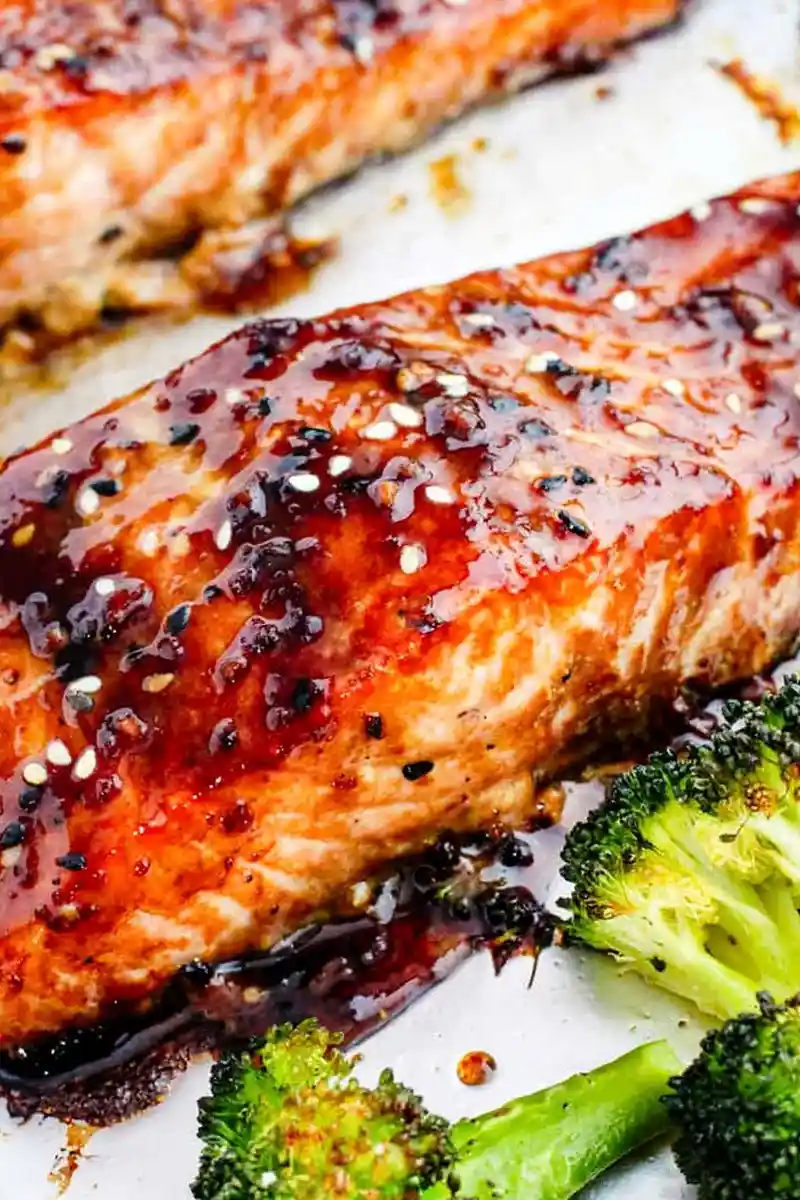
This one-pan meal combines nutrient-rich salmon and crisp broccoli with a savory-sweet glaze. It is a quick, healthy dinner option that minimizes cleanup by using a single baking sheet.
List of ingredients
- 1/4 cup vegetable oil (or avocado oil) – provides a neutral base for the marinade.
- 1/3 cup soy sauce – delivers salty umami flavor.
- 1/4 cup honey – adds sweetness and helps the glaze caramelize.
- 2 cloves garlic, minced – provides a sharp aromatic base.
- 1 tbsp ginger, grated – adds a fresh, zesty heat.
- 1 tsp sesame seeds – used for the final garnish.
- 1.5 lbs salmon filets – center-cut pieces are recommended for even cooking.
- 1 lb broccoli crowns, cut into bite-sized pieces – fresh florets work best.
- 2 tbsp olive oil – used to coat the broccoli for roasting.
- 1 tsp kosher salt – enhances the flavor of the vegetables.
step-by-step instructions
- Prepare the sauce: Mix the vegetable oil, soy sauce, honey, minced garlic, grated ginger, and a pinch of black pepper in a small bowl. Divide the sauce into two equal portions, using one half to marinate the salmon and reserving the other half for the glaze.
- Marinate the fish: Place the salmon filets in a large plastic bag or glass baking dish and pour half of the sauce over them. Refrigerate for 30 to 60 minutes, turning the filets occasionally to ensure they are fully coated.
- Heat the oven: Preheat your oven to 400 degrees. Line a large rimmed baking sheet with aluminum foil or parchment paper to prevent sticking and make cleanup easier.
- Season the broccoli: Chop the broccoli crowns into uniform bite-sized pieces. Toss them in a bowl with olive oil and kosher salt until evenly coated.
- Roast the components: Place the marinated salmon filets in the center of the prepared baking sheet, leaving a little space between them. Arrange the seasoned broccoli around the edges of the salmon. Bake for 15-18 minutes, or until the salmon reaches your desired doneness and the broccoli is cooked through.
- Thicken the glaze: While the salmon and broccoli are roasting, pour the reserved half of the marinade into a small saucepan over medium heat. Bring the sauce to a simmer, then reduce the heat to low and cook for 4-5 minutes until it thickens slightly.
- Finish and serve: Remove the baking sheet from the oven. Brush the thickened glaze generously over the salmon filets, sprinkle with sesame seeds, and serve alongside the roasted broccoli.
Optimizing Your Salmon Selection
Choose Center-Cut Fillets for Even Cooking
Selecting salmon fillets that are roughly the same thickness, typically around one inch, ensures that every piece finishes cooking at the same time. Center-cut portions are more uniform than the tail end, preventing the thinner parts from overcooking while the thickest part remains raw.
Understand the Difference Between Salmon Varieties
Atlantic salmon generally offers a richer, fattier texture that is more forgiving during roasting. Sockeye or King salmon are leaner and have a more intense flavor, but they can dry out more quickly, so you may need to reduce the baking time by a few minutes.
Pat the Salmon Dry Before Marinating
Using a paper towel to pat the fish dry before adding the marinade helps the sauce adhere better to the surface. Excessive surface moisture can dilute the glaze and may lead to steaming rather than roasting, which reduces the potential for a caramelized crust.
Perfecting the Roasted Broccoli
Cut Florets into Uniform Sizes
Aim for broccoli pieces that are between 0.5 and 1 inch in diameter. When the pieces are uniform, they roast at the same rate, ensuring you do not have a mix of burnt edges and raw stems on the same pan.
Ensure Broccoli is Completely Dry After Washing
After rinsing your broccoli, spin it in a salad spinner or pat it dry with a towel. If the florets are wet when they enter the oven, they will release steam, which prevents the edges from becoming crisp and browned.
Trim Thick Stems for Better Texture
Do not discard the stems; instead, peel the tough outer skin with a vegetable peeler and slice them into rounds. These tender interior pieces cook quickly and provide a satisfying crunch that complements the softer florets.
Glaze and Flavor Enhancements
Control Salt Levels with Low-Sodium Soy Sauce
Using low-sodium soy sauce allows you to manage the saltiness of the dish more effectively. This is especially important since the glaze is reduced in a pan, which concentrates the salt and can make the sauce overly salty if using standard soy sauce.
Substitute Honey for Other Natural Sweeteners
If you prefer a different flavor profile, maple syrup is an excellent substitute for honey, providing a slightly woodier sweetness. For a refined sugar-free option, coconut nectar can be used in the same quantity to achieve a similar sticky consistency.
Use Freshly Grated Ginger for Maximum Aroma
Fresh ginger contains volatile oils that provide a bright, spicy fragrance that dried ginger powder cannot replicate. For the best results, peel the ginger with a spoon and grate it finely using a microplane or a small grater.
Cooking and Temperature Precision
Verify Oven Calibration
Ovens can often vary by 10 to 20 degrees from their digital readout. Using an external oven thermometer ensures that your oven is truly at 400 degrees, which is critical for achieving the correct roast on the broccoli and the right sear on the salmon.
Target Internal Temperature for Medium Salmon
For a medium cook, aim for an internal temperature of 135°F to 140°F. Use an instant-read meat thermometer inserted into the thickest part of the fillet to avoid guessing and prevent overcooking the fish.
Allow the Salmon to Rest
Let the salmon rest on the pan for 2 to 3 minutes after removing it from the oven. This allows the juices to redistribute and the internal temperature to rise slightly due to carry-over cooking, resulting in a more tender texture.
Vegetable Substitutions and Modifications
Using Asparagus as a Substitute
Asparagus is a great alternative to broccoli and cooks in a similar timeframe. Trim the woody ends and place them around the salmon just as you would with the broccoli, ensuring they are lightly coated in olive oil and salt.
Adding Snap Peas to the Pan
Snap peas add a bright color and sweet crunch to the dish. Because they cook faster than broccoli, add them to the baking sheet during the last 8 to 10 minutes of the roasting process to keep them crisp.
Handling Watery Vegetables like Zucchini
Vegetables like zucchini and yellow squash release a significant amount of moisture during cooking. To prevent the salmon from steaming, roast these on a separate tray or create a foil divider on the main pan to keep the liquids away from the fish.
Serving and Pairing Ideas
Pairing with Steamed Jasmine Rice
The sticky soy-ginger glaze pairs perfectly with a bed of fluffy jasmine rice. The neutral flavor and absorbent texture of the rice help soak up any extra glaze that drips from the salmon.
Serving Over Quinoa for Extra Protein
For a more nutrient-dense option, serve the salmon and broccoli over cooked quinoa. The nutty flavor of the quinoa complements the ginger and soy notes while adding a boost of fiber and protein.
Adding a Squeeze of Fresh Lime
A squeeze of fresh lime juice over the finished dish adds a hit of acidity that cuts through the richness of the salmon and the sweetness of the honey. This balances the overall flavor profile and brightens the dish.
Storage and Preservation Guidelines
Safe Refrigeration Times
Store leftover salmon and broccoli in airtight containers in the refrigerator for up to three days. Keep the salmon and vegetables together or separate, as long as the container is sealed to prevent the fish from absorbing other odors.
Using Glass Airtight Containers
Glass containers are preferable to plastic for this recipe because they do not stain from the soy sauce and they maintain a better seal. This helps preserve the moisture of the salmon and prevents it from drying out during storage.
Avoiding Freezer Storage for Cooked Broccoli
While the cooked salmon can be frozen, the roasted broccoli does not freeze well. Once frozen and thawed, the broccoli will lose its structure and become mushy, so it is best to consume the vegetable portion fresh or refrigerated.
Effective Reheating Methods
Gentle Oven Reheating
To maintain the texture of the fish, reheat leftovers in a 350°F oven. Place the salmon and broccoli on a lined tray and heat for 5 to 10 minutes until just warmed through, avoiding high temperatures that could overcook the salmon.
Quick Microwave Reheating
If using a microwave, place the food on a plate and cover it with a damp paper towel. Heat on medium power in 30-second intervals to prevent the salmon from becoming rubbery or the broccoli from over-steaming.
Using an Air Fryer for Crispiness
An air fryer can restore the crisp edges of the roasted broccoli. Heat the leftovers at 360°F for 3 to 5 minutes, which quickly warms the salmon while refreshing the texture of the vegetables.
Make-Ahead Strategies
Prepping Broccoli in Advance
You can chop the broccoli and store it in a sealed bag in the fridge for up to three days. Do not add the olive oil or salt until you are ready to roast, as salting the vegetables too early can draw out moisture and prevent browning.
Optimal Marinating Duration
While 30 to 60 minutes is ideal, avoid marinating the salmon for more than 12 hours. The acids and salts in the soy sauce can begin to break down the proteins in the fish, potentially changing the texture from flaky to mushy.
Pre-making the Glaze Sauce
You can prepare the full batch of soy-ginger sauce in advance and store it in a jar in the refrigerator. When you are ready to cook, simply divide the sauce for marinating and glaze reduction as directed.
Troubleshooting Common Issues
Preventing Overcooked Salmon
If your salmon frequently overcooks, check if your fillets are too thin. Adjust the cooking time downward or use a lower temperature, and always rely on an internal thermometer rather than a timer.
Fixing Soggy Roasted Broccoli
Soggy broccoli usually occurs due to overcrowding the pan. Ensure there is plenty of space between the broccoli florets so that hot air can circulate around each piece, allowing the moisture to evaporate.
Thickening a Runny Glaze
If your reduced glaze remains too thin, continue to simmer it over low heat for another 2 to 3 minutes. Stir constantly to prevent the honey from burning, which can happen quickly once the sauce reaches a thick consistency.
Frequently Asked Questions
Is this recipe spicy?
This recipe is mild and family-friendly. If you prefer more heat, you can add a teaspoon of sriracha or a pinch of red pepper flakes to the glaze during the reduction process.
Can I use frozen broccoli?
Fresh broccoli is recommended for the best roasting results. If you must use frozen broccoli, roast it separately or add it to the oven 5 minutes before the salmon to account for the extra moisture and different cooking time.
What if I don’t have honey?
You can use brown sugar or maple syrup as a substitute. Brown sugar provides a deep, molasses-like sweetness, while maple syrup offers a lighter, more aromatic flavor; both will help the glaze thicken and caramelize.
Print
Honey Soy Ginger Salmon and Broccoli Sheet Pan Dinner
- Total Time: 60 minutes
- Yield: 4 servings 1x
- Diet: General
Description
The ultimate 30-minute healthy dinner. Salmon and broccoli cooks on one pan with a delicious sticky sweet ginger-soy glaze the whole family will love.
Ingredients
- ¼ cup vegetable oil (or avocado oil)
- ⅓ cup soy sauce
- ¼ cup honey
- 2 cloves garlic, minced
- 1 tbsp ginger, grated
- 1 tsp sesame seeds
- 1½ lbs salmon filets
- 1 lb broccoli crowns, cut into bite sized pieces
- 2 tbsp olive oil
- 1 tsp kosher salt
Instructions
- Prep the Sauce: Mix vegetable oil, soy sauce, honey, ginger, garlic, and ground black pepper in a small bowl.
- Marinate the Salmon: Pour half of the sauce into a large plastic bag or glass baking dish with your salmon and reserve the other half to make the glaze. Refrigerate the salmon for 30 minutes to an hour, turning occasionally.
- Prep the Pan and Oven: Preheat oven to 400 degrees. Line a baking sheet with foil or parchment paper.
- Prep the Broccoli: Cut broccoli into bite size pieces and toss with olive oil and salt.
- Cook the Salmon and Veggies: Place the marinated salmon fillets in the center of the pan with a little space between them. Add the broccoli around the edges. Cook for 15-18 minutes or until the salmon reaches your desired doneness and the broccoli is cooked through.
- Make the Glaze: While salmon cooks heat remaining marinade in small pan over medium heat. Bring to simmer and reduce heat to low. Cook the sauce 4-5 minutes to slightly thicken, then remove from heat.
- Sauce and Serve: Remove the sheet pan from the oven and brush the salmon with glaze, then garnish with sesame seeds and serve with the broccoli.
Notes
Use center-cut fillets of roughly the same thickness (about 1 inch) for even cooking. Ensure broccoli is dried thoroughly after washing to prevent steaming and achieve crispy edges.
- Prep Time: 10 minutes
- Cook Time: 20 minutes
- Category: Main Course
- Method: Baking
- Cuisine: Asian
Nutrition
- Serving Size: 1 fillet with broccoli
- Calories: 429 kcal
- Sugar: 12 g
- Sodium: 796 mg
- Fat: 23 g
- Saturated Fat: 4 g
- Unsaturated Fat: 19 g
- Trans Fat: 0 g
- Carbohydrates: 15 g
- Fiber: 3 g
- Protein: 38 g
- Cholesterol: 95 mg