This high-protein meal comes together in just 30 minutes using a sticky, savory glaze. It is an ideal choice for quick weeknight dinners or healthy meal prep for the week.
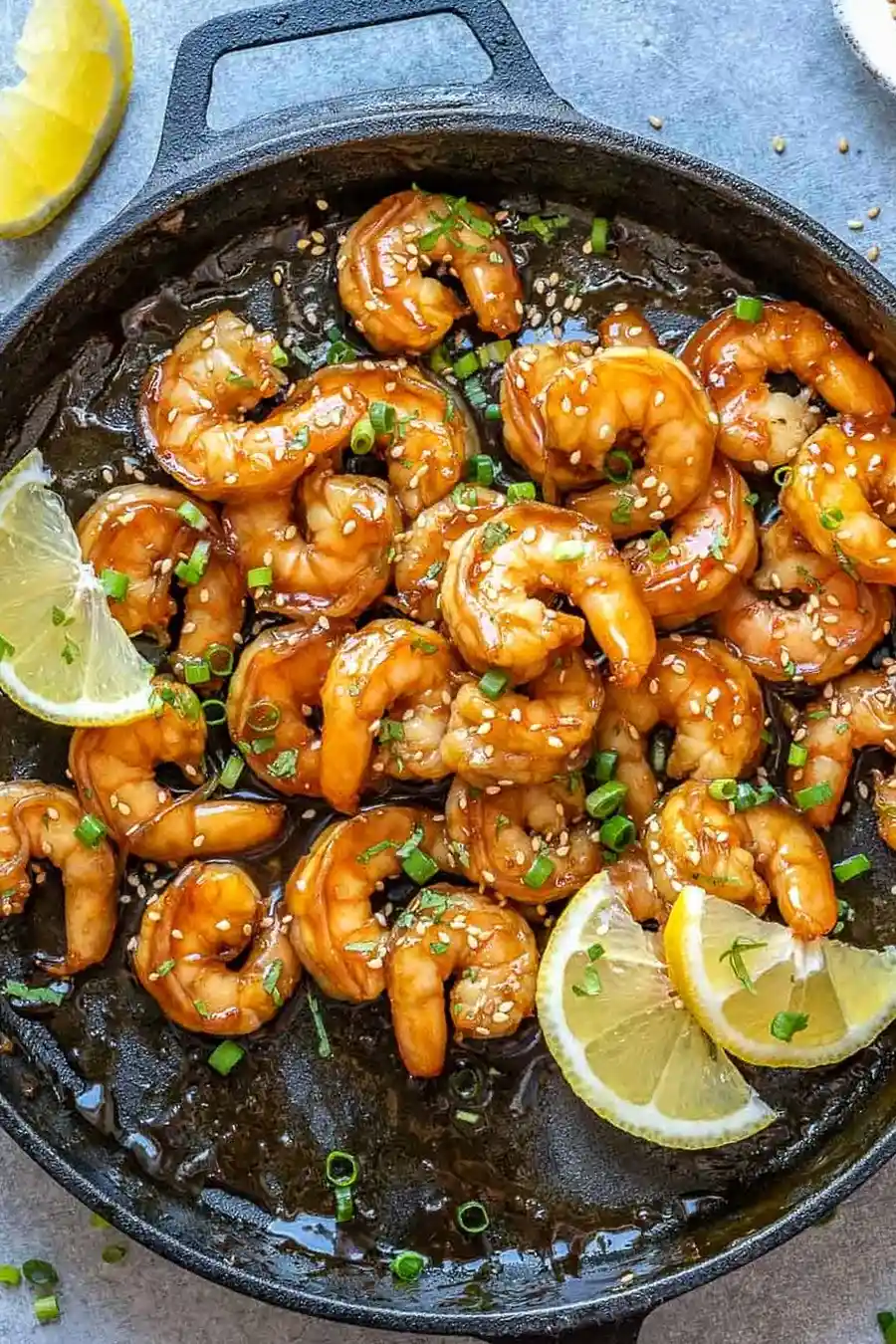
List of ingredients
- 1/3 cup honey – creates the sweetness and sticky glaze.
- 1/4 cup coconut amino liquid – provides a savory, soy-free depth of flavor.
- 1-2 garlic cloves (grated on the Microplane) – adds a sharp, aromatic base.
- 1″ knob of fresh ginger (grated on the Microplane) – provides a warm, zesty kick.
- 1 lb medium raw shrimp (peeled & deveined) – the main protein source.
- 2 teaspoons olive oil – used for searing the shrimp.
- 2 tsp sesame seeds – adds a nutty crunch for garnishing.
- 1-2 green onions (green parts only, chopped) – adds fresh color and mild onion flavor.
- 1 tbsp chopped cilantro – used as a fresh herbal garnish.
- lemon wedges – serves to add a citrusy brightness to the dish.
step-by-step instructions
- Prepare the aromatics: Use a Microplane to grate the fresh garlic and ginger into a fine paste.
- Clean the shrimp: Peel the shrimp and make a shallow incision from the top down to the tail to remove the vein. Rinse them thoroughly under clean water, then pat them completely dry with paper towels.
- Mix the sauce: In a mixing bowl, whisk together the honey, coconut amino liquid, grated garlic, and grated ginger.
- Marinate the shrimp: Place the shrimp in a large bowl and toss them with one-quarter of the prepared sauce. Refrigerate the shrimp to marinate for 15-20 minutes, and store the remaining sauce in a separate covered bowl in the fridge.
- Temper the protein: Remove the shrimp from the refrigerator and allow them to sit at room temperature for about 5 minutes.
- Sauté the shrimp: Heat olive oil in a non-stick pan over medium-high heat. Add the shrimp and sauté for approximately 2 minutes until they just turn pink, then move them to a plate.
- Reduce the glaze: Immediately pour the remaining sauce into the hot pan. Cook over medium-high heat for 3-4 minutes until the liquid is bubbly and has thickened.
- Combine: Return the cooked shrimp to the pan and stir them well to ensure they are fully coated in the sticky sauce.
- Garnish: Sprinkle the dish with chopped green onions and sesame seeds if desired.
- Serve: Plate the shrimp and serve immediately with lemon wedges on the side.
Professional Cooking Tips
Patting Shrimp Dry for Better Searing
Moisture on the surface of the shrimp creates steam, which prevents them from searing properly. By patting them dry with paper towels, you ensure the shrimp brown quickly and develop a better texture. This step is crucial for achieving a professional finish.
Avoiding Overcooked Rubbery Shrimp
Shrimp cook very quickly and can become rubbery if left in the pan too long. Remove them as soon as they curl into a loose C-shape and turn pink. Overcooked shrimp will curl tightly into an O-shape and lose their tenderness.
Using a Microplane for Aromatics
A Microplane creates a fine paste rather than chunks, which allows the garlic and ginger to integrate seamlessly into the sauce. This ensures that every bite has a balanced flavor without hitting a large piece of raw garlic. It also helps the sauce thicken more uniformly.
Maintaining Pan Temperature
Ensure the pan is hot before adding the oil and shrimp to avoid sticking. Medium-high heat is necessary to quickly sear the protein and then reduce the honey-based sauce. If the heat is too low, the shrimp will release water and boil instead of sautéing.
Ingredient Substitutions and Swaps
Replacing Coconut Aminos with Soy Sauce
If you do not have coconut aminos, low-sodium soy sauce is a direct substitute. Note that soy sauce is saltier, so you may want to taste the glaze before adding any additional seasoning. This swap maintains the savory, umami profile of the dish.
Swapping Fresh Ginger for Ground Powder
In a pinch, you can use ground ginger powder instead of fresh root. Use approximately 1/4 to 1/2 teaspoon of powder to replace a 1-inch knob of fresh ginger. While the flavor is less zesty, it still provides the necessary warmth.
Using Garlic Powder Instead of Fresh
Garlic powder can be used if fresh cloves are unavailable. Use about 1/4 teaspoon of powder per clove of fresh garlic. Keep in mind that fresh garlic provides a more robust and pungent flavor profile.
Alternative Oil Choices
While olive oil is recommended, any neutral oil with a high smoke point will work. Avocado oil, canola oil, or grapeseed oil are excellent choices for medium-high heat. Avoid using butter for the initial sear as it may burn before the shrimp are cooked.
Using Chicken Instead of Shrimp
This sauce works equally well with boneless, skinless chicken breasts cut into small cubes. Be aware that chicken requires a longer cooking time than shrimp. Sauté the chicken cubes until fully cooked through before adding the thickened sauce.
Creative Serving Suggestions
Pairing with Grains
Serve these shrimp over a bed of steamed jasmine rice or brown rice to soak up the extra glaze. Quinoa is another healthy option that adds a nutty flavor and extra protein. For a lighter version, cauliflower rice works well as a base.
Fresh Vegetable Accompaniments
Pair the dish with steamed broccoli, sautéed snap peas, or roasted asparagus for a balanced meal. The sweetness of the honey garlic sauce complements the bitterness of green vegetables. These sides add essential vitamins and fiber to the plate.
Low-Carb Serving Options
For those following a low-carb diet, serve the shrimp over zucchini noodles or sautéed spinach. These options provide a fresh contrast to the sticky sauce without adding significant calories. Steamed cabbage is another great low-carb alternative.
Bread and Roll Pairings
Warm garlic dinner rolls or crusty baguette slices are perfect for dipping into the remaining sauce. Toasted sourdough bread also provides a nice texture contrast to the tender shrimp. This makes the meal more filling and satisfying.
Storage and Reheating Guide
Refrigeration Guidelines
Store any leftover shrimp in an airtight container in the refrigerator. They will remain fresh and safe to eat for up to 4 days. Ensure the container is sealed tightly to prevent the shrimp from absorbing other fridge odors.
Best Reheating Methods
The best way to reheat is using a microwave for 60-90 seconds until heated through. Alternatively, you can place them in a skillet over low heat with a teaspoon of water to loosen the sauce. Be careful not to overcook them during reheating, or they will become rubbery.
Freezer Suitability
While you can freeze cooked shrimp, the texture may change slightly upon thawing. If freezing, use a vacuum-seal bag or a freezer-safe container with minimal air. Thaw them in the refrigerator overnight before reheating on the stovetop.
Make-Ahead Strategies
Prepping the Sauce in Advance
You can whisk the honey, coconut aminos, garlic, and ginger together up to 24 hours in advance. Store the sauce in a glass jar in the refrigerator. This saves time during the actual cooking process on busy weeknights.
Pre-Cleaning the Shrimp
Peel, devein, and wash your shrimp ahead of time and store them in a sealed container. This allows you to move straight to the marinating step. Always keep the shrimp chilled until they are ready to be marinated.
Marinating Time Considerations
While a 15-20 minute marinade is ideal, you can skip this step if you are in a rush. The flavors will still be present because the shrimp are tossed in the reduced sauce at the end. However, marinating helps the protein tenderize and absorb more flavor.
Common Troubleshooting Solutions
Sauce Too Thin
If the sauce does not thicken enough, continue simmering it over medium-high heat for an additional minute. The honey needs to reach a specific temperature to caramelize and become sticky. Avoid adding more ingredients, as reduction is the best way to thicken the glaze.
Sauce Burning Too Quickly
Because of the high sugar content in honey, the sauce can burn if the heat is too high. If you see the sauce darkening too rapidly, lower the heat to medium. Adding a tiny splash of water or coconut aminos can also help regulate the temperature.
Shrimp Releasing Too Much Water
If the shrimp release water in the pan, it usually means the pan wasn’t hot enough or the pan was overcrowded. Cook the shrimp in batches if necessary to maintain the temperature. Ensure the shrimp are patted dry before they hit the oil.
Frequently Asked Questions
Is shrimp a healthy protein choice?
Yes, shrimp is high in protein and low in fat, making it a lean protein source. It provides essential omega-3 fatty acids and minerals like calcium and selenium. It is a nutritious addition to most diets when cooked with healthy fats.
How do I know when shrimp are perfectly cooked?
Perfectly cooked shrimp turn an opaque pink color and curl into a loose C-shape. If they curl tightly into a circle, they are likely overcooked. Always remove them from the heat just as they reach this state.
How long do these leftovers last in the fridge?
Leftover honey garlic shrimp can be stored in the refrigerator for 3 to 4 days. Keep them in an airtight container to maintain the quality of the sauce. Always reheat them gently to avoid ruining the texture.
Print
Honey Garlic Shrimp
- Total Time: 30 minutes
- Yield: 4 servings 1x
- Diet: Gluten-Free
Description
Easy to make tender Shrimp sauteed in a honey garlic sauce and ready in just 30 minutes.
Ingredients
- 1/3 cup honey
- 1/4 cup coconut amino liquid
- 1–2 garlic cloves, grated
- 1” knob of fresh ginger, grated
- 1 lb medium raw shrimp, peeled and deveined
- 2 teaspoons olive oil
- 2 tsp sesame seeds
- 1–2 green onions, green parts only, chopped
- 1 tbsp chopped cilantro
- lemon wedges
Instructions
- Grate: Using a Microplane grate the garlic and ginger.
- Prepare Shrimp: Peel the shrimps and carefully mark a shallow incision, using a small paring knife from the top of the shrimp all the way down to the tail.
- Clean: Discard the vein in the shrimp and thoroughly wash with clean water. Pat dry with a paper towel and set aside.
- Mix Sauce: In a mixing bowl, combine honey, coconut amino liquid, grated garlic, and ginger.
- Marinate: Add shrimps and 1/4 of the prepared sauce into a large bowl. Toss to coat with the marinade.
- Chill: Refrigerate and let marinate for 15-20 minutes. Store the remaining sauce in a bowl, cover, and refrigerate.
- Temper: When ready to cook, remove the shrimps from the fridge and let sit at room temperature for 5 minutes.
- Sauté: Heat olive oil in a non-stick pan over medium-high heat. Add shrimps and gently sauté until they just turn pink about 2 minutes. Set aside on a plate.
- Thicken: Immediately pour in the remaining sauce, cook a few minutes over medium-high heat, until bubbly and thickened, about 3-4 minutes.
- Combine: Add in cooked shrimp and stir to coat into the sticky sauce. Garnish with chopped green onion and sesame seeds.
- Serve: Serve with lemon wedges and enjoy!
Notes
Divide the shrimp into 4 equal servings (approx 1 cup each). Chicken breast cubes can be used as a substitute for shrimp. Garlic powder and ginger powder can be used if fresh are unavailable. Marinating is optional but helps tenderize the shrimp. Store leftovers in the fridge for 3-4 days.
- Prep Time: 5 minutes
- Cook Time: 10 minutes
- Category: Main Course
- Method: Sautéing
- Cuisine: American
Nutrition
- Serving Size: 1 cup
- Calories: 241 kcal
- Sugar: 23 g
- Sodium: 1222 mg
- Fat: 4 g
- Saturated Fat: 1 g
- Unsaturated Fat: 3 g
- Trans Fat: 0 g
- Carbohydrates: 27 g
- Fiber: 1 g
- Protein: 24 g
- Cholesterol: 286 mg