This honey garlic pecan chicken offers a perfect harmony of savory depth and natural sweetness, making it a sophisticated choice for any weeknight dinner. By pan-searing thin chicken breasts and finishing them in a buttery, nut-infused glaze, you create a restaurant-quality meal in under forty minutes. It is a reliable, crowd-pleasing dish that pairs beautifully with simple grains or roasted seasonal vegetables.
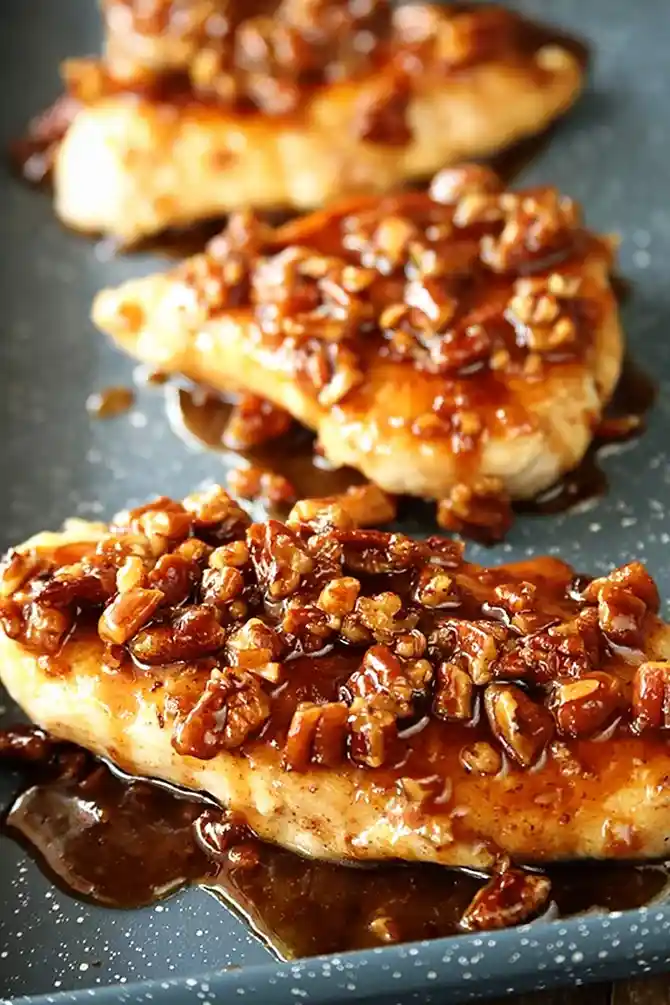
List of ingredients
- 4 thin, boneless, skinless chicken breasts
- 1 teaspoon seasoned salt
- 2 tablespoons olive oil
- 1/4 cup all-purpose flour
- 4 tablespoons unsalted butter
- 1/2 cup chopped pecans
- 3 cloves garlic, minced
- 1/3 cup chicken broth
- 1/4 cup honey
- 1/2 teaspoon salt
- 1/4 teaspoon pepper
step-by-step instructions
- Step: Place chicken breast between two pieces of plastic wrap or in a ziptop bag and pound to about 1/2-inch thick. Season both sides with seasoned salt and set aside.
- Step: Heat the olive oil in a large heavy-bottomed skillet over medium heat.
- Step: Lightly dredge the chicken in flour and add to the hot oil.
- Step: Sear the chicken for 4 to 5 minutes on each side until golden brown and cooked through. Remove, set on a wire rack, and tent with foil.
- Step: Add the butter to the skillet and melt. Stir in the pecans and cook for about 3 minutes until fragrant.
- Step: Add the garlic and cook, stirring constantly, for 1 minute. Add the chicken broth, scraping the bottom of the skillet to loosen the browned bits.
- Step: Reduce heat to a simmer, add the honey, salt, and pepper. Cook while stirring frequently until the sauce thickens, about 5 minutes. Spoon over the chicken to serve.
Improving the Cooking Technique
Achieving Even Thickness
Pounding the chicken is essential because it ensures that the breasts cook through at the same rate. When you have uneven pieces, the thicker parts remain undercooked while the thinner edges turn tough and dry. A steady, even thickness allows for a fast sear that keeps the interior tender.
Managing Pan Fond
The browned bits sticking to the bottom of the pan are technically known as fond, representing concentrated flavor. When you add the broth to the pan, the liquid helps release these bits, which then integrate into the butter and honey. Failing to scrape these off results in a flatter, less complex sauce.
Controlling Heat Levels
Because honey is sugar-based, it can caramelize and burn quickly once it reaches high temperatures. Keep the final glaze on a gentle simmer rather than a rolling boil to maintain a glossy, pourable consistency. If the sauce begins to darken too rapidly, move the pan off the heat source entirely for a few seconds.
Selecting and Preparing Ingredients
Choosing Quality Pecans
Freshness matters with pecans, as old nuts can become slightly rancid or bitter, which will ruin the delicate balance of the sauce. Look for pecans that appear plump and have a rich, golden-brown color. Chopping them into smaller, uniform pieces helps them toast evenly in the butter within the three-minute window.
Using Low-Sodium Broth
Using a low-sodium chicken broth gives you more control over the final salt content of your meal. Since you are using seasoned salt on the chicken itself, a high-sodium broth might make the final sauce taste too sharp or salty. You can always add extra salt at the end if the taste profile requires it.
Common Serving and Storage Advice
Recommended Side Dishes
This dish pairs perfectly with neutral starches that can absorb the extra honey garlic glaze. Steamed jasmine rice or fluffy mashed potatoes are excellent foundations. For vegetables, try roasted asparagus or sautéed green beans to provide a crisp, fresh contrast to the rich, buttery sauce.
Storing and Reheating
Store any leftovers in an airtight container in the refrigerator for up to three days. To reheat, avoid the microwave if possible, as it can turn the chicken rubbery. Instead, place the chicken in a skillet over low heat with a splash of water or extra broth, covering it to steam briefly until warmed through.
Freezing the Prepared Chicken
If you need to store this for longer, freeze the cooked chicken breasts individually without the sauce. While the sauce can be frozen, the texture of the pecans may soften significantly after thawing. For the best quality, consider making a fresh half-batch of the sauce whenever you decide to reheat the frozen chicken.
Frequently Asked Questions
Can I use different nuts if I don’t have pecans?
Walnuts or sliced almonds work effectively as substitutes for pecans in this recipe. Both offer a similar crunch and will toast well in the butter, though walnuts provide a slightly earthier flavor.
What is the best way to tell if the chicken is fully cooked?
Using an instant-read meat thermometer is the safest method for accuracy. Insert it into the thickest part of the chicken; you are looking for a reading of 165°F to ensure it is cooked through but not dried out.
How can I thicken the sauce if it remains too thin?
If the sauce is not thickening after five minutes of simmering, you can increase the heat slightly or continue simmering for another two minutes. Ensure you are whisking frequently, as the honey may settle at the bottom of the pan.
Is there a way to make the sauce without butter?
While butter provides a specific richness and mouthfeel, you can substitute it with a high-quality olive oil or a dairy-free plant-based butter alternative. Note that these substitutes may slightly alter the final sheen of the glaze compared to traditional dairy butter.
Strategic Tips for Consistency
Preheating the Skillet Properly
Always ensure your skillet is fully preheated before adding the chicken to the oil. If the oil is not hot enough, the chicken will steam rather than sear, leading to a greyish exterior instead of a golden crust. A proper sear locks in the natural juices, resulting in a significantly more flavorful bite.
Monitoring Garlic Aroma
Garlic has a very short window of perfection before it turns bitter. As soon as you can smell the aroma filling your kitchen—usually within sixty seconds—it is time to add the broth. If you see the garlic turning dark brown, you must immediately remove the pan from the heat to stop the cooking process.
Print
Honey Garlic Pecan Chicken
- Total Time: 35 minutes
- Yield: 4 servings 1x
- Diet: Nut-inclusive
Description
Honey Garlic Pecan Chicken is a quick and savory pan-seared chicken dish featuring a rich, buttery sauce with toasted pecans, minced garlic, and a touch of honey.
Ingredients
- 4 thin, boneless, skinless chicken breasts
- 1 teaspoon seasoned salt
- 2 tablespoons olive oil
- 1/4 cup all-purpose flour
- 4 tablespoons unsalted butter
- 1/2 cup chopped pecans
- 3 cloves garlic, minced
- 1/3 cup chicken broth
- 1/4 cup honey
- 1/2 teaspoon salt
- 1/4 teaspoon pepper
Instructions
- Step: Place chicken breast between two pieces of plastic wrap or in a ziptop bag and pound to about 1/2-inch thick. Season both sides with seasoned salt and set aside.
- Step: Heat the olive oil in a large heavy-bottomed skillet over medium heat.
- Step: Lightly dredge the chicken in flour and add to the hot oil.
- Step: Sear the chicken for 4 to 5 minutes on each side until golden brown and cooked through. Remove, set on a wire rack, and tent with foil.
- Step: Add the butter to the skillet and melt. Stir in the pecans and cook for about 3 minutes until fragrant.
- Step: Add the garlic and cook, stirring constantly, for 1 minute. Add the chicken broth, scraping the bottom of the skillet to loosen the browned bits.
- Step: Reduce heat to a simmer, add the honey, salt, and pepper. Cook while stirring frequently until the sauce thickens, about 5 minutes. Spoon over the chicken to serve.
Notes
Ensure the chicken is pounded to a uniform 1/2-inch thickness for even cooking. Use an instant-read thermometer to ensure the chicken reaches an internal temperature of 165°F without drying out. The sauce is excellent when served over rice or potatoes.
- Prep Time: 10 minutes
- Cook Time: 25 minutes
- Category: Main Course
- Method: Pan-searing
- Cuisine: American
Nutrition
- Serving Size: 1 chicken breast with sauce
- Calories: 483 kcal
- Sugar: 18 g
- Sodium: 1079 mg
- Fat: 31 g
- Saturated Fat: 10 g
- Unsaturated Fat: 19 g
- Trans Fat: 0.5 g
- Carbohydrates: 26 g
- Fiber: 2 g
- Protein: 27 g
- Cholesterol: 103 mg