This vibrant honey citrus salmon offers a refreshing balance of sweet and savory flavors that make it an excellent choice for a quick yet impressive weeknight meal. By combining high-quality salmon fillets with a zesty glaze, you can create a restaurant-quality dish that features perfectly caramelized edges and a moist, tender interior. Whether you are cooking for a family gathering or a simple dinner at home, this recipe delivers consistent results with minimal cleanup required.
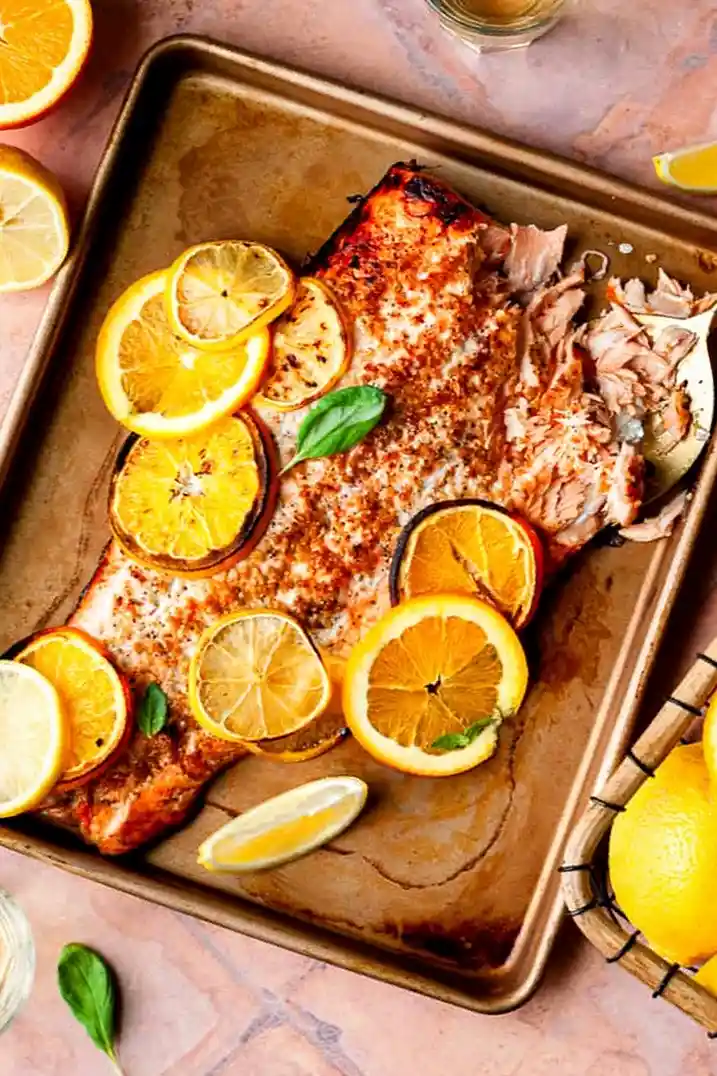
List of ingredients
- 4 salmon fillets (0.5 lb each)
- 1 teaspoon salt
- 1 teaspoon black pepper
- 3 tablespoons olive oil
- 4 cloves garlic, minced
- 1/4 cup honey
- 3 tablespoons soy sauce
- 1 tablespoon fresh orange juice
- 1 tablespoon lemon juice
- 1 teaspoon fresh or ground ginger
- Lemon and orange slices (for serving)
step-by-step instructions
- Step: Preheat oven to 350 degrees F. Prepare a large baking sheet with foil.
- Step: Pat salmon dry and place on prepared baking sheet. Top with salt and pepper.
- Step: Combine olive oil, garlic, honey, soy sauce, orange juice, lemon juice, and ginger in a small bowl. Whisk well and pour over salmon.
- Step: Top salmon with lemon and orange slices.
- Step: Bake for 15 minutes, then broil for 2-3 minutes, until the salmon is crispy.
- Step: Serve with additional citrus slices.
Refining your preparation techniques
Ensuring uniform fish portions
To achieve the most professional result, source salmon fillets that have a relatively uniform thickness from the center to the tail. If you have a thin tail piece and a thick center cut, tuck the thin end of the tail portion underneath itself to create a uniform block. This prevents the thinner portion from overcooking and becoming dry while waiting for the thicker part to reach the ideal internal temperature.
Achieving the perfect glaze consistency
When whisking your glaze ingredients, ensure the honey is at room temperature so it incorporates fully with the citrus juices and soy sauce. If the honey is too thick or crystallized, place the jar in a bowl of warm water for a few minutes before measuring. A well-emulsified sauce will cling to the salmon better during the roasting process, creating a thicker, more flavorful layer that seals in moisture.
Creative variations for the adventurous home cook
Exploring alternative citrus profiles
While the combination of orange and lemon is classic, you can easily adapt this dish to use other seasonal fruits. Blood oranges provide a deep, complex sweetness with a striking red hue, while grapefruit offers a sharper, more bitter edge that cuts through the fat of the salmon. You may even experiment with Meyer lemons if you prefer a slightly sweeter, more floral citrus note that is less aggressive than standard lemon juice.
Adding heat with dry spices
If you prefer a spicy kick to your sweet-and-sour dishes, consider adding a pinch of crushed red pepper flakes or a dash of cayenne to the glaze mixture. The heat pairs exceptionally well with the sweetness of the honey and the umami of the soy sauce, creating a complex flavor profile. Be sure to mix these dry spices directly into the glaze rather than sprinkling them on top to ensure the heat is distributed evenly across all the fillets.
Serving suggestions for a balanced plate
Pairing with grain-based sides
This salmon is incredibly versatile when it comes to side dishes, especially those that can absorb the extra glaze from the baking sheet. A fluffy bed of jasmine rice, nutty quinoa, or steamed couscous provides a neutral foundation that lets the citrus notes shine. You might also consider a cold soba noodle salad tossed with sesame oil, which complements the soy and ginger notes found in the salmon glaze.
Incorporating roasted seasonal vegetables
Since the oven is already preheated to 350 degrees F, you can easily roast vegetables on a separate tray at the same time. Asparagus, snap peas, or broccoli florets tossed in a light coating of oil and salt will reach a perfect tender-crisp texture in the same 15-minute window as the salmon. The charred edges of roasted green vegetables offer a savory, earthy contrast to the sticky, sweet coating on the fish.
Managing leftovers and food quality
Proper cooling before refrigeration
Before moving your leftovers to an airtight container, allow the salmon to cool to room temperature for about thirty minutes. Placing hot fish directly into a cold refrigerator can create excess condensation inside the container, which may soften the crispy glaze and make the salmon texture mushy. Once it has cooled down, seal it tightly to prevent the fish from absorbing any other scents in your refrigerator.
Guidelines for safe reheating
Avoid using a microwave to reheat this salmon, as the high-energy waves tend to cook the proteins unevenly and can make the fish rubbery or dry. Instead, heat a non-stick skillet over medium-low heat with a tiny splash of water or oil. Place the salmon in the pan and cover it with a lid, which creates a gentle steaming effect that warms the center without drying out the exterior glaze.
Freezing prepared salmon
If you find yourself with extra servings, you can freeze the cooked salmon for up to three months. To maintain the best quality, wrap each individual fillet tightly in plastic wrap before placing them into a heavy-duty freezer bag. Squeeze as much air out of the bag as possible to prevent frost buildup, which can cause freezer burn and degrade the flavor of the honey glaze over time.
Common inquiries
How do you determine the fish is fully cooked?
The safest way to check for doneness is to use an instant-read meat thermometer inserted into the thickest part of the fillet, looking for an internal temperature of 145 degrees F. Alternatively, you can use a fork to gently flake the salmon; if it separates easily along the natural connective tissue lines and appears opaque throughout, it is ready to be removed from the heat.
Why is the glaze thin after baking?
If your glaze appears runny rather than syrupy, it is often because the salmon released too much liquid during the baking process or the oven temperature was not hot enough to cause reduction. To fix this, you can carefully remove the salmon from the baking sheet after it is cooked and pour the juices into a small saucepan. Simmer the liquid over medium-high heat until it thickens into a syrup, then brush it back over the fish before serving.
Can I prepare the glaze in advance?
Yes, you can whisk the honey, soy sauce, citrus juices, garlic, and ginger together up to twenty-four hours before you plan to cook. Keep this mixture in a sealed glass jar in the refrigerator to allow the flavors to meld, which actually enhances the intensity of the garlic and ginger. Just be sure to give the mixture a vigorous shake or stir before drizzling it over your salmon, as the ingredients may separate slightly while sitting.
Print
Honey Citrus Salmon
- Total Time: PT25M
- Yield: 4 servings 1x
- Diet: Pescatarian
Description
Honey Citrus Salmon will be your new favorite weeknight dinner recipe! This recipe bursts with sweet citrus flavor.
Ingredients
- 4 salmon fillets (0.5 lb each)
- 1 teaspoon salt
- 1 teaspoon black pepper
- 3 tablespoons olive oil
- 4 cloves garlic, minced
- 1/4 cup honey
- 3 tablespoons soy sauce
- 1 tablespoon fresh orange juice
- 1 tablespoon lemon juice
- 1 teaspoon fresh or ground ginger
- Lemon and orange slices (for serving)
Instructions
- Step: Preheat oven to 350 degrees F. Prepare a large baking sheet with foil.
- Step: Pat salmon dry and place on prepared baking sheet. Top with salt and pepper.
- Step: Combine olive oil, garlic, honey, soy sauce, orange juice, lemon juice, and ginger in a small bowl. Whisk well and pour over salmon.
- Step: Top salmon with lemon and orange slices.
- Step: Bake for 15 minutes, then broil for 2-3 minutes, until the salmon is crispy.
- Step: Serve with additional citrus slices.
Notes
Recipe Storage: Store in an airtight container and eat leftovers within 4-5 days. Freezer Storage: Freeze in a freezer-safe, airtight container and keep for up to 3 months. Reheating Instructions: The best way to reheat this recipe is to heat in a skillet with a little olive oil over low heat until the salmon is warm.
- Prep Time: PT5M
- Cook Time: PT20M
- Category: Main Course
- Method: Baking
- Cuisine: Seafood
Nutrition
- Serving Size: 1 fillet
- Calories: 355 kcal
- Sugar: 14g
- Sodium: 650mg
- Fat: 18g
- Saturated Fat: 3g
- Unsaturated Fat: 14g
- Trans Fat: 0g
- Carbohydrates: 16g
- Fiber: 1g
- Protein: 32g
- Cholesterol: 85mg