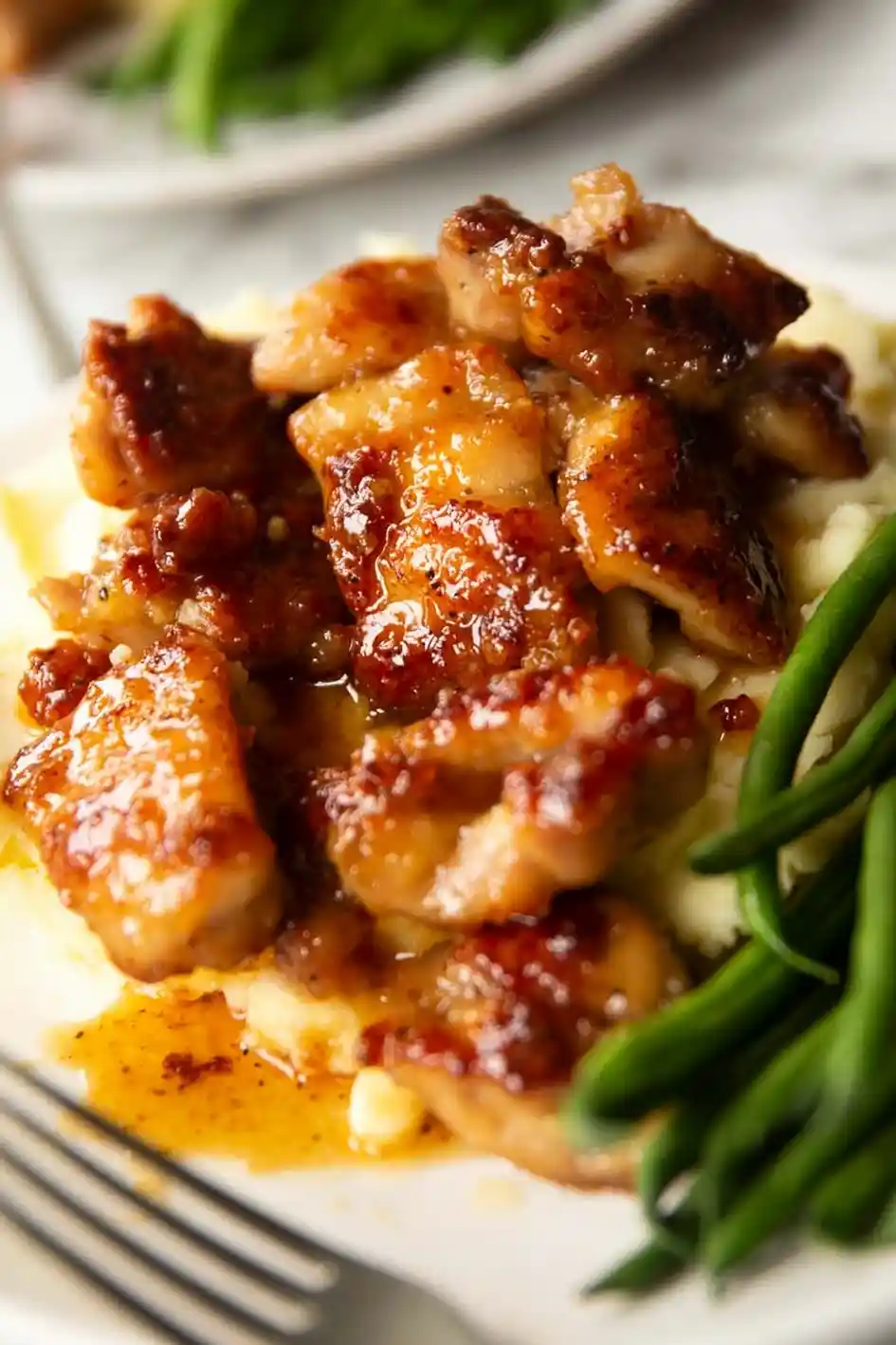
This recipe creates a sweet and sticky glaze over crispy chicken pieces, offering a rich flavor profile in under 30 minutes. It is an efficient meal that balances savory seasonings with a honey-butter reduction.
List of ingredients
- 1.3lb / 600g boneless skinless chicken thighs – diced into large bite-sized chunks for juicy results.
- 1/3 cup / 50g flour – used for dredging and thickening the sauce.
- 1 tsp salt – provides base seasoning.
- 1/2 tsp onion powder – adds a subtle savory depth.
- 1/2 tsp garlic powder – enhances the aromatic profile.
- 1/2 tsp black pepper – adds a mild spicy kick.
- 1 tbsp unsalted butter – for frying the chicken.
- 1 tbsp olive oil – raises the smoke point of the butter during frying.
- 1/3 cup / 110g honey – the primary sweetener for the glaze.
- 5 tbsp / 75g / 2.6oz unsalted butter – diced into tablespoon chunks for the sauce.
- 2 tbsp apple cider vinegar – cuts through the sweetness with acidity.
- 1 tbsp soy sauce – adds umami and a deeper color.
- Salt and black pepper – used to taste for final seasoning.
step-by-step instructions
- Coat the chicken: In a medium-sized mixing bowl, combine the flour, 1 tsp salt, onion powder, garlic powder, and black pepper. Add the diced chicken to the bowl and stir until every piece is fully coated in the seasoned flour.
- Sear the meat: Heat 1 tbsp butter and olive oil in a large pan over medium-high heat. Once the butter has melted, stir it into the oil and add the chicken pieces, ensuring they are spaced out to avoid overcrowding. Fry until the chicken is crispy and deep golden on one side, then flip and cook until the other side is crisp or lightly charred and the center is piping hot. Remove the chicken from the pan and reduce the heat to medium.
- Prepare the glaze: Melt the remaining 5 tbsp of diced butter into the same pan. Stir in the honey, apple cider vinegar, soy sauce, and a pinch of salt and pepper. Keep stirring over a gentle simmer until the sauce thickens and reaches a thin caramel consistency. Taste the sauce and adjust the seasoning as needed.
- Combine and serve: Add the fried chicken back into the pan. Stir quickly until the chicken is fully coated in the glaze, then serve immediately.
Optimizing Chicken Cut Selection
Using Boneless Skinless Thighs
Chicken thighs are recommended because they contain more fat than breasts, which prevents the meat from drying out during high-heat frying. The dark meat remains tender and juicy even when seared to a deep golden brown. This cut also holds up better when tossed in a thick, sticky sauce.
Adapting for Chicken Breasts
If using diced chicken breast, reduce the frying time slightly as white meat cooks faster than thighs. Breast meat is leaner, so it can become tough if overcooked. Ensure the pieces are cut into uniform sizes to maintain consistent cooking times across the pan.
Preparing Whole Chicken Breasts
To use whole breasts, butterfly two large breasts to create four thinner, even-sized fillets. Dredge the fillets in the seasoned flour and fry both sides until golden and cooked through. This method allows for a larger surface area of crispy crust while keeping the center moist.
Working with Bone-in Thighs
Bone-in, skin-on thighs can be used by frying them skin-side down first to render the fat. Once the skin is crispy, flip the pieces and lower the heat to ensure the meat cooks through to the bone. This version will take longer to cook but provides a richer flavor from the bone.
The Science of the Honey Butter Sauce
Selecting Runny Honey for Emulsion
Using a runny honey ensures that it blends smoothly into the melted butter without clumping. If the honey is crystallized, gently warm it before adding it to the pan. This allows the honey to emulsify more effectively with the butter and vinegar.
Controlling Salt with Unsalted Butter
Unsalted butter is preferred to give the cook full control over the final sodium level. Since soy sauce already contains a significant amount of salt, using salted butter can easily make the dish overly salty. If only salted butter is available, reduce the extra salt added during the sauce simmering phase.
Balancing Sweetness with Apple Cider Vinegar
The apple cider vinegar provides the necessary acidity to cut through the richness of the butter and the sweetness of the honey. This prevents the sauce from tasting cloying and adds a bright top note to the flavor profile. As the sauce simmers, the sharp vinegar taste mellows into a balanced tang.
Adding Umami with Soy Sauce
Soy sauce introduces a savory, salty depth known as umami, which complements the sugar in the honey. It also contributes to the dark, mahogany color of the final glaze. For a different flavor profile, a small amount of Worcestershire sauce can be used as an alternative.
Achieving Caramel Consistency
Simmering the sauce is crucial for reducing the water content and concentrating the sugars. The sauce should be stirred constantly until it reaches a thin caramel state, meaning it coats the back of a spoon. Overcooking the sauce can lead to it becoming too thick or burnt, so monitor the heat closely.
Frying Techniques for Maximum Crunch
The Role of Seasoned Flour Dredging
The flour coating serves two primary purposes: creating a crispy exterior and helping the sauce adhere to the meat. The seasoned flour creates a porous surface that absorbs the honey butter glaze. This ensures every bite is packed with flavor rather than the sauce simply sliding off the meat.
Preventing Sauce Sludge by Shaking Excess Flour
It is important to shake off any excess flour from the chicken before placing it in the pan. Too much loose flour can leak into the frying oil and then into the sauce, resulting in a grainy or sludgy texture. A light, even coating is all that is required for a proper crust.
Managing Pan Temperature and Crowding
Adding too many chicken pieces to the pan at once lowers the surface temperature of the oil. This causes the chicken to steam in its own juices rather than sear, which prevents the formation of a crispy crust. Fry the chicken in batches if necessary to maintain a high heat.
Combining Butter and Oil for Searing
Using a mixture of butter and olive oil allows for the flavor of butter with the higher smoke point of oil. Butter alone burns quickly at the temperatures needed for a deep golden sear. The olive oil stabilizes the butter, allowing the chicken to brown without the fats smoking or burning.
Serving and Pairing Suggestions
Pairing with Mustard Mashed Potatoes
Mustard mashed potatoes provide a sharp, pungent contrast to the sweet honey glaze. The acidity in the mustard cuts through the richness of the butter, cleaning the palate between bites. This combination creates a balanced meal of contrasting flavors.
Adding Garlic Green Beans
Sautéed garlic green beans add a fresh, crisp element to the plate. The garlic notes complement the garlic powder used in the chicken dredging. This side dish introduces a necessary vegetable component to balance the heavy proteins and sugars.
Serving Over Steamed Rice
White or brown steamed rice is an excellent base for this dish as it absorbs the extra honey butter sauce. The neutral flavor of the rice allows the complex sweetness and saltiness of the chicken to remain the focal point of the meal.
Incorporating Fresh Garnishes
Freshly chopped parsley or sliced green onions can be added as a garnish after plating. These additions provide a pop of color and a fresh, herbaceous finish that lightens the overall feel of the dish. Sesame seeds can also be used for a slight nutty crunch.
Storage and Reheating Guidelines
Refrigerating Leftovers
Store any remaining chicken in an airtight container in the refrigerator for up to three to four days. Ensure the chicken is completely cooled before sealing the container to prevent excess steam from making the coating mushy. The sauce will thicken further in the cold.
Freezing the Prepared Dish
While this dish can be frozen, the texture of the flour coating will change significantly upon thawing. To freeze, place the chicken in a freezer-safe bag with as much air removed as possible. It will keep for up to two months, though reheating will be necessary to restore some texture.
Best Reheating Methods
To maintain as much crispness as possible, reheat the chicken in an oven or air fryer at 350 degrees Fahrenheit until heated through. Microwave reheating is faster but often results in a softer, rubbery coating. If using a microwave, heat in short intervals and avoid overcooking.
Restoring Sauce Texture
If the sauce has solidified in the refrigerator, add a teaspoon of water or a small knob of butter during the reheating process. This helps the glaze loosen and return to its original glossy, liquid state. Stir gently to avoid breaking the chicken pieces.
Cooking Troubleshooting
Preventing the Flour Coating from Becoming Mushy
Do not leave the chicken sitting in the sauce for an extended period after cooking. The flour crust is designed to absorb the sauce, but prolonged exposure will cause the coating to break down and become soft. Toss the chicken in the glaze and serve immediately.
Managing Broken Sauce Emulsions
If the sauce appears to separate or look oily, it is usually due to the heat being too high. Lower the temperature and whisk the sauce vigorously to bring the butter and honey back together. A small splash of water can also help stabilize the emulsion.
Correcting Over-Salted Sauce
If the sauce tastes too salty, add a small amount of extra honey or a squeeze of fresh lemon juice. The sugar and acidity help mask the excess sodium and bring the flavor back into balance. Avoid adding more water, as this will dilute the flavor too much.
Adjusting Sauce Thickness
If the sauce is too thin after simmering, continue to cook it for another two to three minutes while stirring. If it becomes too thick or sticky, stir in a tablespoon of water or apple cider vinegar to loosen it. The goal is a consistency that clings to the meat without being gloopy.
Frequently Asked Questions
Can I use salted butter instead of unsalted?
Yes, you can use salted butter, but you must be careful with additional seasoning. Reduce the amount of salt in the flour dredging and omit the extra pinch of salt in the sauce to prevent the dish from becoming too salty.
What is a suitable substitute for honey?
Maple syrup is the best alternative as it provides a similar sweetness and viscosity. While the flavor profile will shift slightly toward a woody sweetness, the texture of the glaze will remain very similar.
How do I keep the chicken from drying out?
Use chicken thighs instead of breasts and avoid overcooking the meat. Ensure the pan is hot enough to sear the outside quickly, which locks in the juices. Once the internal temperature is reached, remove the chicken from the pan immediately.
Can I make this recipe in an air fryer?
You can air fry the floured chicken pieces first to achieve the crispiness, then toss them in the sauce prepared on the stovetop. The sauce must be made in a pan, as the air fryer cannot simmer and reduce a liquid glaze.
Print
Honey Butter Chicken
- Total Time: 30 minutes
- Yield: 4 servings 1x
- Diet: General
Description
This honey butter chicken is sweet, sticky, loaded with flavour and SO easy to make!
Ingredients
- 1.3lb / 600g boneless skinless Chicken Thigh, diced into large bite sized chunks
- 1/3 cup / 50g Flour
- 1 tsp Salt
- 1/2 tsp Onion Powder
- 1/2 tsp Garlic Powder
- 1/2 tsp Black Pepper
- 1 tbsp Unsalted Butter
- 1 tbsp Olive Oil
- 1/3 cup / 110g Honey
- 5 tbsp / 75g Unsalted Butter, diced into tbsp chunks
- 2 tbsp Apple Cider Vinegar
- 1 tbsp Soy Sauce
- Salt & Black Pepper, to taste
Instructions
- Step 1: In a medium-sized mixing bowl combine flour with 1 tsp salt and 1/2 tsp onion powder, garlic powder & black pepper. Add in diced chicken and combine until fully coated.
- Step 2: Add 1 tbsp butter and olive oil to a large pan over medium-high heat. Once the butter has melted, stir it to combine with the oil then add in and space out the chicken. Leave to fry until crispy and deep golden on one side, then flip the pieces and cook the other side until crisp/lightly charred, with the centre piping hot. Remove from pan and turn heat down to medium.
- Step 3: Melt the remaining 5 tbsp butter into the pan then stir in honey, apple cider vinegar, soy sauce and a good pinch of salt and pepper (to taste). Keep stirring over a gentle simmer until the sauce thickens to a thin caramel consistency. Check for seasoning and adjust accordingly.
- Step 4: Stir in chicken until it’s fully coated then serve up and enjoy!
Notes
You can use different cuts of chicken: butterfly large chicken breasts for 4 even pieces, use diced chicken breast for quicker cooking, or boneless/skinless whole thighs. Using unsalted butter allows for better control over the saltiness of the sauce. Serve with mustard mash and garlic green beans or rice.
- Prep Time: 10 minutes
- Cook Time: 20 minutes
- Category: Dinner, Main Course
- Method: Pan-frying
- Cuisine: Universal
Nutrition
- Serving Size: 1 serving
- Calories: 450 kcal
- Sugar: 23.82 g
- Sodium: 791 mg
- Fat: 21.85 g
- Saturated Fat: 9.44 g
- Unsaturated Fat: 12.41 g
- Trans Fat: 0.03 g
- Carbohydrates: 32.23 g
- Fiber: 0.5 g
- Protein: 31.14 g
- Cholesterol: 161 mg