Enjoy a nutritious and flavor-packed meal with this quick salmon ramen. This dish combines a savory, deep-flavored broth with oven-baked salmon and fresh, crisp vegetables for a satisfying dinner.

List of ingredients
- 1-pound filet of Salmon – yields 3-4 ounces per serving.
- 2 packages of instant ramen noodles – discard the seasoning packets.
- 1/4 cup low-sodium soy sauce – for the salmon sauce.
- 2 tbsp honey mixed with 1 tsp water – replaces mirin for sweetness.
- 1/2 tsp Chinese five-spice blend seasoning – adds aromatic depth.
- 1 tbsp sesame oil – for the sauce.
- 1/8 tsp sea salt – for the sauce.
- 1 tbsp granulated sugar – for the sauce.
- 1 tbsp light brown sugar – for the sauce.
- 1-inch piece of freshly grated ginger – for the sauce.
- 2 large cloves of garlic, minced – for the sauce.
- 5 stalks of green onion – root removed and tops trimmed, used for baking.
- 1-2 green onion stalks – cut into thin slices for garnish.
- 1/4 cup sliced cremini mushrooms – for the topping.
- 1/4 cup sliced assorted color mini sweet peppers – for the topping.
- 1/4 cup julienned carrots – for the topping.
- 1 hard-boiled egg – peeled and cut in half.
- 2 tsp garlic chili oil – 1 tsp added to each bowl before serving.
- 1 tsp sesame seeds – 1/2 tsp divided into each bowl.
- 4 cups sodium-reduced chicken stock or bone stock – for the broth.
- 1/3 cup low-sodium soy sauce – for the broth.
- 1/8 tsp ground white pepper – for the broth.
- 1/2 ounce kombu (dried kelp) or nori (dried seaweed) – for umami.
- 1/2 cup bonito flakes (dried fish) – for depth of flavor.
- 1 tbsp sesame oil – for the broth.
- Sea salt to taste – used sparingly due to soy sauce.
step-by-step instructions
- Prepare the Salmon Sauce: In a small bowl, combine the low-sodium soy sauce, honey-water mixture, Chinese five-spice, granulated sugar, light brown sugar, grated ginger, and minced garlic. Mix well and reserve 2-3 tablespoons of the sauce to brush on the fish after it finishes baking.
- Bake the Salmon: Preheat your oven to 350°F. Pat the salmon filet dry and brush both sides with the sauce mixture. Line a sheet pan with aluminum foil, brush the foil with 1 tablespoon of sesame oil, and arrange the 5 green onion stalks on top. Place the salmon on the onions and bake on the center rack for 30 minutes. Brush the reserved sauce over the cooked salmon once removed from the oven.
- Create the Broth: Use the Saute setting on an Instant Pot or a medium pot on the stove. Add chicken stock, low-sodium soy sauce, white pepper, kombu, bonito flakes, sea salt, and sesame oil. Bring the mixture to a low boil, then switch to the Keep Warm setting to let the flavors steep.
- Cook the Mushrooms: Add the sliced cremini mushrooms to the simmering broth. Let them cook for 2 minutes, then remove them with a slotted spoon and set aside.
- Prepare the Vegetables: Julienne the carrots and slice the mini sweet peppers and remaining green onions. Set these aside for assembly.
- Prepare the Ramen Noodles: Bring a small stockpot of water to a boil and add a pinch of sea salt. Add the instant ramen noodles and cook until al dente, which usually takes about 2 minutes.
- Assemble the Bowls: Divide the cooked noodles evenly between two serving bowls. Add 3-4 ounces of baked salmon, the simmered mushrooms, julienned carrots, and sliced peppers to each bowl.
- Final Touch: Ladle the hot broth over the noodles and toppings. Garnish each bowl with sliced green onions, sesame seeds, and 1 tsp of garlic chili oil. Add half a hard-boiled egg to each bowl and serve immediately.
Pro Tips for Baking the Salmon
Achieve the Perfect Internal Temperature
Use a meat thermometer to ensure the salmon reaches an internal temperature of 145°F. This prevents the fish from becoming dry while ensuring it is safely cooked through. Overcooking salmon can lead to a chalky texture.
Pat the Filet Completely Dry
Always use paper towels to remove excess moisture from the salmon before applying the sauce. A dry surface allows the glaze to adhere better and helps the fish roast rather than steam. This results in a better exterior texture.
Use Foil for Easy Cleanup
Lining your baking sheet with aluminum foil and sesame oil prevents the sugars in the sauce from sticking to the pan. This makes cleanup effortless and stops the salmon from tearing when you lift it. It also helps the green onions caramelize underneath the fish.
Rest the Salmon Before Slicing
Allow the salmon to rest for a few minutes after baking and brushing with the reserved sauce. Resting allows the juices to redistribute, ensuring the fish remains moist. Slicing too early can cause the juices to run out into the broth.
Optimizing the Ramen Broth
Maximize Umami with Kombu
Do not over-boil the kombu, as this can make the broth bitter. Steeping the kelp on the Keep Warm setting or a very low simmer extracts the glutamates without releasing bitter compounds. Remove the kombu before serving for a clean taste.
Infuse Depth with Bonito Flakes
Bonito flakes provide the essential smoky, fishy depth characteristic of traditional ramen. Let them steep for at least 10 minutes to fully integrate into the chicken stock. If you prefer a clearer broth, strain the flakes through a fine-mesh sieve.
Control the Salt Levels
Since soy sauce is used in both the salmon glaze and the broth, be cautious with additional sea salt. Taste the broth after it has steeped before adding any extra salt. You can always add more, but you cannot remove it.
Selecting the Right Chicken Stock
Use a sodium-reduced or low-sodium chicken stock to maintain control over the flavor profile. Bone broth is an excellent alternative as it provides a richer, more viscous mouthfeel. This adds a professional quality to the homemade soup.
Noodle Selection and Preparation
Maintaining Al Dente Texture
Cook the ramen noodles for exactly the time specified or slightly less. Because the noodles will continue to cook in the hot broth, undercooking them slightly prevents them from becoming mushy. This ensures a satisfying chew in every bite.
Using Fresh Ramen Alternatives
Fresh ramen noodles from the refrigerated section offer a superior texture compared to instant varieties. If using fresh noodles, rinse them under cold water after boiling to remove excess starch. This keeps the broth clear and prevents it from thickening.
Substituting with Rice Noodles
For a gluten-free option, substitute wheat ramen with wide rice noodles. Soak rice noodles in warm water according to package directions before adding them to the bowl. Be aware that rice noodles absorb broth faster than wheat noodles.
Handling Instant Ramen Packets
Always discard the silver seasoning packets that come with instant noodles. These packets contain high levels of sodium and preservatives that clash with the homemade broth. The custom broth provides all the flavor needed.
Vegetable Variations and Prep
Perfecting the Julienne Cut
Cut carrots into thin, matchstick-sized strips to ensure they cook slightly in the hot broth. This technique allows the carrots to soften just enough while maintaining a crisp bite. Consistent sizing also ensures a visually appealing presentation.
Selecting Complementary Mushrooms
While cremini mushrooms are recommended, shiitake mushrooms provide a more traditional earthy flavor. Sautéing them briefly in the broth concentrates their taste. Avoid using overly watery mushrooms like oyster mushrooms unless you sear them first.
Adding Leafy Greens
Incorporate baby spinach or bok choy for added nutrition and color. Place the greens in the bowl just before pouring in the boiling broth. The heat of the liquid will wilt them perfectly without overcooking.
Using Seasonal Peppers
Mini sweet peppers add a bright pop of color and a mild sweetness to the dish. If you prefer more heat, substitute these with thinly sliced red fresno chilies. Ensure the peppers are sliced thinly for a balanced bite.
Customizing Flavor Profiles
Increasing the Heat Level
Adjust the spiciness by increasing the amount of garlic chili oil added at the end. You can also stir a teaspoon of sriracha or gochujang into the broth while it is steeping. This adds a fermented depth and a lingering heat.
Enhancing the Sweetness
If the broth feels too salty, add a pinch of brown sugar or a small amount of honey. This balances the saltiness of the soy sauce and complements the glazed salmon. A small amount of sweetness enhances the overall umami.
Adding Extra Aromatics
Double the amount of grated ginger in the salmon sauce for a zingier, more pungent flavor. Adding a splash of rice vinegar to the finished bowl can also brighten the heavy flavors. This acidity cuts through the richness of the salmon.
Alternative Umami Boosters
Add a teaspoon of miso paste to the broth for a creamier, saltier profile. Whisk the miso with a small amount of warm broth first to avoid clumps. Miso adds a fermented complexity that pairs well with the fish.
Storage and Preservation
Refrigerating the Broth
Store leftover ramen broth in an airtight glass container in the refrigerator for up to three days. Keep the broth separate from the noodles and vegetables to prevent spoilage. Ensure the broth has cooled completely before sealing the lid.
Freezing for Long-Term Use
Freeze the broth in BPA-free containers or heavy-duty freezer bags for up to three months. Leave two inches of headspace at the top of the container to allow for expansion. This is a great way to meal prep for future dinners.
Handling Leftover Noodles
Avoid storing noodles in the broth, as they will absorb all the liquid and become bloated. If you have extra cooked noodles, toss them in a tiny bit of sesame oil to prevent sticking. Store them in a separate airtight container.
Freezing Cooked Salmon
Cooked salmon can be frozen for up to two months if wrapped tightly in foil and plastic wrap. To reheat, thaw in the fridge overnight and warm gently in the oven. Avoid microwaving the salmon to prevent it from becoming rubbery.
Reheating and Make-Ahead Advice
Stovetop Broth Reheating
Reheat the broth in a small saucepan over medium heat until it reaches a simmer. This allows you to re-infuse any flavors if you choose to add fresh aromatics. Avoid boiling the broth vigorously to prevent it from reducing and becoming too salty.
Reviving Noodles for Second Meals
Do not reheat noodles in the microwave, as this often results in uneven cooking. Instead, dip the cold noodles into boiling water for 30 seconds to refresh their texture. Then, place them into the hot broth.
Prepping Vegetables in Advance
Julienne the carrots, slice the peppers, and mince the garlic up to two days in advance. Store them in separate containers or a divided prep tray in the fridge. This reduces assembly time to just a few minutes.
Batch Cooking Hard-Boiled Eggs
Boil a dozen eggs at the start of the week to have them ready for multiple meals. Store the peeled eggs in a container with a damp paper towel to keep them from drying out. Slice them just before adding to the ramen.
Common Troubleshooting
Dealing with Over-Salty Broth
If the broth tastes too salty, dilute it with a half-cup of water or unsalted chicken stock. You can also add a squeeze of lime juice to mask the excess salt. Adding more vegetables can also help absorb some of the saltiness.
Fixing Bland Salmon
If the salmon lacks flavor, increase the amount of five-spice powder and ginger in the glaze. Ensure you are brushing the reserved sauce on the fish after baking to provide a fresh layer of flavor. Check that your soy sauce is not expired.
Preventing Cloudy Broth
Avoid boiling the broth rapidly, as this emulsifies fats and creates a cloudy appearance. Keep the heat at a gentle simmer or use the Keep Warm setting. Straining the broth through a fine-mesh sieve removes particulates for a clearer look.
Addressing Dry Salmon
If the salmon is dry, reduce the baking time by 5 minutes. Every oven varies, so start checking the fish at the 25-minute mark. Brushing with more sesame oil on the foil can also help retain moisture.
Frequently Asked Questions
Can I make this without an Instant Pot?
Yes, you can use a standard saucepan or stockpot on the stove. Simmer the broth ingredients over medium-low heat and let them steep as directed. The result is identical to the Instant Pot method.
What are the best ramen noodles to use?
Fresh ramen noodles provide the best taste and texture. If unavailable, wheat-based dried noodles are a great middle ground. Instant noodles are the most convenient but lack the authentic chew of fresh varieties.
How long do fresh ramen noodles last?
Fresh noodles typically last two to three weeks in the refrigerator if kept in an airtight bag. For longer storage, they can be frozen for up to a year. Thaw them in the fridge before boiling.
Can I use frozen salmon for this recipe?
Yes, but you must thaw the salmon completely in the refrigerator before cooking. Pat the filet very dry with paper towels to ensure the sauce adheres. Cooking frozen salmon directly can lead to uneven textures.
What is a good substitute for bonito flakes?
For a similar umami profile without fish flakes, you can use a teaspoon of mushroom powder or a bit more kombu. This maintains the savory depth while altering the specific seafood notes.
Can I make this recipe vegetarian?
Replace the salmon with firm tofu and the chicken stock with vegetable broth. Omit the bonito flakes and use extra kombu or dried shiitake mushrooms to maintain the umami levels.
How do I store the leftover eggs?
Store peeled, hard-boiled eggs in a sealed container in the refrigerator for up to one week. Do not slice them until you are ready to serve to prevent the edges from drying out.
Why do I need to discard the ramen seasoning?
The seasoning packets are very high in salt and artificial flavors that overwhelm the nuanced taste of the homemade broth. The soy and chicken stock combination provides a cleaner, more complex flavor.
Print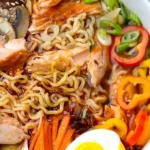
Homemade Salmon Ramen Recipe
- Total Time: 40 minutes
- Yield: 2 servings 1x
- Diet: General
Description
Our homemade salmon ramen recipe is ready in about 30 minutes. With three easy steps: making the broth, cooking the salmon, and preparing the veggies, you can enjoy steaming bowls of ramen in no time.
Ingredients
- 1-pound filet of Salmon
- 2 packages of instant ramen noodles (seasoning packets discarded)
- 1/4 cup low-sodium soy sauce
- 2 tbsp alcohol-free mirin substitute
- 1/2 tsp Chinese five-spice blend seasoning
- 1 tbsp sesame oil
- 1/8 tsp sea salt
- 1 tbsp granulated sugar
- 1 tbsp light brown sugar
- 1-inch piece of freshly grated ginger
- 2 large cloves of garlic, minced
- 5 stalks of green onion, root removed and tops trimmed
- 1–2 green onion stalks, thinly sliced
- 1/4 cup sliced cremini mushrooms
- 1/4 cup sliced assorted color mini sweet peppers
- 1/4 cup julienned carrots
- 1 hard-boiled egg, peeled and cut in half
- 2 tsp garlic chili oil
- 1 tsp sesame seeds
- 4 cups sodium-reduced chicken stock
- 1/3 cup low-sodium soy sauce
- 1/8 tsp ground white pepper
- 1/2 ounce kombu (dried kelp) or nori (dried seaweed)
- 1/2 cup bonito flakes
- 1 tbsp sesame oil
- Sea salt to taste
Instructions
- Step 1: Preheat oven to 350°F.
- Step 2: Combine low-sodium soy sauce, alcohol-free mirin substitute, Chinese five-spice blend, granulated sugar, light brown sugar, grated ginger, and minced garlic in a bowl; reserve 2-3 tablespoons of the mixture.
- Step 3: Pat salmon dry, brush both sides with the mixture, place on a sesame oil-brushed foil-lined sheet pan over green onions, and bake for 30 minutes. Brush with reserved mixture after baking.
- Step 4: Use the Saute setting on an Instant Pot to bring chicken stock, low-sodium soy sauce, white pepper, kombu, bonito flakes, sea salt, and sesame oil to a low boil, then switch to Keep Warm to steep.
- Step 5: Simmer sliced mushrooms in the stock for 2 minutes, then remove and set aside.
- Step 6: Julienne the carrots and slice the peppers and green onions.
- Step 7: Boil ramen noodles in salted water until al dente, approximately 2 minutes.
- Step 8: Divide noodles between 2 bowls and add 3-4 ounces of salmon, mushrooms, carrots, and peppers to each.
- Step 9: Ladle hot broth into bowls and garnish with sliced green onions, sesame seeds, garlic chili oil, and half a hard-boiled egg per bowl.
Notes
If you do not have an Instant Pot, you can simmer the broth in a saucepan over medium heat. You can substitute the vegetables with broccoli, cabbage, spinach, or kale.
- Prep Time: 10 minutes
- Cook Time: 30 minutes
- Category: Main Course
- Method: Baking
- Cuisine: American
Nutrition
- Serving Size: 1 bowl
- Calories: 820 kcal
- Sugar: 18 g
- Sodium: 2100 mg
- Fat: 32 g
- Saturated Fat: 8 g
- Unsaturated Fat: 22 g
- Trans Fat: 0 g
- Carbohydrates: 68 g
- Fiber: 6 g
- Protein: 48 g
- Cholesterol: 210 mg