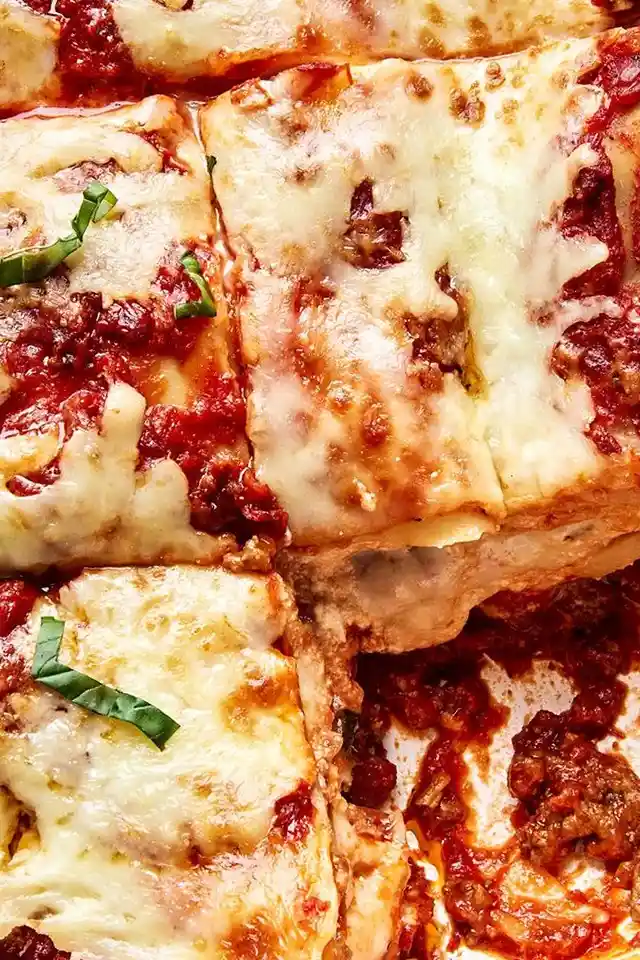
This hearty beef lasagna features layers of rich meat sauce and creamy cheeses. It is a satisfying meal perfect for large family gatherings or meal prepping for the week.
List of ingredients
- 1 pound dried lasagna noodles – use traditional boil noodles for best texture.
- 1 pound ground beef – a mix of beef and beef-based Italian sausage works well.
- 1 medium yellow onion – finely chopped for uniform distribution.
- 4 garlic cloves – minced to release aromatic oils.
- 1/4 cup tomato paste – thickens the sauce and adds depth.
- 2 (28-ounce) cans crushed tomatoes – the base for the meat sauce.
- 1 1/2 teaspoons kosher salt – plus more to taste for seasoning.
- 3/4 teaspoon freshly cracked black pepper – plus more to taste.
- 1 teaspoon Italian seasoning – a blend of dried herbs.
- 2 teaspoons sugar – helps balance the acidity of the tomatoes.
- 16 ounces whole milk ricotta cheese – provides a creamy texture.
- 1 large egg – binds the ricotta mixture together.
- 1 cup grated Parmesan – plus extra for the top crust.
- 1/4 cup loosely packed fresh basil – minced, optional for freshness.
- 6 cups grated mozzarella – ensures a gooey, melted finish.
step-by-step instructions
- Preheat and Prep: Set the oven to 375°F with the rack in the center position.
- Cook Noodles: Boil a large pot of salted water. Add lasagna noodles and cook until al dente, about 8 minutes, then drain, rinse, and separate them.
- Brown Meat: Heat a large skillet over medium-high heat. Cook ground beef, chopped onions, and minced garlic, breaking the meat apart, until browned and onions are soft (about 8 minutes).
- Simmer Sauce: Stir in tomato paste for 1 minute. Add crushed tomatoes, 1 teaspoon salt, 1/2 teaspoon pepper, Italian seasoning, and sugar. Cover and simmer on medium-low for 15-20 minutes until thickened.
- Prepare Cheese Mixture: In a bowl, combine ricotta, egg, 3/4 cup Parmesan, minced basil (if using), the remaining 1/2 teaspoon salt, and 1/4 teaspoon pepper.
- Start Layering: Spread 1 cup of meat sauce on the bottom of a 9 x 13-inch baking dish. Lay a single layer of noodles on top.
- Build Layers: Spread 1 1/2 cups sauce over noodles. Dollop 1/4 of the ricotta mixture and spread it lightly. Sprinkle with 1 1/4 cups mozzarella. Repeat this process three more times.
- Final Top Layer: Place the last layer of noodles on top. Pour remaining sauce over them and sprinkle with the remaining 1 cup mozzarella and 1/4 cup Parmesan.
- First Bake: Cover the dish loosely with aluminum foil. Place it on a foil-lined baking sheet to catch drips. Bake for 30 minutes.
- Finish Baking: Remove the foil and bake for another 20 minutes until the cheese is lightly browned and bubbling.
- Rest: Let the lasagna cool for 5-10 minutes before slicing and serving.
Meat Sauce Optimization
Browning Meat for Maximum Flavor
Searing the ground beef over medium-high heat allows the Maillard reaction to occur, creating a deeper flavor profile. Ensure you break the meat into small crumbles so it integrates evenly with the sauce.
Balancing Tomato Acidity
Crushed tomatoes can sometimes have a sharp acidic bite. Adding a small amount of sugar neutralizes this acidity, resulting in a smoother, more balanced taste that complements the savory beef.
Reducing Sauce for Thickness
Simmering the sauce uncovered or partially covered for 20 minutes is essential. This reduces excess water, preventing the final lasagna from becoming watery or soupy during the baking process.
Cheese Filling Secrets
Binding Ricotta with Egg
Mixing a beaten egg into the ricotta cheese acts as a stabilizer. This prevents the cheese layer from weeping or sliding apart when the lasagna is sliced.
Enhancing Flavor with Parmesan
While mozzarella provides the stretch, Parmesan provides the salty, nutty punch. Stirring it directly into the ricotta adds a layer of complexity to every bite.
Integrating Fresh Herbs
Adding minced fresh basil to the ricotta mixture provides a bright, peppery contrast to the heavy fats of the cheese and meat. If fresh basil is unavailable, a pinch of dried basil can be used.
Noodle Management
Preventing Noodle Adhesion
Rinsing cooked noodles under cold water stops the cooking process and removes excess starch. This ensures that the noodles do not clump together before they are layered in the dish.
The Importance of Al Dente Pasta
Cooking noodles slightly under their recommended time is critical because they continue to cook in the oven. Al dente noodles maintain their structure and prevent the lasagna from becoming mushy.
Managing Fresh Pasta Sheets
If using fresh pasta, skip the boiling process entirely. Fresh sheets are soft enough to absorb moisture from the sauce during baking while remaining tender.
Layering Precision
Preventing Bottom-Layer Sticking
Applying a thin layer of sauce to the bottom of the pan creates a barrier between the noodles and the glass or ceramic. This prevents the bottom pasta sheets from sticking and burning.
Even Distribution of Ricotta
Using the back of a spoon to spread the ricotta ensures there are no large clumps of cheese. Even distribution creates a consistent texture across every slice of the dish.
Structuring the Top Crust
The final layer should always end with cheese rather than sauce. This allows the mozzarella and Parmesan to form a golden-brown crust that holds the layers together.
Baking Techniques
Using Foil for Moisture Control
Covering the lasagna for the first 30 minutes traps steam, which ensures the noodles cook through and the cheese melts. Removing it for the final 20 minutes allows for browning.
Using a Baking Sheet for Overflow
Lasagna sauce often bubbles over the edges of the dish during baking. Placing the pan on a foil-lined rimmed baking sheet prevents burnt sauce from ruining your oven floor.
Identifying the Perfect Doneness
The lasagna is ready when the edges are bubbling vigorously and the center cheese has turned a light golden brown. A toothpick inserted into the center should slide through the layers easily.
Cooling and Slicing
Allowing the Structure to Set
Cutting into a lasagna immediately after it leaves the oven often results in the layers collapsing. Waiting 10 minutes allows the cheeses to firm up and the sauce to thicken slightly.
Slicing for Clean Pieces
Use a sharp serrated knife to cut through the layers. This prevents the noodles from tearing and ensures that the internal layers remain visible and intact.
Storage and Preservation
Refrigeration Guidelines
Store leftover lasagna in an airtight container in the refrigerator for up to four days. Ensure the dish is cooled to room temperature before sealing to avoid condensation.
Freezing for Long Term
You can freeze the lasagna either before or after baking. Wrap it tightly in plastic wrap followed by aluminum foil to prevent freezer burn for up to three months.
Best Reheating Methods
To reheat, cover the slice with foil and bake at 350°F until heated through. Adding a teaspoon of water to the side of the dish helps keep the noodles moist during reheating.
Customizing the Protein
Using Ground Turkey or Chicken
Ground turkey or chicken can be substituted for beef to reduce fat content. Since these meats are leaner, you may need to add a tablespoon of olive oil to the skillet to prevent sticking.
Beef-Based Sausage Alternatives
Replacing half of the beef with beef-based Italian sausage adds garlic and fennel notes. This provides a more complex, savory flavor than using plain ground beef alone.
Adjusting Meat-to-Sauce Ratios
For a meatier lasagna, increase the beef to 1.5 pounds. For a more sauce-forward dish, add an extra can of crushed tomatoes and simmer for a longer period.
Vegetable Enhancements
Adding Sautéed Spinach
Sautéed and squeezed-dry spinach can be mixed into the ricotta layer. This adds a nutritional boost and a pop of color without altering the overall flavor profile.
Incorporating Sliced Mushrooms
Sautéing sliced mushrooms with the onions and garlic adds an earthy depth to the meat sauce. Ensure the mushrooms are browned well to remove excess water.
Using Shredded Carrots
Finely shredded carrots cooked into the meat sauce add natural sweetness and nutrients. They blend seamlessly into the red sauce, making them a great option for picky eaters.
Troubleshooting
Fixing Watery Lasagna
If your lasagna is too watery, it is likely due to under-reduced sauce or moisture-heavy cheese. In the future, simmer the sauce longer and strain any cottage cheese if used as a substitute.
Addressing Dry Noodles
Dry noodles usually occur when no-boil noodles are used without enough sauce. Ensure you use plenty of sauce between layers and keep the dish covered with foil for the first half of baking.
Preventing Burnt Cheese
If the top cheese browns too quickly before the middle is hot, lower the oven temperature by 25°F. You can also keep the foil on for an extra 10 minutes.
Handling Curdled Ricotta
Ricotta may appear grainy if overmixed or overheated. Mixing it with an egg and Parmesan helps stabilize the texture and creates a creamier mouthfeel.
Frequently Asked Questions
Can I replace the ricotta with cottage cheese?
Yes, you can use cottage cheese as a substitute. For a smoother texture and less moisture, strain the cottage cheese through a mesh strainer or cheesecloth for 20 minutes before mixing.
Can I use no-boil noodles?
No-boil noodles will work, but they absorb more liquid from the sauce. To prevent a dry lasagna, you may need to increase the amount of sauce or crushed tomatoes in the recipe.
Is ground turkey a suitable substitute for beef?
Yes, ground turkey works well and is a leaner option. The flavor will be milder, so you may want to add a bit more Italian seasoning to maintain the savory profile.
Do refrigerated lasagna noodles need to be boiled?
If the refrigerated noodles are pre-cooked, you can skip the boiling step. If they are raw fresh pasta, they can be layered directly into the dish without boiling.
Can I assemble the lasagna a few hours ahead?
Yes, you can assemble the dish and keep it in the refrigerator until you are ready to bake. Just ensure it is covered tightly to prevent the noodles from drying out.
Can I freeze lasagna in smaller portions?
Yes, dividing the lasagna into smaller foil trays is an excellent way to create individual freezer meals. Bake them from frozen or thaw in the fridge overnight before heating.
How does the bake time change for homemade noodles?
Fresh homemade noodles do not need to be boiled first, but the baking time remains the same. The moisture from the sauce and cheese will cook the fresh pasta perfectly.
Can I prepare the meat sauce the day before?
Yes, making the sauce in advance is a great time-saver. Store it in the fridge and gently reheat it on the stove before you begin the layering process.
Print
Homemade Beef and Cheese Lasagna
- Total Time: 1 hour 55 minutes
- Yield: 12 servings 1x
- Diet: General
Description
The best lasagna recipe relies on the best ingredients; homemade meat sauce, lots of mozzarella, Parm, and ricotta, and al dente lasagna noodles, layered into a towering slab of awesome.
Ingredients
- 1 pound dried lasagna noodles
- 1 pound ground beef (or ground turkey)
- 1 medium yellow onion, finely chopped
- 4 garlic cloves, minced
- ¼ cup tomato paste
- 2 (28-ounce) cans crushed tomatoes
- 1½ teaspoons kosher salt
- ¾ teaspoon freshly cracked black pepper
- 1 teaspoon Italian seasoning
- 2 teaspoons sugar
- 16 ounces whole milk ricotta cheese
- 1 large egg
- 1 cup grated Parmesan
- ¼ cup loosely packed fresh basil, minced (optional)
- 6 cups grated mozzarella
Instructions
- Step: Preheat the oven to 375°F with a rack in the center position.
- Step: Bring a large pot of water to a boil over high heat and salt it. Add the lasagna noodles and cook until al dente, about 8 minutes. Drain, rinse, and separate any noodles that are stuck together.
- Step: Heat a large skillet over medium-high heat. Add the beef, onions, and garlic and cook, breaking up the meat with a wooden spoon, until the beef is browned and the onions are softened, about 8 minutes.
- Step: Stir in the tomato paste until combined, about 1 minute. Stir in the crushed tomatoes, 1 teaspoon salt, ½ teaspoon pepper, Italian seasoning, and sugar. Bring to a simmer, cover, reduce heat to medium-low and cook, stirring occasionally, until the tomato sauce has thickened, about 15-20 minutes.
- Step: Meanwhile, in a large bowl combine the ricotta, egg, ¾ cup Parmesan, basil, if using, remaining ½ teaspoon salt and remaining ¼ teaspoon pepper.
- Step: Spread 1 cup of the sauce on the bottom of a 9 x 13-inch (3-inch deep) baking dish. Top the sauce with a single layer of noodles.
- Step: Top with 1½ cups sauce and spread out over the noodles. Dollop the sauce with ¼ of the ricotta mixture and lightly spread over the sauce with the back of a spoon. Sprinkle with 1¼ cups mozzarella. Top with another layer of noodles and repeat three more times with the remaining ingredients. Layer with the last of the noodles, pour the remaining sauce over the top and sprinkle with the remaining 1 cup mozzarella and ¼ cup remaining Parmesan.
- Step: Cover loosely with aluminum foil and place the baking dish on top of a foil-lined rimmed baking sheet to prevent any overflow from burning on the bottom of your oven.
- Step: Bake for 30 minutes. Remove the foil and bake for an additional 20 minutes until the cheese is lightly browned and the sauce is bubbling.
- Step: Let cool for at least 5-10 minutes before serving.
Notes
This lasagna freezes beautifully. Cover it tightly with plastic wrap and then a layer or two of tin foil. Label it clearly and freeze for up to 3 months.
- Prep Time: 30 minutes
- Cook Time: 1 hour 25 minutes
- Category: Dinner
- Method: Baking
- Cuisine: Italian
Nutrition
- Serving Size: 1 slice
- Calories: 425 kcal
- Sugar: 8 g
- Sodium: 585 mg
- Fat: 24 g
- Saturated Fat: 12 g
- Unsaturated Fat: 12 g
- Trans Fat: 0 g
- Carbohydrates: 29 g
- Fiber: 4 g
- Protein: 30 g
- Cholesterol: 62 mg