This high-protein chicken pot pie casserole offers a creamy, satisfying meal without the need for heavy cream or a traditional pastry crust. By using blended cottage cheese, you get a rich texture and a significant protein boost in every bite.
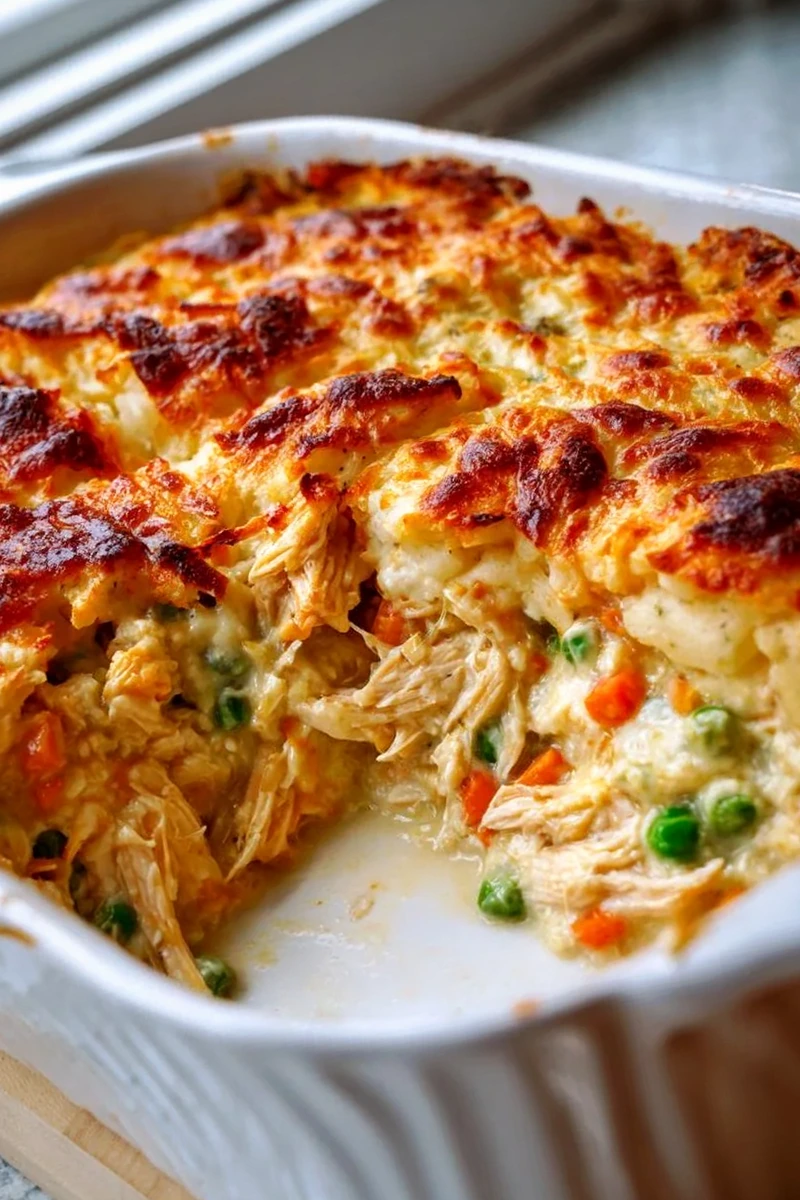
List of ingredients
- 2 cups cooked shredded chicken – rotisserie chicken is a convenient and flavorful option.
- 1 1/2 cups frozen peas and carrots – ensure they are thawed and patted dry with paper towels to prevent excess moisture.
- 1 cup cottage cheese – must be blended until completely smooth for a creamy sauce.
- 1/2 cup chicken broth – low-sodium broth is recommended to control the salt level.
- 1 tbsp cornstarch – acts as the primary thickening agent for the sauce.
- 1 tsp dried thyme – provides a classic herbal pot pie aroma.
- 1/2 tsp garlic powder – adds a savory depth to the creamy base.
- Salt and pepper – adjusted to taste for seasoning.
- 1/2 cup shredded cheddar cheese (optional) – used for a melted, golden topping.
step-by-step instructions
- Blend the sauce: Place the cottage cheese, chicken broth, cornstarch, dried thyme, garlic powder, and a pinch of salt and pepper into a blender. Process until the mixture is completely smooth and creamy with no lumps.
- Prepare the oven and filling: Preheat your oven to 375°F (190°C). In a large mixing bowl, combine the cooked shredded chicken and the thawed, dried peas and carrots.
- Combine ingredients: Pour the blended cottage cheese sauce over the chicken and vegetable mixture. Stir thoroughly with a spatula until every piece of chicken and vegetable is evenly coated.
- Assemble the dish: Transfer the mixture into a baking dish. If using the optional cheddar cheese, sprinkle it evenly across the top of the casserole.
- Bake and set: Bake in the preheated oven for 25 to 30 minutes until the edges are bubbling and the sauce has thickened. Let the casserole rest for 5 minutes before serving to allow the sauce to set properly.
Pro Techniques for Optimal Results
Blend Cottage Cheese for Maximum Silkiness
To ensure the sauce does not have a grainy texture, run the blender for a full minute. If the mixture appears too thick, add a tablespoon of extra chicken broth. This creates a luxurious consistency that mimics a traditional roux-based sauce.
Dry Frozen Vegetables Thoroughly
Frozen vegetables release a significant amount of water as they heat up. Pat them firmly with several paper towels after thawing to remove all surface moisture. This step is critical to prevent the casserole from becoming watery or thin during the baking process.
Utilize Pre-Cooked Rotisserie Chicken
Using a store-bought rotisserie chicken saves significant preparation time. The pre-seasoning on rotisserie chicken often complements the thyme and garlic powder in the sauce. Shred the meat while it is still slightly warm for easier separation.
Broil for a Golden-Brown Finish
If you prefer a more toasted top, turn the oven to broil for the final 2 to 3 minutes of cooking. Watch the dish closely to prevent the cheese from burning. This adds a visually appealing golden crust and a deeper flavor profile.
Ingredient Alternatives and Modifications
Substituting Greek Yogurt for Cottage Cheese
Full-fat Greek yogurt is an excellent alternative if you do not have cottage cheese. Use the same quantity and blend it with the other sauce ingredients. Note that Greek yogurt has a slight tanginess that may slightly alter the flavor profile.
Using Fresh Instead of Frozen Vegetables
When using fresh carrots and peas, you must sauté them first. Dice the carrots and cook them in a pan for about 5 minutes, adding the peas for the last 2 minutes. This ensures the vegetables are tender, as the baking time is not long enough to cook raw carrots.
Replacing Cornstarch with Flour
If cornstarch is unavailable, you can use all-purpose flour as a substitute. Use 2 tablespoons of flour instead of 1 tablespoon of cornstarch. Whisk the flour into the cold chicken broth before adding it to the blender to avoid clumping.
Adding Extra Nutrient-Dense Vegetables
You can increase the vegetable content by adding sautéed mushrooms, spinach, or diced celery. Ensure these additions are cooked and drained before stirring them into the chicken mixture. This increases the fiber content without altering the sauce consistency.
Creating a Dairy-Free Base
For a dairy-free version, replace the cottage cheese with blended silken tofu. Mix in a tablespoon of nutritional yeast to provide a cheesy, savory flavor. Use a plant-based shredded cheese alternative for the topping.
Serving Suggestions
Pair with a Crisp Green Salad
The richness of the creamy casserole pairs well with a fresh, acidic side. A romaine salad with a lemon-based vinaigrette or a balsamic glaze provides a sharp contrast. This balances the meal and adds a refreshing crunch.
Serve with Crusty Artisan Bread
To make the meal more filling, serve the casserole with warmed sourdough or a French baguette. The bread is ideal for scooping up the remaining creamy sauce from the plate. Toast the bread with a small amount of butter and garlic for extra flavor.
Accompaniment of Roasted Potatoes
For those who miss the potato element of some pot pies, serve this with a side of roasted baby potatoes. Toss the potatoes in olive oil and rosemary before roasting them at 400°F. This adds a hearty, earthy component to the dinner.
Add Steamed Green Beans
Steamed green beans with a squeeze of fresh lemon juice offer a light and healthy side dish. They provide a bright color contrast to the golden-brown casserole. This ensures a balanced plate with multiple types of vegetables.
Storage and Preservation
Refrigerating Leftovers Properly
Allow the casserole to cool completely to room temperature before storing. Transfer it to an airtight container or cover the baking dish tightly with aluminum foil. The dish will stay fresh in the refrigerator for up to 3 days.
Freezing the Casserole
This recipe can be frozen for later use. Assemble the casserole but do not bake it or add the cheese topping. Freeze in a freezer-safe dish and thaw in the refrigerator overnight before baking.
Preventing Condensation During Storage
Avoid covering the dish while it is still steaming hot. This prevents water droplets from forming on the underside of the lid, which can drip back into the casserole. This helps maintain the thickness of the sauce for later consumption.
Best Reheating Methods
Using the Oven for Texture
To maintain the best consistency, reheat portions in the oven at 350°F for 15 to 20 minutes. This allows the cheese to remelt and the sauce to thicken again. Cover the dish loosely with foil to prevent the top from drying out.
Quick Microwave Heating
For a faster option, microwave individual servings for 1 to 2 minutes. Stir the casserole halfway through the heating process to ensure an even temperature. Note that the sauce may become slightly thinner when microwaved.
Adding Fresh Cheese Before Reheating
Sprinkle a small amount of fresh shredded cheddar on top of the leftovers before reheating. This refreshes the topping and adds a new layer of melted cheese. It makes the reheated meal feel as fresh as the original batch.
Make-Ahead Planning
Assembling and Chilling
You can assemble the entire casserole in the morning or the day before. Mix all the ingredients and place the mixture in the baking dish. Keep it covered and refrigerated until you are ready to bake.
Adjusting Bake Time for Cold Casseroles
When baking a casserole directly from the refrigerator, you will need to increase the cooking time. Add 5 to 10 minutes to the original baking duration. Ensure the center is bubbling and hot before removing it from the oven.
Troubleshooting Common Issues
Fixing a Watery Sauce
If the casserole is too runny after baking, it is usually due to excess moisture from the vegetables. You can stir in a small amount of extra cornstarch slurry (cornstarch mixed with water) and bake for another 5 minutes. Alternatively, let it rest longer before serving.
Preventing the Sauce from Breaking
If the sauce separates, it may be due to overheating or using low-fat cottage cheese. Ensure the blender process is thorough and the oven temperature is accurate. Using full-fat cottage cheese provides better stability during the heating process.
Addressing Under-cooked Vegetables
If the vegetables are too firm, it means they were not thawed or pre-sautéed sufficiently. Ensure frozen vegetables are fully thawed and fresh vegetables are softened in a pan before adding them to the mix. This ensures a uniform texture in every bite.
Frequently Asked Questions
Can I use fresh vegetables instead of frozen?
Yes, you can use fresh vegetables, but they must be pre-cooked. Sauté diced carrots for 5 minutes and add peas for the last 2 minutes. Raw vegetables will not soften enough during the 30-minute baking window.
How can I make this gluten-free?
This recipe is easily made gluten-free by replacing the cornstarch. Use an equal amount of arrowroot powder, tapioca starch, or potato starch. These substitutes provide the same thickening power as cornstarch.
Can I prepare this ahead and bake later?
Yes, you can assemble the mixture and refrigerate it for up to 24 hours. Add the cheese topping just before putting it in the oven. Remember to add a few extra minutes to the bake time since the dish starts cold.
Is there a dairy-free version that works?
You can substitute the cottage cheese with blended silken tofu and a tablespoon of nutritional yeast. This creates a similar creamy consistency and savory flavor. Use dairy-free cheese or omit the topping entirely.
Print
High Protein Chicken Pot Pie Casserole
- Total Time: 40 minutes
- Yield: 6 servings 1x
- Diet: Low Fat
Description
A comforting chicken pot pie casserole with a light cottage cheese base. This family-friendly dish is hearty and wholesome, perfect for a cozy dinner.
Ingredients
- 2 cups cooked shredded chicken
- 1 1/2 cups frozen peas & carrots (thawed and patted dry with a paper towel)
- 1 cup cottage cheese (blended smooth)
- 1/2 cup chicken broth
- 1 tbsp cornstarch (thickener)
- 1 tsp dried thyme
- 1/2 tsp garlic powder
- Salt and pepper to taste
- 1/2 cup shredded cheddar (optional)
Instructions
- Step 1: In a blender, combine the cottage cheese, chicken broth, cornstarch, dried thyme, garlic powder, and a pinch of salt and pepper. Blend until smooth and creamy.
- Step 2: Preheat your oven to 375°F (190°C). In a mixing bowl, combine the cooked shredded chicken and the thawed, dried peas and carrots.
- Step 3: Pour the smooth cottage cheese sauce over the mixture and stir until well combined.
- Step 4: Transfer the chicken and vegetable mixture into a baking dish. If you’d like to add a cheesy topping, sprinkle the shredded cheddar over the top.
- Step 5: Bake in the preheated oven for 25–30 minutes, or until the casserole is bubbly and thickened.
Notes
You can use rotisserie chicken for convenience. For a creamier texture, blend the cottage cheese longer. Let the casserole cool for 5 minutes before serving.
- Prep Time: 10 minutes
- Cook Time: 30 minutes
- Category: Casserole
- Method: Baking
- Cuisine: American
Nutrition
- Serving Size: 1 serving
- Calories: 280 kcal
- Sugar: 3 g
- Sodium: 450 mg
- Fat: 10 g
- Saturated Fat: 4 g
- Unsaturated Fat: 5 g
- Trans Fat: 0 g
- Carbohydrates: 15 g
- Fiber: 2 g
- Protein: 25 g
- Cholesterol: 70 mg