This thick and filling vegetable barley soup is a nutritious meal designed to provide warmth and sustenance during cold weather. It utilizes a strategic mix of fresh aromatics and frozen vegetables to balance deep flavor with modern preparation convenience.
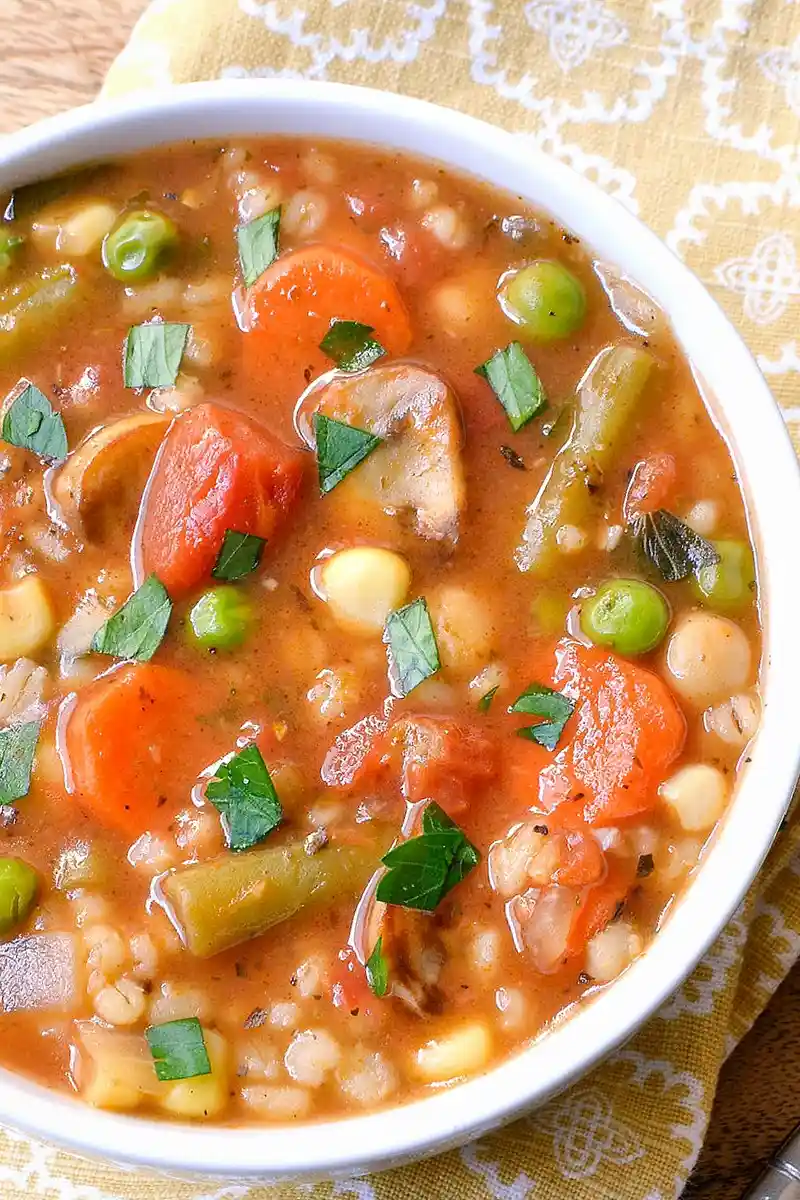
List of ingredients
- 1 tablespoon extra virgin olive oil
- 1 medium onion, diced – used for the aromatic base
- 2 large carrots, thinly sliced – adds natural sweetness and color
- 1 large stalk celery, thinly sliced – provides a classic savory depth
- 1 (8-ounce / 227 gram) package mushrooms, sliced – contributes an earthy richness and texture
- 2 cloves garlic, minced – adds a pungent aromatic layer
- 8 cups vegetable broth – the primary liquid for simmering
- 1 (15.5-ounce / 439 gram) can chickpeas, drained and rinsed – boosts plant-based protein and heartiness
- 1 (14.5-ounce / 411 gram) can diced tomatoes – provides necessary acidity and body
- 1 1/2 cups frozen cut green beans – adds a crisp textural variety
- 1 cup pearl barley – serves as the primary thickening grain
- 2/3 cup frozen corn – contributes pops of sweetness and yellow color
- 1 teaspoon dried basil – imparts a classic Italian herbal note
- 1/2 teaspoon dried oregano – adds an earthy, aromatic scent
- 1 bay leaf – provides a subtle, deep background flavor
- 2/3 cup frozen peas – added at the end to maintain brightness
- 1/3 cup chopped Italian parsley, plus extra for serving – adds a fresh, clean finish
- Kosher salt – used for seasoning to taste
- Pepper – used for seasoning to taste
step-by-step instructions
- Heat olive oil in a large pot over medium heat.
- Add onions, carrots, and celery to oil. Season with salt and pepper, then saute until softened (about 5 minutes).
- Increase heat to medium-high. Add mushrooms and cook until lightly browned, stirring frequently.
- Add garlic and cook, stirring constantly, until fragrant (about 30 seconds).
- Stir in broth, chickpeas, tomatoes, green beans, barley, corn, basil, oregano, and bay leaf.
- Bring soup to a boil, then reduce to a simmer. Cook until barley is tender, stirring occasionally (about 30 minutes).
- Mix in peas and cook until tender and hot (about 1 to 2 minutes).
- Remove soup from heat. Discard bay leaf, then stir in parsley and season to taste with salt and pepper.
- Serve soup hot, sprinkled with additional parsley.
Selecting the Best Ingredients
Use Pearl Barley for Optimal Texture
Pearl barley is the preferred choice for this soup because the outer bran layer has been polished away. This process allows it to cook significantly faster than hulled barley and results in a softer, more tender consistency that integrates well with the broth. Avoid using quick-cooking barley, as it will disintegrate and become mushy before the vegetables reach the correct tenderness.
Prioritize Low-Sodium Vegetable Broth
Using a low-sodium broth allows you to control the salt levels more accurately as the soup reduces during the simmering process. Since the canned tomatoes and chickpeas often contain added salt, starting with a lower-sodium base prevents the final dish from becoming overly salty. You can always add more kosher salt at the end to refine the taste to your preference.
Balance Fresh and Frozen Produce
Fresh onions, carrots, and celery create the essential flavor base through sautéing in olive oil. Using frozen peas, corn, and green beans ensures that these vegetables maintain their bright color and structural snap. Frozen vegetables are often flash-frozen at peak ripeness, making them a practical and reliable substitute for fresh produce in winter months.
Selecting High-Quality Olive Oil
Extra virgin olive oil is recommended for this recipe because it has a higher smoke point than some refined oils but retains a fruity flavor. This oil helps in effectively sautéing the aromatics without breaking down. It also contributes a healthy fat profile to the soup, enhancing the overall nutrient density of the meal.
Customizing the Flavor Profile
Incorporating Nutrient-Dense Leafy Greens
You can increase the nutritional value by stirring in chopped kale, spinach, or Swiss chard during the last few minutes of cooking. These greens wilt quickly and integrate seamlessly with the barley and chickpeas. If using heartier greens like kale, add them shortly before the peas to ensure they soften sufficiently while retaining their color.
Exploring Alternative Protein Sources
While chickpeas provide a great texture, you can substitute them with cannellini beans, kidney beans, or butter beans. White beans offer a creamier profile that blends well with the vegetable broth and barley. Simply ensure any substitute beans are drained and rinsed thoroughly to avoid altering the soup’s color or salt content.
Varying the Herb Profiles
For a different aromatic direction, replace the basil and oregano with a blend of Herbes de Provence or a pinch of dried thyme and rosemary. These herbs shift the flavor from an Italian style to a more French country profile. Regardless of the herb choice, keep the bay leaf, as it provides a necessary depth that anchors the vegetable flavors.
Adding Umami Boosters
To deepen the savory quality of the soup, you can add a tablespoon of soy sauce or a teaspoon of nutritional yeast to the broth. These ingredients enhance the earthy flavor of the mushrooms and barley. Be cautious with additional salt if you choose these options, as they already contain sodium.
Cooking Techniques for Success
Properly Sautéing Aromatics
Ensure the olive oil is shimmering before adding the onions and carrots to prevent the vegetables from steaming instead of browning. Sautéing them over medium heat allows the natural sugars to release, which creates a complex sweetness. This step establishes a flavor foundation that cannot be achieved by simply boiling the vegetables in broth.
Preventing Garlic from Burning
Garlic burns much faster than onions or carrots, which can introduce an unpleasant bitter taste to the entire pot. Add the minced garlic only after the mushrooms have browned and immediately before the liquid is introduced. Stirring constantly for 30 seconds is sufficient to release the aromatic oils without scorching the cloves.
Monitoring Barley Tenderness
The ideal barley texture should be tender but still possess a slight, satisfying chew. Because different brands of barley vary in their processing, start tasting the grains at the 25-minute mark of simmering. If the barley is still too hard, continue simmering in 5-minute increments until the desired consistency is reached.
Managing Pot Temperature
Using a heavy-bottomed pot, such as a Dutch oven, helps maintain a consistent temperature throughout the soup. This prevents hot spots that could cause the barley to stick to the bottom and burn. Stirring occasionally is vital to ensure the grains are evenly distributed and cooked through.
Thickness and Consistency Control
Managing the Starch Content
Barley releases natural starches into the liquid as it cooks, which naturally thickens the soup into a hearty stew-like consistency. If you prefer a thinner, more traditional broth, simply stir in an additional cup of vegetable broth. Do this towards the end of the cooking process to avoid overcooking the vegetables.
Avoiding Over-thickening During Storage
Barley continues to absorb liquid even after the soup has been removed from the heat and stored in the refrigerator. You may find that leftovers have turned into a very thick porridge by the next day. Add a splash of water or extra broth when reheating to restore the original soup consistency.
Using a Puree for Extra Thickness
If you prefer an even thicker soup without adding more grain, you can remove a small portion of the cooked vegetables and blend them. Stir this puree back into the pot to create a creamier texture without using dairy. This is an excellent way to thicken the soup while keeping it vegan.
Storage and Reheating Guidelines
Refrigerator Storage Parameters
Store the cooled soup in an airtight container in the refrigerator for up to four days. It is important to cool the soup quickly to prevent the growth of bacteria and maintain the integrity of the vegetables. Using shallow containers can help the soup cool down more efficiently before it is sealed.
Best Practices for Freezing
This soup freezes well for one to two months if stored in freezer-safe containers or heavy-duty zip-top bags. Leave a small amount of headspace at the top of the container to allow for the natural expansion of liquid during the freezing process. Label each container with the date to track freshness effectively.
Optimal Reheating Methods
Reheat the soup slowly on the stovetop over medium-low heat, stirring occasionally to prevent the bottom from scorching. If using a microwave, heat in short intervals and stir in between to ensure even heating. Always add a small amount of extra broth during reheating to compensate for the liquid absorbed by the barley during storage.
Serving and Pairing Ideas
Pairing with Crusty Breads
Serve this soup with a side of toasted garlic bread, a warm sourdough loaf, or a crusty baguette. The acidity of the tomatoes in the soup pairs perfectly with the richness of buttered or oiled bread. This addition transforms the soup from a light lunch into a complete, hearty dinner.
Adding Fresh Finishing Garnishes
Beyond the required parsley, consider topping each bowl with a sprinkle of fresh chives or a squeeze of fresh lemon juice. The lemon juice cuts through the earthiness of the barley and mushrooms, brightening the overall flavor profile. Freshly cracked black pepper added at the table also enhances the aroma.
Complementary Side Salads
A light side salad with a lemon-vinaigrette dressing provides a refreshing contrast to the thick, savory soup. Use mixed greens, sliced cucumber, and radish to add a crisp, cool texture to the meal. This balance prevents the meal from feeling too heavy and provides a variety of nutrients.
Troubleshooting Common Issues
How to Fix Bland Soup
If the soup tastes flat, it likely needs more acidity or salt to balance the earthy tones of the barley. Stir in a teaspoon of lemon juice or a small amount of apple cider vinegar to wake up the flavors. If the salt is insufficient, add kosher salt in small increments and taste after each addition.
Dealing with Mushy Vegetables
Mushy vegetables usually occur from overcooking or adding frozen vegetables too early in the process. Always add frozen peas and corn in the final minutes of the cooking cycle. If your root vegetables are too soft, reduce the initial sauté time or decrease the total simmering time by a few minutes.
Handling Hard Barley Grains
A grainy or hard texture occurs if the barley is not fully cooked or if a coarse-ground variety was used. Ensure you are using pearl barley and simmering it for the full recommended time. If the grains remain hard, add a small amount of water and simmer for an additional 10 to 15 minutes.
Preventing Liquid Separation
If you notice a layer of oil on top, it is likely due to the olive oil used in the beginning. You can simply stir the soup vigorously before serving to emulsify the oil back into the broth. Alternatively, skim a small amount of oil off the top with a spoon before serving.
Frequently Asked Questions
What exactly is barley?
Barley is a hardy cereal grain that is rich in fiber, vitamins, and essential minerals. In this recipe, pearl barley is used, which is a processed version where the outer hull and some of the bran are removed to reduce the cooking time and create a softer texture.
Can I use a different grain instead of barley?
Yes, you can substitute barley with farro, quinoa, or brown rice. Be aware that each grain has a different cooking time; for example, quinoa cooks much faster than pearl barley, so it should be added much later in the cooking process to avoid becoming mushy.
Is it possible to freeze this soup?
Yes, this soup can be frozen for up to two months in an airtight container. Thaw it in the refrigerator overnight before reheating it on the stove, and remember to add a bit of extra broth to restore the original consistency.
Print
Hearty Vegetable and Barley Soup
- Total Time: 55 minutes
- Yield: 6 to 8 servings 1x
- Diet: Vegan
Description
This hearty Barley Soup is packed with veggies and perfect for chasing away the winter chill!
Ingredients
- 1 tablespoon extra virgin olive oil
- 1 medium onion, diced
- 2 large carrots, thinly sliced
- 1 large stalk celery, thinly sliced
- 1 (8-ounce / 227 gram) package mushrooms, sliced
- 2 cloves garlic, minced
- 8 cups vegetable broth
- 1 (15.5-ounce / 439 gram) can chickpeas, drained and rinsed
- 1 (14.5-ounce / 411 gram) can diced tomatoes
- 1 1/2 cups frozen cut green beans
- 1 cup pearl barley
- 2/3 cup frozen corn
- 1 teaspoon dried basil
- 1/2 teaspoon dried oregano
- 1 bay leaf
- 2/3 cup frozen peas
- 1/3 cup chopped Italian parsley, plus extra for serving
- kosher salt
- pepper
Instructions
- Step 1: Heat olive oil in a large pot over medium heat.
- Step 2: Add onions, carrots, and celery to oil. Season with salt and pepper, then saute until softened (about 5 minutes).
- Step 3: Increase heat to medium-high. Add mushrooms and cook until lightly browned, stirring frequently.
- Step 4: Add garlic and cook, stirring constantly, until fragrant (about 30 seconds).
- Step 5: Stir in broth, chickpeas, tomatoes, green beans, barley, corn, basil, oregano, and bay leaf.
- Step 6: Bring soup to a boil, then reduce to a simmer. Cook until barley is tender, stirring occasionally (about 30 minutes).
- Step 7: Mix in peas and cook until tender and hot (about 1 to 2 minutes).
- Step 8: Remove soup from heat. Discard bay leaf, then stir in parsley and season to taste with salt and pepper.
- Step 9: Serve soup hot, sprinkled with additional parsley. Enjoy!
Notes
The finished recipe is very thick and hearty. If you prefer a more brothy soup, just add more vegetable broth near the end of the cooking time. Be sure to use pearl barley for this recipe, not quick-cooking barley.
- Prep Time: 15 minutes
- Cook Time: 40 minutes
- Category: Soup
- Method: Simmering
- Cuisine: American
Nutrition
- Serving Size: 1 serving
- Calories: 304 kcal
- Sugar: 8 g
- Sodium: 720 mg
- Fat: 6 g
- Saturated Fat: 1 g
- Unsaturated Fat: 5 g
- Trans Fat: 0 g
- Carbohydrates: 45 g
- Fiber: 12 g
- Protein: 14 g
- Cholesterol: 0 mg