This plant-based soup delivers the comforting flavors of classic stuffed peppers in an easy, one-pot meal. It is a filling dish packed with brown rice, lentils, and red bell peppers for a nutritious dinner.
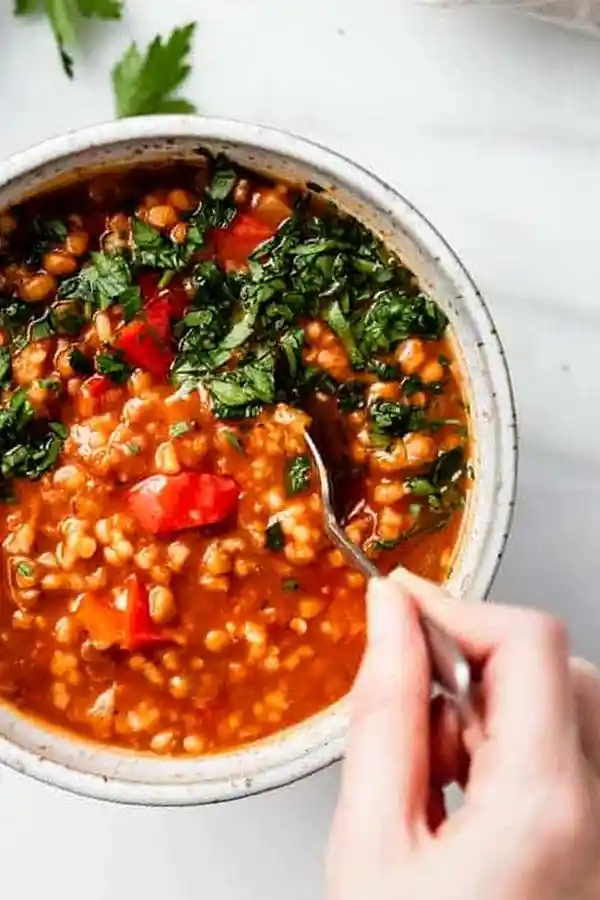
List of ingredients
- 1 tbsp olive oil – used for sautéing the aromatic vegetables.
- 1 large onion, finely chopped – provides a savory base layer.
- 4 garlic cloves, finely chopped – adds essential depth and pungency.
- 2 red peppers, chopped (with seeds & stems removed) – delivers the characteristic stuffed pepper flavor.
- 3/4 cup short-grain brown rice – adds heartiness and a chewy texture.
- 1 can lentils (14oz) – provides a significant source of plant-based protein.
- 3 tbsp tomato paste – concentrates the tomato flavor and thickens the broth.
- 1 1/2 cups crushed tomatoes – creates the rich, acidic body of the soup.
- 1 tsp dried oregano – adds a Mediterranean herbal note.
- 1 tsp dried thyme – complements the earthy flavor of the lentils.
- 1 L vegetable broth – the primary liquid base for simmering.
- 1 cup water – helps adjust the final consistency.
- salt & pepper to taste – used for basic seasoning.
- Parsley to top – provides a fresh, colorful garnish.
step-by-step instructions
- Sauté Aromatics: Heat the olive oil in a large pot over medium-high heat. Add the chopped onion and cook for 3-4 minutes until translucent.
- Cook Peppers: Add the finely chopped garlic and red peppers to the pot. Cook for another 2-3 minutes until the peppers begin to soften.
- Combine Ingredients: Stir in the brown rice, canned lentils, tomato paste, crushed tomatoes, dried oregano, dried thyme, vegetable broth, and water. Mix thoroughly to ensure the tomato paste is well incorporated.
- Simmer: Cover the pot with a lid and reduce the heat to low. Let the soup simmer for 30-40 minutes, or until the brown rice is tender and fully cooked.
- Garnish and Serve: Remove the pot from the heat. Serve the soup in bowls and top with fresh parsley.
Customizing Your Soup Ingredients
Substituting Red Peppers for Green Peppers
While red peppers provide a natural sweetness, green peppers offer a more bitter and pungent flavor. If you prefer a sharper taste, swap the red peppers for green ones. You can also use a mixture of both colors to balance the sweetness and bitterness.
Using White Rice Instead of Brown Rice
White rice is a viable alternative if you prefer a softer texture or a faster cooking time. However, white rice cooks much more quickly than brown rice and can become mushy if simmered for 40 minutes. If using white rice, reduce the simmering time to 15-20 minutes.
Swapping Lentils for Other Legumes
You can replace the canned lentils with other legumes like chickpeas or kidney beans for a different texture. Chickpeas provide a firmer bite, while kidney beans make the soup feel more like a chili. Ensure the canned beans are rinsed and drained before adding them to the pot.
Choosing Different Vegetable Broths
The type of vegetable broth used can change the overall flavor profile of the dish. A mushroom-based broth adds a deeper umami taste, while a standard garden vegetable broth keeps the flavor light. Always check the sodium content of your broth to avoid oversalting the soup.
Adjusting the Herbal Seasoning
Oregano and thyme are classic choices, but you can experiment with other dried herbs. Dried basil or a pinch of smoked paprika can add a different dimension to the tomato base. Avoid using too much of any single herb to prevent it from overpowering the peppers.
Expert Texture and Flavor Tips
Managing the Rice Starch
Brown rice releases starch as it cooks, which naturally thickens the soup. If you prefer a clearer broth, rinse the rice under cold water until the water runs clear before adding it to the pot. This removes excess surface starch and prevents the soup from becoming too gummy.
Caramelizing the Tomato Paste
For a deeper, more complex flavor, add the tomato paste to the pot during the sautéing phase. Cook the paste with the onions and garlic for 2 minutes before adding the liquid. This process, known as caramelization, removes the raw metallic taste of the paste.
Optimizing the Sauté Process
Ensure the olive oil is shimmering before adding the onions to prevent them from absorbing too much oil. Cook the garlic only after the onions have softened to avoid burning the garlic. Burnt garlic can introduce a bitter taste that persists throughout the entire soup.
Balancing Acidity with Sweetness
The combination of crushed tomatoes and tomato paste can sometimes result in a very acidic broth. If the soup tastes too tart, add a small pinch of granulated sugar or a teaspoon of maple syrup. This neutralizes the acidity without making the soup taste sweet.
Controlling the Simmer Temperature
Keeping the heat on low is crucial to prevent the bottom of the pot from scorching. A gentle simmer allows the rice to cook evenly and the flavors to meld without boiling over. Always keep the lid tightly closed to trap steam and cook the rice efficiently.
Storage and Meal Prep Guide
Refrigeration Guidelines
Store the leftover soup in an airtight container in the refrigerator for up to four days. Allow the soup to cool slightly before sealing the container to prevent condensation. Keep the container tightly sealed to prevent the soup from absorbing other odors from the fridge.
Dealing with Rice Absorption
One characteristic of this soup is that the rice continues to absorb liquid even after it has cooled. When you move the soup from the stove to the fridge, it will thicken significantly. You will likely need to add a splash of water or broth when reheating to restore the soup’s consistency.
Freezing Instructions
This soup freezes well for up to three months in freezer-safe containers. Leave about an inch of headspace at the top of the container to allow for the liquid to expand as it freezes. This prevents the container from cracking or the lid from popping open.
Thawing and Reheating Techniques
Thaw frozen soup in the refrigerator overnight before reheating it on the stovetop. Heat the soup over medium-low heat, stirring frequently to ensure the rice and lentils are heated evenly. Avoid reheating in the microwave on high power to prevent the edges from drying out.
Batch Cooking for the Week
This recipe is ideal for meal prepping because the flavors often improve after a day in the fridge. Prepare a large batch and portion it into individual containers for easy weekday lunches. Ensure each portion is stored separately to minimize the number of times you reheat the entire pot.
Serving and Pairing Suggestions
Complementary Side Dishes
Serve this soup with a side of crusty sourdough bread or toasted garlic bread. The crunch of the bread provides a great contrast to the soft texture of the rice and lentils. Dipping the bread into the thick tomato broth is a highly recommended way to enjoy the meal.
Fresh Topping Ideas
Enhance the presentation and flavor by adding fresh toppings just before serving. Sliced avocado adds a creamy texture that balances the acidity of the tomatoes. A dollop of vegan sour cream or a sprinkle of nutritional yeast can provide a cheesy, savory finish.
Pairing with a Fresh Salad
A light, crisp salad is the perfect accompaniment to this hearty soup. Use baby spinach or arugula tossed with a simple lemon-olive oil vinaigrette. The acidity of the lemon dressing cuts through the richness of the lentils and rice.
Using Different Bowls for Presentation
Serve the soup in deep ceramic bowls to keep the heat retained for longer. Garnish with a generous amount of freshly chopped parsley and a crack of black pepper. A drizzle of extra virgin olive oil on top can add a luxurious finish to the dish.
Adjusting Portion Sizes
For a lighter meal, serve a smaller bowl of soup with a large side of steamed vegetables. For a more filling dinner, increase the portion of soup and serve it with a side of quinoa or brown rice. This allows you to adjust the caloric density based on your appetite.
Troubleshooting Common Cooking Issues
Soup is Too Thick After Sitting
If the rice has absorbed too much liquid and the soup has become a porridge, simply stir in more vegetable broth. Add the broth one-quarter cup at a time until you reach your desired consistency. This is common and does not mean the soup was cooked incorrectly.
Rice Remains Hard After Simmering
If the rice is still undercooked after 40 minutes, add a small amount of water and continue to simmer for another 5-10 minutes. Ensure the lid is on tight, as the steam is what actually cooks the grains of rice. Check the rice every few minutes to avoid overcooking it.
Flavor is Too Bland
If the soup lacks depth, check your salt and pepper levels first, as these are the most common missing elements. Adding a teaspoon of soy sauce or a small amount of lemon juice can also wake up the flavors. Stir in these adjustments at the very end of the cooking process.
Peppers are Too Firm
If you prefer your peppers to be completely soft, increase the sautéing time in the second step. Cook them for 5-7 minutes instead of 2-3 before adding the other ingredients. This ensures the peppers melt into the broth rather than remaining as distinct chunks.
Tomato Paste is Lumpy
If the tomato paste does not blend smoothly into the liquid, use a whisk to stir it in. You can also mix the tomato paste with a small amount of warm broth in a separate bowl before adding it to the main pot. This ensures a smooth, homogenous texture throughout.
Frequently Asked Questions
Can I make this in a slow cooker?
Yes, you can adapt this for a slow cooker by sautéing the onions, garlic, and peppers first on the stove. Transfer the sautéed vegetables and all other ingredients to the slow cooker and cook on low for 6-8 hours or on high for 3-4 hours. Check the rice tenderness before serving.
Is this soup gluten-free?
This soup is naturally gluten-free as it uses brown rice and lentils as its main components. Ensure that your chosen vegetable broth is certified gluten-free to avoid any hidden additives. No substitutions are necessary for those following a gluten-free diet.
How do I store the leftovers?
Store leftovers in an airtight container in the refrigerator for up to four days. If you plan to keep the soup longer, transfer it to freezer-safe containers for up to three months. Always reheat the soup gently on the stovetop to maintain the best texture.
Can I use dried lentils instead of canned?
Yes, but you will need to adjust the liquid and cooking time. Use 3/4 cup of dried brown or green lentils and increase the vegetable broth by an additional 2 cups. Simmer the soup for a longer period, typically 45-60 minutes, until the dried lentils are tender.
What is the best rice to use for this recipe?
Short-grain brown rice is recommended because it holds its shape well while adding a nutty flavor. However, long-grain brown rice also works, though it may take slightly longer to cook. Avoid using instant rice, as it will overcook and disintegrate during the simmering process.
Print
Hearty Vegan Stuffed Pepper Soup
- Total Time: 40 minutes
- Yield: 4–6 servings 1x
- Diet: Vegan, Gluten-Free
Description
All the flavour you love of stuffed peppers in a SOUP!
Ingredients
- 1 tbsp olive oil
- 1 large onion, finely chopped
- 4 garlic cloves, finely chopped
- 2 red peppers, chopped (with seeds & stems removed)
- 3/4 cup short-grain brown rice
- 1 can lentils (14oz)
- 3 tbsp tomato paste
- 1 1/2 cups crushed tomatoes
- 1 tsp dried oregano
- 1 tsp dried thyme
- 1 L vegetable broth
- 1 cup water
- salt & pepper to taste
- Parsley to top
Instructions
- Step: Heat the olive oil in a large pot on medium-high heat
- Step: Add the onion and let cook for 3-4 minutes, then add the garlic and red pepper and cook another 2-3 minutes.
- Step: Add the rest of the ingredients and stir to combine.
- Step: Cover, reduce heat to low and let simmer for 30-40 minutes until the rice is tender and cooked.
- Step: Serve with parsley
Notes
If you store the soup in the fridge overnight, the rice will continue to absorb liquid and the soup will thicken slightly. Add a bit more broth if you prefer the soup thinner. You can freeze any leftovers of this soup in an airtight container.
- Prep Time: 10 minutes
- Cook Time: 30 minutes
- Category: Main
- Method: Stovetop
- Cuisine: American
Nutrition
- Serving Size: 1 bowl
- Calories: 204 kcal
- Sugar: 7 g
- Sodium: 620 mg
- Fat: 3 g
- Saturated Fat: 0 g
- Unsaturated Fat: 3 g
- Trans Fat: 0 g
- Carbohydrates: 34 g
- Fiber: 13 g
- Protein: 11 g
- Cholesterol: 0 mg