This nutritious vegetable soup is a simple, one-pot meal that provides a balanced blend of garden vegetables and savory broth. It is an efficient way to prepare a healthy dinner that appeals to all ages.
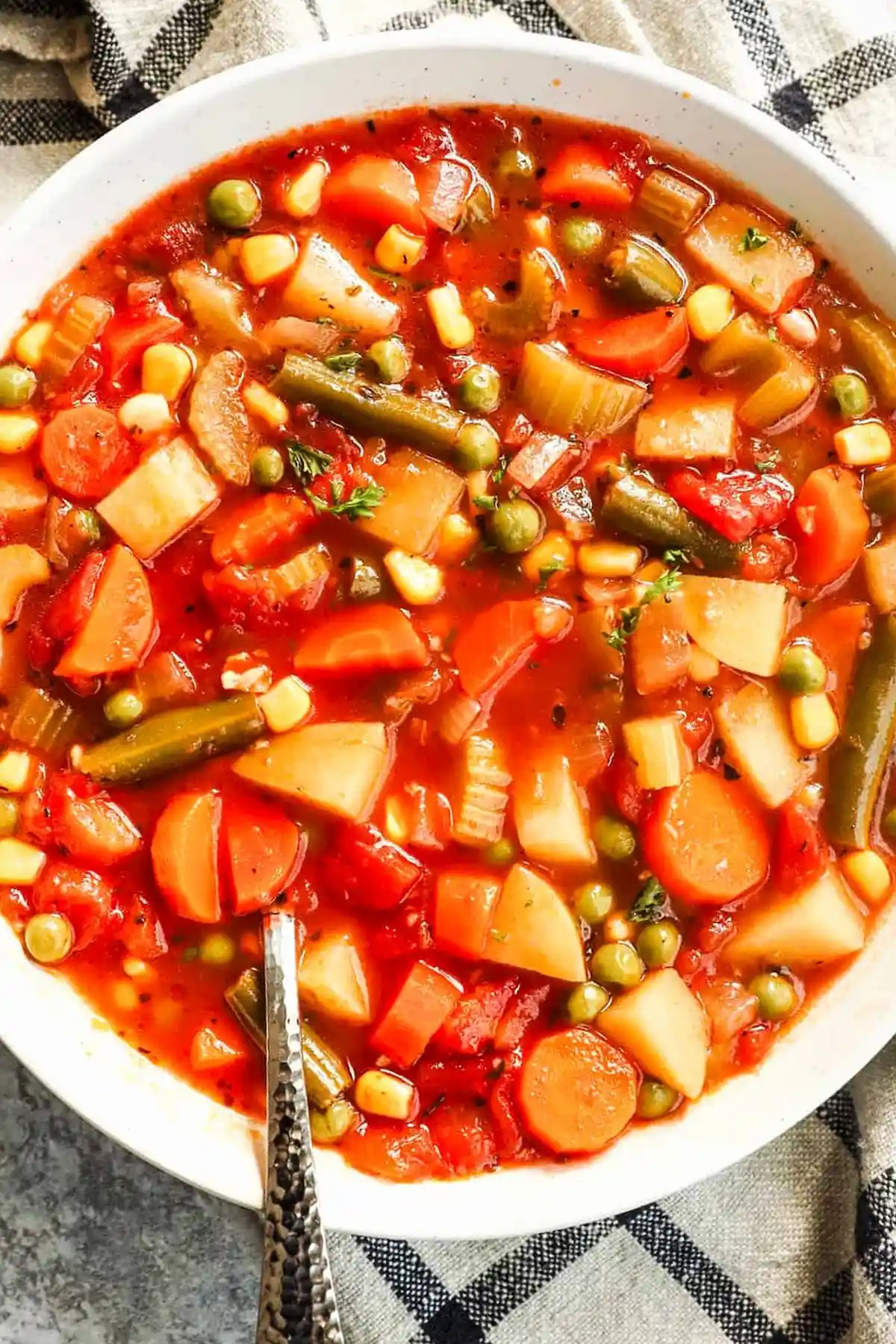
List of ingredients
- 2 Tbsp olive oil – used for sautéing the base vegetables.
- 3 carrots – peeled and chopped small for even cooking.
- 2 celery stalks – chopped into bite-sized pieces.
- 1 cup chopped yellow onion – provides a foundational aromatic flavor.
- 3 minced garlic cloves – adds a pungent, savory depth.
- 32 oz vegetable broth – the liquid base for the soup.
- 30 oz canned diced tomatoes – include the liquid for extra body and acidity.
- 3 Yukon gold potatoes – peeled and chopped into about 2 cups of pieces.
- 1 cup chopped green beans – use either fresh or frozen varieties.
- 1 tsp Italian seasoning – a blend of herbs for a classic flavor.
- 1 tsp salt – enhances all the vegetable flavors.
- 1/2 tsp ground black pepper – provides a subtle heat.
- 1 cup frozen corn – adds sweetness and color.
- 1 cup frozen peas – adds a pop of brightness and texture.
step-by-step instructions
- Sauté the Base: Heat 2 Tbsp olive oil in a large pot over medium-high heat. Add the 3 chopped carrots, 2 chopped celery stalks, and 1 cup chopped yellow onion, sautéing for 5 minutes while stirring occasionally to prevent sticking.
- Add Aromatics: Stir in the 3 minced garlic cloves and cook for exactly 30 seconds. Be careful not to burn the garlic, as it can become bitter.
- Simmer the Soup: Pour in 32 oz vegetable broth and 30 oz canned diced tomatoes with their liquid. Add 3 chopped yellow potatoes, 1 cup chopped green beans, 1 tsp Italian seasoning, 1 tsp salt, and 1/2 tsp ground black pepper. Mix well, bring the liquid to a boil, then reduce heat to a simmer for 8-10 minutes until the potatoes, carrots, and beans are fork-tender.
- Final Additions: Stir in 1 cup frozen corn and 1 cup frozen peas. Cook for an additional 2 minutes just until the frozen vegetables are heated through. Remove from heat and serve.
Vegetable Selection and Preparation
Choose Yukon Gold Potatoes for Texture
Yukon Gold potatoes are preferred for this soup because they are waxy. Unlike starchy potatoes, they hold their shape during the simmering process, which prevents the soup from becoming overly thick or cloudy.
Selecting Firm Carrots
Use fresh, firm carrots to ensure a distinct snap and sweetness. Peeling them and chopping them into uniform, small pieces ensures they cook at the same rate as the celery and onions.
Achieving Uniform Chop Sizes
Cutting all the mirepoix vegetables to a similar size is critical for consistent cooking. When pieces are uniform, you avoid having some vegetables turn to mush while others remain undercooked.
Using Fresh versus Frozen Green Beans
Both fresh and frozen green beans work well in this recipe. If using fresh, trim the ends and cut them into one-inch pieces to match the size of the potato chunks.
Cooking Techniques for Better Flavor
Maximizing the Sauté Process
Sautéing the carrots, celery, and onions first allows the vegetables to release their natural sugars. This creates a flavor base that is much deeper than if the vegetables were simply boiled in the broth.
Precise Garlic Timing
Garlic has a lower burn point than onions and carrots. Adding it only for the final 30 seconds of the sauté phase ensures the garlic releases its oils without scorching.
Controlling the Simmer
After bringing the soup to a boil, reducing it to a simmer is essential. A gentle simmer prevents the vegetables from breaking apart and keeps the broth clear rather than turbulent.
Preventing Overcooked Frozen Vegetables
Frozen peas and corn are already blanched before freezing. Adding them at the very end for only two minutes preserves their bright color and prevents them from becoming soggy.
Customizing Your Soup
Incorporating Leafy Greens
You can add a handful of fresh baby spinach or chopped kale during the final two minutes of cooking. These greens wilt quickly and add a boost of iron and vitamins without changing the soup’s flavor profile.
Adding Protein with Beans
For a heartier meal, stir in a can of drained cannellini beans or chickpeas. These legumes add plant-based protein and a creamy texture that complements the vegetable broth.
Adjusting the Salt Balance
If you are sensitive to sodium, use a low-sodium vegetable broth. You can then control the salt level manually by adding the salt in small increments at the end of the cooking process.
Enhancing Acidity with Citrus
A squeeze of fresh lemon juice or a teaspoon of apple cider vinegar added just before serving can brighten the flavors. Acidity cuts through the starch of the potatoes and elevates the vegetable notes.
Serving and Pairing Ideas
Pairing with Crusty Breads
Serve this soup with a slice of toasted sourdough or a warm French baguette. The acidity of sourdough pairs well with the savory broth and provides a satisfying crunch.
Adding Texture with Toppings
Garnish the bowls with homemade garlic croutons or toasted pumpkin seeds. These toppings add a necessary textural contrast to the soft-cooked vegetables.
Complementary Side Dishes
A simple side salad with a lemon vinaigrette or a grilled cheese sandwich are classic pairings. These sides turn the soup into a complete, filling dinner.
Maintaining Temperature in Thermal Bowls
To keep the soup hot during a family-style meal, pre-warm your bowls with hot water. This prevents the soup from cooling down too quickly upon contact with the ceramic.
Storage and Preservation
Refrigeration Guidelines
Store any leftover soup in an airtight glass or plastic container in the refrigerator. It will remain fresh and safe to eat for 3 to 4 days.
Best Practices for Freezing
This soup freezes well for up to three months. Use freezer-safe bags or containers, leaving a small amount of space at the top to allow for the liquid to expand as it freezes.
Stovetop Reheating Method
For the best results, reheat the soup in a small pot over medium heat. This allows you to stir the ingredients evenly and add a splash of water or broth if the soup has thickened too much.
Microwave Reheating Tips
When using a microwave, heat the soup in short intervals of 60 seconds. Stir between each interval to ensure the heat is distributed evenly and avoid cold spots.
Troubleshooting and Refinements
Fixing Thin Broth
If the soup is too watery, use a fork or potato masher to crush a few of the cooked potato chunks against the side of the pot. Stirring these mashed potatoes back into the broth naturally thickens the liquid.
Correcting Over-Salted Soup
If the soup tastes too salty, you can add a peeled, halved raw potato and simmer it for 10 minutes to absorb some salt. Alternatively, add a small amount of unsalted vegetable broth to dilute the concentration.
Handling Mushy Vegetables
If your vegetables are too soft, reduce the simmering time in future batches. Start checking the doneness with a fork at the 7-minute mark to find your preferred texture.
Reviving Muted Flavors
If the soup tastes bland after reheating, add a pinch of fresh black pepper or a sprinkle of dried parsley. Fresh herbs added at the end of reheating can wake up the dormant flavors.
Frequently Asked Questions
Can I use a slow cooker for this recipe?
Yes, you can. Sauté the aromatics first, then add all ingredients except the frozen corn and peas to the crockpot. Cook on low for 6-8 hours or high for 3-4 hours, stirring in the frozen vegetables at the end.
Which other potatoes work best?
Red potatoes are a great alternative to Yukon Gold because they also have a waxy texture. Avoid using Russet potatoes as they tend to fall apart and make the soup starchy.
How do I make this soup creamier?
To achieve a creamier consistency without dairy, blend one cup of the finished soup in a blender and stir it back into the pot. You can also stir in a tablespoon of coconut cream.
Can I substitute the Italian seasoning?
Yes, you can use a combination of dried oregano, basil, and thyme. A ratio of 1/3 teaspoon of each will mimic the profile of most Italian seasoning blends.
Are canned tomatoes better than fresh?
Canned diced tomatoes provide a consistent acidity and a thicker sauce that is ideal for this style of soup. If using fresh, ensure they are very ripe and dice them finely.
Print
Hearty Homemade Vegetable Soup
- Total Time: 30 minutes
- Yield: 8 servings 1x
- Diet: Vegetarian
Description
A fresh and healthy classic vegetable soup, perfect for a cozy lunch or a chilly day.
Ingredients
- 2 Tbsp olive oil
- 3 carrots (peeled and chopped small)
- 2 celery stalks (chopped)
- 1 cup chopped yellow onion
- 3 minced garlic cloves
- 32 oz vegetable broth
- 30 oz canned diced tomatoes (with liquid)
- 3 Yukon gold potatoes (peeled and chopped)
- 1 cup chopped green beans (fresh or frozen)
- 1 tsp Italian seasoning
- 1 tsp salt
- 1/2 tsp ground black pepper
- 1 cup frozen corn
- 1 cup frozen peas
Instructions
- Step 1: In a pot over medium-high heat, add 2 Tbsp olive oil, 3 chopped carrots, 2 chopped celery stalks, and 1 cup chopped yellow onion. Saute the vegetables for 5 minutes, stirring occasionally.
- Step 2: Stir in 3 minced garlic cloves and let cook for 30 seconds.
- Step 3: Now add in 32 oz vegetable broth, 30 oz canned diced tomatoes with the liquid, 3 chopped yellow potatoes, 1 cup chopped green beans, 1 tsp Italian seasoning, 1 tsp salt and ½ tsp ground black pepper. Mix together. Bring the pot to a boil then reduce to let it simmer for 8-10 minutes, or until potatoes, carrots and green beans are softened when poked with a fork.
- Step 4: Once the veggies have softened, add in 1 cup frozen corn and 1 cup frozen peas. Cook for 2 minutes until the corn and peas have heated through. Now the soup is ready to serve.
Notes
Check doneness by poking potatoes, beans and carrots with a fork; leave them tender crisp so they don’t become too soggy. Store leftovers in an airtight container in the fridge for up to 3-4 days.
- Prep Time: 10 minutes
- Cook Time: 20 minutes
- Category: Main Course
- Method: Simmering
- Cuisine: American
Nutrition
- Serving Size: 1 serving
- Calories: 163 kcal
- Sugar: 7 g
- Sodium: 921 mg
- Fat: 4 g
- Saturated Fat: 1 g
- Unsaturated Fat: 3 g
- Trans Fat: 0 g
- Carbohydrates: 30 g
- Fiber: 6 g
- Protein: 5 g
- Cholesterol: 0 mg