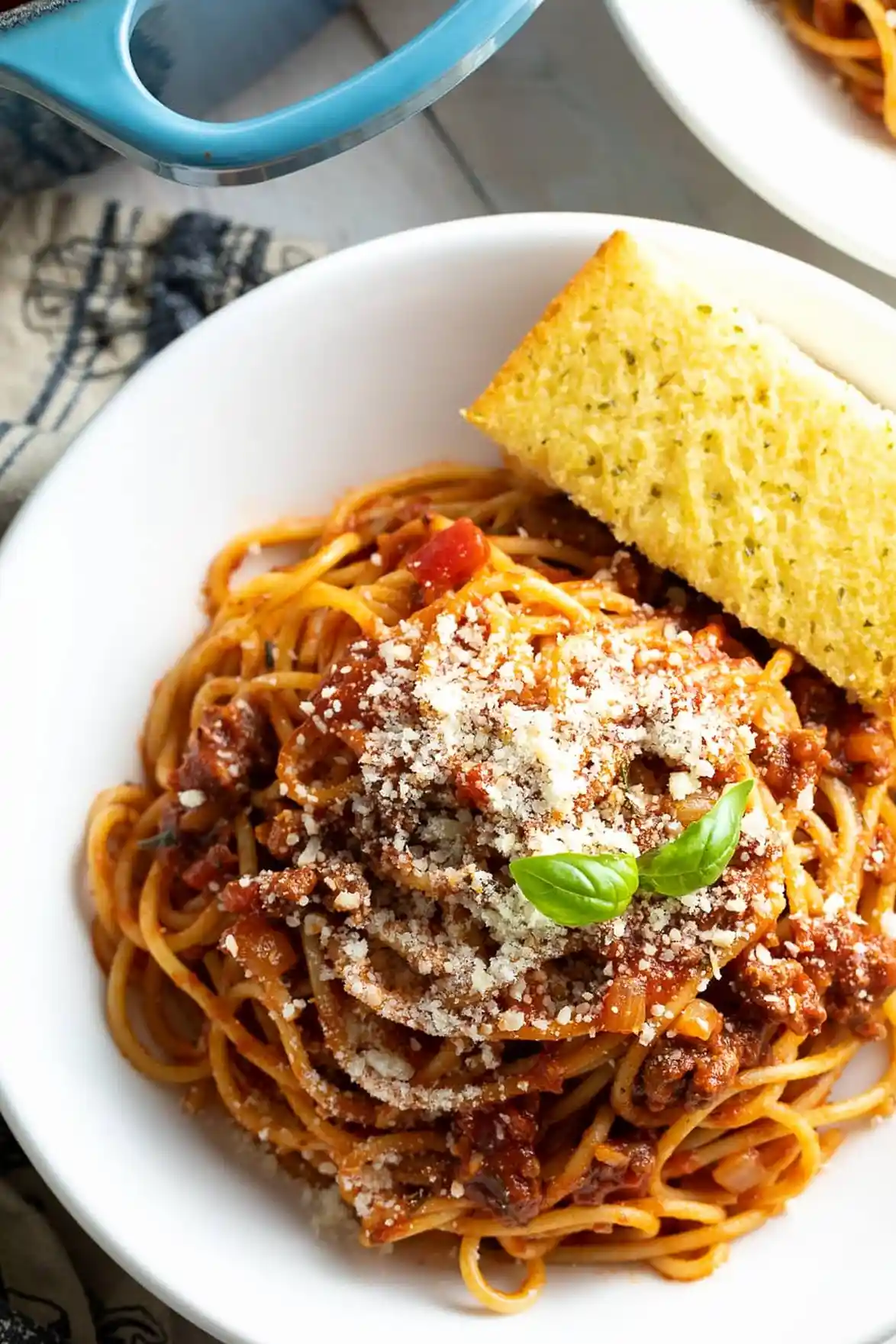
This savory meat sauce is a classic comfort dish that combines rich beef and zesty aromatics for a deep, satisfying flavor. It is an ideal choice for a family dinner when paired with your favorite pasta noodles.
List of ingredients
- 3 tablespoons butter – used for sautéing vegetables and adding richness.
- 1 extra-large red onion, peeled and diced (2 cups) – provides a sweet, aromatic base.
- 7-8 cloves garlic, minced – adds a pungent, savory depth.
- 1 pound ground beef Italian-style sausage – contributes bold seasoning and spice.
- 1 pound ground beef – provides the primary hearty protein structure.
- 1 tablespoon dried oregano or Italian seasoning – brings traditional herbal notes.
- 2 cans (28 ounces each) tomato sauce – forms the smooth base of the sauce.
- 1 can (28 ounces) crushed tomato – adds rustic texture and body.
- 1/2 cup chopped fresh basil – provides a bright, peppery finish.
- 1-2 tablespoons sugar – optional, used to balance high acidity in tomatoes.
- Salt and pepper – to taste for final seasoning.
step-by-step instructions
- Sauté aromatics: Set a heavy-bottomed 6-quart sauce pot over medium heat. Add the butter and diced onions, stirring until they soften for about 5-8 minutes; lower heat to medium-low if they begin to brown.
- Add garlic: Stir in the minced garlic and continue to sauté for another 2 minutes until fragrant.
- Brown the meat: Incorporate the ground beef Italian-style sausage, ground beef, and dried oregano. Cook the mixture, breaking the meat into small, uniform pieces with a wooden spoon, until fully browned.
- Combine tomato base: Stir in the tomato sauce and crushed tomatoes once the meat is browned.
- Simmer: Cover the pot and simmer for 30-60 minutes, stirring occasionally to prevent sticking. The sauce is ready after 30 minutes, but longer simmering deepens the flavor.
- Final seasoning: Stir in the fresh chopped basil. Taste the sauce, then add salt and pepper as needed. If the sauce tastes too acidic, stir in 1-2 tablespoons of sugar.
- Serve: Serve the finished sauce warm over cooked pasta.
Expert Tips for Flavor Development
Maximize the Meat Browning
Allow the ground beef and sausage to sear without stirring constantly for the first few minutes. This creates a Maillard reaction, resulting in a deeper, caramelized flavor that permeates the entire sauce. Drain excess fat if preferred, though some remains to carry the flavor of the herbs.
The Importance of Simmering Time
While the sauce is edible after 30 minutes, extending the simmer to an hour allows the flavors to meld and the consistency to thicken. A slower cook time reduces the raw metallic taste sometimes found in canned tomato products. Keep the heat low to avoid scorching the bottom of the pot.
Balancing Tomato Acidity
Depending on the brand of canned tomatoes, the sauce may have a sharp, acidic tang. Adding a small amount of sugar neutralizes this acidity without making the sauce taste sweet. Taste the sauce specifically after the simmering process is complete before adding the sugar.
Using Fresh Basil at the End
Fresh basil is delicate and loses its bright, aromatic quality if cooked for too long. Stirring it in at the very end of the process preserves the essential oils and provides a fresh contrast to the heavy meats. If using dried basil, add it during the meat-browning stage instead.
Ingredient Substitutions and Modifications
Leaner Protein Alternatives
For a lower-fat version, replace the ground beef with ground turkey or lean ground chicken. Since these meats have less fat, you may need to increase the butter by one tablespoon to ensure the onions sauté properly. You can also use ground veal for a more traditional, silky texture.
Vegetarian and Vegan Adaptations
To make this sauce plant-based, substitute the combined beef and sausage with finely chopped mushrooms, lentils, or a commercial plant-based meat crumble. Use olive oil or a vegan butter substitute for the sautéing stage. Ensure the Italian seasoning is used generously to compensate for the loss of savory meat flavors.
Alternative Tomato Products
If you cannot find tomato sauce, you can use a combination of tomato paste and water. Specifically, 20 ounces of tomato paste mixed with 36 ounces of water creates a similar consistency. For a chunkier sauce, replace the tomato sauce with diced tomatoes, though you may need to simmer it longer to break them down.
Substituting the Onion
While red onion offers a slight sweetness, yellow or white onions are excellent substitutes. Yellow onions provide a more balanced, savory profile that is standard in most Italian-American recipes. Shallots can also be used for a more refined, subtle onion flavor.
Serving and Pairing Suggestions
Classic Pasta Pairings
Spaghetti is the traditional choice, but thick noodles like fettuccine or pappardelle hold heavy meat sauces exceptionally well. Ziti or rigatoni are also great options as the sauce gets trapped inside the tubes. Always toss the pasta with a bit of the sauce before plating to ensure every strand is coated.
Low-Carb Base Options
For those avoiding grains, this sauce is excellent over roasted spaghetti squash or zoodles (zucchini noodles). Sauté the zoodles briefly in a pan before adding the sauce to prevent them from releasing too much water. Roasted cauliflower steaks also provide a sturdy base for a hearty meat sauce.
Complementary Side Dishes
Pair the meal with buttery garlic bread or toasted focaccia to soak up any remaining sauce. A crisp green salad with a light vinaigrette or roasted asparagus provides a fresh, acidic contrast to the richness of the beef. Steamed broccoli with lemon is another healthy side that cuts through the savory flavors.
Using Sauce for Other Dishes
This versatile meat sauce can be used as a filling for lasagna or stuffed shells. It also works well as a topping for polenta or mashed potatoes for a rustic comfort meal. You can even use it as a base for a meat-lover’s pizza.
Storage and Make-Ahead Advice
Refrigeration Guidelines
Store leftover sauce in an airtight container in the refrigerator for up to 3 days. The flavors often intensify overnight, making the sauce taste even better on the second day. Ensure the sauce is cooled slightly before sealing the lid to prevent condensation.
Freezing for Long-Term Use
This sauce freezes exceptionally well for up to 3 months. Portion the sauce into freezer-safe bags or containers, leaving a small amount of space at the top for expansion. Label each container with the date to maintain quality control.
Thawing and Reheating Methods
Thaw frozen sauce in the refrigerator overnight for the best results. When reheating, place the sauce in a saucepan over medium-low heat and add a splash of water or beef broth to loosen the consistency. Avoid reheating in the microwave on high heat to prevent the sauce from splattering or separating.
Batch Cooking Strategy
Prepare multiple batches of this sauce at once to stock your freezer. This allows for quick, homemade meals during busy weekdays. Since the prep work involves a lot of chopping, doing it in bulk saves significant time in the long run.
Troubleshooting Common Issues
Handling a Thin Sauce
If the sauce is too watery after simmering, remove the lid and increase the heat slightly to reduce the liquid. You can also stir in a tablespoon of tomato paste to thicken the consistency instantly. Avoid adding flour or cornstarch, as this can alter the authentic flavor and texture.
Correcting Over-Salting
Because Italian sausage and canned tomatoes already contain salt, it is easy to over-season the dish. If the sauce is too salty, add an extra can of crushed tomatoes or a splash of water to dilute the concentration. A small amount of sugar or a pinch of brown sugar can also help mask excessive saltiness.
Fixing a Bitter Taste
Bitterness usually occurs if the garlic is burnt during the sautéing process. To fix this, add a small amount of butter or a pinch of sugar to mellow out the flavor. In the future, ensure the garlic is only sautéed for 2 minutes and is removed from heat if it turns dark brown.
Managing Oil Separation
It is common for some fat to rise to the top of a meat sauce. You can simply skim the oil off with a spoon before serving for a cleaner look. Alternatively, stir the sauce vigorously right before serving to re-incorporate the fats into the emulsion.
Frequently Asked Questions
Is this meat sauce different from a Bolognese?
Yes, this is a classic Italian-American meat sauce, which is more tomato-forward and rustic. A traditional Bolognese is a slow-cooked ragu that uses a soffritto of carrots, celery, and onions, and typically contains a small amount of milk or cream for richness.
Can I use dried basil instead of fresh?
You can use dried basil, but the flavor profile will change from bright and peppery to more concentrated and earthy. Use about one-third of the amount of dried basil compared to fresh, and add it during the simmering stage rather than at the end.
Which type of onion is best for this recipe?
Red onion is recommended for its slight sweetness, which complements the savory beef. However, yellow onion is the most versatile and common choice for Italian cooking. White onion can be used but provides a sharper, more pungent taste.
Can I substitute the butter with oil?
Yes, olive oil is a great substitute for butter and is more traditional in Italian cooking. Use the same 3-tablespoon measurement. Olive oil provides a cleaner taste, while butter adds a creamy richness to the base vegetables.
What is the best way to brown the meat?
The best method is to use a heavy-bottomed pot that distributes heat evenly. Let the meat sit undisturbed for a few minutes to create a brown crust before breaking it up. This ensures the meat is cooked through and flavor-packed.
} Print
Hearty Homemade Italian-Style Meat Sauce
- Total Time: 70 minutes
- Yield: 12 servings 1x
- Diet: General
Description
Nana’s Best Spaghetti and Meat Sauce Recipe – Zesty, savory, and terrifically meaty, this classic homemade Italian-style meat sauce is perfect for enjoying with pasta and more!
Ingredients
- 3 tablespoons butter
- 1 extra-large red onion, peeled and diced (2 cups)
- 7–8 cloves garlic, minced
- 1 pound ground beef sausage
- 1 pound ground beef
- 1 tablespoon dried oregano
- 2 28-ounce cans tomato sauce
- 1 28-ounce can crushed tomato
- ½ cup chopped fresh basil
- 1–2 tablespoons sugar, optional
- salt and pepper
Instructions
- Step 1: Set a heavy-bottomed 6 quart sauce pot over medium heat. Add the butter and onions. Stir and soften the onions for 5-8 minutes. If they start to brown, turn the heat to medium-low.
- Step 2: Stir in the garlic and sauté another 2 minutes. Then add in the ground beef sausage, ground beef, and dried oregano. Cook and break the meat into small pieces with a wooden spoon. Once the meat pieces are well browned, stir in tomato sauce and crushed tomatoes.
- Step 3: Cover and simmer for 30-60 minutes, stirring occasionally.
- Step 4: Stir in the fresh chopped basil. Taste, then salt and pepper as needed. If the meat sauce tastes too acidic, stir in 1-2 tablespoons sugar.
- Step 5: Serve warm with pasta.
Notes
The ground sausage and canned tomatoes are both salty. It is best to let the sauce simmer for at least 30 minutes before deciding if additional salt is needed. Only add sugar if the canned tomatoes are overly acidic.
- Prep Time: 10 minutes
- Cook Time: 60 minutes
- Category: Main Course
- Method: Simmering
- Cuisine: Italian-American
Nutrition
- Serving Size: 1 serving
- Calories: 248 kcal
- Sugar: 1 g
- Sodium: 293 mg
- Fat: 20 g
- Saturated Fat: 8 g
- Unsaturated Fat: 12 g
- Trans Fat: 0 g
- Carbohydrates: 3 g
- Fiber: 1 g
- Protein: 13 g
- Cholesterol: 62 mg