This protein-packed chicken quinoa soup is a nutritious alternative to traditional noodle soups. It is prepared in a single pot for efficiency and is ready to serve in about 35 minutes.
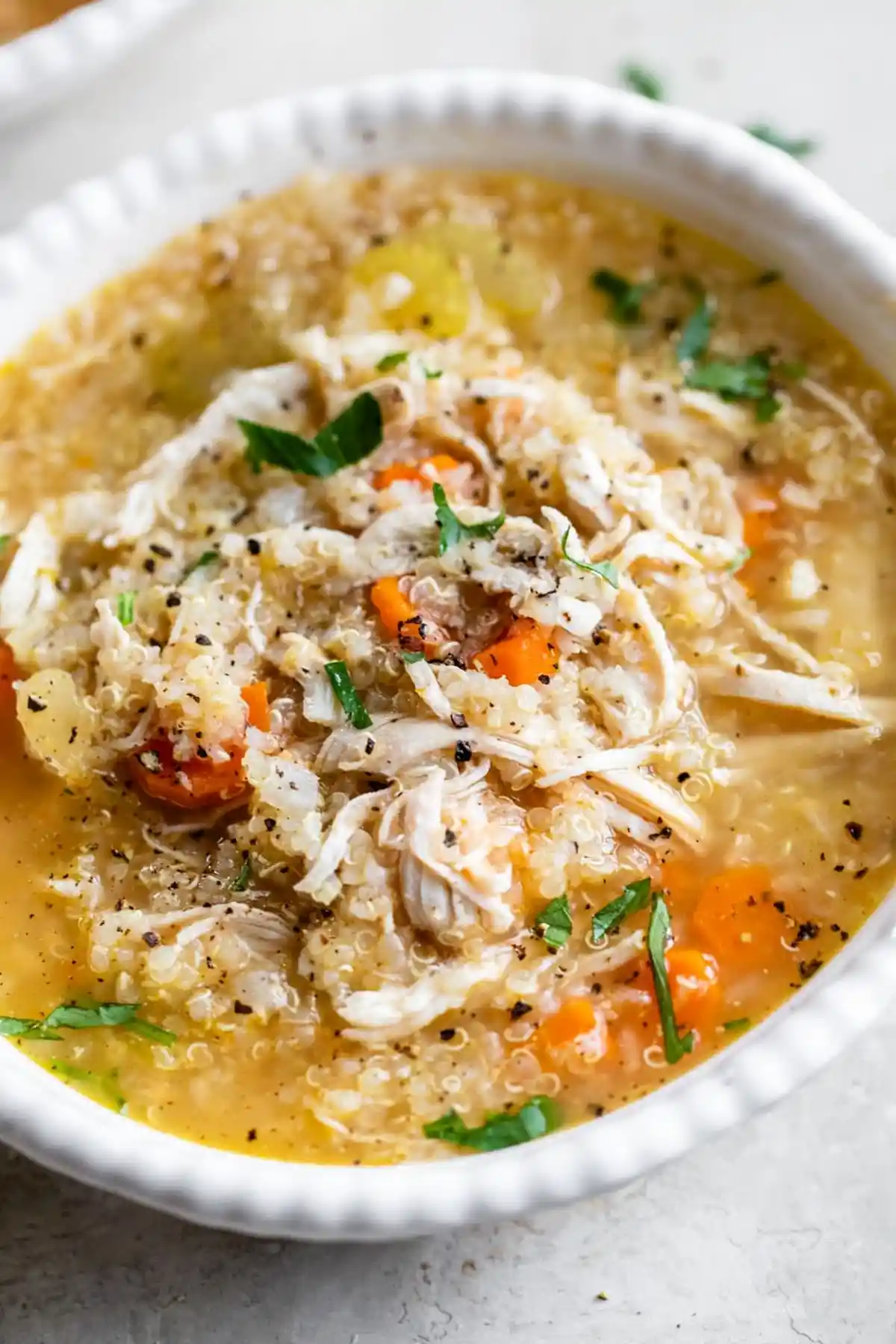
List of ingredients
- 1 tbsp olive oil – used for sautéing the aromatic vegetables.
- 2 celery stalks, sliced – adds a classic savory base.
- 3 carrots, chopped – provides sweetness and color.
- 1 cup yellow onion, diced – essential for deep flavor.
- 4 garlic cloves, minced – adds pungent, aromatic notes.
- 2 bay leaves – infuses the broth with a subtle herbal scent.
- 1 lb chicken breast (approx. 2 breasts) – the primary lean protein source.
- 1 cup quinoa, rinsed – a gluten-free grain high in protein and fiber.
- 7 cups chicken broth, plus more as needed – the liquid base for the soup.
- 2 tsp hot sauce – adds a hint of heat and tanginess.
- 1/2 tsp salt, plus more to taste – enhances all other flavors.
- black pepper to taste – provides a mild spicy finish.
- lemon juice to taste (optional) – adds a bright, acidic lift.
- fresh parsley, chopped – used as a fresh garnish.
step-by-step instructions
- Sauté the vegetables: Heat olive oil in a dutch oven or large pot over medium heat. Add the sliced celery, chopped carrots, diced onion, and minced garlic, sautéing for 5-7 minutes until the vegetables soften.
- Combine and simmer: Stir in the bay leaves, whole chicken breasts, rinsed quinoa, chicken broth, hot sauce, and salt. Bring the liquid to a boil, then reduce the heat to a simmer for approximately 30 minutes or until the chicken is fully cooked.
- Prepare the chicken: Use kitchen tongs to carefully remove the cooked chicken breasts from the pot and place them on a cutting board. Use two forks to shred the meat into bite-sized pieces, then return the shredded chicken to the soup.
- Final seasoning: Simmer the soup for a few more minutes to integrate the shredded meat. Add black pepper, fresh parsley, and optional lemon juice to taste before serving.
- Slow Cooker Alternative: Sauté celery, carrots, and onion in a skillet for 7 minutes, then add garlic for 1 minute. Transfer the mixture and bay leaves to a slow cooker. Slice each chicken breast into three large pieces and add them along with the quinoa, broth, hot sauce, salt, and pepper. Cook on HIGH for about 3 hours, then shred the chicken and return it to the pot before garnishing.
Optimizing Your Ingredient Selection
Selecting the Best Quinoa Variety
White quinoa is the most common choice and offers a mild flavor and soft texture similar to rice. Red quinoa maintains its shape better after cooking and has a slightly nuttier taste. Black quinoa is the heartiest option with an earthy flavor and a slightly crunchier texture.
Choosing the Right Chicken Cut
Boneless, skinless chicken breasts are used for a lean, high-protein result. For a richer flavor and more moisture, you can substitute chicken thighs, though they may require slightly more trimming of excess fat. Chicken tenderloins are also a viable alternative and cook slightly faster.
Broth Quality and Options
Low-sodium chicken broth allows you to control the salt levels more accurately. For a deeper flavor profile, homemade bone broth provides additional collagen and minerals. Vegetable broth is a suitable alternative if you prefer a lighter base.
Customizing Your Soup Base
Integrating Additional Vegetables
You can increase the nutrient density by adding frozen peas or corn kernels during the last five minutes of simmering. Leafy greens like spinach or kale can be stirred in at the very end until they just wilt. Diced potatoes or cauliflower rice are excellent for adding more bulk and texture.
Alternative Grain Substitutions
If you prefer a different texture, replace the quinoa with long-grain white rice or brown rice. Barley and farro provide a chewier consistency and a rustic feel. For a traditional approach, use egg noodles or homemade dumplings, though these will change the nutritional profile.
Substituting Other Proteins
Turkey breast can be used as a direct substitute for chicken to maintain a lean profile. For a plant-based version, replace the chicken with extra quinoa, chickpeas, or firm tofu cubes. Ensure you use vegetable broth when omitting all animal proteins.
Professional Cooking Techniques
The Importance of Rinsing Quinoa
Quinoa is coated in saponins, which are natural compounds that can taste bitter or soapy. Rinsing the grains under cold water in a fine-mesh strainer removes these compounds. This step ensures the soup has a clean, savory taste without any lingering bitterness.
Building Flavor Through Sautéing
Sautéing the onion, carrots, and celery—known as a mirepoix—creates a foundation of flavor. Cooking these vegetables until they are translucent and slightly browned releases their natural sugars. This process adds a layer of complexity that boiling alone cannot achieve.
Preventing Overcooked Chicken
To ensure the chicken remains tender, avoid boiling the soup vigorously for too long. A gentle simmer is sufficient to cook the meat through without making it tough. Removing the chicken to shred it separately prevents the meat from breaking down too much in the pot.
Serving and Flavor Enhancements
Balancing Taste with Acidity
Adding fresh lemon juice at the very end of the cooking process cuts through the richness of the broth. The acid brightens the earthy notes of the quinoa and the savoriness of the chicken. Start with one teaspoon and adjust based on your preference.
Using Fresh Herb Garnishes
Fresh parsley adds a clean, peppery finish and a pop of green color to the dish. For a different flavor profile, try adding chopped cilantro or fresh dill. These herbs should be added just before serving to preserve their volatile oils and bright color.
Suggested Side Pairings
This soup pairs well with a side of crusty sourdough bread or garlic toast for dipping. A light side salad with a lemon vinaigrette complements the flavors of the soup. For a more filling meal, serve it with a slice of buttered rye bread.
Storage and Preservation Guidelines
Refrigerator Storage Limits
Store any leftovers in an airtight glass or plastic container in the refrigerator. The soup will remain fresh and safe to eat for up to five days. Ensure the soup is cooled to room temperature before sealing the container to prevent condensation.
Freezer Compatibility Issues
While the broth and chicken freeze well, quinoa tends to change texture when frozen. Upon thawing, the quinoa may become mushy or clumpy due to the release of starches. For the best quality, it is recommended to refrigerate rather than freeze this specific soup.
Reheating Methods
Reheat the soup on the stovetop over medium heat, adding a small splash of water or broth if the quinoa has absorbed too much liquid. If using a microwave, heat in short intervals and stir in between to ensure even warming. Avoid overheating to prevent the chicken from becoming rubbery.
Common Troubleshooting Steps
Managing Soup Thickness
Quinoa continues to absorb liquid even after the heat is turned off, which can make the soup too thick. To fix this, simply stir in additional chicken broth or water until the desired consistency is reached. This is especially common when reheating leftovers.
Fixing Bland Flavor Profiles
If the soup tastes flat, it likely needs more salt or acidity. Add a pinch of salt at a time, tasting after each addition. If salt doesn’t solve it, a small squeeze of lemon juice or a drop of apple cider vinegar can awaken the other flavors.
Correcting Grain Texture
If the quinoa is too crunchy, simmer the soup for an additional 5-10 minutes. If the quinoa is too soft, reduce the simmering time in future batches. Ensure you are using a timer to keep the cooking process consistent.
Frequently Asked Questions
Can I make chicken quinoa soup in the Instant Pot?
Yes, use Saute Mode to soften the vegetables in oil. Turn off Saute Mode, add the remaining ingredients, seal the lid, and cook on high pressure for 7 minutes. Manually release the pressure, shred the chicken, and return it to the pot.
Is this recipe gluten-free?
Yes, this recipe is naturally gluten-free because it uses quinoa instead of wheat-based noodles. Ensure your chicken broth is certified gluten-free if you have a severe sensitivity.
Can I use frozen chicken breasts?
It is best to thaw chicken breasts completely before adding them to the soup. Using frozen chicken can lower the temperature of the broth significantly, increasing the total cooking time and potentially leading to unevenly cooked quinoa.
Can I omit the hot sauce?
Yes, the hot sauce is optional and used for a hint of spice. If you prefer a mild soup, omit the hot sauce entirely and increase the amount of lemon juice to maintain a bright flavor profile.
How do I know when the chicken is fully cooked?
The chicken is done when it is opaque throughout and reaches an internal temperature of 165°F (74°C). When shredded, the meat should pull apart easily with two forks without appearing raw in the center.
Print
Hearty Chicken and Quinoa Soup
- Total Time: 35 minutes
- Yield: 4 servings 1x
- Diet: Gluten-free
Description
A healthy spin on classic chicken noodle, this Chicken Quinoa Soup is packed with protein, simple ingredients and cozy flavors. It’s ready to eat in just 30 minutes and is easy to make in just one pot!
Ingredients
- 1 tbsp olive oil
- 2 celery, sliced
- 3 carrots, chopped
- 1 cup yellow onion, diced
- 4 garlic cloves, minced
- 2 bay leaves
- 1 lb chicken breast
- 1 cup quinoa, rinsed
- 7 cups chicken broth
- 2 tsp hot sauce
- 1/2 tsp salt
- black pepper to taste
- lemon juice to taste
- fresh parsley, chopped
Instructions
- Sauté: Heat oil in a dutch oven or large pot over medium heat, then add celery, carrots, onion, and garlic; sauté for 5-7 minutes.
- Simmer: Add bay leaves, chicken, quinoa, chicken broth, hot sauce, and salt; bring to a boil, then simmer for 30 minutes.
- Shred: Remove the chicken, shred it with two forks, and return it to the pot.
- Finish: Add black pepper, fresh parsley and lemon juice to taste.
Notes
Omit the hot sauce if you prefer a non-spicy soup. Store leftovers in a sealed container in the refrigerator for up to 5 days.
- Prep Time: 5 minutes
- Cook Time: 30 minutes
- Category: Dinner
- Method: Stovetop
- Cuisine: American
Nutrition
- Serving Size: 1 serving
- Calories: 380 kcal
- Sugar: 4 g
- Sodium: 2032 mg
- Fat: 10 g
- Saturated Fat: 2 g
- Unsaturated Fat: 6 g
- Trans Fat: 1 g
- Carbohydrates: 39 g
- Fiber: 5 g
- Protein: 33 g
- Cholesterol: 73 mg