This classic Italian-style braised chicken dish combines tender meat with a rich, savory tomato and vegetable sauce. It is a comforting meal that pairs exceptionally well with pasta, rice, or crusty bread.
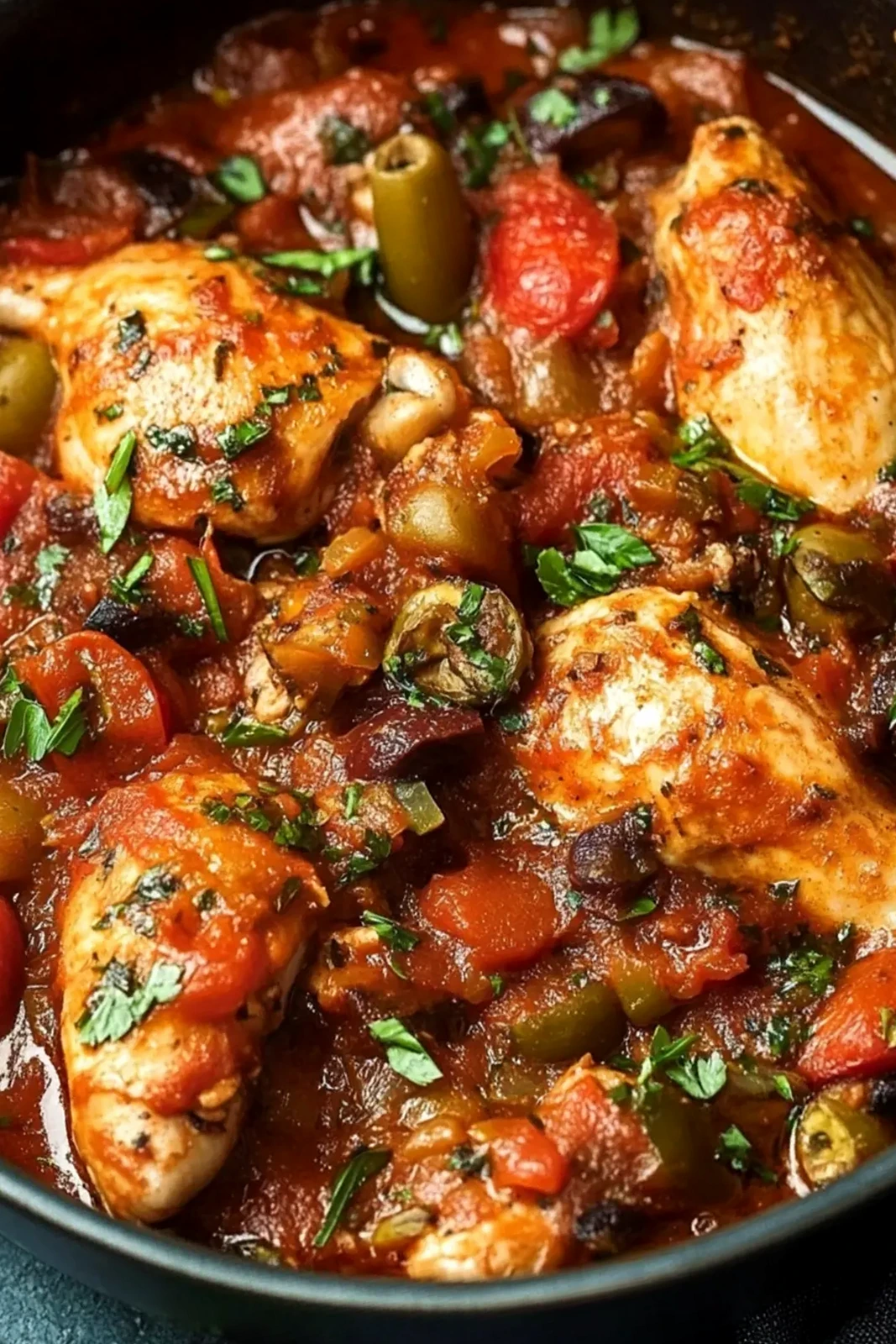
List of ingredients
- 4 pieces Chicken Pieces (bone-in, skin-on) – ensures maximum moisture and flavor during braising.
- 2 tablespoons Olive Oil – used for searing the chicken and sautéing vegetables.
- 28 ounces Canned Tomatoes (crushed or diced) – forms the base of the hearty sauce.
- 1 cup Chicken Broth – provides a savory liquid for deglazing and simmering.
- 1 tablespoon Italian Herbs (Oregano, Basil) – adds authentic Mediterranean aroma; fresh herbs can be substituted.
- Salt and Pepper (to taste) – used for seasoning the chicken and adjusting the final sauce.
- 2 medium Bell Peppers (Red/Green) – adds sweetness and vibrant color to the dish.
- 1 large Onion (yellow or sweet) – creates a flavorful aromatic foundation.
- 3 cloves Garlic (fresh) – provides a pungent, sharp flavor depth.
step-by-step instructions
- Sear the Chicken: Heat olive oil in a large skillet over medium-high heat. Brown the chicken pieces on all sides for 8-10 minutes until the skin is golden and crisp.
- Sauté the Aromatics: Remove the browned chicken from the skillet. Add the sliced onions and bell peppers to the remaining oil, sautéing for 5-7 minutes until they are softened.
- Add Garlic: Stir in the minced garlic and cook for about one minute until it becomes fragrant, taking care not to burn it.
- Deglaze the Pan: Pour in the chicken broth, using a wooden spoon to scrape up the browned bits (fond) from the bottom of the skillet. Simmer for 3-4 minutes until the liquid reduces slightly.
- Combine Sauce and Meat: Return the browned chicken to the skillet and stir in the canned tomatoes and Italian herbs. Ensure all chicken pieces are well-coated in the tomato mixture.
- Slow Simmer: Cover the skillet with a lid and reduce the heat to low. Let the dish simmer for 30-40 minutes, stirring occasionally, until the chicken is cooked through and tender.
- Final Seasoning and Service: Taste the sauce and adjust salt and pepper as needed. Serve the chicken and sauce hot over your preferred side dish.
Pro Techniques for Superior Results
Use a Heavy-Bottomed Skillet for Consistent Heat
A cast iron or heavy stainless steel skillet is ideal for this recipe because it distributes heat evenly across the surface. This prevents the chicken skin from burning in hot spots while ensuring the vegetables soften uniformly. Heavy pans also retain heat better during the simmering phase, which keeps the temperature stable.
Achieve a Deep Sear on the Chicken
Do not crowd the pan when browning the chicken, as this releases too much moisture and causes the meat to steam instead of sear. Leave space between the pieces to allow the skin to render and turn golden brown. This process, known as the Maillard reaction, creates a complex depth of flavor that permeates the entire sauce.
Maintain a Gentle Simmer
Avoid letting the sauce reach a rolling boil during the final 30-40 minutes of cooking. A gentle simmer keeps the chicken tender and prevents the tomato sauce from breaking or evaporating too quickly. If the sauce bubbles too vigorously, lower the heat immediately to maintain the meat’s texture.
Season the Sauce at the Final Stage
Wait until the simmering process is complete before adding final amounts of salt and pepper. Since the sauce reduces during cooking, adding too much salt early on can result in an overly salty finished dish. Tasting the sauce at the end allows you to balance the acidity of the tomatoes with the perfect amount of seasoning.
Ingredient Substitutions and Customizations
Incorporating Sliced Mushrooms for Earthiness
Adding 8 ounces of sliced cremini or white button mushrooms adds an earthy, savory quality to the dish. Sauté the mushrooms along with the onions and bell peppers until they have released their moisture and browned. This adds a meaty texture that complements the chicken and thickens the sauce slightly.
Adding Olives for a Mediterranean Profile
Stir in a handful of pitted green or Kalamata olives during the last 10 minutes of simmering. The briny, salty flavor of the olives provides a sharp contrast to the sweetness of the bell peppers and tomatoes. This variation is common in various regional Italian styles of cacciatore.
Using Zucchini for a Low-Carb Alternative
If you prefer a lower-carbohydrate version, replace the bell peppers with diced zucchini or cubed eggplant. Zucchini absorbs the tomato sauce well and provides a softer texture. For a more robust bite, sauté the zucchini separately and stir it in toward the end of the cooking process.
Adding Red Pepper Flakes for Heat
For those who prefer a spicy kick, add half a teaspoon of crushed red pepper flakes when sautéing the garlic. This infuses the oil with heat, which then distributes evenly throughout the sauce. Adjust the quantity based on your heat tolerance to ensure it doesn’t overpower the herbs.
Using Fresh Rosemary and Thyme
While dried Italian herbs are convenient, fresh rosemary and thyme can brighten the flavor profile. Strip the leaves from the stems and finely chop them before adding them to the sauce. Fresh herbs provide a more vibrant, aromatic quality compared to the concentrated taste of dried versions.
Finishing with Heavy Cream for a Rich Sauce
To create a creamier, velvety sauce, stir in two tablespoons of heavy cream or coconut milk during the last five minutes of cooking. This mellows the acidity of the canned tomatoes and adds a luxurious mouthfeel. It transforms the dish into a richer meal that pairs exceptionally well with mashed potatoes.
Storage and Preservation Guide
Refrigerated Storage Guidelines
Store leftover chicken cacciatore in an airtight glass or plastic container once it has cooled to room temperature. This prevents condensation from forming inside the lid, which can dilute the sauce. The dish will remain fresh and safe to eat for up to 3 days in the refrigerator.
Freezing for Long-Term Use
This recipe freezes well for up to 2 months. Use freezer-safe containers or heavy-duty freezer bags, squeezing out as much air as possible to prevent freezer burn. Portion the meal into individual servings to make the thawing and reheating process more efficient.
Proper Thawing and Reheating Techniques
Thaw frozen portions in the refrigerator overnight before reheating. For the best results, reheat the dish in a skillet over low heat, adding a splash of water or chicken broth if the sauce has thickened too much. Alternatively, use a microwave on medium power, stirring every two minutes until heated through.
Make-Ahead Strategy
Advance Preparation of Components
You can prepare the entire dish up to 24 hours in advance to save time on serving day. Brown the chicken and sauté the vegetables, then combine everything with the tomato sauce and broth. Store the mixture in the fridge, which allows the flavors to meld and intensify overnight.
Reheating for Final Service
When ready to serve, place the chilled mixture in a pot over low to medium heat. Cover and warm for 15-20 minutes, checking that the chicken is heated through to the center. This method often results in a more cohesive flavor than cooking and serving immediately.
Serving Suggestions
Pairing with Toasted Garlic Bread
Serve the chicken with thick slices of toasted baguette rubbed with fresh garlic and brushed with olive oil. The crunch of the bread provides a texture contrast to the tender chicken. It is also the most practical way to ensure none of the rich tomato sauce is left on the plate.
Serving Over Pasta Options
Spaghetti, fettuccine, or rigatoni are traditional choices that carry the heavy sauce effectively. Toss the cooked pasta directly into the skillet with the sauce for a minute before plating to ensure every strand is coated. Alternatively, serve the chicken on top of a bed of al dente pasta.
Adding a Fresh Arugula Salad
A side of fresh arugula tossed with lemon juice, olive oil, and a pinch of salt adds a peppery brightness to the meal. The acidity of the lemon cuts through the richness of the braised chicken. This balance makes the overall dinner feel lighter and more refreshed.
Complementing with Roasted Root Vegetables
Roasted carrots or parsnips provide a sweet, caramelized side that complements the savory notes of the cacciatore. Roast them at 400°F (200°C) with olive oil and salt until tender. The sweetness of the root vegetables balances the acidity of the tomato sauce.
Common Troubleshooting and FAQs
Which chicken cut is best for this recipe?
Bone-in, skin-on chicken thighs or drumsticks are the best choice because they contain more fat and connective tissue. This ensures the meat remains juicy and tender during the long simmering process. Boneless breasts can be used but are prone to drying out and may require a shorter simmering time.
How can I thicken a sauce that is too thin?
If the sauce is too watery, simmer it uncovered for an additional 10-15 minutes to allow the liquid to reduce naturally. For a faster result, mix one teaspoon of cornstarch with a tablespoon of cold water to create a slurry. Stir the slurry into the simmering sauce and cook for two more minutes until thickened.
Can I use fresh tomatoes instead of canned?
Yes, you can use approximately 2 pounds of ripe fresh tomatoes. To prepare them, score an X on the bottom, blanch them in boiling water for one minute, and then plunge them into ice water to peel them easily. Dice the peeled tomatoes and add them in place of the canned variety for a fresher taste.
How do I adapt this for guests with garlic allergies?
If you need to omit garlic, increase the amount of bell peppers and onions to maintain the aromatic base. You can also add a pinch of asafoetida powder for a similar savory flavor. Increasing the amount of Italian herbs will also help compensate for the loss of the pungent garlic notes.
What is the best way to prevent chicken from sticking to the pan?
Ensure the olive oil is shimmering and hot before adding the chicken. Do not move the chicken pieces immediately after placing them in the pan; let them sear undisturbed for several minutes. This allows the meat to naturally release from the surface of the skillet once a crust has formed.
Print
Hearty Braised Chicken Cacciatore with Tomato and Peppers
- Total Time: 75 minutes
- Yield: 4 servings 1x
- Diet: General
Description
The Best Chicken Cacciatore offers a comforting aroma and hearty ingredients in a classic Italian dish perfect for family gatherings.
Ingredients
- 4 pieces bone-in, skin-on chicken pieces
- 2 tablespoons olive oil
- 28 ounces crushed or diced canned tomatoes
- 1 cup chicken broth
- 1 tablespoon Italian herbs (oregano, basil)
- Salt and pepper to taste
- 2 medium red and green bell peppers
- 1 large yellow or sweet onion
- 3 cloves fresh garlic
Instructions
- Sauté Chicken: Heat olive oil over medium-high heat, brown chicken pieces on all sides for 8-10 minutes, and remove from skillet.
- Sauté Vegetables: In the same skillet, sauté sliced onions and bell peppers until softened, about 5-7 minutes.
- Add Garlic: Stir in minced garlic and sauté for about a minute until fragrant.
- Deglaze: Pour in chicken broth, scrape up browned bits, and simmer for 3-4 minutes.
- Combine Ingredients: Return the chicken to the skillet, add canned tomatoes and Italian herbs, and mix thoroughly.
- Simmer: Cover and reduce heat to low, simmering for 30-40 minutes until chicken is cooked through and tender.
- Serve: Adjust seasoning and serve hot over pasta or with crusty bread.
Notes
Garnish with freshly chopped parsley for added flavor and color.
- Prep Time: 15 minutes
- Cook Time: 60 minutes
- Category: Dinner
- Method: Braising
- Cuisine: Italian
Nutrition
- Serving Size: 1 serving
- Calories: 350 kcal
- Sugar: 4 g
- Sodium: 500 mg
- Fat: 15 g
- Saturated Fat: 3 g
- Unsaturated Fat: 12 g
- Trans Fat: 0 g
- Carbohydrates: 26 g
- Fiber: 4 g
- Protein: 30 g
- Cholesterol: 75 mg