This nutrient-dense pasta salad combines whole grain noodles with chickpeas and zesty pesto for a high-protein vegetarian meal. It is a practical choice for meal prep or summer gatherings due to its durability and fresh flavors.
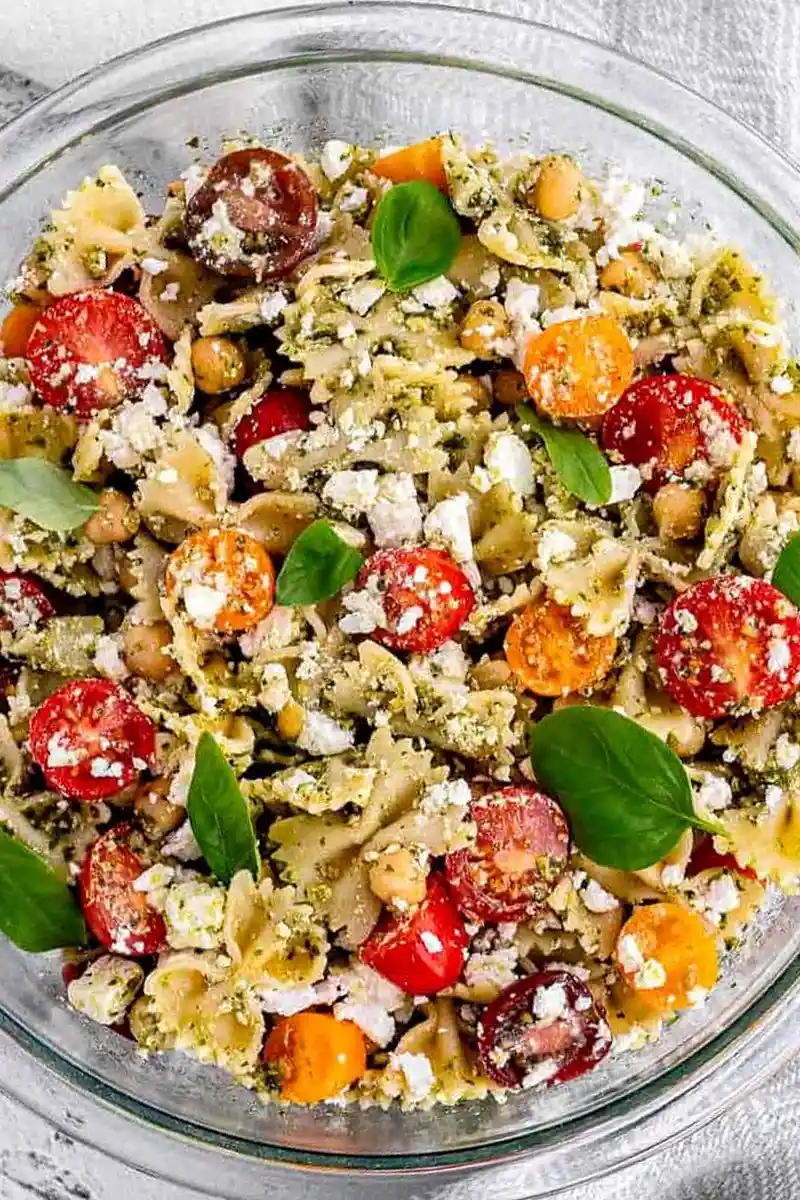
List of ingredients
- 1/2 lb dry whole-grain bowtie pasta – provides fiber and a hearty base (gluten-free pasta can be substituted).
- 1 1/2 cups cherry or grape tomatoes, halved – adds acidity and sweetness.
- 1 cup low sodium chickpeas, canned or cooked from scratch – serves as the primary plant-based protein source.
- 3/4 cup crumbled feta cheese – adds a salty, tangy Mediterranean flavor.
- 1/2 cup pesto, homemade or store-bought – acts as the primary dressing.
- Salt and pepper – used for seasoning to taste.
- Fresh basil leaves – used for garnish and extra aroma.
step-by-step instructions
- Cook the pasta: Bring a large pot of salted water to a rolling boil. Cook the pasta according to the package instructions until it reaches an al dente consistency, then drain the water.
- Combine ingredients: In a large mixing bowl, add the cooked pasta, halved tomatoes, chickpeas, crumbled feta, and pesto. Toss the mixture gently until all ingredients are evenly coated.
- Season and garnish: Season the salad with salt and pepper to taste. Garnish with fresh basil leaves if desired.
- Serve or store: Serve the salad immediately or place it in the refrigerator for later use.
Pasta Selection and Texture Guide
Use Bowtie Pasta for Optimal Sauce Adhesion
Bowtie pasta, also known as farfalle, is ideal for this salad because its shape creates folds that trap the pesto. This ensures that every bite contains a balanced amount of dressing. Other short pastas like rotini or fusilli also work well for the same reason.
Incorporate High-Protein Pasta Alternatives
To further increase the nutritional value, you can use pasta made from chickpeas or lentils. These alternatives significantly boost the protein and fiber content compared to traditional wheat pasta. They typically have a denser texture and a slightly nuttier flavor.
Choose Gluten-Free Pasta for Dietary Needs
Brown rice pasta or corn-based pasta are excellent substitutes for those avoiding gluten. These options maintain a similar structure to whole-grain pasta when cooked al dente. Ensure you follow the specific cooking times for gluten-free brands to avoid mushiness.
Avoid Overcooking the Noodles
Cooking pasta to an al dente state is critical for salads. Since the pasta will continue to absorb moisture from the pesto and tomatoes while sitting, overcooked noodles will become too soft. Aim for a firm center to maintain the integrity of the dish.
Ingredient Optimization and Preparation
Select Tri-Colored Cherry Tomatoes
Using a mix of red, yellow, and orange cherry tomatoes adds visual appeal to the dish. Different colors often provide slightly different sweetness and acidity levels. Halving them allows the juices to mingle with the pesto for a richer flavor.
Prepare Low-Sodium Chickpeas
If using canned chickpeas, rinse them thoroughly under cold water using a colander. This process removes the excess sodium and the viscous liquid from the can. For the best texture, ensure they are patted dry before adding them to the bowl.
Use Microbial-Rennet Feta Cheese
For a salty punch, use a high-quality crumbled feta made with microbial-rennet. This ensures the cheese is suitable for a wider range of dietary preferences while maintaining its characteristic tang. Store-bought crumbles are convenient, but block feta crumbled by hand often has a better texture.
Select the Right Pesto Base
Basil pesto is the classic choice, but you can use sun-dried tomato pesto for a deeper, smokier flavor. If using store-bought pesto, check the labels for high sodium content. Homemade pesto allows you to control the amount of garlic and oil used.
Advanced Assembly Techniques
Rinse Pasta with Cold Water
After draining the pasta, rinsing it briefly with cold water stops the cooking process immediately. This prevents the noodles from sticking together and keeps the pesto from melting or separating. It also ensures the tomatoes do not wilt from residual heat.
Allow the Salad to Marinate
While the salad can be eaten immediately, letting it sit for 30 to 60 minutes is recommended. This resting period allows the pasta to absorb the garlic and herb notes from the pesto. The flavors become more integrated and cohesive.
Toss Ingredients Gently
Use a large silicone spatula or a wooden spoon to combine the ingredients. Fold the components together slowly to avoid crushing the cherry tomatoes or over-mashing the feta. This keeps the presentation clean and the textures distinct.
Balance the Seasoning
Because feta and pesto are naturally salty, taste the salad before adding extra salt. Use freshly ground black pepper to add a subtle heat that cuts through the richness of the cheese and oil. Adjust the seasoning only after the pesto has been fully mixed in.
Storage and Freshness Maintenance
Use Airtight Glass Containers
Store the pasta salad in glass containers with locking lids to keep air out. Glass is preferable to plastic as it does not absorb odors from the garlic and basil. This helps maintain the fresh scent of the herbs for several days.
Maximize Refrigeration Life
This salad typically stays fresh in the refrigerator for 3 to 5 days. Keep it chilled at 40 degrees Fahrenheit or below to preserve the quality of the dairy and vegetables. Stir the salad well before serving to redistribute the pesto that may have settled.
Rehydrateing Dry Pasta Salad
Pasta naturally absorbs liquid over time, which can make the salad seem dry on day three. To fix this, stir in a tablespoon of warm water or an extra dollop of pesto. This restores the creamy consistency without altering the flavor profile.
Avoid Freezing the Salad
Do not freeze this pasta salad, as the tomatoes will lose their structure and become watery upon thawing. The feta cheese also changes texture when frozen and thawed. If you need to prepare a large batch, freeze only the cooked pasta and assemble the fresh ingredients later.
Serving and Pairing Suggestions
Pair with Grilled Lean Proteins
This salad serves as an excellent side for grilled chicken breast or turkey burgers. The acidity of the tomatoes and the richness of the pesto complement charred meats perfectly. For a lighter option, pair it with grilled zucchini or eggplant.
Serve as a Standalone Lunch
Due to the combination of whole grains, chickpeas, and cheese, this dish is filling enough for a main course. Pack it in a bento box with a side of fresh apple slices or grapes. It is an ideal cold lunch for work or school environments.
Adjust Temperature Before Serving
While traditionally served cold, this salad can be enjoyed at room temperature for a more mellow flavor. If serving at a potluck, take it out of the fridge 20 minutes before serving. This allows the fats in the pesto and feta to soften slightly.
Garnish for Visual Appeal
Add fresh basil leaves just before serving to prevent them from bruising or darkening. A sprinkle of toasted pine nuts or sunflower seeds can add a crunch that contrasts the soft pasta. A drizzle of extra virgin olive oil can add a glossy finish.
Dietary Modifications and Variations
Create a Vegan Version
To make this recipe vegan, omit the feta cheese or replace it with a plant-based almond-based feta. Use a vegan pesto that replaces parmesan with nutritional yeast. These swaps maintain the savory profile while removing all animal products.
Increase the Protein Content
For those with higher protein requirements, add grilled shrimp or diced tofu to the mix. You can also replace the whole-grain pasta with red lentil pasta. This significantly increases the amino acid profile of the meal.
Add Extra Fresh Vegetables
Enhance the nutrient density by adding diced red onion, thinly sliced red bell peppers, or black olives. Sliced cucumbers can add a refreshing crunch and more hydration. Spinach or arugula can be tossed in at the end for added greens.
Modify the Pesto Flavor
Experiment with different herb bases such as arugula pesto or kale pesto. A lemon-infused pesto can provide a brighter, more citrusy note that works well in the peak of summer. You can also add a pinch of red pepper flakes to the pesto for a spicy kick.
Frequently Asked Questions
How do you keep pasta salad from drying out?
Avoid over-draining the pasta by leaving a tiny amount of cooking water on the noodles. You can also reserve a small portion of the pesto to mix in right before serving. Adding a splash of olive oil or water can rehydrate the dish if it has been stored for several days.
Is pasta salad healthy?
This specific recipe is healthy because it uses whole-grain pasta for fiber and chickpeas for plant-based protein. Unlike mayo-based salads, it uses pesto, which contains heart-healthy monounsaturated fats from olive oil. The tomatoes provide essential vitamin C and antioxidants.
Can I use other types of beans?
Yes, white cannellini beans or navy beans are excellent substitutes for chickpeas. They have a creamier texture and a milder flavor that pairs well with pesto. Ensure they are rinsed and drained just like the chickpeas.
Can I make this without a food processor?
If you are making the pesto from scratch and lack a food processor, you can use a mortar and pestle. Grind the garlic and nuts first, then stir in the basil and oil manually. Alternatively, using a high-quality store-bought pesto is a fast and practical option.
How do I prevent the basil from turning brown?
Add the fresh basil leaves as a garnish immediately before serving. If you mix the basil into the salad too early, the acid from the tomatoes and the salt can cause the leaves to oxidize. Keeping them separate until the last moment preserves the vibrant green color.
Print
Healthy Chickpea Pesto Protein Pasta Salad
- Total Time: 35 minutes
- Yield: 6–8 servings 1x
- Diet: Vegetarian
Description
This healthy chickpea pesto pasta salad is made with whole grain pasta and no mayo for a delicious protein and fibre packed vegetarian side dish or summer main.
Ingredients
- 1/2 lb dry whole-grain bowtie pasta
- 1 1/2 cups halved cherry or grape tomatoes
- 1 cup low sodium chickpeas
- 3/4 cup crumbled feta cheese
- 1/2 cup pesto
- Salt & pepper, to taste
- Fresh basil leaves
Instructions
- Step: Bring a large pot of salted water to a rolling boil. Cook pasta according to package directions, until it reaches an al dente consistency. Drain the water.
- Step: Add the cooked pasta, halved tomatoes, chickpeas, feta cheese and pesto to a large bowl and toss gently to combine. Season with salt and pepper to taste and garnish with fresh basil leaves, if desired.
- Step: Serve immediately or place in the fridge for later use.
Notes
Use store-bought or homemade pesto. Cook pasta to al dente consistency to prevent it from being too mushy. Use tri-coloured cherry or grape tomatoes for color. Rinse canned chickpeas to reduce sodium. Allow the pasta salad to sit for at least 30 minutes for flavors to blend. Can be stored in the fridge up to three days.
- Prep Time: 20 minutes
- Cook Time: 15 minutes
- Category: Side Dish
- Method: Mixing
- Cuisine: American
Nutrition
- Serving Size: 1 serving
- Calories: 286 kcal
- Sugar: 4 g
- Sodium: 374 mg
- Fat: 9 g
- Saturated Fat: 2 g
- Unsaturated Fat: 7 g
- Trans Fat: 0 g
- Carbohydrates: 40 g
- Fiber: 3 g
- Protein: 14 g
- Cholesterol: 5 mg