This nutrient-dense chicken miso soup combines savory fermented soy with fresh aromatics for a restorative meal. It is an efficient way to get lean protein and various vegetables into one bowl in under 30 minutes.

List of ingredients
- 2 tablespoons avocado oil or olive oil – used for sautéing the base vegetables.
- 1 medium white or yellow onion – sliced into thin vertical strips.
- 1 1/4 cups carrots – peeled and thinly sliced or julienned.
- 1 1/4 cups celery – thinly sliced.
- 8 oz cremini mushrooms – about 2 1/2 cups, sliced.
- 1 clove garlic – peeled and thinly sliced.
- 1 tablespoon ginger – peeled and thinly julienned.
- 8 cups low-sodium chicken broth – divided into 7 cups and 1 cup portions.
- 2 tablespoons white miso paste – provides the primary savory flavor.
- 2 1/2 cups shredded chicken – use breast and/or thigh meat.
- 2 teaspoons toasted sesame oil – added at the end for nuttiness.
- 1 tablespoon rice vinegar – adds a bright, acidic balance.
- Additional salt – to taste (optional).
- Sliced green onions and/or cilantro – for final garnish.
step-by-step instructions
- Sauté Aromatics: Preheat a Dutch oven or large stock pot over medium-high heat. Sauté the onions, carrots, celery, mushrooms, garlic, and ginger for 6-7 minutes, stirring frequently until the onions soften.
- Simmer Vegetables: Stir 7 cups of the chicken broth into the vegetable mixture. Increase heat to high to bring the liquid to a boil, then reduce to medium and simmer for 8-10 minutes until the carrots are tender.
- Prepare Miso Slurry: In a small microwave-safe bowl, heat the remaining 1 cup of chicken broth for 1 minute. Ensure it is hot but not boiling, then whisk in the miso paste until completely dissolved.
- Combine Protein: Stir the shredded chicken and the miso broth mixture into the main pot. Cook on medium heat for 1-2 minutes, stirring continually until the chicken is heated through.
- Final Seasoning: Stir in the toasted sesame oil and rice vinegar. Season with additional salt if needed and serve hot, garnished with sliced green onions and cilantro.
Understanding Miso Paste Selection
White Miso for a Mild Profile
White miso, often called light miso, is made with a higher proportion of rice compared to soybeans. This results in a milder, slightly sweeter flavor that does not overpower other ingredients. It is the ideal choice for those who prefer a subtle, nutty taste in their soup.
Red Miso for Intense Savory Notes
Red miso is fermented for a longer period and contains more soybeans. This creates a much saltier and more robust flavor profile that is more pungent than the white variety. If you want a bolder, more traditional savory depth, red miso is a suitable alternative.
Correct Storage for Miso Paste
Once a container of miso paste is opened, it must be stored in the refrigerator to maintain its quality. Ensure the lid is tightly sealed to prevent the paste from absorbing other odors from the fridge. For long-term preservation, miso can be stored in a freezer-safe container for up to six months.
Protein and Broth Substitutions
Alternative Lean Proteins
While chicken is the standard, you can replace it with shredded turkey breast for a similar lean profile. For plant-based options, shredded jackfruit or seitan provide a similar texture. Tofu cubes are also a traditional and highly compatible substitute for chicken in miso-based soups.
Broth Variations for Different Diets
Low-sodium vegetable broth can be used instead of chicken broth to make the soup vegetarian. If using a full-sodium broth, omit the additional salt at the end to avoid over-salting the dish. Chicken stock is also an acceptable substitute for chicken broth, providing a slightly richer body.
Vegetable Swaps for Variety
You can modify the vegetable base by adding bok choy, zucchini, or shiitake mushrooms for more earthiness. Thinly sliced sweet potato or broccoli florets also work well. Ensure that harder vegetables are added early in the sauté process to ensure they soften completely.
Neutral Oil Choices
Avocado oil is recommended due to its high smoke point and neutral taste. Olive oil is a practical alternative if avocado oil is unavailable. Grapeseed or canola oil can also be used to sauté the aromatics without altering the flavor profile of the soup.
Advanced Chicken Preparation Techniques
Stovetop Poaching for Tender Meat
To poach chicken, place breasts or thighs in a skillet with 1-2 cups of water and a pinch of salt. Bring the water to a simmer over medium heat and cover the pan. Cook for 9-12 minutes until the internal temperature reaches 165 degrees for breasts or 170 degrees for thighs.
Pressure Cooking in the Instant Pot
Add 1-2 cups of water and salted chicken to the Instant Pot. Seal the lid and cook on high pressure for 5 minutes. Allow a natural pressure release for 5 minutes before manually releasing the remaining steam to keep the meat moist before shredding.
Using Pre-Cooked Rotisserie Chicken
For the fastest preparation, use shredded meat from a store-bought rotisserie chicken. Remove the skin to keep the soup lean and lower in saturated fat. Simply add the pre-cooked meat during the final heating stage as described in the instructions.
Flavor Customization and Enhancements
Integrating Spicy Elements
If you prefer a spicy kick, stir in a teaspoon of sriracha or a pinch of red pepper flakes during the final step. You can also add sliced fresh jalapeños during the sauté phase for a more integrated heat. These additions contrast well with the sweetness of the miso.
Boosting Umami with Sesame Oil
To enhance the nutty, toasted flavor, drizzle an additional half teaspoon of toasted sesame oil directly onto each bowl before serving. This keeps the aroma fresh and potent. Avoid boiling the sesame oil for long periods as it can lose its distinct flavor.
Balancing Acidity with Rice Vinegar
The rice vinegar provides a necessary acid that cuts through the saltiness of the miso. If the soup tastes too heavy, add an extra teaspoon of vinegar to brighten the flavor. This acidity helps highlight the fresh notes of the ginger and garlic.
Adding Depth with Dried Mushrooms
To increase the savory depth, you can soak dried shiitake mushrooms in warm water and add them along with the cremini mushrooms. Use the mushroom soaking liquid as part of the chicken broth for an extra layer of umami. This technique is common in professional Asian kitchens.
Storage and Reheating Guidelines
Refrigeration and Shelf Life
Leftover chicken miso soup can be stored in an airtight container in the refrigerator for 4 to 5 days. Ensure the soup has cooled slightly before sealing the container to prevent condensation. Keep the garnishes, like green onions, separate until the moment of serving.
Freezing for Long-Term Use
The soup can be frozen in freezer-safe containers or vacuum-sealed bags for up to 3 months. When freezing, leave a small amount of space at the top of the container to allow for expansion. Note that the texture of the carrots may soften more after thawing.
Proper Reheating to Preserve Probiotics
Miso contains beneficial probiotics that can be destroyed by boiling temperatures. When reheating, use medium-low heat and warm the soup until it is steaming, but avoid letting it reach a rolling boil. This ensures the nutritional value of the miso remains intact.
Serving Suggestions and Pairings
Fresh Garnish Combinations
Sliced green onions provide a sharp contrast to the rich broth, while cilantro adds a fresh, citrusy note. For added texture, sprinkle toasted sesame seeds or thinly sliced nori strips on top. These additions improve the visual appeal and the overall flavor complexity.
Complementary Side Dishes
Serve this soup alongside a bowl of steamed jasmine or brown rice for a more filling meal. Steamed edamame with sea salt is another excellent pairing that complements the Asian flavor profile. A side of pickled ginger can also provide a refreshing palate cleanser.
Meal Prep Planning
This recipe is ideal for batch cooking on Sundays. Portion the soup into individual glass containers to make quick lunches throughout the work week. Since it reheats well, it serves as a convenient, healthy option for busy schedules.
Troubleshooting Common Issues
Correcting Overly Salty Broth
If the soup is too salty due to the miso or broth, stir in an additional cup of unsalted chicken broth or water. You can also add a small amount of grated fresh ginger or an extra splash of rice vinegar. The acidity and freshness help mask excess sodium.
Fixing Thin Soup Consistency
If the broth feels too thin, allow the vegetables to simmer for an additional 5 minutes before adding the miso. You can also blend a small portion of the cooked vegetables and stir them back into the pot. This creates a slightly thicker body without using flour or cornstarch.
Addressing Bland Flavor Profiles
If the soup lacks depth, increase the amount of miso paste by one teaspoon, whisking it in the same slurry method. Adding a small amount of soy sauce or a dash of fish sauce can also provide the missing savory notes. Always taste and adjust in small increments.
Frequently Asked Questions
Is miso soup gluten-free?
This recipe is gluten-free provided that you use a gluten-free chicken broth and a pure miso paste. Some commercial miso pastes may contain barley or other grains, so always check the ingredient label to ensure it is soy and rice-based only.
Is this recipe compatible with a keto diet?
Yes, this soup is naturally low in carbohydrates and fits within a ketogenic diet. It contains approximately 9 grams of carbohydrates per serving, primarily from the vegetables and the miso paste. It provides a good balance of fats and proteins.
Can I use a different vinegar instead of rice vinegar?
Apple cider vinegar is the best substitute for rice vinegar as it has a similar mild acidity. Avoid using white distilled vinegar, as it is too harsh and may overpower the delicate miso flavor. Use the same quantity as specified in the recipe.
Can I add noodles to this soup?
Yes, you can add cooked rice noodles, soba, or udon noodles to make the dish more substantial. Add the noodles at the very end, just before serving, to prevent them from absorbing too much of the broth and becoming mushy.
Print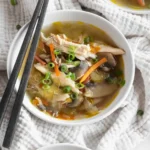
Healthy and Comforting Chicken Miso Soup
- Total Time: 30 minutes
- Yield: 6 servings 1x
- Diet: Gluten-Free
Description
Chicken Miso Soup: the perfect comforting soup recipe you can get on the table in no time! This flavorful soup is easy to make and chock-full of veggies, lean protein, and delicious aromatic spices like garlic and ginger.
Ingredients
- 2 tablespoons avocado oil or olive oil
- 1 medium white or yellow onion (sliced into thin vertical strips)
- 1 ¼ cups peeled and thinly sliced or julienned carrots
- 1 ¼ cups thinly sliced celery
- 8 oz sliced cremini mushrooms (about 2 ½ cups)
- 1 clove garlic (peeled and thinly sliced)
- 1 tablespoon peeled and thinly julienned ginger
- 8 cups low-sodium chicken broth, divided
- 2 tablespoons white miso paste
- 2 ½ cups shredded chicken (breast and/or thigh meat)
- 2 teaspoons toasted sesame oil
- 1 tablespoon rice vinegar
- Additional salt (to taste (optional))
- Sliced green onions and/or cilantro (to garnish)
Instructions
- Step: Preheat a Dutch oven or large stock pot over medium-high heat. Sauté the onions, carrots, celery, mushrooms, garlic, and ginger for 6-7 minutes, stirring frequently as you cook, or until the onions begin to soften.
- Step: Stir all but 1 cup of the chicken broth into the vegetable mixture. Increase the heat to high and bring the broth to a boil. Reduce the heat to medium and simmer for 8-10 minutes, or until the carrots are tender.
- Step: In a small microwave-safe bowl, heat the remaining 1 cup of chicken broth for 1 minute, or until hot but not boiling. Whisk the miso paste into the chicken broth until dissolved.
- Step: Stir the shredded chicken and the cup of miso broth into the soup. Cook on medium heat for 1-2 minutes, stirring continually, or until the chicken is heated through.
- Step: Stir the toasted sesame oil and rice vinegar into the soup and season with additional salt to taste. Serve the soup hot with sliced green onions and/or cilantro to garnish.
Notes
Leftover soup keeps covered in the refrigerator for 4-5 days or frozen in a freezer-safe container for up to 3 months. Vegetable broth can substitute for chicken broth.
- Prep Time: 10 minutes
- Cook Time: 20 minutes
- Category: Soup
- Method: Stovetop
- Cuisine: Asian
Nutrition
- Serving Size: 1 serving
- Calories: 229 kcal
- Sugar: 4 g
- Sodium: 1619 mg
- Fat: 13 g
- Saturated Fat: 2 g
- Unsaturated Fat: 11 g
- Trans Fat: 0 g
- Carbohydrates: 9 g
- Fiber: 2 g
- Protein: 19 g
- Cholesterol: 49 mg