This grilled salmon is a moist and healthy dinner option that works perfectly on an outdoor grill or an indoor grill pan. The smoky-sweet seasoning rub adds deep flavor without the need for long marination times. It is an efficient meal that can be prepared and served in under 30 minutes.
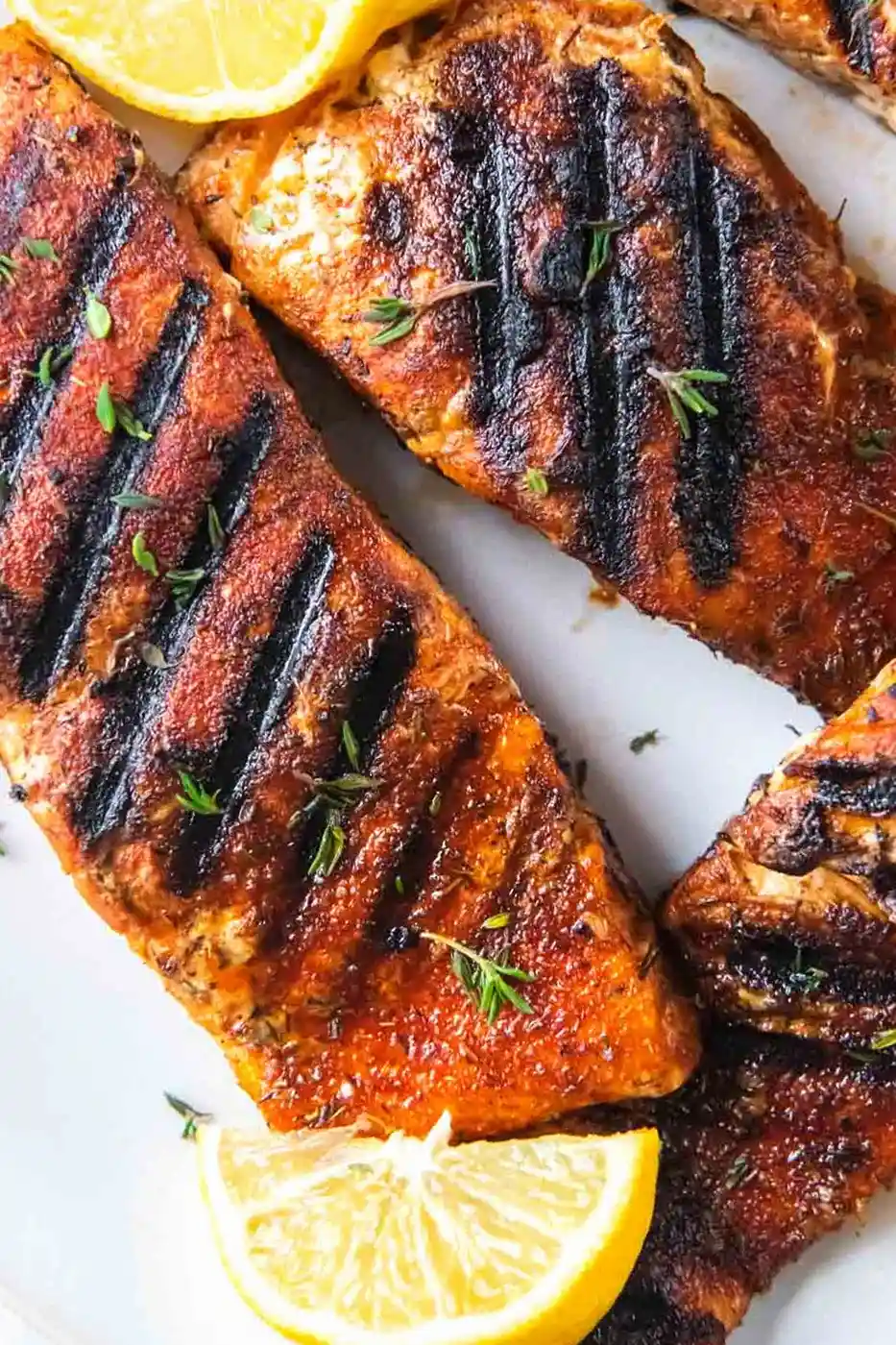
List of ingredients
- 1 tablespoon brown sugar – creates a caramelized crust.
- 2 teaspoons smoked paprika – provides a bold, smoky depth.
- 1 teaspoon dried thyme – adds a subtle herbal note.
- 3/4 teaspoon kosher salt – enhances the natural flavor of the fish.
- 1/2 teaspoon garlic powder – adds a savory, aromatic quality.
- 2 teaspoons olive oil – helps the rub adhere and prevents sticking.
- 4 salmon fillets, skin on (about 6 ounces each) – the main protein source.
- lemon wedges – used for a fresh, acidic finish during serving.
step-by-step instructions
- Prepare the rub: Combine the brown sugar, smoked paprika, dried thyme, kosher salt, and garlic powder in a small bowl and whisk until well combined.
- Oil the fish: Place the salmon fillets skin side down on a cutting board or dish, drizzle with olive oil, and rub the oil over the flesh.
- Apply seasoning: Sprinkle the seasoning mixture evenly over the tops of the fillets and gently rub it into the fish.
- Rest the fillets: Let the seasoned salmon sit at room temperature for 15 to 20 minutes to enhance flavor and ensure even cooking.
- Preheat the grill: Oil a clean grill pan, gas grill, or charcoal grill and preheat it to medium heat.
- Initial sear: Place the salmon on the hot grill skin side down.
- Cook first side: Close the grill cover and cook for 6 to 10 minutes until the fish is almost cooked through.
- Final sear: Flip the fillets over and cook for 1 to 2 more minutes until the fish reaches your preferred doneness.
- Serve: Remove from heat and serve immediately with fresh lemon wedges.
Guidelines for Selecting Quality Salmon
Choosing Wild-Caught Options
Wild-caught salmon typically offers a more robust flavor and a denser texture than farmed varieties. It is often prized for its natural nutrient profile and vibrant color.
Inspecting Freshness
Fresh salmon should have a mild, oceanic scent rather than a strong fishy odor. The flesh should be firm to the touch and moist without any dull or grayish spots.
Benefits of Keeping the Skin
Keeping the skin on provides a protective barrier between the direct heat and the delicate flesh. This prevents the fish from drying out and makes flipping much easier.
Techniques to Prevent Sticking
Preparing the Grill Surface
Ensure your grill grates are scrubbed clean of any residue from previous cooking sessions. Carbon buildup can cause the skin to bond to the metal, leading to tearing.
The Role of Oil
Applying olive oil to both the fillets and the grill grates creates a necessary lubricant. This layer prevents the proteins from sticking and helps the dry rub stay in place.
Starting with High Heat
A properly preheated grill ensures that the fish sears immediately upon contact. This immediate searing creates a crust that allows the fish to release naturally from the grates.
Using the Correct Flipping Technique
Avoid moving or poking the fish too early in the process. Once the salmon has developed a proper sear, it will naturally lift away from the grill surface.
Cooking Temperature and Doneness
USDA Recommended Temperature
The USDA recommends an internal temperature of 145°F for salmon. This ensures the fish is fully cooked and safe for all consumers, resulting in a firmer texture.
Medium-Rare Preference
Many people prefer taking the salmon off the grill when it reaches 130-135°F. This temperature results in a more succulent and moist center.
Using a Meat Thermometer
The most accurate way to check doneness is with an instant-read thermometer. Insert the probe into the thickest part of the fillet to get a precise reading.
The Fork-Flake Method
If you do not have a thermometer, press a fork gently into the side of the fillet. If the meat separates easily along the natural muscle lines, it is cooked.
Pro Tips for Maximum Flavor
Importance of Room Temperature Resting
Allowing the salmon to rest for 15-20 minutes removes the chill from the center of the meat. This promotes more even cooking and allows the seasonings to penetrate deeper.
Trimming Excess Fat
Trim away any large pieces of belly fat or loose skin flaps before grilling. These areas can cause oil flare-ups that may char the seasoning too quickly.
Utilizing the Grill Lid
Keeping the lid closed on an outdoor grill creates a convection effect. This ensures the heat circulates around the fish, cooking the center without over-charring the exterior.
Suggested Side Dish Pairings
Grilled Seasonal Vegetables
Asparagus and zucchini are excellent companions for grilled salmon. Toss them in olive oil and salt, then grill them alongside the fish for a complete meal.
Starchy Accompaniments
White rice, quinoa, or roasted red potatoes provide a hearty base. These options balance the smoky and sweet notes of the seasoning rub.
Fresh Summer Salads
A cucumber tomato salad or an orzo salad adds a refreshing crunch. The acidity in these salads cuts through the richness of the salmon fillets.
Ingredient Substitutions
Replacing Brown Sugar
You can use honey, maple syrup, or coconut sugar for a similar sweet profile. These alternatives still provide the necessary caramelization on the grill.
Alternatives to Smoked Paprika
If smoked paprika is unavailable, use regular paprika and add a drop of liquid smoke to the olive oil. This maintains the signature smoky flavor profile.
Substituting Dried Thyme
Dried oregano or rosemary can be used as effective substitutes for thyme. These herbs provide an earthiness that complements the garlic and paprika.
Storage and Reheating Advice
Proper Refrigeration
Store leftover grilled salmon in an airtight container in the refrigerator. The fish remains fresh and safe to consume for 3 to 4 days.
Safe Reheating Methods
Reheat salmon gently in a pan over low heat with a splash of water or lemon juice. Avoid high-power microwaving, which can make the fish rubbery and dry.
Freezing Cooked Salmon
Wrap cooked fillets tightly in foil and place them in a freezer-safe bag. This preserves the quality for up to two months if sealed properly.
Common Troubleshooting
Dealing with Flare-Ups
Move the salmon to a cooler part of the grill if flames appear. Avoid spraying water on the flames, as this can cause a sudden temperature drop.
Overcooked Salmon
Overcooked fish becomes pale and chalky in texture. To avoid this, start checking the internal temperature a few minutes before the estimated time is up.
Seasoning Burning Too Quickly
If the sugar in the rub burns before the fish is done, lower the grill heat. You can also apply the seasoning closer to the actual cooking time.
Frequently Asked Questions
Can I use a different type of fish?
This seasoning rub works very well with trout or Arctic char. These fish have similar fat contents and cooking times to salmon.
Do I have to leave the skin on?
You can remove the skin, but the cooking time will be shorter. Leaving the skin on is highly recommended to prevent sticking and moisture loss.
How long can I store grilled salmon?
It is best consumed within 3 days for optimal flavor and texture. Beyond that, the fish may begin to dry out.
Print
Grilled Salmon with the Best Salmon Seasoning
- Total Time: 30 minutes
- Yield: 4 servings 1x
- Diet: Dairy Free, Gluten Free
Description
This Grilled Salmon is moist, succulent and perfectly seasoned. Cook it on an outdoor gas or charcoal grill, or indoors on a grill pan.
Ingredients
- 1 tablespoon brown sugar
- 2 teaspoons smoked paprika
- 1 teaspoon dried thyme
- ¾ teaspoon kosher salt
- ½ teaspoon garlic powder
- 2 teaspoons olive oil
- 4 salmon fillets, skin on (about 6 ounces each)
- lemon wedges
Instructions
- Combine: Combine the brown sugar, smoked paprika, dried thyme, kosher salt and garlic powder in a small bowl. Whisk until well combined.
- Season: Place the salmon fillets skin side down on a cutting board or in a baking dish. Drizzle the olive oil over the salmon fillets and rub the oil over the fish. Sprinkle the seasoning mixture evenly over the tops of the salmon fillets and gently rub onto the fish.
- Rest: Let the salmon rest at room temperature for 15-20 minutes.
- Preheat: Meanwhile, oil a clean grill pan, gas grill or charcoal grill and preheat to medium heat. When the grill is hot, put the salmon on the grill or grill pan, skin side down.
- Grill: Cook with the grill cover on until fish is almost cooked through, about 6 to 10 minutes with the skin side down. Then flip the salmon over and cook 1 to 2 more minutes, until cooked through to your liking. Serve with lemon wedges.
Notes
Let the salmon rest at room temperature for 15-20 minutes before cooking to promote more even cooking. The USDA recommends an internal temperature of 145°F, though some prefer 130-135°F for a moister result.
- Prep Time: 5 minutes
- Cook Time: 10 minutes
- Category: Main Course
- Method: Grilling
- Cuisine: American
Nutrition
- Serving Size: 6 ounces
- Calories: 275 kcal
- Sugar: 3 g
- Sodium: 513 mg
- Fat: 13 g
- Saturated Fat: 2 g
- Unsaturated Fat: 10 g
- Trans Fat: 0 g
- Carbohydrates: 4 g
- Fiber: 0.5 g
- Protein: 34 g
- Cholesterol: 94 mg