Experience the perfect fusion of smoky grill flavor and bright, citrus-infused richness with this straightforward grilled salmon recipe. Designed to stay flaky, juicy, and tender, the garlic-lime butter provides a professional-grade finish that elevates every single bite. Follow these simple steps to master the art of outdoor seafood preparation for your next gathering.
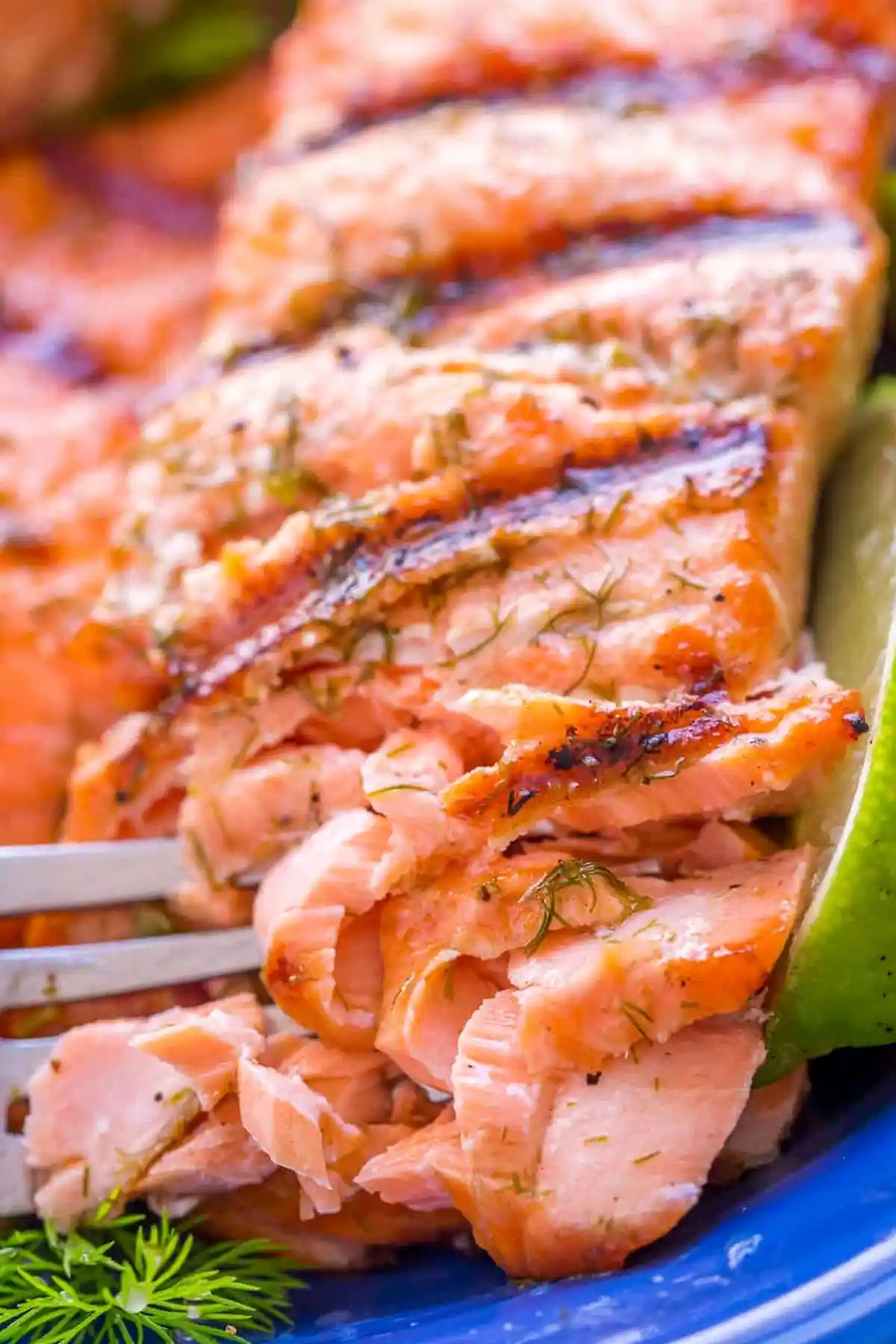
List of ingredients
- 1/2 cup unsalted butter
- 4 cloves garlic, smashed
- 2 Tbsp lime juice
- 2 Tbsp fresh dill, chopped
- 1 tsp sea salt
- 1/4 tsp black pepper
- 2 lbs salmon filet, skin-on, cut into 6 portions
step-by-step instructions
- Step: In a sauce pan, melt 1/2 cup butter over medium heat.
- Step: Smash 4 garlic cloves with the flat side of a knife and add to saucepan with 1 tsp salt and 1/4 tsp pepper.
- Step: Simmer 1 min or until fragrant, then add chopped dill and 2 Tbsp lime juice and immediately remove from heat.
- Step: Arrange salmon fillets on a platter skin-side-down and spoon on 1/3 of butter sauce and brush over the tops.
- Step: Let salmon marinate while preheating grill to medium heat (350˚F to 400˚F) and oiling the hot grates.
- Step: Place salmon onto preheated grill, skin-side-up, and cover and grill over medium (350˚F) heat undisturbed for about 3 minutes.
- Step: Carefully flip salmon over, brush on another 1/3 of butter sauce, then cover and cook another 2 minutes until internal temperature reaches 140˚F.
- Step: Transfer salmon to a platter, drizzle with remaining sauce, garnish with fresh dill, and serve with lime wedges.
Techniques for Grilling Delicate Fish
Maintaining Consistent Heat Levels
Keeping your grill within the 350°F to 400°F range is vital for the proper texture of salmon. If the grill is too hot, the exterior will dry out before the center is cooked, and if it is too cool, the fish will stick to the grates. Always keep the lid closed during the cooking duration to trap heat and ensure even distribution around the filets.
Preventing Sticking to Grates
The most common challenge when grilling fish is it adhering to the metal. You can minimize this by ensuring the grates are thoroughly cleaned before heating and applying a high-smoke-point oil right before adding the salmon. The inclusion of the skin also acts as a natural barrier that protects the delicate meat during the intense sear.
Utilizing the Resting Period
Salmon continues to cook due to residual heat for several minutes after being moved to a platter. By removing the fish when it hits 140°F, you allow it to climb to the ideal 145°F during the resting phase. This ensures the center remains moist instead of becoming chalky or overdone.
Customizing Your Flavor Profile
Herbal Adjustments
While dill is the traditional choice for this garlic lime butter, you can experiment with fresh cilantro for a more zest-forward, tropical appeal. Flat-leaf parsley is another excellent option if you prefer a more subtle, grassy undertone that highlights the lime. Always ensure your herbs are fresh, as dried versions lack the necessary moisture and brightness for a butter-based sauce.
Adding Gentle Spice
For those who enjoy a tiny kick, adding a pinch of crushed red pepper flakes to the melting butter works wonders. You can also mix in a teaspoon of grated fresh ginger to create an aromatic profile that complements the garlic and lime. Keep these additions minimal so they do not overpower the natural flavor of the salmon itself.
Common Questions Regarding Grilled Salmon
How can I tell if the salmon is properly cooked without a thermometer?
If you lack a digital thermometer, look for the salmon flesh to become opaque and light pink throughout. You should be able to gently flake the meat apart with a fork along the natural white lines of the muscle. If the center still appears translucent or resists flaking, it requires another minute of heat.
Why does white residue sometimes appear on the salmon while it cooks?
That white substance is actually albumin, a protein that coagulates when the fish is heated. It is perfectly safe to eat, but it is often an indicator that the heat was slightly too high and the fish cooked too quickly. Reducing your grill heat or cooking the fish for a shorter duration can help prevent this from forming.
Can this recipe be prepared on an indoor grill pan?
Absolutely, an indoor cast-iron grill pan works remarkably well for this recipe. Follow the same heating instructions and ensure the pan is well-oiled before placing the fish down. Since indoor pans often have lower heat thresholds than outdoor gas grills, you may need to add an extra minute of cooking time to each side.
Storage and Reheating Advice
Handling Leftovers Properly
If you have remaining salmon, transfer it to an airtight container within two hours of cooking. Refrigerate for up to two days to maintain the highest quality and safety. Avoid freezing cooked salmon, as the texture can become grainy and loose once thawed.
Reviving Moisture During Reheating
To reheat, it is best to place the salmon in a preheated oven at 300°F with a small splash of water or broth in the pan. Cover the dish loosely with foil to create a gentle steam environment. Heat for 8 to 10 minutes until warmed through, which helps prevent the fish from drying out in the same way a microwave would.
Ideal Side Pairings
Complementary Starch Options
The richness of the garlic butter pairs beautifully with neutral grains or starches. Steamed jasmine rice or fluffy white quinoa are excellent vessels for soaking up the extra sauce on the plate. Alternatively, roasted baby potatoes with a light dusting of sea salt provide a satisfying crunch that contrasts well with the soft, tender salmon.
Choosing the Right Vegetables
Since the grill is already hot, consider cooking asparagus or zucchini alongside the salmon. These vegetables have similar cook times and benefit from the same high-heat environment. A simple side of blanched green beans tossed with toasted almonds also offers a nice textural variety to the meal.
Print
Grilled Salmon with Garlic Lime Butter
- Total Time: PT30M
- Yield: 6 servings 1x
- Diet: Pescatarian
Description
Grilled Salmon with Garlic Lime Butter, a perfect recipe for flaky, juicy, and delicious fish that tastes like a vacation on a plate.
Ingredients
- 1/2 cup unsalted butter
- 4 cloves garlic, smashed
- 2 Tbsp lime juice
- 2 Tbsp fresh dill, chopped
- 1 tsp sea salt
- 1/4 tsp black pepper
- 2 lbs salmon filet, skin-on, cut into 6 portions
Instructions
- Step: In a sauce pan, melt 1/2 cup butter over medium heat.
- Step: Smash 4 garlic cloves with the flat side of a knife and add to saucepan with 1 tsp salt and 1/4 tsp pepper.
- Step: Simmer 1 min or until fragrant, then add chopped dill and 2 Tbsp lime juice and immediately remove from heat.
- Step: Arrange salmon fillets on a platter skin-side-down and spoon on 1/3 of butter sauce and brush over the tops.
- Step: Let salmon marinate while preheating grill to medium heat (350˚F to 400˚F) and oiling the hot grates.
- Step: Place salmon onto preheated grill, skin-side-up, and cover and grill over medium (350˚F) heat undisturbed for about 3 minutes.
- Step: Carefully flip salmon over, brush on another 1/3 of butter sauce, then cover and cook another 2 minutes until internal temperature reaches 140˚F.
- Step: Transfer salmon to a platter, drizzle with remaining sauce, garnish with fresh dill, and serve with lime wedges.
Notes
Internal temperature will rise to an ideal 145˚F after removing from the grill. For different thicknesses: 1 inch fillets cook 3 minutes per side, 3/4 inch fillets cook 2-3 minutes per side, and 1/2 inch fillets cook 2 minutes per side.
- Prep Time: PT24M
- Cook Time: PT6M
- Category: Main Course
- Method: Grilling
- Cuisine: American
Nutrition
- Serving Size: 1 filet
- Calories: 355 kcal
- Sugar: 1 g
- Sodium: 457 mg
- Fat: 25 g
- Saturated Fat: 11 g
- Unsaturated Fat: 13 g
- Trans Fat: 0 g
- Carbohydrates: 1 g
- Fiber: 1 g
- Protein: 30 g
- Cholesterol: 124 mg