These grilled BBQ boneless chicken thighs are juicy, sweet, and savory, making them an ideal choice for summer meals. This recipe uses a balanced dry rub and a glazed finish to ensure the meat remains tender while developing a charred exterior.
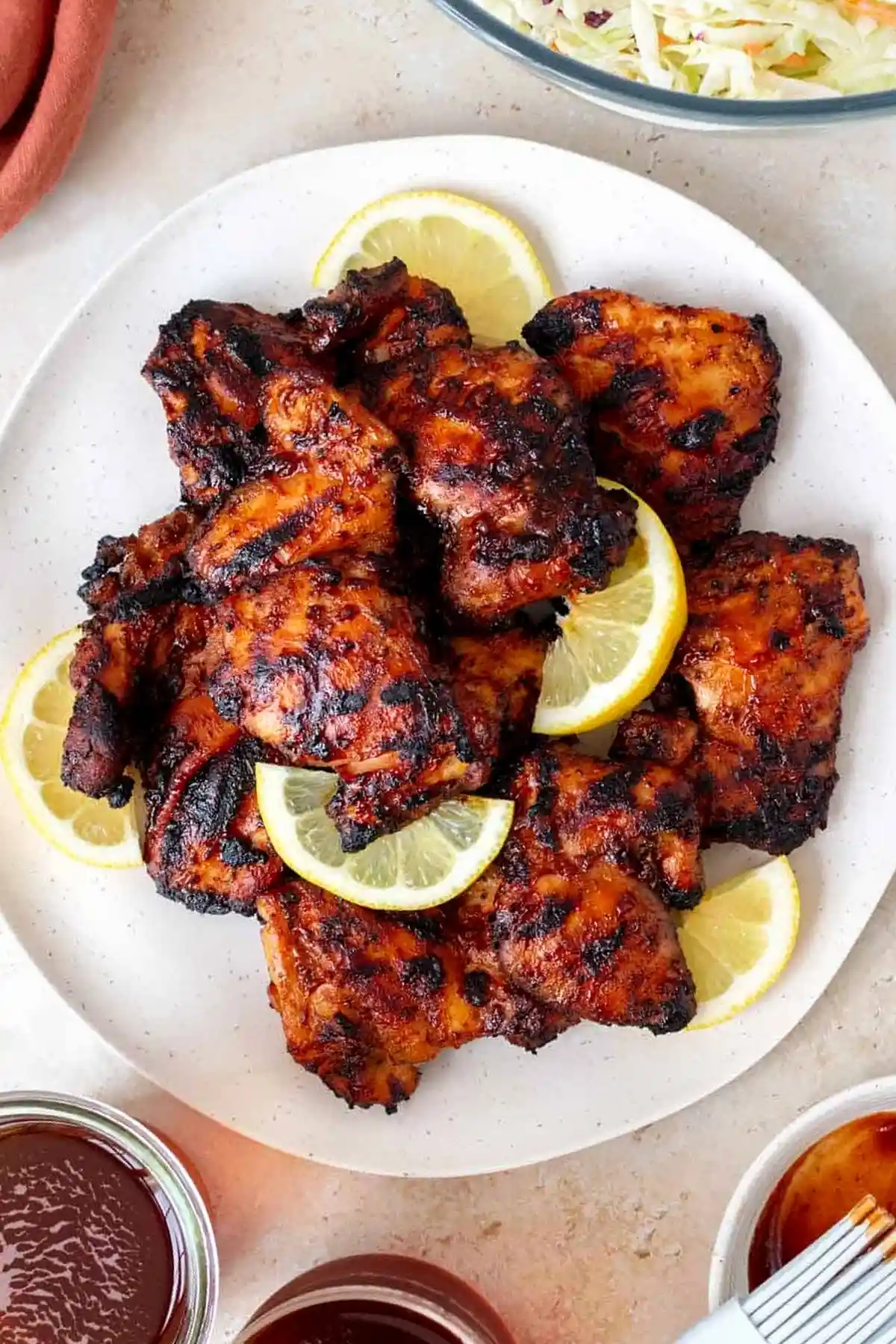
List of ingredients
- 8 to 10 boneless skinless chicken thighs – ensure they are patted dry for better seasoning adhesion.
- 1 tablespoon oil – olive oil or any neutral oil like avocado oil works well.
- 1 teaspoon salt – used to enhance all other flavors.
- ½ teaspoon pepper – provides a mild heat.
- 1 teaspoon garlic powder – adds a savory, aromatic depth.
- 1 teaspoon onion powder – contributes a subtle sweetness and savory note.
- 1 teaspoon paprika – gives the chicken a rich red color and earthy taste.
- 1 teaspoon oregano – adds a herbal, Mediterranean quality.
- ½ teaspoon ground mustard – provides a slight tang and helps the rub stick.
- 2 tablespoons brown sugar – helps with caramelization and balances the salt.
- ½ cup bbq sauce – use your preferred brand for the final glaze.
step-by-step instructions
- Season the Meat: Pat the chicken thighs dry with a paper towel and place them in a large mixing bowl. Add the oil, salt, pepper, garlic powder, onion powder, paprika, oregano, ground mustard, and brown sugar, mixing until the meat is well-coated.
- Prepare the Grill: Preheat your grill to 400°F to ensure a high-heat sear.
- Initial Sear: Place the chicken thighs onto the grill with the smooth side facing down. Grill on direct heat for 3 minutes with the lid closed to trap heat.
- First Glaze: Open the lid, flip the chicken, and generously brush the cooked side with BBQ sauce. Close the lid and cook for another 3 minutes.
- Second Glaze: Open the lid, flip the chicken again, and brush the other side with BBQ sauce. Close the lid and cook for 1 minute.
- Final Sear: Flip the chicken one last time so the most recently brushed side sears for 1 minute.
- Resting Phase: Remove the chicken from the grill and let it rest for at least five minutes. Covering the meat with foil during this time helps retain juices.
Mastering the Grilling Process
Controlling Direct and Indirect Heat
Direct heat is essential for the initial sear to create a crust and lock in flavors. If the chicken begins to char too quickly due to flare-ups, move the pieces to the cooler edges of the grill. This allows the meat to finish cooking through without burning the exterior sugar.
The Importance of the Grill Lid
Keeping the lid closed transforms your grill into a convection oven, which ensures the chicken cooks evenly on all sides. This trapped heat helps reach the safe internal temperature of 165°F more quickly. It also prevents heat loss, which is critical when cooking thicker cuts like thighs.
Using a Digital Meat Thermometer
Using a probe thermometer is the only way to guarantee the chicken is cooked safely without overcooking it. Insert the probe into the thickest part of the thigh, avoiding the bone or the grill grate. Remove the meat as soon as it hits 165°F to maintain maximum juiciness.
Preventing Sauce Combustion
BBQ sauces containing high amounts of sugar can burn quickly if exposed to direct flames for too long. This is why the sauce is applied toward the end of the cooking process. Brushing the sauce in layers during the final minutes creates a thick glaze without creating a bitter, burnt taste.
Ingredient Substitutions and Adjustments
Using Skin-on Boneless Thighs
You can replace skinless thighs with skin-on boneless versions for extra flavor and texture. Start the grilling process skin-side down to render the fat and achieve a crispy exterior. Be cautious of flare-ups as the dripping fat can cause sudden bursts of flame.
Alternative Oil Options
While olive oil is common, avocado oil is a superior choice for grilling due to its higher smoke point. This prevents the oil from breaking down and smoking at 400°F. Grapeseed oil is another excellent neutral alternative that won’t alter the taste of the rub.
Sugar-Free Rub Variations
To reduce the sugar content, you can replace brown sugar with a small amount of maple syrup or omit it entirely. If omitting sugar, be aware that the chicken will not caramelize as deeply. You may need to increase the paprika slightly to maintain the rich color.
Customizing the BBQ Sauce
Different BBQ sauces offer various flavor profiles, from smoky and bold to sweet and tangy. For a spicier version, mix a teaspoon of sriracha or chipotle powder into your store-bought sauce. A splash of apple cider vinegar can be added to the sauce to increase the acidity and brightness.
Analyzing the Dry Rub Components
The Role of Brown Sugar in Maillard Reaction
Brown sugar facilitates the Maillard reaction, which is the chemical reaction between amino acids and reducing sugars. This process creates the characteristic brown color and complex flavor of grilled meat. It provides a sweet counterpoint to the salt and spices in the rub.
Adding Depth with Garlic and Onion Powder
These powders provide a consistent base of savory flavor that penetrates the meat more evenly than fresh aromatics. Because they are dehydrated, they adhere better to the oil and chicken surface. They create a classic savory profile that complements the sweetness of the BBQ sauce.
The Function of Ground Mustard
Ground mustard acts as an emulsifier and adds a subtle piquant note to the seasoning. It cuts through the richness of the chicken fat and the sweetness of the sugar. This creates a more balanced flavor profile that prevents the dish from tasting overly sweet.
Herbal Notes from Oregano
Oregano introduces an earthy, peppery element that prevents the BBQ flavor from becoming one-dimensional. It pairs well with paprika to give the chicken a rustic, grilled taste. For a different profile, you can swap oregano for thyme or dried basil.
Serving Suggestions and Pairings
Fresh Summer Side Dishes
Pair these thighs with a crisp cabbage slaw dressed in a vinegar-based dressing to balance the sweetness. Grilled corn on the cob with lime and salt also complements the charred flavor of the chicken. A chilled cucumber salad provides a refreshing contrast to the hot, savory meat.
Bun and Sandwich Options
These thighs are perfect for sandwiches when served on toasted brioche buns. Add a slice of melted provolone cheese and some pickled red onions for a gourmet touch. Use a smear of garlic aioli on the bottom bun to add creaminess.
Adding Citrus for Brightness
Squeezing fresh lemon or lime juice over the chicken just before serving brightens the heavy flavors of the BBQ sauce. This acidity cuts through the sugar and fat, making the dish feel lighter. Garnish with fresh parsley or cilantro for an added pop of color.
Storage and Reheating Guidelines
Refrigeration and Meal Prep
Allow the chicken to cool completely before placing it in an airtight container to prevent steam from making the meat soggy. Store the thighs in the refrigerator for up to four days. This recipe is excellent for meal prep as the flavors often deepen overnight.
Freezing Instructions
For long-term storage, freeze the cooked chicken in a freezer-safe bag or airtight container. Ensure the meat is fully cooled to avoid ice crystal formation. They can be stored in the freezer for up to three months without significant loss of quality.
Best Reheating Methods
To avoid drying out the chicken, reheat it in an oven at 325°F covered with foil and a splash of water or broth. If using a microwave, cover the meat with a damp paper towel and heat in short intervals. This preserves the moisture and prevents the BBQ sauce from becoming rubbery.
Common Troubleshooting and FAQs
Why is my chicken sticking to the grill?
Sticking usually occurs if the grill grates are not hot enough or if the meat was not patted dry. Ensure the grill is preheated to 400°F and lightly oil the grates before adding the chicken. Avoid flipping the meat too early; it will naturally release from the grate once a proper sear has formed.
How do I know when the chicken is fully cooked?
The most reliable method is using a meat thermometer to check for an internal temperature of 165°F. Visually, the juices should run clear rather than pink when the thickest part is pierced. Thighs are more forgiving than breasts and can often handle a slightly higher temperature without drying out.
Can I make this recipe in an oven or air fryer?
Yes, you can bake these at 400°F on a wire rack over a baking sheet for about 20-25 minutes, brushing the sauce on during the last 5 minutes. For an air fryer, cook at 380°F for 12-15 minutes, flipping halfway and applying sauce at the end. The grill remains the best option for the specific charred flavor.
What should I do if the BBQ sauce burns?
If the sauce begins to blacken too quickly, immediately move the chicken to an indirect heat zone. You can also scrape off the burnt bits and apply a fresh layer of sauce during the final minute of cooking. To prevent this, ensure you are not grilling over excessively high flames during the glazing phase.
Can I use chicken breasts instead of thighs?
You can use breasts, but you must adjust the cooking time and temperature. Chicken breasts dry out much faster than thighs and should be removed the moment they hit 165°F. Because they lack the fat of thighs, you may need to use slightly more oil in the rub to keep them moist.
Print
Grilled BBQ Boneless Chicken Thighs
- Total Time: 19 minutes
- Yield: 4 servings 1x
- Diet: General
Description
These grilled BBQ boneless chicken thighs are a staple during the summer months! You’ll love how juicy, sweet, tangy, and savory these grilled chicken thighs are! They come together quickly and easily, making them the perfect crowdpleaser or as a weeknight dinner.
Ingredients
- 8 to 10 boneless skinless chicken thighs
- 1 tablespoon oil
- 1 teaspoon salt
- ½ teaspoon pepper
- 1 teaspoon garlic powder
- 1 teaspoon onion powder
- 1 teaspoon paprika
- 1 teaspoon oregano
- ½ teaspoon ground mustard
- 2 tablespoons brown sugar
- ½ cup bbq sauce
Instructions
- Season: Pat dry the chicken thighs with a paper towel if needed and transfer to a large mixing bowl. To a mixing bowl, add the oil, salt, pepper, garlic powder, onion powder, paprika, oregano, ground mustard, and brown sugar. Mix until well-coated.
- Heat: Heat the grill to 400F.
- Place: Place the chicken thighs onto the grill, smooth side down.
- Grill: Grill the chicken thighs on direct heat for 3 minutes, depending on their size. Keep the grill lid closed.
- Flip and Brush: Open the lid and flip the chicken thighs. Brush the chicken thighs generously with BBQ sauce and close the lid, letting them cook for 3 minutes.
- Repeat Brush: Open the lid and flip the chicken thighs again. Brush the other side, and cook for another minute with the lid closed.
- Sear and Rest: Flip the chicken one last time to let the just-brushed side sear for a minute. Remove the chicken from the grill and rest for at least five minutes before serving. If possible, cover with foil.
Notes
Pat the chicken dry before adding seasoning for better adhesion. Always let the chicken rest before slicing to ensure juices redistribute. Internal temperature should reach 165°F. This recipe can also be made on a grill pan over medium-high heat.
- Prep Time: 10 minutes
- Cook Time: 9 minutes
- Category: BBQ
- Method: Grilling
- Cuisine: American
Nutrition
- Serving Size: 1 serving
- Calories: 362 kcal
- Sugar: 18 g
- Sodium: 1154 mg
- Fat: 10 g
- Saturated Fat: 2 g
- Unsaturated Fat: 5 g
- Trans Fat: 0.04 g
- Carbohydrates: 22 g
- Fiber: 1 g
- Protein: 44 g
- Cholesterol: 215 mg