This vibrant Greek orzo pasta salad combines tender orzo with crisp, garden-fresh vegetables and a tangy, zesty dressing. It is the perfect side dish for warm weather gatherings, light lunches, or festive outdoor dinners. With its bright colors and balanced flavors, this refreshing dish brings a Mediterranean flair to any table.
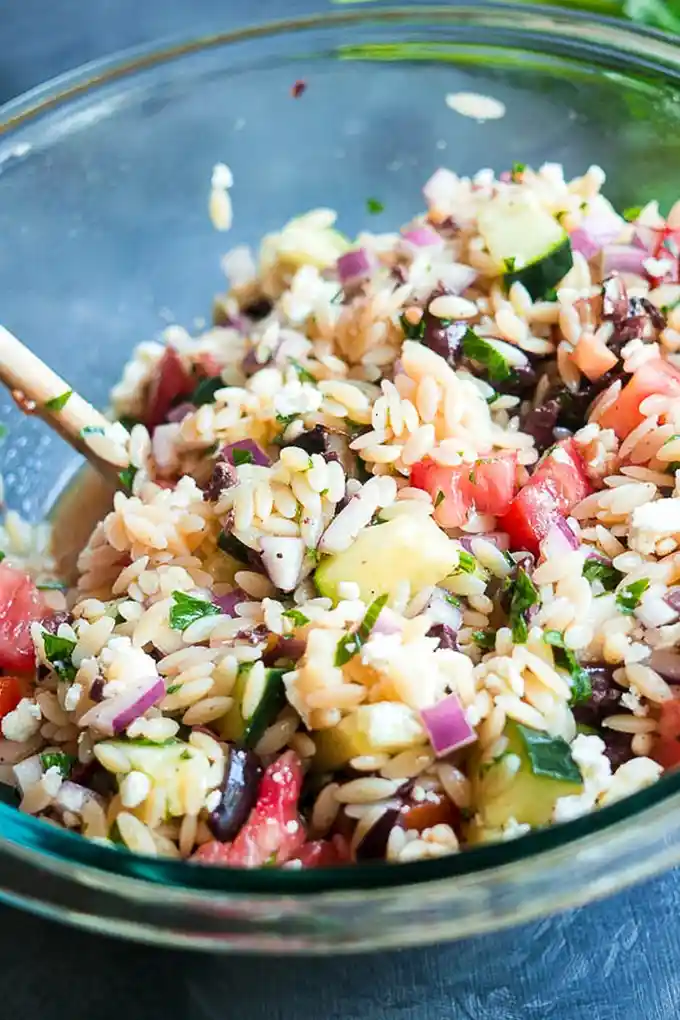
List of ingredients
- 1 cup dried orzo pasta
- 1 medium sized cucumber, chopped
- 2 medium sized tomatoes, chopped
- 1 small red onion, finely chopped
- 1/2 cup chopped, pitted, kalamata olives
- 1/4 cup fresh chopped parsley
- 1/2 cup crumbled feta cheese
- 1/4 cup extra virgin olive oil
- 1/4 cup apple cider vinegar
- 1 tablespoon fresh lemon juice
- 1 teaspoon honey
- 1/2 teaspoon garlic powder
- 1/2 teaspoon freshly ground black pepper
- 1 teaspoon kosher salt
step-by-step instructions
- Step: Cook orzo to al dente according to pasta directions in well salted water.
- Step: While pasta is cooking, whisk together dressing ingredients in large bowl.
- Step: Add veggies to dressing and lightly toss.
- Step: When pasta is done cooking, rinse in cold water and drain well.
- Step: Add pasta to veggies and dressing, stir well, then top with feta cheese.
- Step: Refrigerate until ready to serve!
Essential Preparation Pointers
Achieving the Perfect Al Dente Texture
When preparing orzo, timing is critical because the small grains cook much faster than traditional pasta shapes. Start checking the texture after seven minutes of boiling to ensure you catch it exactly when it is firm to the bite. Once it reaches this stage, drain it quickly to prevent the residual heat from softening it into a mushy consistency.
The Role of Cold Rinsing
Rinsing your cooked orzo under cold, running water is a mandatory step for pasta salads. This process removes excess surface starch that causes the grains to clump together into a single mass. Cold water also cools the pasta down instantly, which preserves the crispness of the vegetables when they are eventually mixed together.
Maximizing Flavor Infusion
Letting your salad rest in the refrigerator is not just about temperature; it is essential for flavor development. During the cooling phase, the vinegar and citrus acids in the dressing gently soften the raw onion and penetrate the orzo. This resting time ensures that the first bite is just as flavorful as the final serving.
Customizing Your Salad Ingredients
Adjusting Vegetable Ratios
If you prefer a higher vegetable-to-pasta ratio, you can easily double the amount of cucumbers or tomatoes. For those who enjoy extra crunch, try adding diced bell peppers or thinly sliced celery. Always aim to cut your vegetables into pieces similar in size to the cooked orzo so that every forkful provides a balanced ratio of textures.
Selecting Alternative Greens
While fresh parsley is the traditional choice for this Mediterranean-style dish, you can swap it for other hearty fresh herbs. Fresh dill adds a bright, slightly grassy note that pairs perfectly with cucumber, while fresh basil offers a sweeter aromatic profile. If you choose basil, wait to add it until just before serving so the leaves remain vibrant and do not wilt.
Enhancing the Savory Elements
For a different profile, consider adding sun-dried tomatoes or artichoke hearts. These ingredients contribute a rich, concentrated savory flavor that complements the kalamata olives perfectly. Ensure that you drain any excess oil from jarred additions to keep the dressing from becoming overly greasy.
Storage and Make-Ahead Advice
Maintaining Texture During Storage
This salad is excellent for meal prep as it holds up well in the refrigerator for up to three days. If you plan to store it for more than twenty-four hours, keep the feta cheese separate and stir it in just before eating. This prevents the cheese from breaking down and clouding the dressing over time.
Optimal Serving Temperature
While the salad should be stored in the refrigerator, it tastes best when removed about ten minutes before eating. Serving it slightly chilled rather than ice-cold allows the olive oil in the dressing to loosen up and the complex flavors of the garlic and herbs to become more pronounced on the palate. If the salad appears a little dry after refrigeration, a quick drizzle of fresh lemon juice will refresh the dressing.
Frequently Asked Questions
Can I use a different type of pasta if I do not have orzo?
Yes, you can substitute other small pasta shapes like ditalini, acini di pepe, or even tiny shell pasta. Ensure you adjust your boiling time according to the package instructions for the specific shape you choose to keep the texture consistent.
How can I make the dressing creamy without dairy?
You can create a creamier base by whisking in a small amount of tahini or a teaspoon of Dijon mustard. These ingredients act as excellent emulsifiers that add depth and body to the vinaigrette without altering the core flavor profile too significantly.
Is it necessary to remove the seeds from the tomatoes?
Removing the seeds is recommended because it prevents the salad from becoming watery as it sits. The extra liquid from the tomato seeds can dilute your dressing and make the orzo soggy over time, so removing them helps keep the dish crisp and fresh for longer.
Troubleshooting Common Issues
Addressing a Salt Balance
If the salad tastes a bit flat, it usually requires a final adjustment of salt or acid rather than more herbs. Start by adding a small pinch of kosher salt, stir, and taste again. If the flavors still feel muted, a splash of lemon juice will provide the brightness needed to wake up the dish.
Preventing Starchy Clumps
If your orzo has already begun to stick together after draining, simply toss it with a teaspoon of olive oil before mixing it with the other ingredients. This creates a barrier between the grains and helps them separate easily as you combine them with the vegetables. Do this immediately after draining to ensure the most effective coating.
Managing Onion Potency
If you find raw red onion too overpowering, you can soak the diced pieces in cold water for ten minutes before adding them to the bowl. This mild technique significantly reduces the harsh, spicy bite while maintaining the onion’s signature crunch. Drain the pieces thoroughly on a paper towel before adding them to your salad mixture.
Print
Greek Orzo Pasta Salad
- Total Time: 25 minutes
- Yield: 6 servings 1x
- Diet: Vegetarian
Description
Jump into spring with this fresh Greek flavored take on a traditional pasta salad featuring orzo, crisp vegetables, and a zesty homemade dressing.
Ingredients
- 1 cup dried orzo pasta
- 1 medium sized cucumber, chopped
- 2 medium sized tomatoes, chopped
- 1 small red onion, finely chopped
- 1/2 cup chopped, pitted, kalamata olives
- 1/4 cup fresh chopped parsley
- 1/2 cup crumbled feta cheese
- 1/4 cup extra virgin olive oil
- 1/4 cup apple cider vinegar
- 1 tablespoon fresh lemon juice
- 1 teaspoon honey
- 1/2 teaspoon garlic powder
- 1/2 teaspoon freshly ground black pepper
- 1 teaspoon kosher salt
Instructions
- Step: Cook orzo to al dente according to pasta directions in well salted water.
- Step: While pasta is cooking, whisk together dressing ingredients in large bowl.
- Step: Add veggies to dressing and lightly toss.
- Step: When pasta is done cooking, rinse in cold water and drain well.
- Step: Add pasta to veggies and dressing, stir well, then top with feta cheese.
- Step: Refrigerate until ready to serve!
Notes
Ensure you rinse the orzo thoroughly with cold water after cooking to stop the cooking process and prevent sticking.
- Prep Time: 15 minutes
- Cook Time: 10 minutes
- Category: Salad
- Method: Boiling
- Cuisine: Greek
Nutrition
- Serving Size: 1 serving
- Calories: 215 kcal
- Sugar: 4 g
- Sodium: 480 mg
- Fat: 11 g
- Saturated Fat: 3 g
- Unsaturated Fat: 7 g
- Trans Fat: 0 g
- Carbohydrates: 26 g
- Fiber: 2 g
- Protein: 6 g
- Cholesterol: 15 mg