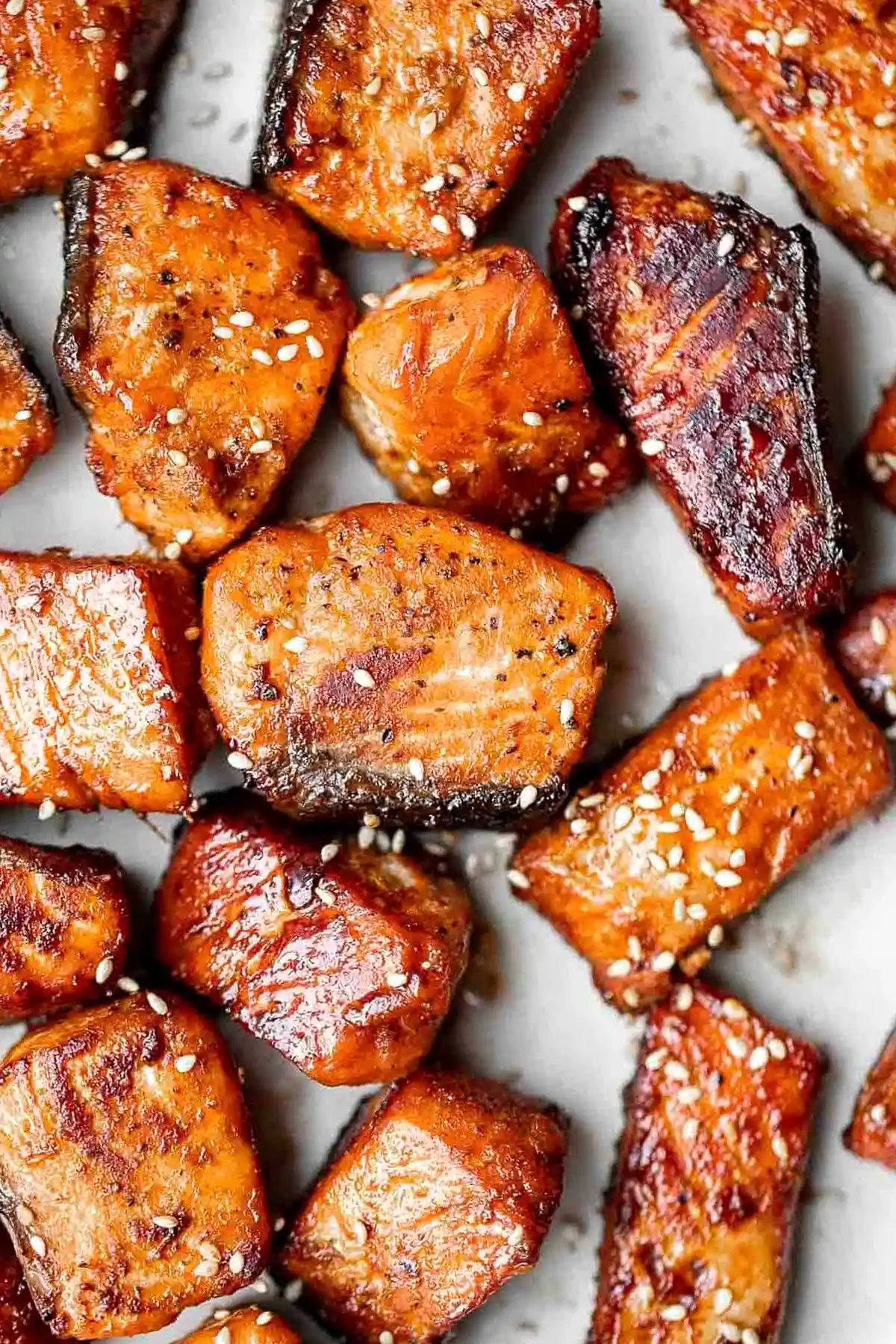
These golden glazed salmon bites offer a quick and satisfying way to enjoy high-quality protein in under thirty minutes. Each piece is seared to perfection to achieve a crispy exterior while maintaining a moist, tender center, all tossed in a balanced, sweet, and tangy savory glaze. Whether you are planning a busy weeknight dinner or looking for an impressive appetizer, this versatile preparation ensures consistent results every single time.
List of ingredients
- 1 large salmon fillet (about 1 1/2 pounds), cut into 1 inch cubes
- 2 tablespoons + 1 teaspoon vegetable oil, divided
- 1/4 teaspoon paprika
- 1/4 teaspoon garlic powder
- 1/4 teaspoon salt
- 1/4 teaspoon ground black pepper
- 1 tablespoon soy sauce
- 1 tablespoon honey
- 1/2 teaspoon sesame oil
- 1 teaspoon lemon juice
step-by-step instructions
- Season: In a medium mixing bowl, add chopped salmon, 1 teaspoon oil, paprika, garlic powder, salt, and pepper. Toss well to coat and set aside for 10 minutes.
- Sear: Heat remaining oil in a large skillet over medium-high heat until the hot oil sizzles, about 1-2 minutes. Sear the salmon pieces (skin side down first) until golden browned and fully cooked, about 5-6 minutes per side. Do not move the salmon around during cooking. When salmon is cooked, the flesh will turn opaque, and it will flake easily when you insert a fork.
- Whisk: In a small mixing bowl, whisk together soy sauce, honey, sesame oil, and lemon juice until smooth.
- Glaze: Pour the sauce over the salmon. Toss well to coat the salmon bites in the sauce and cook for another 1-2 minutes until browned.
- Serve: Use tongs to remove the salmon bites and place on a serving plate. Garnish with white sesame seeds and serve immediately.
Cooking for Texture and Flavor
Uniform Cube Cutting for Consistent Results
Cutting your salmon fillet into uniform 1-inch cubes is the most effective way to ensure every piece cooks at the same rate. If the pieces are uneven, smaller cubes may become overcooked and dry while larger ones remain undercooked in the center. Use a sharp chef’s knife to measure each cut, which helps achieve that ideal sear on every surface.
Achieving the Perfect Sear
The key to a professional-looking crust on your salmon bites is resistance to the urge to stir the pan. Allow the salmon to remain undisturbed for the full recommended time on each side to let the Maillard reaction occur, which creates those delicious, golden-brown edges. Using a heavy-bottomed skillet, such as stainless steel or cast iron, will provide the best heat retention for this task.
Managing Glaze Thickness
The honey-soy glaze relies on the reduction process to transform from a liquid state into a sticky coating. If you prefer a thicker glaze, let it bubble in the pan for an extra thirty seconds after tossing. Keep a close eye on the heat level during this phase, as the sugars in the honey can caramelize quickly and risk burning if the heat is too high.
Customizing Your Salmon Bites
Exploring Flavor Profiles
While the Asian-inspired profile is classic, you can easily pivot to Mediterranean-inspired flavors by omitting the honey and soy sauce in favor of dried oregano, lemon zest, and a touch of chopped fresh parsley. Another option is a rustic, woodsy variation using smoked paprika and a drop of maple syrup for a deeper, more complex sweetness that pairs beautifully with the natural oils in the salmon.
Incorporating Fresh Herbs
Fresh herbs can elevate the final presentation of the dish significantly. Chives, cilantro, or scallions sliced on a bias provide a fresh, crisp contrast to the warm and sweet glazed salmon. Adding these right before serving ensures they retain their vibrant color and sharp, clean flavor profile, balancing the richness of the fish.
Serving Suggestions
Pairing with Whole Grains and Starches
Because the glaze provides such a strong savory-sweet flavor, serving these bites alongside neutral starches is an excellent way to balance the meal. Steamed jasmine rice, quinoa, or thin vermicelli noodles are perfect for soaking up any excess sauce left on the plate. If you prefer potatoes, a simple mash or roasted fingerling potatoes provide a satisfying, buttery contrast to the firmer texture of the fish.
Adding Fresh Vegetables
Pairing these salmon bites with crunchy or bright vegetables adds essential fiber and color to your dinner. Stir-fried snap peas, blanched bok choy, or a quick cucumber salad seasoned with rice vinegar work exceptionally well. The goal is to provide a refreshing, crisp counterpart to the dense, rich nature of the seared salmon bites.
Handling and Storage Details
Maximizing Freshness in the Fridge
If you have leftovers, allow them to cool down completely to room temperature before placing them in a storage container. This prevents excess condensation from forming inside the lid, which can make the crispy exterior of the salmon soggy. When sealed in an airtight container, the salmon will remain safe and flavorful in your refrigerator for up to 48 hours.
Freezing for Long-Term Use
For longer storage, you can freeze your cooked salmon bites for up to three months. Wrap the cooled pieces individually or in small batches in plastic wrap, then place them inside a heavy-duty freezer bag to prevent freezer burn. When you are ready to eat them, transition the frozen salmon to the refrigerator the night before to allow for a gentle, uniform thaw.
Safe Reheating Strategies
To reheat without drying out the delicate fish, use a low-temperature approach. Placing the salmon on a rimmed baking sheet in a 300°F oven for about 8 to 10 minutes is ideal. Alternatively, you can use an air fryer set to a low heat level for a few minutes, which helps regain some of the crispness that may have been lost during storage.
Frequently Asked Questions
Can I use frozen salmon for this recipe?
Yes, you can use frozen salmon, but it must be completely thawed and thoroughly patted dry before you begin seasoning. Excess surface moisture prevents the salmon from searing properly, leading to steaming instead of browning. Use paper towels to remove all moisture from the surface after the fish has fully defrosted in the refrigerator.
Is there a substitute for sesame oil?
If you do not have sesame oil on hand, you can substitute it with a small amount of neutral oil combined with a pinch of toasted sesame seeds. If you prefer to omit it entirely, the dish will still be delicious, though you will lose that signature nutty aroma that defines the glaze. You might add a small dash of ginger powder to the sauce to compensate for the lost depth.
Why does the salmon stick to my skillet?
Sticking usually occurs if the pan is not hot enough when the salmon is added or if the fish is moved before the crust has properly formed. Ensure your oil is shimmering and hot before the fish hits the surface, and let it sear for the full time required. If you find your pan is prone to sticking, using a well-seasoned cast-iron skillet or a high-quality non-stick pan is highly recommended.
Can I grill these bites instead of pan-searing?
Grilling salmon bites is an excellent alternative, especially in warmer weather. Use a grill basket or heavy-duty foil to hold the cubes so they do not fall through the grates. Because the high heat of a grill can cook these small pieces very quickly, ensure you monitor them closely, rotating them every few minutes to maintain an even char.
Print
Golden Glazed Salmon Bites
- Total Time: 25 minutes
- Yield: 4 servings 1x
- Diet: Gluten-Free
Description
Salmon Bites are a flavorful and delicious meal that is quick and easy to make with a handful of simple ingredients. Bite-sized portions of salmon are cooked until tender with crispy, golden edges and coated with a homemade, sweet and sticky Asian glaze.
Ingredients
- 1 large salmon fillet (about 1 1/2 pounds), cut into 1 inch cubes
- 2 tablespoons + 1 teaspoon vegetable oil, divided
- 1/4 teaspoon paprika
- 1/4 teaspoon garlic powder
- 1/4 teaspoon salt
- 1/4 teaspoon ground black pepper
- 1 tablespoon soy sauce
- 1 tablespoon honey
- 1/2 teaspoon sesame oil
- 1 teaspoon lemon juice
Instructions
- Season: In a medium mixing bowl, add chopped salmon, 1 teaspoon oil, paprika, garlic powder, salt, and pepper. Toss well to coat and set aside for 10 minutes.
- Sear: Heat remaining oil in a large skillet over medium-high heat until the hot oil sizzles, about 1-2 minutes. Sear the salmon pieces (skin side down first) until golden browned and fully cooked, about 5-6 minutes per side. Do not move the salmon around during cooking. When salmon is cooked, the flesh will turn opaque, and it will flake easily when you insert a fork.
- Whisk: In a small mixing bowl, whisk together soy sauce, honey, sesame oil, and lemon juice until smooth.
- Glaze: Pour the sauce over the salmon. Toss well to coat the salmon bites in the sauce and cook for another 1-2 minutes until browned.
- Serve: Use tongs to remove the salmon bites and place on a serving plate. Garnish with white sesame seeds and serve immediately.
Notes
Store leftovers in an airtight container in the refrigerator for up to 2 days. To reheat, warm in a 300F oven, air fryer, or on the stove over medium-low heat until warmed through. To freeze, wrap cooled salmon tightly or place in a sealed bag for up to 3 months; thaw overnight in the fridge before serving.
- Prep Time: 10 minutes
- Cook Time: 15 minutes
- Category: Appetizer
- Method: Stovetop
- Cuisine: Asian
Nutrition
- Serving Size: 1 serving
- Calories: 320 kcal
- Sugar: 4 g
- Sodium: 450 mg
- Fat: 18 g
- Saturated Fat: 3 g
- Unsaturated Fat: 12 g
- Trans Fat: 0 g
- Carbohydrates: 5 g
- Fiber: 0.5 g
- Protein: 34 g
- Cholesterol: 85 mg