This rich and creamy salmon pasta comes together in just 20 minutes. It is an ideal option for a fast yet elegant weeknight meal that feels like restaurant quality.
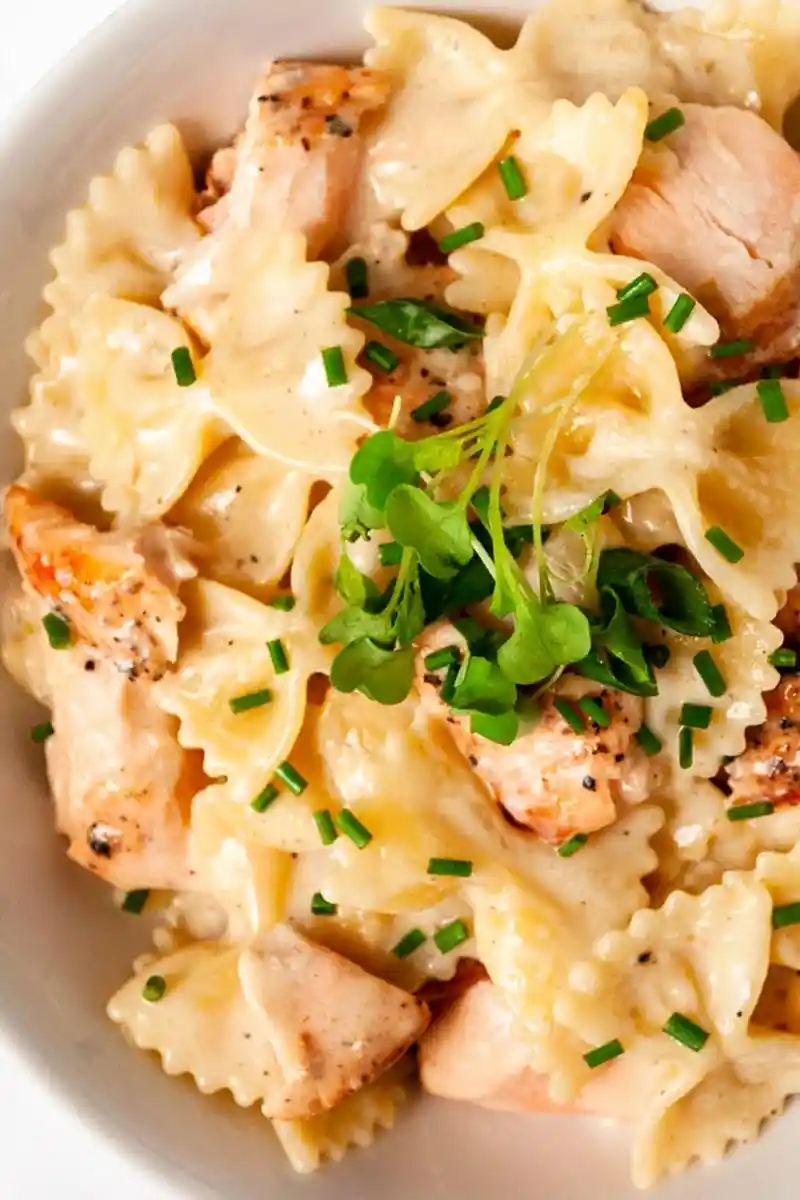
List of ingredients
- 6 ounces farfalle – bow-tie pasta that holds thick sauces well.
- 2 Tablespoons butter – used for searing the fish and building the sauce base.
- 8 ounces salmon – fresh fillets, skin removed and cut to size.
- 2 cloves garlic – finely minced for a pungent aromatic base.
- 1/2 Tablespoon all purpose flour – used as a thickening agent for the cream.
- 1/3 cup white grape juice with a teaspoon of lemon juice – replaces white wine to provide acidity and sweetness.
- 1/3 cup chicken stock or veg stock – adds a savory depth to the sauce.
- 1/2 cup heavy cream – provides the signature velvet texture.
- Chives – freshly chopped for a mild onion-like garnish.
- Fine sea salt and fresh ground black pepper – used throughout for seasoning.
step-by-step instructions
- Boil the Pasta: Heat a large pot of water to boiling, add the farfalle, and reduce the heat to low. Cook according to the package directions, typically taking about 15 minutes.
- Sear the Salmon: Heat a non-stick ceramic skillet to just below medium heat and melt the butter. Season the salmon fillets liberally with sea salt and black pepper, then cook for 5 minutes on the first side. Flip and cook for another 3-5 minutes depending on the thickness of the fillet.
- Sauté Aromatics: Remove the cooked salmon from the pan and set it aside on a plate. Add the minced garlic to the remaining butter and sauté for one to two minutes until fragrant.
- Create the Thickener: Stir the all-purpose flour into the garlic butter and cook for a minute to remove the raw flour taste.
- Deglaze the Pan: Pour in the white grape juice and lemon mixture, using a wooden spoon to scrape up any browned bits from the bottom of the pan. Let the liquid come to a boil and stir constantly to ensure there are no lumps.
- Simmer the Cream Sauce: Stir in the chicken or vegetable stock and the heavy cream. Allow the sauce to bubble, then lower the heat to low and simmer for a few minutes until the sauce thickens.
- Combine Pasta: Drain the cooked farfalle and add it directly to the skillet with the cream sauce. Stir well to ensure every piece of pasta is thoroughly coated.
- Add Salmon: Use a fork or knife to break the seared salmon into small, bite-sized chunks. Gently fold the salmon pieces into the pasta to avoid breaking them too much.
- Final Garnish: Serve the dish immediately and garnish with freshly chopped chives for color and flavor.
Pro Tips for Searing Salmon
Pat the Salmon Dry Before Cooking
Use a paper towel to remove all surface moisture from the salmon fillets. Excess water creates steam in the pan, which prevents the fish from developing a golden-brown crust. A dry surface ensures a better sear and a firmer texture.
Maintain a Consistent Pan Temperature
Avoid heating the skillet on high, as the butter can burn quickly and the fish may cook unevenly. Keeping the heat just below medium allows the salmon to cook through to the center without scorching the exterior. If the butter begins to brown too quickly, lower the heat immediately.
Wait for the Natural Release
Do not force the salmon to flip if it feels stuck to the pan. When the salmon has developed a proper crust, it will naturally release from the surface of the skillet. Forcing it early can result in the fillet breaking or leaving the best parts of the sear in the pan.
Season Immediately Before Searing
Apply salt and pepper to the salmon right before it hits the pan. Salting too early can draw moisture out of the fish, which interferes with the searing process. Fresh seasoning ensures the flavors stay on the surface where they can caramelize.
Creative Ingredient Substitutions
Alternative Pasta Shapes
While farfalle is recommended for its ability to trap sauce in its folds, penne or fusilli are excellent alternatives. These shapes provide a similar surface area and structure to hold onto the heavy cream. Avoid very thin pastas like spaghetti, as the thick sauce may overwhelm them.
Using Different Proteins
If salmon is unavailable, trout or Arctic char are the best substitutes due to their similar fat content and flavor profiles. When using a different fish, adjust the cooking time based on the thickness of the fillet. Always ensure the fish is seared in butter for the same flavor base.
Dairy-Free Cream Alternatives
For a dairy-free version, replace the heavy cream with full-fat coconut milk or a cashew-based cream. Note that coconut milk adds a distinct flavor that may change the profile of the dish. Use a plant-based butter substitute for the searing process to keep the recipe vegan-friendly if using a vegetable-based fish alternative.
Stock Variations for Depth
While chicken stock is traditional, mushroom stock can add a deeper, earthier flavor to the sauce. Vegetable stock is a neutral alternative that allows the salmon and garlic to remain the primary flavors. Ensure the stock is low-sodium to maintain control over the final salt level.
Serving and Presentation Ideas
Pairing with Fresh Vegetables
Sautéed asparagus or steamed broccolini provide a crisp contrast to the rich cream sauce. You can also stir in a handful of fresh baby spinach during the final minute of simmering the sauce. The heat from the pasta will wilt the spinach perfectly without overcooking it.
Adding an Acidic Balance
Serve the pasta with a fresh lemon wedge on the side. A final squeeze of lemon juice just before eating cuts through the richness of the heavy cream and butter. This brightens the overall flavor profile and enhances the taste of the salmon.
Herb Variations for Garnish
While chives provide a mild onion flavor, fresh dill or parsley are classic pairings for salmon. Dill adds a citrusy, herbal note that complements the fish perfectly. Parsley offers a clean, fresh finish that lightens the visual appearance of the dish.
Plating for Visual Appeal
Use wide, shallow pasta bowls to present the dish, which allows the sauce to pool slightly around the pasta. Place the larger salmon chunks on top rather than mixing them completely in. This creates a more professional presentation and showcases the sear on the fish.
Storage and Reheating Guide
Proper Refrigeration Techniques
Store leftovers in an airtight container in the refrigerator for up to two to three days. Keep the pasta and sauce together to prevent the noodles from drying out. Ensure the food is cooled slightly before sealing the container to avoid excessive condensation.
Reheating in the Microwave
Heat the pasta in short intervals, stirring every 30 to 60 seconds to distribute the heat evenly. Add a splash of water or a tablespoon of cream before heating to loosen the sauce. Use medium power to avoid overcooking the salmon, which can become rubbery when overheated.
Stovetop Reheating Method
Place the pasta in a skillet over low heat and add a small amount of milk or cream. Stir gently and cover with a lid to trap the steam, which helps re-emulsify the sauce. This method is superior to the microwave as it maintains the texture of the fish better.
Freezing Considerations
It is not recommended to freeze this dish because the cream sauce tends to separate upon thawing. The texture of the salmon also changes significantly when frozen and reheated. For the best quality, consume the pasta within a few days of cooking.
Common Troubleshooting Steps
Fixing a Sauce That Is Too Thin
If the sauce has not thickened enough, let it simmer for an additional two to three minutes on low heat. Alternatively, you can stir in a tiny pinch of cornstarch mixed with water to thicken it quickly. Avoid adding too much flour at this stage, as it may create a grainy texture.
Preventing the Cream from Curdling
Curdling usually happens when the sauce is boiled too aggressively or the heat is too high. Keep the temperature on low once the cream is added and stir frequently. If the sauce looks like it is separating, whisk in a teaspoon of cold water to stabilize the emulsion.
Handling Salmon That Sticks
If the salmon sticks to the pan, it usually means the pan wasn’t hot enough or the fish wasn’t dry. Use a thin metal spatula to gently nudge the edges to see if it releases. If it still sticks, add a small knob of butter around the edges of the fish to help it lift.
Adjusting the Salt Levels
If the dish tastes too salty, do not add more water, as this will dilute the creaminess. Instead, add a squeeze of lemon juice or a small amount of unsalted cream to balance the salt. The acidity of the lemon helps mask the saltiness without changing the volume of the sauce.
Frequently Asked Questions
Can I use frozen salmon for this recipe?
Yes, you can use frozen salmon as long as it is completely thawed and patted dry before cooking. Thawing in the refrigerator overnight is the best method to preserve the texture. Avoid microwaving the fish to thaw it, as this can start the cooking process and lead to uneven searing.
What is the best butter for this recipe?
Unsalted butter is recommended so that you have complete control over the salt level of the dish. If you only have salted butter, reduce the amount of sea salt used during the searing and sauce-making stages. This prevents the final result from becoming overly salty.
How do I keep the salmon chunks intact?
Avoid stirring the pasta vigorously once the salmon has been added. Instead, use a folding motion with a spatula to incorporate the fish into the noodles. This ensures the chunks stay bite-sized rather than breaking down into small flakes.
Can I add spinach or peas to this dish?
Yes, adding baby spinach or frozen peas is a great way to add nutrients and color. Add the peas during the last two minutes of the sauce simmering stage. For spinach, stir it in right after the pasta is added, letting the residual heat wilt the leaves.
Print
Garlic Cream Salmon Farfalle
- Total Time: 20 minutes
- Yield: 2 servings 1x
- Diet: Pescatarian
Description
An easy and flavourful pasta with salmon and a garlic cream sauce.
Ingredients
- 6 ounces farfalle
- 2 Tablespoons butter
- 8 ounces salmon
- 2 cloves garlic
- 1⁄2 Tablespoon all purpose flour
- 1⁄3 cup alcohol-free white wine alternative
- 1⁄3 cup vegetable stock
- 1⁄2 cup heavy cream
- chives for garnish
- fine sea salt & fresh ground black pepper
Instructions
- Step 1: Heat a large pot of water to boiling, then add the pasta and reduce the heat to low. Cook according to package directions.
- Step 2: Heat a non stick ceramic skillet to just below medium heat. Add the butter to the pan and melt.
- Step 3: Place the salmon in the pan and season the top of it liberally with sea salt and fresh ground pepper.
- Step 4: Cook the first side for 5 minutes, then flip the salmon over and cook for another 3-5 minutes depending on the thickness of your salmon.
- Step 5: Remove the salmon from the pan and add the garlic. Sautee for a minute or two then stir in the flour.
- Step 6: Add the alcohol-free white wine alternative to the pan, and using a wooden spoon scrape anything that may be stuck on the bottom of the pan into the liquid.
- Step 7: Let the liquid come to a boil, stirring constantly so there are no lumps in the sauce.
- Step 8: Add the stock and the cream, and allow the sauce to just begin to bubble before turning the heat down to low. Let the sauce simmer for a few minutes until it thickens.
- Step 9: Drain the pasta, add the farfalle to the skillet and stir to coat the pasta.
- Step 10: Using a fork or knife, break the salmon into small chunks and add them to the pasta and stir through. Serve garnished with chives.
Notes
Build flavour by cooking the salmon first, then preparing the sauce in the same pan.
- Prep Time: 5 minutes
- Cook Time: 15 minutes
- Category: Main Course
- Method: Stovetop
- Cuisine: Italian
Nutrition
- Serving Size: 1 serving
- Calories: 840 kcal
- Sugar: 3 g
- Sodium: 237 mg
- Fat: 42 g
- Saturated Fat: 22 g
- Unsaturated Fat: 19 g
- Trans Fat: 1 g
- Carbohydrates: 70 g
- Fiber: 3 g
- Protein: 36 g
- Cholesterol: 175 mg