This quick one-pan meal features tender chicken thighs and a rich, savory mushroom sauce. It is an efficient choice for weeknight dinners when minimal cleanup is required.
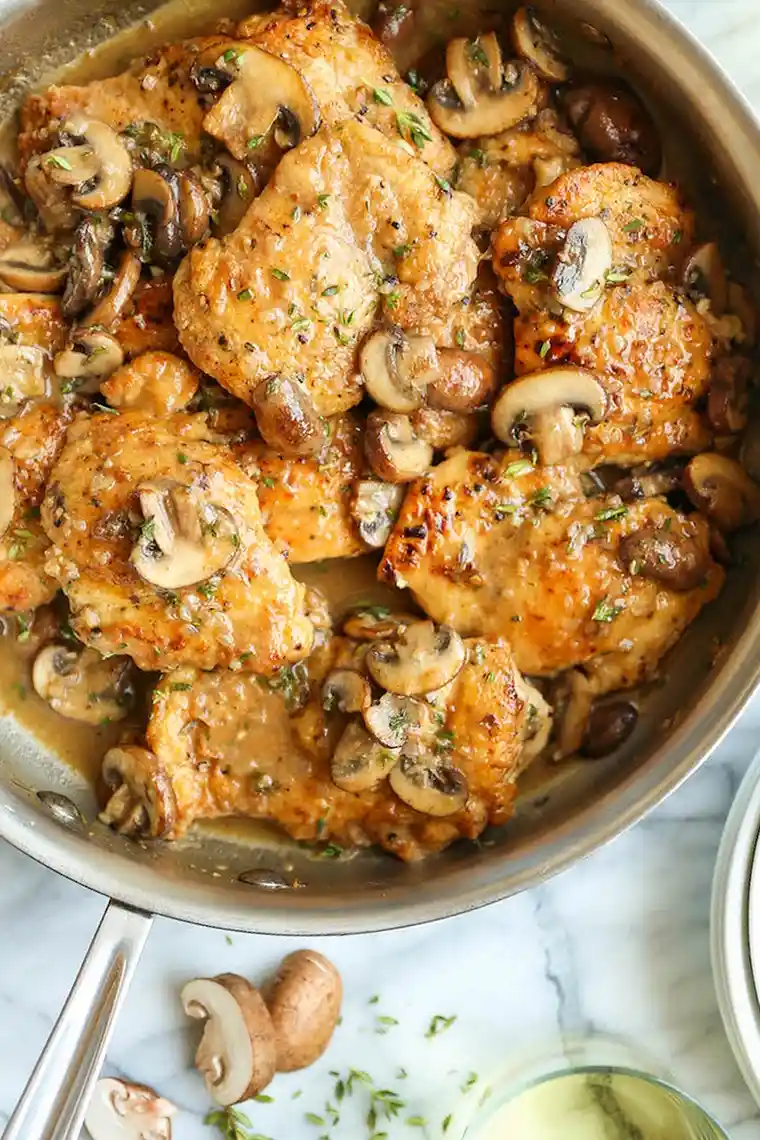
List of ingredients
- 1 1/2 pounds boneless, skinless chicken thighs – provides juicy meat for the dish.
- Kosher salt and freshly ground black pepper – used for basic seasoning.
- 5 1/2 tablespoons all-purpose flour (divided) – used for dredging and thickening the sauce.
- 1 tablespoon canola oil – prevents the chicken from sticking to the pan.
- 1 tablespoon unsalted butter – adds richness to the sauce.
- 3 cloves garlic, minced – provides a strong aromatic base.
- 1 small shallot, diced – adds a mild, sweet onion flavor.
- 8 ounces cremini mushrooms, sliced – adds earthiness and texture.
- 1 cup chicken stock – creates the liquid base for the pan sauce.
- 2 teaspoons chopped fresh thyme leaves – adds herbal depth.
- 2 tablespoons chopped fresh parsley leaves – used for a fresh finish.
step-by-step instructions
- Season and Coat: Season the chicken thighs with 1 teaspoon salt and 1/2 teaspoon pepper, then dredge them in 4 tablespoons of flour until evenly coated.
- Sear Chicken: Heat canola oil and butter in a large cast iron skillet over medium heat. Working in batches, cook chicken in a single layer until golden brown and the internal temperature reaches 165 degrees F, about 4-5 minutes per side, then set aside.
- Sauté Aromatics: Reduce heat to medium-low. Add the minced garlic, diced shallot, and sliced mushrooms, cooking for about 4 minutes until the mushrooms are tender and browned. Season with salt and pepper.
- Create Roux: Whisk in the remaining 1 1/2 tablespoons of flour and cook for approximately 1 minute until the mixture is lightly browned.
- Simmer Sauce: Gradually whisk in the chicken stock and fresh thyme. Bring the mixture to a boil, then reduce the heat and simmer for about 3 minutes until the sauce has reduced and thickened.
- Finish and Combine: Stir in the chopped parsley and season with salt and pepper to taste. Return the cooked chicken thighs to the skillet.
- Serve: Serve the dish immediately while hot.
Cooking Techniques for Better Results
Searing in Batches
Avoid overcrowding the skillet by cooking the chicken thighs in two or three separate groups. When too much meat is added at once, the pan temperature drops, causing the chicken to steam in its own juices rather than sear. This prevents the formation of a golden-brown crust and leads to a softer texture.
Using a Meat Thermometer
An instant-read thermometer is the only way to ensure chicken thighs are cooked to exactly 165 degrees F. Overcooking dark meat can lead to a rubbery texture, while undercooking poses safety risks. Insert the probe into the thickest part of the thigh to get an accurate reading.
Achieving Browned Mushrooms
Allow the mushrooms to sit undisturbed in the pan for a few minutes before stirring. Constant stirring releases moisture too quickly, which boils the mushrooms instead of browning them. Proper browning concentrates the flavor and provides a better texture for the sauce.
Controlling Pan Temperature
Switching from medium heat for searing to medium-low for the sauce is critical. Garlic and shallots burn quickly at high temperatures, which creates a bitter taste in the final dish. Lowering the heat ensures these aromatics soften and release their oils without scorching.
Ingredient Modifications
Alternative Mushroom Options
While cremini mushrooms are standard, you can use a variety of other types. Shiitake mushrooms offer a deeper umami flavor, while oyster mushrooms provide a more delicate texture. White button mushrooms are a milder, more accessible alternative that works well in this sauce.
Using Chicken Breasts
Chicken breasts can be used as a substitute for thighs, but they require a shorter cooking time. Because breasts are leaner, they dry out more quickly if overcooked. Reduce the searing time and check the internal temperature frequently to maintain juiciness.
Fresh vs Dried Herbs
If fresh thyme and parsley are unavailable, dried herbs can be used. The general conversion ratio is one tablespoon of fresh herbs to one teaspoon of dried herbs. Dried herbs are more concentrated, so using too much can make the sauce taste medicinal.
Cooking Oil Alternatives
Canola oil is used for its high smoke point and neutral flavor, but avocado oil or grapeseed oil are excellent substitutes. Avoid using extra-virgin olive oil for the initial high-heat sear, as it can smoke and develop a burnt flavor at medium-high temperatures.
Low-Sodium Broth Selection
Since salt is added during the dredging and sautéing phases, using low-sodium or unsalted chicken stock is recommended. This prevents the final sauce from becoming overly salty as it reduces. You can always add more salt at the end if the flavor is too mild.
Recommended Side Dishes
Starch Pairings
Mashed potatoes are a classic choice as they soak up the garlic butter sauce effectively. For a different texture, try serving the chicken over wild rice or quinoa. Creamy polenta or buttered egg noodles also complement the earthiness of the mushrooms.
Vegetable Accompaniments
Pair this rich dish with a vegetable that provides a bit of acidity or freshness. Roasted broccoli with lemon or glazed carrots add color and nutritional balance. An Italian chopped salad with a vinaigrette can cut through the richness of the butter sauce.
Bread Selections
A crusty baguette or toasted sourdough bread is ideal for cleaning the remaining sauce from the plate. Garlic bread is another option, though it may be redundant given the garlic in the chicken. Warm dinner rolls also provide a soft contrast to the seared chicken.
Storage and Reheating Guidelines
Refrigeration Process
Store leftover chicken and sauce in an airtight container in the refrigerator for 3 to 4 days. Allow the food to cool slightly before sealing the container to prevent excessive condensation. This helps maintain the quality of the flour-based sauce.
Oven Reheating Instructions
To avoid the rubbery texture often caused by microwaving, reheat the chicken in the oven at 350 degrees F. Place the chicken and sauce in a baking dish and cover it tightly with aluminum foil. Heat until the internal temperature reaches 165 degrees F.
Microwave Reheating Method
If using a microwave, heat the dish in short 30-second intervals, stirring in between. Add a teaspoon of water or chicken stock to the sauce before heating to prevent it from becoming too thick or separating. Keep the dish covered with a microwave-safe lid.
Advanced Prep Tips
Mise en Place Organization
Because this recipe moves quickly once the heat is on, prepare all ingredients beforehand. Mince the garlic, dice the shallots, and slice the mushrooms before starting the stove. Having your flour measured and stock ready prevents the garlic from burning while you prep other items.
Flour Coating Timing
Dredge the chicken in flour immediately before placing it in the pan. If the chicken sits in the flour coating for too long, the flour can become gummy and wet. A fresh coat ensures a crispier, golden-brown exterior during the searing process.
Common Troubleshooting Solutions
Fixing a Thin Sauce
If the sauce is too thin after simmering, continue to cook it on medium-low heat for another 2 to 3 minutes. The reduction process evaporates water, which concentrates the flavors and thickens the roux. Avoid adding more flour at this stage, as it may leave a raw taste.
Adjusting an Overly Thick Sauce
If the sauce becomes too thick or paste-like, whisk in a tablespoon of chicken stock or water at a time. Do this over low heat until the desired consistency is reached. Stirring gently prevents the sauce from breaking or separating.
Preventing Meat from Sticking
Ensure the oil and butter are shimmering and hot before adding the chicken. If the meat sticks, avoid forcing it out of the pan; it will naturally release once a proper crust has formed. Using a cast iron skillet helps maintain a steady temperature to prevent sticking.
Managing Mushroom Moisture
Mushrooms release a significant amount of water when they first hit the pan. If the pan becomes too watery, increase the heat slightly to evaporate the liquid before adding the flour. This ensures the flour cooks properly into a roux rather than clumping.
Frequently Asked Questions
Can I use a different skillet?
Yes, you can use a stainless steel or non-stick skillet if you do not have cast iron. Stainless steel is excellent for creating a fond (browned bits), while non-stick is easier for cleanup but doesn’t sear the meat as effectively.
Is there a gluten-free option?
To make this recipe gluten-free, replace the all-purpose flour with a 1:1 gluten-free flour blend or cornstarch. If using cornstarch, mix it with a little cold water first to create a slurry before adding it to the pan.
Can I add other vegetables?
Adding fresh spinach or peas at the very end of the process is a great way to add nutrients. Stir in the spinach and let it wilt for about 60 seconds before returning the chicken to the pan.
How to avoid burning the flour?
Whisk the flour constantly for the one minute it is in the pan. The flour should turn a pale golden color; if it turns dark brown, it may taste burnt and you should start the sauce over.
Can I use a different type of butter?
You can use salted butter, but you must reduce the amount of kosher salt added to the chicken and the sauce. Ghee is another excellent alternative for a higher smoke point and a nuttier flavor.
What if I don’t have shallots?
A small finely diced yellow onion or a white onion can be used as a replacement. Shallots are preferred for their subtle sweetness, but onions provide a similar aromatic base for the mushroom sauce.
How to prevent the sauce from breaking?
Avoid boiling the sauce violently once the butter and flour are incorporated. Keep the heat at a gentle simmer and stir occasionally to maintain a smooth, emulsified consistency.
Can I freeze this dish?
This dish can be frozen for up to two months, though the sauce may separate during thawing. To reheat from frozen, thaw in the refrigerator overnight and warm slowly in a pan with a splash of extra stock.
How to thicken the sauce without flour?
You can use a cornstarch slurry or a reduction method. For a reduction, simmer the stock for a longer period until it naturally thickens, though this will result in a less creamy sauce than the flour method.
Can I use chicken thighs with skin on?
Yes, but you will need to sear the skin side first to render the fat. This will add more flavor and a crispier texture, but it will increase the overall fat content of the meal.
Print
Garlic Butter Mushroom Chicken Thighs
- Total Time: 30 minutes
- Yield: 4 servings 1x
- Diet: General
Description
Golden brown, super juicy, tender chicken smothered in a garlicky, mushroom butter sauce. So quick so good!
Ingredients
- 1 1/2 pounds boneless, skinless chicken thighs
- Kosher salt and freshly ground black pepper, to taste
- 5 1/2 tablespoons all-purpose flour, divided
- 1 tablespoon canola oil
- 1 tablespoon unsalted butter
- 3 cloves garlic, minced
- 1 small shallot, diced
- 8 ounces cremini mushrooms, sliced
- 1 cup chicken stock
- 2 teaspoons chopped fresh thyme leaves
- 2 tablespoons chopped fresh parsley leaves
Instructions
- Step: Season chicken with 1 teaspoon salt and 1/2 teaspoon pepper. Dredge chicken in 4 tablespoons flour until evenly coated.
- Step: Heat canola oil and butter in a large cast iron skillet over medium heat. Working in batches, add chicken to the skillet in a single layer and cook until golden brown and cooked through, reaching an internal temperature of 165 degrees F, about 4-5 minutes per side; set aside. Reduce heat to medium low.
- Step: Add garlic, shallot and mushrooms, and cook, stirring occasionally, until mushrooms are tender and browned, about 4 minutes; season with salt and pepper, to taste.
- Step: Whisk in remaining 1 1/2 tablespoons flour until lightly browned, about 1 minute.
- Step: Gradually whisk in chicken stock and thyme. Bring to a boil; reduce heat and simmer, stirring occasionally, until reduced and slightly thickened, about 3 minutes.
- Step: Stir in parsley; season with salt and pepper, to taste. Return chicken to the skillet.
- Step: Serve immediately.
Notes
For a deeper flavor, use a variety of mushrooms such as baby bella, chanterelles, shiitake or oyster mushrooms. To reheat leftovers, use the oven at 350°F covered in aluminum foil to prevent the chicken from becoming rubbery.
- Prep Time: 15 minutes
- Cook Time: 15 minutes
- Category: Main Course
- Method: Skillet
- Cuisine: American
Nutrition
- Serving Size: 1 serving
- Calories: 380 kcal
- Sugar: 5 g
- Sodium: 720 mg
- Fat: 22 g
- Saturated Fat: 8 g
- Unsaturated Fat: 12 g
- Trans Fat: 0 g
- Carbohydrates: 14 g
- Fiber: 2 g
- Protein: 32 g
- Cholesterol: 125 mg