This recipe provides a sweet and savory marinade for perfectly charred salmon fillets. It is an efficient way to prepare a healthy dinner that works well for guests or quick weeknight meals.
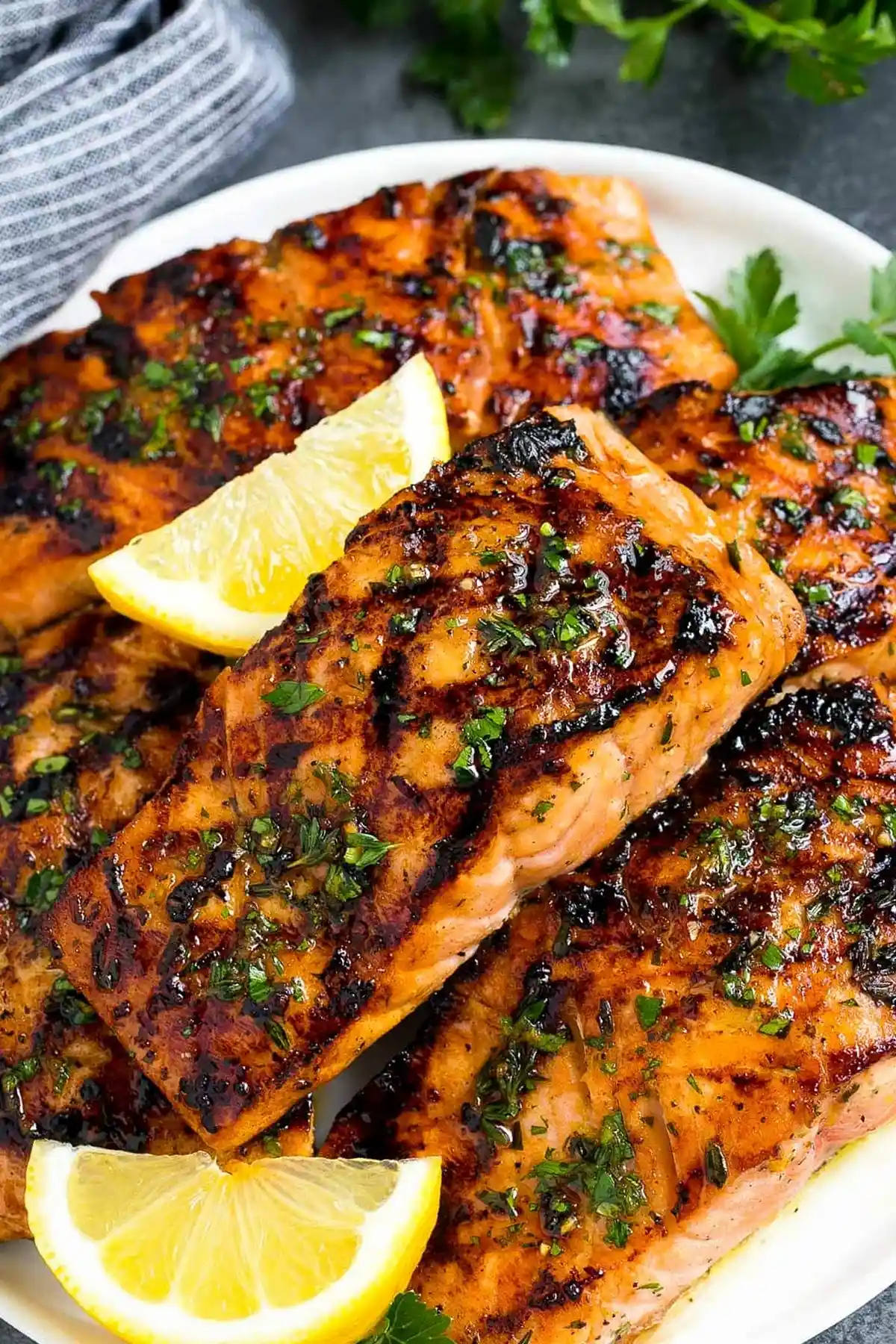
List of ingredients
- 6 salmon fillets (4-6 ounces each) – ensure they are similar in size for even cooking.
- 5 tablespoons olive oil – provides moisture and prevents the fish from sticking.
- 1 1/2 tablespoons brown sugar – adds a touch of sweetness and aids caramelization.
- 1 1/2 tablespoons soy sauce – brings umami and a salty depth to the marinade.
- 1 teaspoon lemon zest – adds bright, fresh citrus notes.
- 1 teaspoon Dijon mustard – provides a tangy balance to the sugar.
- 1 tablespoon parsley leaves (chopped) – adds a fresh, herbal flavor.
- 2 teaspoons thyme leaves (chopped) – contributes an earthy, aromatic quality.
- 3/4 teaspoon salt – enhances the overall flavor profile.
- 1/2 teaspoon pepper – adds a mild, spicy warmth.
- 1 teaspoon minced garlic – gives a pungent and aromatic base.
step-by-step instructions
- Prepare the marinade base: Place the olive oil, brown sugar, soy sauce, lemon zest, Dijon mustard, parsley, thyme, salt, and pepper in a bowl. Whisk these together until the brown sugar is fully dissolved and the mixture is smooth.
- Set aside the glaze: Reserve 1 tablespoon of the prepared marinade in a small container and place it in the refrigerator. Add the minced garlic to the remaining marinade in the bowl.
- Marinate the salmon: Add the salmon fillets to the bowl. Spoon the marinade evenly over the fish to ensure full coverage, then cover the bowl with plastic wrap.
- Chill for flavor: Place the salmon in the refrigerator to marinate for at least 1 hour, but no more than 8 hours. This allowing the herbs and citrus to penetrate the flesh.
- Clean the fillets: Remove the salmon from the marinade. Carefully scrape off any excess bits of garlic or herbs, as these small particles can burn quickly on a hot grill.
- Prepare the grill: Preheat an outdoor grill or indoor grill pan over medium-high heat. If using an outdoor grill, thoroughly coat the grill grates with vegetable oil using a paper towel.
- Grill the fish: Add the salmon fillets to the hot surface. Cook for 5-6 minutes on each side, or until the salmon is opaque throughout and flakes easily.
- Finish and serve: Brush the reserved marinade over the top of the fillets just before taking them off the heat. Serve immediately while hot.
Professional Grilling Techniques
Maintain Consistent Grill Temperature
Use a grill thermometer to ensure your surface is at a steady medium-high heat. This allows the exterior to sear and caramelize without overcooking the center. If the grill is too hot, the sugars in the marinade will burn before the fish is done.
Prevent Fish from Sticking
Start with a completely clean grill grate to avoid food residue acting as glue. Apply a layer of oil to the grates immediately before placing the fish. Avoid moving the fillets too early, as the fish naturally releases from the metal once a proper sear has formed.
Handle Fillets Gently
Use a wide, thin fish spatula to flip the salmon. This prevents the delicate flesh from breaking or flaking apart during the process. Flip the fish only once per side to maintain the integrity of the fillet.
Verify Doneness with Temperature
While opacity is a good sign, an instant-read thermometer is the most reliable method. Aim for an internal temperature of 145 degrees F. Remove the fish slightly before this point to allow carry-over cooking to finish the process.
Ingredient Substitutions and Swaps
Use Dried Herbs Instead of Fresh
If fresh parsley and thyme are unavailable, you can use dried versions. Use one-third of the amount of dried herbs compared to the fresh requirements. Dried herbs are more concentrated and can become overpowering if used in full quantities.
Alternative Sweeteners for Caramelization
Maple syrup or honey can replace brown sugar for a different flavor profile. These liquid sweeteners create a thicker glaze that adheres well to the salmon. Use an equal tablespoon measurement for the substitution.
Different Mustard Options
While Dijon provides a sharp tang, whole grain mustard adds a nice texture and a milder flavor. Honey mustard can also be used if you prefer a sweeter profile. Ensure the mustard is unsweetened if you are already using brown sugar.
Gluten-Free Soy Substitutes
For those avoiding gluten, replace soy sauce with tamari or coconut aminos. Tamari offers a taste very similar to traditional soy sauce. Coconut aminos provide a slightly sweeter, lower-sodium alternative.
Flavor Variations
Add a Spicy Element
Incorporate red chili flakes or a dash of sriracha into the marinade for a spicy kick. This heat balances well with the sweetness of the brown sugar. Start with a small amount and adjust based on your preference.
Increase Garlic Intensity
For those who love a strong garlic flavor, increase the minced garlic to one full tablespoon. Ensure the garlic is finely minced to distribute the flavor evenly. Be extra careful to scrape excess garlic off before grilling to avoid bitterness.
Trial Other Fresh Herbs
Swap parsley and thyme for fresh dill or basil to change the aroma. Dill is a classic pairing with salmon and adds a bright, lemony quality. Basil provides a sweeter, peppery note that works well in the summer.
Finish with a Butter Baste
During the last two minutes of cooking, melt a small knob of butter on the grill and spoon it over the salmon. This adds a rich, decadent finish to the fillets. The butter helps carry the herb flavors deeper into the fish.
Alternative Cooking Methods
Bake in the Oven
Preheat your oven to 400 degrees F and place the marinated salmon on a parchment-lined baking sheet. Bake for 12-15 minutes depending on the thickness of the fillets. This method is more consistent and less prone to burning.
Broil for a Charred Top
Place the salmon on a broiler pan and set the oven to high. Broil for 6-8 minutes, keeping a close eye on the surface to prevent the sugars from burning. This mimics the charred effect of a grill in a shorter timeframe.
Pan Sear for Crisp Skin
Heat a non-stick skillet with a bit of oil over medium-high heat. Place the salmon skin-side down and press gently with a spatula to ensure maximum contact. Sear for 5 minutes before flipping to finish the top.
Cook in Foil Packets
Wrap the marinated salmon and a few vegetable slices in aluminum foil. Grill the packets for 10-12 minutes. This method steams the fish, keeping it exceptionally moist while simplifying cleanup.
Best Side Dish Pairings
Serve with Roasted Vegetables
Asparagus or Brussels sprouts roasted with olive oil and salt complement the richness of the salmon. The charred edges of the vegetables mirror the flavor of the grilled fish. Roast them at the same temperature as the oven-baked salmon option.
Pair with Fresh Garden Salads
A cucumber and tomato salad with a light vinaigrette provides a refreshing contrast. The acidity of the dressing cuts through the fatty oils of the salmon. Add some red onion for a bit of extra bite.
Choose Starchy Accompaniments
Wild rice or quinoa serves as a hearty base that absorbs the extra marinade. Roasted baby potatoes with rosemary are another excellent choice. These options provide the necessary carbohydrates to make the meal filling.
Incorporate Grilled Zucchini
Slice zucchini into long planks and grill them alongside the salmon. Brush them with the same olive oil and lemon zest used in the marinade. This creates a cohesive flavor profile across the entire plate.
Storage and Preservation
Refrigerate Leftovers Correctly
Store cooked salmon in an airtight container in the refrigerator. It will remain fresh and safe to eat for 3 to 4 days. Ensure the fish is completely cooled before sealing the container to prevent moisture buildup.
Freeze Cooked Salmon
Wrap the salmon tightly in plastic wrap and place it in a freezer-safe bag. It can be stored for up to two months. Thaw the fish in the refrigerator overnight before reheating to maintain the texture.
Store Extra Marinade
If you made an extra batch of marinade without adding the fish, store it in a jar in the fridge. It will last up to 3 days. Use it as a dressing for a seafood salad or a marinade for shrimp.
Reheating Instructions
Use the Oven for Best Texture
Preheat the oven to 275 degrees F and place the salmon on a tray. Cover it loosely with foil to prevent the surface from drying out. Heat for 10-12 minutes until warmed through.
Microwave for Speed
Place the fillet on a microwave-safe plate and cover it with a damp paper towel. Use a medium power setting and heat in 30-second bursts. This prevents the fish from becoming rubbery or overcooked.
Pan Heat for Crispiness
Place a teaspoon of oil in a skillet over medium heat. Quickly sear the salmon for 1-2 minutes per side. This restores some of the original crust and warmth to the fish.
Make-Ahead Strategy
Prepare Marinade in Advance
You can whisk the marinade ingredients together up to 3 days before you intend to cook. Keep it in a sealed container in the refrigerator. This saves time on the day of the meal.
Pre-portion the Salmon
Cut a large side of salmon into 4-6 ounce fillets ahead of time. Store them in the fridge on a tray with parchment paper. This ensures they are ready to be dropped into the marinade quickly.
Organize Your Grilling Station
Set up your tools, including the spatula, oil, and reserved glaze, before you start the grill. Having your mise en place ready prevents you from leaving the fish unattended on the heat. This reduces the risk of overcooking.
Troubleshooting Common Issues
Fix Dry Salmon
Dryness is usually caused by overcooking. If your salmon is too dry, try reducing the cook time by one minute per side next time. Using a thermometer to hit exactly 145 degrees F is the best prevention.
Solve Burning Marinade
If the marinade burns before the fish is done, you may have left too many herb bits on the fillets. Be more aggressive in scraping off the garlic and parsley before grilling. Alternatively, lower the heat slightly.
Prevent Salmon from Breaking
Salmon often breaks if flipped too early. Wait until the fish naturally releases from the grill grates. If it sticks, give it another minute to develop a proper crust.
Frequently Asked Questions
How do you know when salmon is done?
The salmon is cooked through when the flesh changes from translucent to opaque. It should flake easily when tested with a fork. An internal temperature of 145 degrees F confirms it is ready.
Can I grill salmon with the skin on?
Yes, grilling with the skin on is recommended. Start with the skin-side down to firm up the fillet and protect the meat from the direct heat. This also makes flipping much easier.
What is the best type of salmon for grilling?
Atlantic salmon is great for its high fat content, which keeps it moist. Sockeye salmon offers a bolder flavor and deeper color but can dry out faster. Choose based on your preference for flavor versus texture.
How long can salmon marinate?
The ideal marinating time is between 1 and 8 hours. Marinating for less than an hour may not provide enough flavor. Marinating for longer than 8 hours can cause the citrus and salt to break down the fish texture, making it mushy.
Print
Garlic and Herb Grilled Salmon
- Total Time: 85 minutes
- Yield: 6 servings 1x
- Diet: General
Description
This grilled salmon is coated in a flavorful marinade then grilled until golden brown. A super easy dinner option that will earn you rave reviews! This salmon can also be baked, broiled or pan seared.
Ingredients
- 6 salmon fillets (4–6 ounces each)
- 5 tablespoons olive oil
- 1 1/2 tablespoons brown sugar
- 1 1/2 tablespoons soy sauce
- 1 teaspoon lemon zest
- 1 teaspoon Dijon mustard
- 1 tablespoon parsley leaves (chopped)
- 2 teaspoons thyme leaves (chopped)
- 3/4 teaspoon salt
- 1/2 teaspoon pepper
- 1 teaspoon minced garlic
Instructions
- Whisk: Place the olive oil, brown sugar, soy sauce, lemon zest, Dijon mustard, parsley, thyme, salt and pepper in a bowl. Whisk to combine.
- Prepare: Reserve 1 tablespoon of the marinade in the refrigerator for later use. Add the garlic to the bowl.
- Marinate: Add the salmon to the bowl of marinade. Spoon the marinade over the salmon and cover the bowl.
- Chill: Marinate in the refrigerator for at least 1 hour, or up to 8 hours.
- Clean: Remove the salmon from the marinade and scrape off any excess bits of herbs or garlic (otherwise they could burn on the grill!).
- Heat: Preheat an outdoor grill or indoor grill pan over medium high heat. If you’re using an outdoor grill, be sure to thoroughly coat your grill grates with vegetable oil.
- Grill: Add the salmon fillets and cook for 5-6 minutes on each side or until salmon is opaque throughout.
- Finish: Brush the reserved marinade over the salmon fillets, then serve.
Notes
You can make this salmon marinade up to 3 days before you plan to use it. Find salmon fillets that are about the same size so they take a similar amount of time to cook through.
- Prep Time: 10 minutes
- Cook Time: 15 minutes
- Category: Main
- Method: Grilling
- Cuisine: American
Nutrition
- Serving Size: 1 fillet
- Calories: 361 kcal
- Sugar: 3 g
- Sodium: 627 mg
- Fat: 16 g
- Saturated Fat: 3 g
- Unsaturated Fat: 13 g
- Trans Fat: 0 g
- Carbohydrates: 3 g
- Fiber: 0 g
- Protein: 34 g
- Cholesterol: 93 mg