This quick pasta dish combines blistered cherry tomatoes and aromatic basil for a light and vibrant dinner. It takes only 20 minutes to prepare and is finished with creamy burrata cheese for added richness.
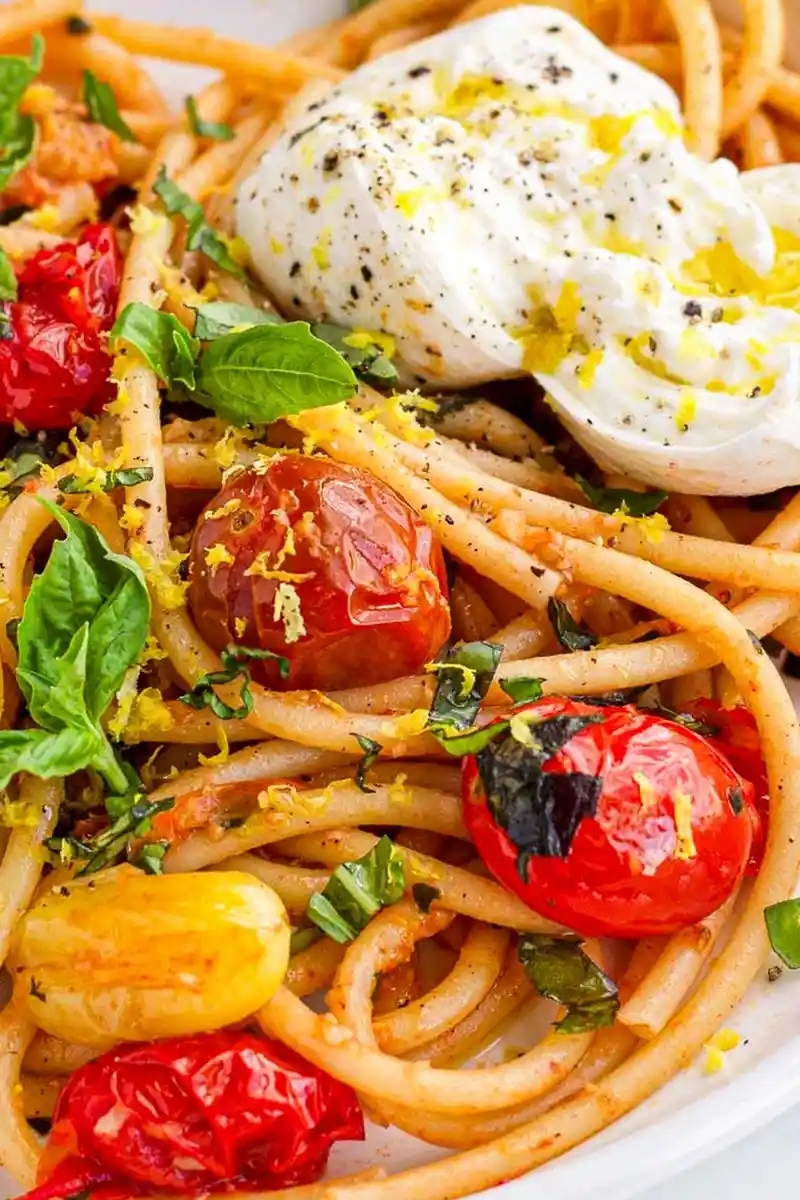
List of ingredients
- ½ pound bucatini pasta (or spaghetti or linguini) – provides a hearty, chewy base.
- 4 to 5 cups heirloom cherry tomatoes (about 24 ounces) – selected for natural sweetness and visual variety.
- ¼ cup extra virgin olive oil (plus more for drizzling) – used for sautéing and finishing.
- 4 cloves garlic, minced – adds a pungent, aromatic depth to the sauce.
- ½ cup fresh sliced basil (plus more for garnish) – provides a peppery, herbal finish.
- Salt and pepper to taste – used for essential seasoning across all steps.
- Lemon zest from 1 lemon (or to taste) – adds a bright, citrusy acidity to balance the richness.
- Burrata cheese – served as a fresh topping for a creamy contrast.
step-by-step instructions
- Cook the pasta: Boil the bucatini pasta in a pot of generously salted water according to the package directions. Reserve 1 cup of the starchy pasta water before draining. Rinse the pasta with cold water to stop the cooking process and set it aside.
- Sauté the aromatics: Heat ¼ cup of olive oil in a large skillet over medium heat. Add the minced garlic and sauté for approximately 1 minute until it becomes fragrant but not browned.
- Blister the tomatoes: Stir in the cherry tomatoes. Cook for 5-6 minutes, stirring occasionally, until the skins begin to burst and release their juices. If the tomatoes are not bursting, use a paring knife to poke small holes in them to speed up the process.
- Combine and emulsify: Toss the cooked pasta into the skillet with the blistered tomatoes. Add the reserved pasta water a small amount at a time, stirring constantly until the liquid incorporates into a rustic sauce that coats the noodles.
- Season and finish: Stir in the sliced basil and season with salt and pepper. Drizzle with additional olive oil and sprinkle the fresh lemon zest over the top.
- Plating: Transfer the pasta to plates and top with fresh burrata cheese and extra basil leaves. Serve immediately while hot.
Optimizing Your Pasta Results
Use High-Quality Extra Virgin Olive Oil
The flavor of this dish relies heavily on the quality of the fat used. Choose a cold-pressed extra virgin olive oil with a robust profile to ensure a peppery finish. This oil acts as both a cooking medium and a seasoning agent in the final drizzle.
Salt Your Pasta Water Generously
Adding a significant amount of salt to the boiling water is the only chance to season the pasta noodles themselves. This prevents the dish from tasting flat. The salt should be dissolved completely before the pasta is added to the pot.
Maintain Al Dente Texture
Cook the pasta slightly less than the package suggests to keep it al dente. Since the pasta is tossed in a hot skillet with tomato juices, it continues to cook slightly. This prevents the noodles from becoming mushy or overcooked during the final emulsion.
Utilize Starchy Pasta Water
The reserved pasta water contains starch released from the wheat during boiling. When added to the oil and tomato juices, it acts as an emulsifier. This creates a cohesive sauce that clings to the pasta rather than pooling at the bottom of the plate.
Alternative Ingredient Choices
Swap Bucatini for Other Pasta Shapes
While bucatini is ideal for its hollow center and thickness, other long noodles like spaghetti or linguine work well. For those who prefer short pasta, penne or rotini are excellent choices as they trap the burst tomatoes and sauce in their ridges.
Use Regular Cherry or Roma Tomatoes
Heirloom cherry tomatoes provide a beautiful color palette, but standard red cherry tomatoes are a perfect substitute. If using Roma tomatoes, dice them into small pieces to mimic the size and consistency of cherry tomatoes for even cooking.
Dairy-Free Cheese Alternatives
To make this recipe vegan, replace the burrata with a cashew-based mozzarella or a dollop of almond ricotta. These alternatives provide a similar creaminess and tang without the use of animal-derived dairy products.
Whole Grain or Gluten-Free Noodles
Whole wheat pasta adds a nuttier flavor and more fiber to the meal. For a gluten-free version, use brown rice or chickpea pasta. Be mindful that gluten-free pastas often release different amounts of starch, so adjust the reserved water accordingly.
Ways to Enhance the Meal
Adding Grilled Proteins
This pasta serves as an excellent base for various proteins. Grilled lemon-garlic chicken breast or pan-seared shrimp complement the tomato and basil flavors. For a richer option, sliced steak can be placed on top of the finished dish.
Incorporating Extra Vegetables
To increase the nutrient density, add sautéed zucchini slices or baby spinach to the skillet. Add the spinach during the final minute of cooking so it wilts without losing its bright green color.
Pairing with Crusty Breads
Serve the pasta with toasted ciabatta or a side of garlic focaccia. The porous nature of these breads makes them ideal for soaking up the remaining olive oil and tomato juices left on the plate.
Creating a Full Summer Menu
Pair this main course with a light side salad, such as a watermelon and feta salad or a classic Caprese. A chilled cucumber salad with a vinegar-based dressing also provides a refreshing contrast to the warm pasta.
Storing and Reheating Guidance
Refrigeration Guidelines
Store leftover pasta in an airtight container in the refrigerator for up to two days. The pasta will naturally absorb more of the sauce as it sits, which may make the dish appear drier than when it was first served.
Best Reheating Methods
Reheat the pasta in a skillet over low heat with a splash of water or olive oil. This helps loosen the sauce and restores the moisture. Avoid overcooking during the reheating process to prevent the noodles from breaking.
Refreshing Dried-Out Pasta
If the pasta has become too thick after refrigeration, add a tablespoon of water or a squeeze of fresh lemon juice before reheating. This re-emulsifies the fats and brings back the brightness of the sauce.
Make-Ahead Component Preparation
You can mince the garlic and slice the basil a few hours in advance to save time. However, do not mix the basil into the sauce until the very end, as heat can cause the leaves to darken and lose their fresh aroma.
Troubleshooting Common Issues
Fixing a Watery Sauce
If the sauce feels too thin, simmer the tomato mixture for an additional two minutes before adding the pasta. This allows the water to evaporate and the sugars in the tomatoes to concentrate, creating a thicker consistency.
Preventing Burnt Garlic
Garlic burns quickly and becomes bitter. Keep the heat at a steady medium and stir constantly. If the garlic begins to brown too quickly, remove the skillet from the heat immediately or add the tomatoes to lower the temperature.
Managing Tomato Bursting Times
Tomatoes vary in thickness and ripeness, which affects how quickly they burst. If they remain whole after six minutes, increase the heat slightly or use a knife to prick the skin. This releases the internal juices needed for the sauce.
Balancing Acidic Flavors
If the tomatoes are too acidic, add a very small pinch of sugar to the sauce. Alternatively, adding more burrata cheese provides a creamy fat that naturally neutralizes the sharpness of the tomatoes and lemon zest.
Frequently Asked Questions
Can I use sun-dried tomatoes?
Yes, you can use sun-dried tomatoes, but they will provide a more concentrated, sweet flavor than fresh ones. If using them, soak them in warm water first and reduce the amount of olive oil used in the skillet.
Is this recipe suitable for meal prep?
The tomato and garlic base can be prepared in advance, but the pasta and fresh basil should be added just before serving. This ensures the noodles maintain their texture and the herbs stay vibrant.
How do I store leftover burrata?
Keep burrata in its original brine in the refrigerator. Ensure the container is sealed tightly to prevent the cheese from absorbing other food odors. Use it within three days of opening.
Can I add spinach or kale?
Yes, both greens work well. Stir them into the skillet just after the tomatoes have burst. The residual heat will wilt the greens sufficiently without overcooking them.
Print
Fresh Tomato Basil Pasta with Burrata
- Total Time: 20 minutes
- Yield: 4 servings 1x
- Diet: Vegetarian
Description
This fresh Tomato Basil Pasta is a wonderful dinner recipe that comes together in just 20 minutes, featuring bursting cherry tomatoes, fragrant basil, lemon zest, and creamy burrata cheese.
Ingredients
- ½ pound bucatini pasta (or spaghetti or linguini)
- 4 to 5 cups heirloom cherry tomatoes (about 24 ounces)
- ¼ cup extra virgin olive oil (plus more for drizzling)
- 4 cloves garlic, minced
- ½ cup fresh sliced basil (plus more for garnish)
- Salt and pepper to taste
- Lemon zest from 1 lemon
- Burrata cheese (made with microbial rennet)
Instructions
- Step 1: Cook the pasta according to package directions in generously salted water. Reserve 1 cup of the pasta water for later just in case. Drain and run the pasta with cold water to stop the cooking process. Set aside.
- Step 2: In a large skillet, heat ¼ cup of olive oil over medium heat. Add the minced garlic and sauté for about 1 minute until fragrant. Then, add the cherry tomatoes. Cook for about 5-6 minutes until they start bursting, stirring occasionally.
- Step 3: Toss the blistered tomato sauce with the cooked bucatini pasta, adding some of the reserved pasta water little by little as needed until incorporated.
- Step 4: Add the sliced basil and toss to combine. Season with salt and pepper to taste.
- Step 5: Add a few extra drizzles of olive oil. Finish with more basil on top and fresh lemon zest. Serve with burrata cheese.
Notes
For the best results, serve this dish immediately. If preparing in advance, it can be stored in the fridge for up to 2 days; reheat with a drizzle of olive oil. Poking tomatoes with a paring knife can help them burst faster.
- Prep Time: 10 minutes
- Cook Time: 10 minutes
- Category: Main Course
- Method: Stovetop
- Cuisine: Italian
Nutrition
- Serving Size: 1 serving
- Calories: 362 kcal
- Sugar: 5 g
- Sodium: 166 mg
- Fat: 15 g
- Saturated Fat: 2 g
- Unsaturated Fat: 13 g
- Trans Fat: 0 g
- Carbohydrates: 49 g
- Fiber: 3 g
- Protein: 9 g
- Cholesterol: 35 mg