This 15-minute Korean beef bowl offers a high-protein, savory dinner solution perfect for those busy weeknights when you need a satisfying meal without spending hours in the kitchen. By utilizing ground beef, you achieve a tender, flavorful base that absorbs the rich, aromatic bulgogi-inspired sauce in mere minutes, making it an ideal staple for any home cook. Its combination of sweet, salty, and earthy notes ensures that every bite provides a classic taste experience that rivals traditional, more labor-intensive dishes.
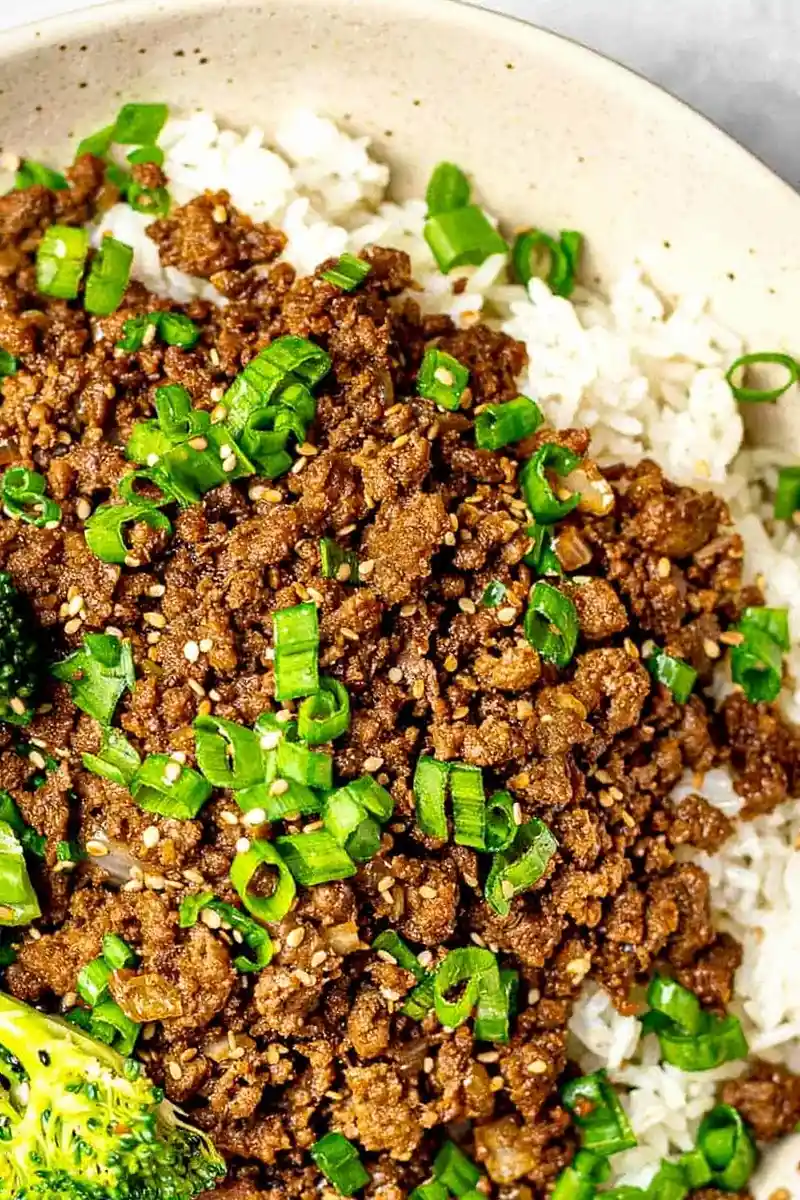
List of ingredients
- 1 lb ground beef
- ¼ cup white onion, chopped
- 1 Tablespoon avocado oil
- 2 stalks scallions, chopped
- 2 cups sesame broccoli or plain steamed broccoli
- Kimchi (to serve on the side, optional)
- Sesame seeds (for garnish)
- Steamed rice (for serving)
- 3 Tablespoons brown sugar, packed tightly
- 2 Tablespoons low sodium soy sauce
- 1 Tablespoon dark soy sauce
- 1 Tablespoon sesame oil
- 2 cloves garlic, minced
- 1 teaspoon ginger, grated
- ½ Tablespoon Korean red pepper flakes (optional)
- ½ Tablespoon gochujang – Korean red pepper paste (optional)
step-by-step instructions
- Step: Mix all the sauce ingredients in a small bowl and set it aside.
- Step: Add the oil and ground beef to a hot pan and break it apart into small pieces while cooking the beef.
- Step: When the beef is almost cooked through, add in the chopped onions and the prepared sauce.
- Step: Continue to stir fry the beef with the sauce until it is completely cooked through, about 2 to 3 minutes.
- Step: Turn off the heat and mix in the chopped scallions.
- Step: Serve the Korean beef over steamed rice with sesame broccoli and kimchi. Garnish with sesame seeds on top and serve immediately.
Understanding Flavor Balancing
Balancing the Sweetness and Saltiness
Achieving the perfect flavor profile in this recipe relies on the interaction between the soy sauce and the brown sugar. If you find the dish is too salty, consider increasing the sugar slightly or adding a splash of rice vinegar to provide a sharp counterpoint. Conversely, if it is too sweet, a small additional drop of low-sodium soy sauce can help ground the flavors and bring them back into balance.
The Role of Aromatics
The combination of fresh ginger and garlic is fundamental to the character of this dish, as they mimic the flavor profile found in traditional slow-marinated bulgogi. Always grate your ginger finely to prevent large, fibrous chunks from ruining the texture of the sauce. If you prefer a stronger punch, you can slightly increase the amount of garlic without overpowering the delicate balance of the sesame oil.
Selecting and Preparing Proteins
Choosing the Right Ground Beef
While this recipe works well with standard ground beef, using a mixture of 85% to 92% lean meat provides the best result for a quick stir-fry. High-fat ground beef can result in excessive liquid in the pan, which dilutes the sauce and makes the final product taste greasy. If you only have higher fat content beef, make sure to drain the excess fat after the initial browning phase but before you add the sauce to ensure a clean, vibrant taste.
Alternative Protein Options
If you prefer a lighter profile, you can easily substitute the beef with ground turkey or chicken, which soak up the bulgogi sauce beautifully. Since poultry is naturally leaner, you may need to add a tiny extra teaspoon of oil to the pan to ensure the meat does not dry out during the searing process. Ground plant-based crumbles also work exceptionally well in this recipe, as they often have a texture that holds onto thick, soy-based sauces quite effectively.
Refining Your Stir-Frying Technique
Managing High Heat for Better Texture
For the most authentic texture, you want the beef to sear rather than steam. Avoid overcrowding your pan by using a large skillet; if the pan is too full, the meat will release too much moisture and boil, which prevents the desired browning. By giving each piece of meat space to hit the hot surface, you ensure a caramelized, savory crust that significantly improves the overall depth of the dish.
Timing the Addition of Sauce
The sauce contains sugar, which means it can scorch if it stays in the pan for too long on high heat. Add the sauce only when the beef is already 90% cooked so that you only need a brief window to glaze the meat and reduce the liquid. This prevents the sugar from turning bitter while ensuring your beef stays tender and succulent.
Optimizing Side Dishes
Achieving Perfect Sesame Broccoli
Steamed broccoli is a standard pairing, but the secret to elevating it is to toss it in a small amount of toasted sesame oil and a pinch of salt immediately after steaming. This simple step infuses the vegetables with a nutty fragrance that connects them to the beef. Ensure you steam the broccoli until it is just tender-crisp to maintain a bright green color and a pleasant crunch that stands up to the heavy savory profile of the main dish.
Why Kimchi is Essential
Kimchi provides the necessary lactic acid and probiotic tang that cuts through the richness of the beef and sugar. If you are serving this for guests, providing the kimchi on the side allows everyone to control their own flavor experience. The crunch and the spicy, vinegary nature of the cabbage serve as a palate cleanser between bites of the savory, sauce-heavy ground beef.
Meal Planning and Storage
Freezing and Refrigeration Guidelines
This dish is an excellent candidate for batch cooking. Once the beef has cooled to room temperature, store it in airtight containers, ideally keeping the rice and the beef separate to prevent the rice from becoming soggy. It will remain high quality in the refrigerator for up to four days or in the freezer for one full month. When freezing, ensure as much air as possible is removed from the container to prevent freezer burn on the meat.
Reheating for Fresh Results
To reheat from a refrigerated state, you can use the microwave in one-minute intervals, stirring in between to ensure the sauce stays moist. If you are reheating from frozen, add a splash of water or a tiny bit of extra soy sauce to the dish before microwaving; this rehydrates the sauce and mimics the freshly cooked texture. Always ensure the internal temperature is steaming hot before consumption for the best quality.
Common Questions Regarding This Recipe
Can I use different types of sugar?
Yes, you can use light brown sugar or even coconut sugar to achieve a slightly more caramel-like depth. However, we recommend avoiding white granulated sugar if possible, as it lacks the molasses content that gives this specific glaze its characteristic rich, glossy appearance and deep flavor.
How can I make this dish even faster?
The fastest way to speed up this recipe is to prep your sauce and chop your onions and scallions while the pan is coming up to temperature. Additionally, using pre-minced garlic and pre-grated ginger, while slightly less aromatic, can shave an extra minute or two off the preparation time if you are truly in a rush.
What should I do if the sauce is too thin?
If you find that your sauce is not thickening to your liking, continue to cook the beef and sauce mixture on high heat for an additional minute or two without adding more liquid. The sugar content in the glaze will naturally reduce and thicken as the water evaporates. Avoid adding cornstarch unless absolutely necessary, as it can dull the vibrant flavor profile of the soy sauce and aromatics.
Is there a way to make this entirely gluten-free?
Absolutely, you can substitute the soy sauce for tamari or a gluten-free liquid aminos blend. Both alternatives offer a similar savory, salty profile that works perfectly with the brown sugar and aromatics, ensuring those with dietary restrictions can enjoy the exact same flavor experience without any compromise to the final quality of the meal.
Print
Fast 15 Minute Korean Beef Bowl
- Total Time: PT15M
- Yield: 4 servings 1x
- Diet: Non-vegetarian
Description
This 15-minute Korean beef bowl is a quick, savory, and satisfying weeknight meal. Ground beef is stir-fried in a delicious bulgogi-inspired sauce made with brown sugar, soy sauce, garlic, and ginger, served perfectly over steamed rice with fresh vegetables.
Ingredients
- 1 lb ground beef
- ¼ cup white onion, chopped
- 1 Tablespoon avocado oil
- 2 stalks scallions, chopped
- 2 cups sesame broccoli or plain steamed broccoli
- Kimchi (to serve on the side, optional)
- Sesame seeds (for garnish)
- Steamed rice (for serving)
- 3 Tablespoons brown sugar, packed tightly
- 2 Tablespoons low sodium soy sauce
- 1 Tablespoon dark soy sauce
- 1 Tablespoon sesame oil
- 2 cloves garlic, minced
- 1 teaspoon ginger, grated
- ½ Tablespoon Korean red pepper flakes (optional)
- ½ Tablespoon gochujang – Korean red pepper paste (optional)
Instructions
- Step: Mix all the sauce ingredients in a small bowl and set it aside.
- Step: Add the oil and ground beef to a hot pan and break it apart into small pieces while cooking the beef.
- Step: When the beef is almost cooked through, add in the chopped onions and the prepared sauce.
- Step: Continue to stir fry the beef with the sauce until it is completely cooked through, about 2 to 3 minutes.
- Step: Turn off the heat and mix in the chopped scallions.
- Step: Serve the Korean beef over steamed rice with sesame broccoli and kimchi. Garnish with sesame seeds on top and serve immediately.
Notes
Gochujang is a sweet and spicy Korean red pepper paste; if you plan to add more than 1 Tablespoon, reduce the brown sugar by a third. For meal prep: divide the beef and rice into containers. Store in the fridge for up to 4 days or freeze for up to 1 month. Reheats well in the microwave.
- Prep Time: PT5M
- Cook Time: PT10M
- Category: Main Course
- Method: Stir-fry
- Cuisine: Korean
Nutrition
- Serving Size: 1 bowl
- Calories: 350 kcal
- Sugar: 10 g
- Sodium: 362 mg
- Fat: 23 g
- Saturated Fat: 9 g
- Unsaturated Fat: 13 g
- Trans Fat: 0 g
- Carbohydrates: 14 g
- Fiber: 2 g
- Protein: 22 g
- Cholesterol: 81 mg