Achieving perfectly grilled barbecue chicken that balances crispy skin with succulent, tender meat requires a simple yet effective two-zone grilling technique. By utilizing both direct high heat for searing and indirect heat for gentle finishing, you ensure the chicken stays moist without burning the sauce. This reliable method delivers a professional-grade result right in your backyard, making it an ideal choice for any summer gathering or quick family dinner.
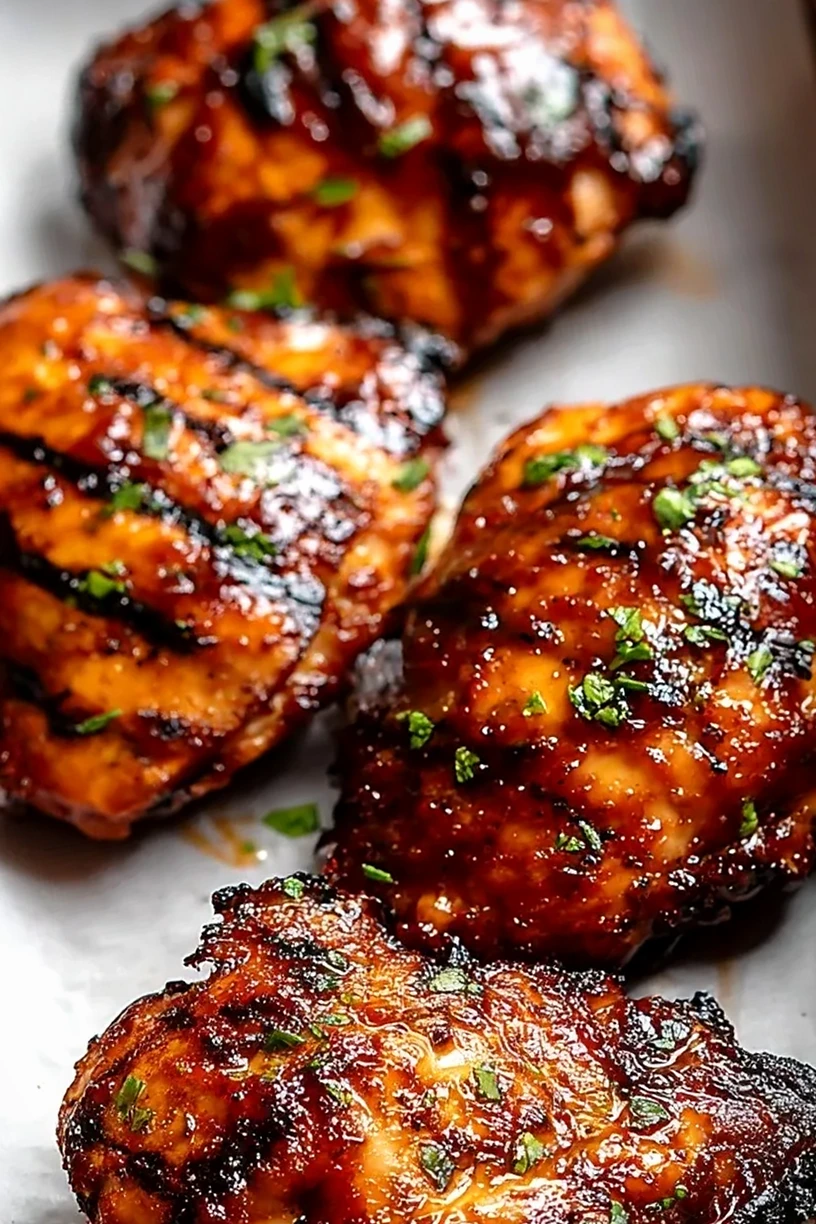
List of ingredients
- 4 bone-in, skin-on chicken thighs (approx. 1.5 lbs)
- 2 tablespoons olive oil
- 1 tablespoon kosher salt
- 1 teaspoon cracked black pepper
- 1 teaspoon smoked paprika
- 1 teaspoon garlic powder
- 1/2 cup tomato-based BBQ sauce
- 1 tablespoon apple cider vinegar
step-by-step instructions
- Step: Pat the chicken thighs thoroughly dry with paper towels to ensure optimal skin crisping.
- Step: In a small bowl, combine the salt, pepper, paprika, and garlic powder; apply the dry rub evenly over all surfaces of the chicken.
- Step: Preheat the grill for two-zone cooking, establishing a high-heat direct zone (400°F/204°C) and a cooler indirect zone.
- Step: Clean and lightly oil the grill grates using a lint-free cloth or paper towel.
- Step: Place chicken skin-side down on the direct heat zone and sear for 5 to 7 minutes until the fat renders and the skin is golden brown.
- Step: Flip the chicken and move it to the indirect heat zone.
- Step: Close the grill lid and roast for 25 to 30 minutes, or until the internal temperature reaches 155°F (68°C) as measured by an instant-read thermometer.
- Step: Whisk the BBQ sauce and apple cider vinegar together in a small bowl; brush a generous layer of the mixture onto the chicken thighs.
- Step: Continue cooking over indirect heat for 5 to 10 minutes until the glaze is tacky and the internal temperature reaches a safe 165°F (74°C).
- Step: Remove the chicken from the grill and let it rest for 5 minutes to allow juices to redistribute before serving.
Practical grilling techniques
Maintaining consistent heat across zones
When setting up your grill, ensure your fuel source—whether charcoal or gas—is concentrated to one side to create the dual-temperature environment. A reliable thermometer is essential for monitoring these zones, as external air temperature can fluctuate significantly during the cooking process. Keeping the lid closed as much as possible helps maintain the ambient temperature required for the indirect roasting phase, which keeps the chicken fibers from tightening too quickly.
Achieving the ideal skin texture
Moisture is the enemy of crisp skin, which is why drying the chicken thoroughly with paper towels is the most important step in the prep phase. By removing surface water, the heat can immediately begin rendering the fat under the skin rather than evaporating moisture first. Applying the oil just before placing the chicken on the grates provides the necessary conductivity to ensure the skin browns evenly during that critical initial sear.
Managing the glaze application
Barbecue sauce contains sugars that can caramelize and then burn if left over high heat for too long. By applying the glaze only during the final 5 to 10 minutes of cooking, you prevent the sugars from turning bitter while still allowing the sauce to become sticky and fragrant. A thin, even coat is better than a thick layer, as it allows for better heat penetration and more uniform glazing across the thighs.
Refining your flavor profile
Customizing the dry spice rub
While the base rub uses garlic powder and paprika for a classic profile, you can easily shift the flavor direction by incorporating ground cumin for an earthy, southwestern influence. If you prefer a bit of heat, adding dried chipotle powder or a pinch of cayenne pepper will provide a slow, smoldering burn that balances well with sugary sauces. Ensure you grind your black pepper fresh to maintain its punchy, volatile oil content, which contributes significantly to the aromatic profile.
Selecting the right barbecue sauce
The choice of sauce fundamentally changes the character of the dish, as tomato-based sauces vary wildly in their level of molasses, vinegar, and spice. If your chosen sauce is particularly thick or syrupy, the apple cider vinegar addition is mandatory to thin it out and provide the necessary acidity to balance the richness of the chicken skin. Experimenting with regional styles, such as Kansas City or Carolina-influenced sauces, allows you to customize the final outcome without needing to alter your cooking method.
Serving and storage considerations
Ideal accompaniments for a balanced plate
Pairing this protein with sides that offer contrasting textures and temperatures creates a more well-rounded meal. Grilled corn on the cob provides a natural sweetness that mirrors the barbecue glaze, while a crisp, acidic coleslaw cleanses the palate between bites of the fatty, savory chicken. Potato dishes, such as roasted wedges or a light vinaigrette-based potato salad, work better than heavy cream-based sides, which can compete with the bold flavors of the grilled chicken.
Preserving leftovers for future meals
When storing the chicken, allow it to reach room temperature before moving it to the refrigerator to prevent condensation from softening the skin. Using an airtight glass container will keep the meat from absorbing other refrigerator odors and helps maintain its internal moisture levels for up to three days. If you find the skin loses its crispness upon cooling, a quick stint in a hot air fryer or a toaster oven will revive it better than a traditional microwave would.
Efficient reheating methods
To reheat chicken thighs while keeping them juicy, place them in a preheated oven set to 350°F (175°C) on a rack set over a baking sheet. This allows the heat to circulate around the entire piece, preventing the underside from becoming soggy. If you want a fresh glaze, brush a small amount of extra sauce on the chicken halfway through the reheating process to restore its glossy appearance and stickiness without scorching the exterior.
Frequently asked questions
Why is the two-zone setup required for this recipe?
The two-zone method allows you to sear the skin to get that desirable color and texture using direct heat, while the indirect side acts as an oven to cook the meat through. This prevents the chicken from drying out and stops the high-sugar barbecue sauce from burning before the center of the thigh is fully cooked.
Can I grill this recipe on a standard stovetop griddle?
While an outdoor grill provides the authentic smoky flavor, you can replicate the results indoors using a heavy cast-iron grill pan. Sear the chicken on the stove to get the char marks, then transfer the pan to an oven preheated to 400°F (204°C) to finish the roasting process. You will need to monitor the internal temperature carefully, as indoor equipment often transfers heat more aggressively.
Is it necessary to remove the skin before eating?
The skin is a primary source of flavor and helps protect the meat from drying out during the cooking process. If you prefer not to consume the skin, leaving it on during the grilling phase is still recommended, as it acts as a self-basting barrier that ensures the meat remains exceptionally tender and juicy.
How do I safely verify the chicken is finished?
Using an instant-read meat thermometer is the only way to ensure safety and precision, as chicken thighs are forgiving but can be tricky to judge by eye. Aim for a final internal temperature of 165°F (74°C) at the thickest part of the meat, avoiding any contact with the bone, which can lead to inaccurate readings.
Why should I rest the chicken after grilling?
Resting the chicken for five minutes allows the internal juices, which are pushed to the center by the intense heat, to redistribute throughout the muscle fibers. If you cut into the chicken immediately, these juices will escape onto the cutting board, resulting in drier, less flavorful meat.
Print
Extra-Juicy Grilled BBQ Chicken
- Total Time: 60 minutes
- Yield: 4 servings 1x
- Diet: Gluten-Free
Description
Enjoy the ultimate backyard comfort food with this extra-juicy grilled BBQ chicken. Using bone-in, skin-on thighs and a simple two-zone cooking method ensures perfectly crispy skin and tender, succulent meat every time.
Ingredients
- 4 bone-in, skin-on chicken thighs (approx. 1.5 lbs)
- 2 tablespoons olive oil
- 1 tablespoon kosher salt
- 1 teaspoon cracked black pepper
- 1 teaspoon smoked paprika
- 1 teaspoon garlic powder
- 1/2 cup tomato-based BBQ sauce
- 1 tablespoon apple cider vinegar
Instructions
- Step: Pat the chicken thighs thoroughly dry with paper towels to ensure optimal skin crisping.
- Step: In a small bowl, combine the salt, pepper, paprika, and garlic powder; apply the dry rub evenly over all surfaces of the chicken.
- Step: Preheat the grill for two-zone cooking, establishing a high-heat direct zone (400°F/204°C) and a cooler indirect zone.
- Step: Clean and lightly oil the grill grates using a lint-free cloth or paper towel.
- Step: Place chicken skin-side down on the direct heat zone and sear for 5 to 7 minutes until the fat renders and the skin is golden brown.
- Step: Flip the chicken and move it to the indirect heat zone.
- Step: Close the grill lid and roast for 25 to 30 minutes, or until the internal temperature reaches 155°F (68°C) as measured by an instant-read thermometer.
- Step: Whisk the BBQ sauce and apple cider vinegar together in a small bowl; brush a generous layer of the mixture onto the chicken thighs.
- Step: Continue cooking over indirect heat for 5 to 10 minutes until the glaze is tacky and the internal temperature reaches a safe 165°F (74°C).
- Step: Remove the chicken from the grill and let it rest for 5 minutes to allow juices to redistribute before serving.
Notes
Always dry the chicken skin with paper towels first for the best texture. Use an instant-read thermometer to ensure the chicken is safely cooked without drying it out. You can add a pinch of cayenne to the rub for a spicy kick.
- Prep Time: 20 minutes
- Cook Time: 40 minutes
- Category: Main Course
- Method: Grilling
- Cuisine: American
Nutrition
- Serving Size: 1 thigh
- Calories: 450 kcal
- Sugar: 12 g
- Sodium: 850 mg
- Fat: 28 g
- Saturated Fat: 7 g
- Unsaturated Fat: 19 g
- Trans Fat: 0 g
- Carbohydrates: 15 g
- Fiber: 1 g
- Protein: 34 g
- Cholesterol: 120 mg