Experience the comforting flavors of your favorite sushi roll in an approachable, warm casserole form. This baked salmon dish features seasoned sushi rice, a savory seafood topping, and all the essential garnishes in a convenient, shareable format perfect for any night of the week. It offers a wonderful balance of creamy, spicy, and umami notes that come together beautifully in the oven.
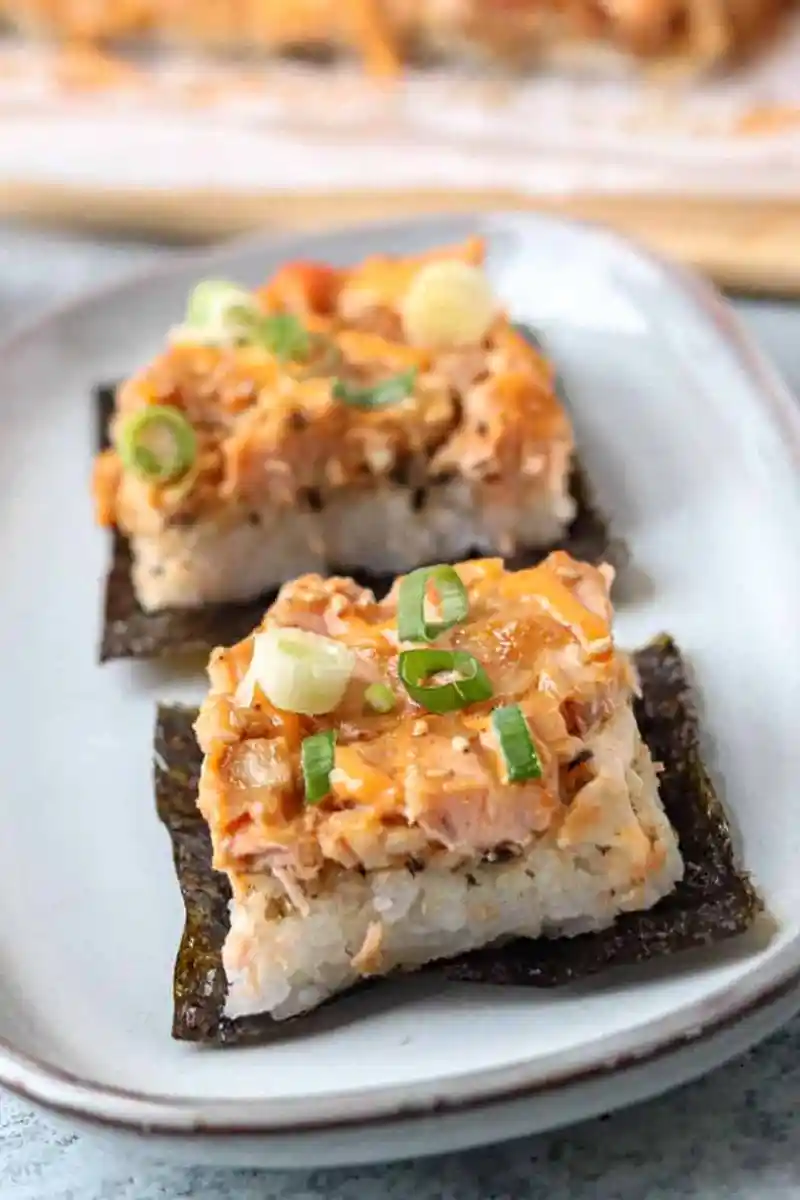
List of ingredients
- 1 cup sushi rice (uncooked)
- 2 tbsp rice vinegar
- 1 tsp salt
- 1 tsp sugar
- 1 1/3 cup cold water
- 10 oz salmon fillet (skin removed)
- 4 oz imitation crab meat
- 1/3 cup mayonnaise
- 2 tbsp reduced sodium soy sauce
- 1 tbsp Sriracha
- 2 tbsp furikake
- 1/3 cup mayonnaise (for sauce)
- 1 tbsp Sriracha (for sauce)
- 2 tsp soy sauce (for sauce)
- scallions
- toasted sesame seeds
- avocado slices
step-by-step instructions
- Step: Preheat the oven to 425 degrees Fahrenheit. Line a 7 x 11” casserole dish with parchment paper.
- Step: Rinse the rice thoroughly on a sieve under cold water.
- Step: Cook rice in water according to package instructions (approximately 20 minutes).
- Step: Let the rice cool for 10 minutes, then season with rice vinegar, salt, and sugar. Mix with a rubber spatula.
- Step: While the rice is cooling, prepare the salmon topping. Dice the raw salmon and imitation crab into small pieces. Transfer to a medium bowl and mix together with mayo, sriracha, and soy sauce.
- Step: Transfer the seasoned rice into the prepared casserole dish and press down into a single layer.
- Step: Sprinkle evenly with furikake.
- Step: Top with the salmon mixture and spread evenly, pressing lightly.
- Step: Bake in preheated oven for 17-20 minutes.
- Step: Let cool for a few minutes, then sprinkle with chopped scallions and cut into squares.
- Step: Serve on its own with a fork or wrapped in roasted seaweed with avocado slices and spicy sriracha mayo (mix together additional mayo, sriracha, and soy sauce until smooth).
Refining Your Sushi Bake Technique
Achieving the Perfect Rice Texture
The secret to a successful sushi bake lies in the texture of the rice. Rinsing the rice until the water runs completely clear is a non-negotiable step because it removes the excess starch that would otherwise make the final dish gummy. Once cooked, let the steam escape for a few minutes before seasoning to ensure the vinegar, sugar, and salt absorb evenly without turning the rice into mush.
Managing the Seafood Topping Consistency
When dicing your salmon, aim for small, uniform cubes about half an inch in size. This consistency ensures that the seafood cooks through at the same rate as the imitation crab during the brief baking period. If the salmon pieces are too large, they may remain underdone while the imitation crab becomes tough, so precision with your knife work pays off in the final texture.
Optimizing Oven Placement
Baking at a high temperature of 425 degrees Fahrenheit is necessary to quickly cook the seafood while keeping it moist. Place your casserole dish on the middle rack to allow for balanced air circulation. If your oven tends to have hot spots, rotate the dish halfway through the cooking process to prevent one side of the salmon from browning faster than the other.
Practical Serving and Storage Suggestions
Building the Perfect Nori Wrap
Serving this casserole with roasted seaweed sheets is the most authentic way to enjoy the flavors. Place a small scoop of the baked mixture onto a square of nori, add a thin slice of fresh avocado, and eat it like a warm, handheld taco. The saltiness of the seaweed perfectly complements the creamy salmon and vinegar-seasoned rice.
Managing Leftovers and Reheating
Store any leftover portions in an airtight glass container in the refrigerator for up to three days. When you are ready to eat, individual portions are best reheated in a microwave at medium power for 60 to 90 seconds. Alternatively, you can pop the entire container into a low-temperature oven at 300 degrees Fahrenheit until just warmed through, covering the dish with foil to prevent the edges from drying out.
Preparing in Advance for Gatherings
You can assemble the rice layer and the seafood topping separately up to one day before your event. Keep the seafood mixture in the refrigerator and the cooked, seasoned rice covered at room temperature if serving within a few hours, or refrigerated if holding longer. Assemble the layers just before putting the dish into the preheated oven to maintain the best structural integrity.
Customizing Your Experience
Selecting the Best Seafood
While salmon and imitation crab are the classic choices, you can experiment with other sustainable seafood options. Cooked shrimp, chopped into small pieces, works exceptionally well as a substitute for the imitation crab meat, offering a firmer bite. Ensure that any seafood used is fresh and patted dry of excess moisture before mixing with the mayonnaise, as too much liquid can soften the rice layer too much during the baking process.
Adjusting Spice Levels
The provided ratio of sriracha is designed to be mild but flavorful. If your household prefers a deeper kick, you can increase the amount of sriracha in the topping mixture or add a teaspoon of chili garlic sauce for added texture and heat. Conversely, if you prefer a milder profile, you can omit the sriracha entirely from the topping and simply use it as a finishing drizzle on individual portions, giving everyone control over their own spice experience.
Refreshing with Texture and Color
Beyond the standard scallions, consider topping your bake with thinly sliced cucumber for a cooling, crisp contrast. Fried onions or crispy shallots are also excellent additions if you enjoy a crunch that mimics deep-fried sushi rolls. These small additions provide a sensory variation that makes each bite more dynamic and keeps the flavor profile interesting.
Common Questions Addressed
Can I use different types of rice if I do not have sushi rice?
While short-grain rice is preferred, you can use medium-grain white rice in a pinch. It will not have the same level of stickiness as true sushi rice, so you may find the casserole slightly less cohesive when you lift it out of the pan. Avoid using long-grain varieties like basmati or jasmine, as they are too dry and separate to provide the necessary texture.
Is it necessary to use Japanese-style mayonnaise?
Japanese mayonnaise, often known as Kewpie, is richer and slightly sweeter than standard American brands because it uses egg yolks instead of whole eggs. While it is highly recommended for the most authentic flavor, standard mayonnaise is a perfectly acceptable substitute. To mimic the Japanese style at home, you can whisk a pinch of sugar into your regular mayonnaise before mixing it with the other ingredients.
How can I make this dish suitable for those with soy allergies?
To ensure the recipe remains savory without soy, you can substitute coconut aminos for the soy sauce. Coconut aminos have a similar dark, salty, and slightly sweet flavor profile that works excellently in sushi-inspired dishes. Be sure to check the labels on your furikake and imitation crab as well, as these can occasionally contain soy-derived ingredients depending on the manufacturer.
Why does the nori sometimes become tough?
Nori sheets are sensitive to moisture and can become chewy if left out for too long. For the best experience, keep the seaweed sheets in an airtight container until the exact moment you are ready to serve. If the sheets feel tough, simply place them on the dinner table and let guests assemble their wraps individually right before eating, which ensures the texture remains crisp and enjoyable.
Can I add vegetables directly into the bake?
Adding vegetables like diced cucumber or shredded carrots directly into the bake is not recommended because they will release water during the cooking process and create a soggy casserole. It is much better to serve these vegetables fresh on the side or as a crisp, cool topping after the dish comes out of the oven. This method preserves the freshness of the vegetables and maintains the integrity of the rice and seafood layers.
Print
Easy Salmon Sushi Bake
- Total Time: 35 minutes
- Yield: 6 servings 1x
- Diet: Pescatarian
Description
If you’re a fan of sushi, you’ll love this easy and delicious Salmon Sushi Bake recipe. This recipe combines all the flavors and textures of sushi in a convenient and satisfying casserole.
Ingredients
- 1 cup sushi rice (uncooked)
- 2 tbsp rice vinegar
- 1 tsp salt
- 1 tsp sugar
- 1 1/3 cup cold water
- 10 oz salmon fillet (skin removed)
- 4 oz imitation crab meat
- 1/3 cup mayonnaise
- 2 tbsp reduced sodium soy sauce
- 1 tbsp Sriracha
- 2 tbsp furikake
- 1/3 cup mayonnaise (for sauce)
- 1 tbsp Sriracha (for sauce)
- 2 tsp soy sauce (for sauce)
- scallions
- toasted sesame seeds
- avocado slices
Instructions
- Step: Preheat the oven to 425 degrees Fahrenheit. Line a 7 x 11” casserole dish with parchment paper.
- Step: Rinse the rice thoroughly on a sieve under cold water.
- Step: Cook rice in water according to package instructions (approximately 20 minutes).
- Step: Let the rice cool for 10 minutes, then season with rice vinegar, salt, and sugar. Mix with a rubber spatula.
- Step: While the rice is cooling, prepare the salmon topping. Dice the raw salmon and imitation crab into small pieces. Transfer to a medium bowl and mix together with mayo, sriracha, and soy sauce.
- Step: Transfer the seasoned rice into the prepared casserole dish and press down into a single layer.
- Step: Sprinkle evenly with furikake.
- Step: Top with the salmon mixture and spread evenly, pressing lightly.
- Step: Bake in preheated oven for 17-20 minutes.
- Step: Let cool for a few minutes, then sprinkle with chopped scallions and cut into squares.
- Step: Serve on its own with a fork or wrapped in roasted seaweed with avocado slices and spicy sriracha mayo (mix together additional mayo, sriracha, and soy sauce until smooth).
Notes
Soy sauce can be swapped for coconut aminos or tamari. If you don’t have a 7”x11” casserole dish, you can also use a 9”x9” square dish. Imitation crab meat can be swapped for real crab meat or more fresh salmon.
- Prep Time: 15 minutes
- Cook Time: 20 minutes
- Category: Dinner
- Method: Baking
- Cuisine: American-Japanese Fusion
Nutrition
- Serving Size: 1 serving
- Calories: 307 kcal
- Sugar: 2 g
- Sodium: 845 mg
- Fat: 14 g
- Saturated Fat: 2 g
- Unsaturated Fat: 11 g
- Trans Fat: 0 g
- Carbohydrates: 30 g
- Fiber: 1 g
- Protein: 14 g
- Cholesterol: 33 mg