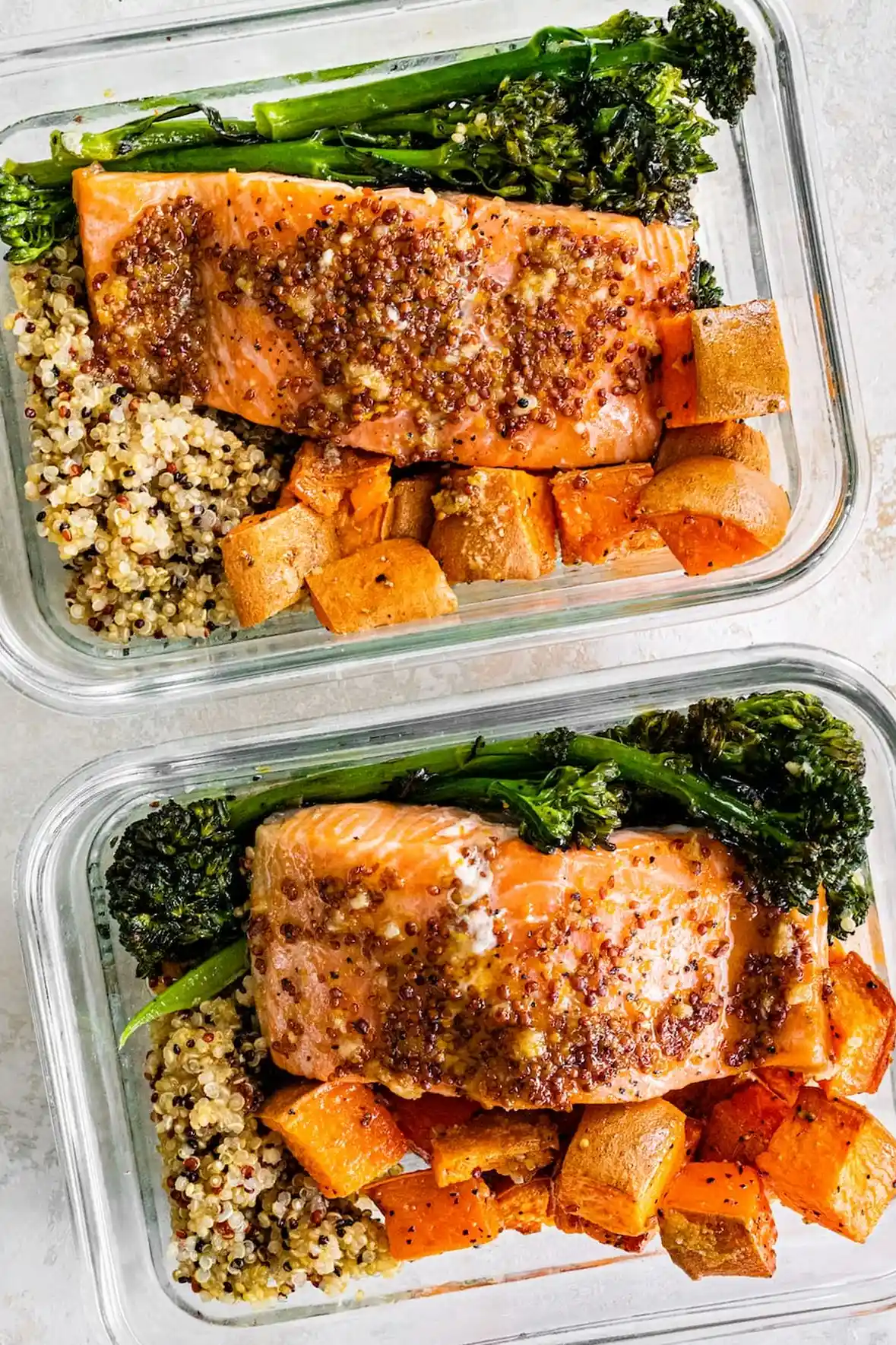
This nutrient-dense salmon bowl is an ideal option for weekly meal preparation. It combines roasted root vegetables and omega-3 rich fish over a bed of fluffy quinoa for a balanced meal.
List of ingredients
- 1 cup dry multi-colored quinoa – provides a protein-rich base.
- 2 cups vegetable broth or water – used for cooking the quinoa.
- 2 bunches broccolini (or broccoli) – adds a fresh, crunchy element.
- 2 medium sweet potatoes (peeled or unpeeled, cubed) – adds natural sweetness and fiber.
- 2-3 cloves garlic (minced) – used for seasoning the vegetables.
- 2 Tablespoons avocado or olive oil (divided) – used for roasting.
- 1 teaspoons sea salt (divided) – used for seasoning.
- ½ teaspoon ground pepper (divided) – used for seasoning.
- 4 4-6 oz filets of salmon – the primary protein source.
- 2 tablespoons whole grain mustard (or dijon mustard) – for the glaze.
- 2 Tablespoons lemon juice – adds acidity to the glaze.
- 1 ½ Tablespoons pure maple syrup – provides a sweet balance to the mustard.
- 2 cloves garlic (minced) – for the salmon glaze.
- kosher or fine sea salt – to taste.
- fresh ground pepper – to taste.
- Lemon Vinaigrette – for the final dressing.
step-by-step instructions
- Prepare the Quinoa: Rinse and drain the quinoa. Add the quinoa and broth (or water) to a saucepan and bring to a boil. Reduce to a simmer, cover and cook for 15 minutes. Fluff with a fork and let cool for 5-10 minutes.
- Setup the Oven: Preheat the oven to 400°F and line a large baking sheet with parchment paper or foil for easy cleanup.
- Roast the Sweet Potatoes: Add the cubed sweet potato chunks to a large bowl and toss with 1 Tablespoon oil, ½ teaspoon salt, and ¼ teaspoon pepper. Spread them on the prepared sheet pan and roast for 20 minutes, flipping them halfway through.
- Roast the Broccolini: Use the same bowl to toss the broccolini with 1 Tablespoon oil, minced garlic, ½ teaspoon salt, and ¼ teaspoon pepper. After the potatoes have roasted for 20 minutes, add the broccolini to one half of the tray and roast for another 12-15 minutes until tender.
- Prepare the Salmon: Season both sides of each salmon filet with salt and pepper. Place the filets skin-side down on a parchment-lined baking dish or tray and roast at 400°F for 10 minutes.
- Apply the Glaze: While the salmon is roasting, whisk together the mustard, lemon juice, maple syrup, and minced garlic. Remove the salmon from the oven, spread the sauce over each filet, and return to the oven for 4-5 minutes until the fish is cooked through and flaky.
- Assemble the Bowls: Divide the cooked quinoa into 4 servings, roughly ½ cup each. Top with the roasted vegetables and the glazed salmon, then drizzle with lemon vinaigrette.
- Meal Prep Storage: For advance prep, layer quinoa at the bottom of containers. Top with the salmon filet and place the roasted broccolini and sweet potatoes beside it. Store the dressing separately.
Alternative Grain Bases
Brown Rice for Hearty Texture
Brown rice is a great alternative if you prefer a chewier texture than quinoa. Use a 2:1 water-to-rice ratio and simmer for about 40-45 minutes. Cooking it in vegetable broth adds a savory layer of flavor.
Cauliflower Rice for Lower Carbs
For a lighter version, use riced cauliflower. Sauté the cauliflower rice in a pan with a small amount of olive oil for 5-7 minutes until tender. This significantly reduces the calorie count of the bowl.
Farro for Nutty Flavor
Farro offers a robust, nutty taste and a firm bite. It requires soaking or a longer simmering time of about 20-30 minutes. It pairs exceptionally well with the sweetness of the roasted potatoes.
White Basmati Rice for Aroma
Basmati rice provides a light, fluffy texture and a floral aroma. Rinse the rice thoroughly before cooking to remove excess starch. It absorbs the lemon vinaigrette very well during reheating.
Wild Rice for Earthy Tones
Wild rice adds a distinct, earthy flavor and more fiber. It takes longer to cook, typically 45 minutes to an hour. Mix it with white rice for a blend of textures.
Protein Substitutions
Roasted Chicken Breast
If you prefer chicken, cut breasts into bite-sized cubes for faster cooking. Roast them at 400°F for 15-20 minutes. Use the same maple mustard glaze for a consistent flavor profile.
Crispy Baked Tofu
For a plant-based option, use extra-firm tofu. Press the tofu to remove moisture, cube it, and toss with cornstarch and oil before roasting. Apply the glaze in the final 5 minutes of cooking.
Maple Balsamic Tempeh
Tempeh provides a fermented, nutty taste and a dense texture. Steam the tempeh slices for 10 minutes before roasting to remove bitterness. Use a mix of maple syrup and balsamic vinegar for a rich glaze.
Roasted Shrimp
Shrimp cook very quickly and add a different seafood profile. Toss them in the glaze and roast for only 5-8 minutes. Add them to the bowls just before serving to avoid overcooking.
Vegetable Modifications
Butternut Squash Replacement
Butternut squash can be used instead of sweet potatoes. Cube the squash into 1-inch pieces and roast them for the same duration. They provide a similar creamy texture and sweetness.
Brussels Sprouts Addition
Brussels sprouts add a savory, charred flavor to the bowl. Halve the sprouts and roast them alongside the broccolini. They take about 15-20 minutes to become tender and crisp.
Carrots for Color
Sliced carrots add vibrant color and a natural sweetness. Roast them on the same tray as the sweet potatoes. Carrots typically need about 20-25 minutes to soften completely.
Red Bell Peppers for Sweetness
Slicing red bell peppers into strips adds a juicy, sweet element. Add them to the oven during the last 12-15 minutes with the broccolini. They roast quickly and stay slightly crisp.
Asparagus for a Fresh Snap
Asparagus is an excellent substitute for broccolini. Roast the spears for 10-12 minutes at 400°F. Ensure they are trimmed of woody ends before roasting.
Parsnips for an Earthy Twist
Parsnips offer a flavor profile between a carrot and a potato. Cube them and roast them with the sweet potatoes. They caramelize beautifully in the oven.
Dressing and Sauce Variations
Creamy Tahini Dressing
Mix tahini, lemon juice, maple syrup, and a splash of warm water. This creates a rich, creamy sauce that complements the roasted vegetables. It adds a healthy dose of sesame fats.
Savory Peanut Sauce
Combine peanut butter, lime juice, soy-free aminos, and a hint of ginger. This gives the bowl an Asian-inspired flavor. It works particularly well if you use cauliflower rice.
Apple Cider Vinaigrette
Whisk together apple cider vinegar, olive oil, Dijon mustard, and honey. This provides a tangy, bright contrast to the maple glaze on the salmon. It is a lighter alternative to the lemon vinaigrette.
Garlic Yogurt Sauce
Mix Greek yogurt with minced garlic, lemon zest, and chopped dill. This adds a creamy, probiotic element to the meal. It is best added fresh rather than stored for days.
Zesty Lime Cilantro Sauce
Blend fresh cilantro, lime juice, avocado, and a pinch of salt. This creates a thick, vibrant sauce. It pairs exceptionally well with the salmon and quinoa base.
Toppings and Added Texture
Pumpkin Seeds for Crunch
Pepitas or pumpkin seeds add a nutty crunch and extra minerals. Toast them lightly in a dry pan for 2 minutes before adding. Sprinkle them over the bowl just before eating.
Slivered Almonds for Nutty Depth
Toasted slivered almonds provide a delicate crunch. They complement the sweetness of the roasted sweet potatoes. Store them separately to maintain their crispness.
Fresh Baby Spinach for Volume
Adding a handful of fresh spinach to the bottom of the bowl adds volume and nutrients. The heat from the reheated quinoa will lightly wilt the leaves. This adds a fresh, green contrast.
Hemp Seeds for Omega-3s
Hemp seeds are a tasteless but nutrient-dense addition. Sprinkle them over the salmon for added protein and healthy fats. They blend seamlessly into the texture of the bowl.
Pomegranate Seeds for Tartness
Pomegranate seeds provide bursts of tart juice and bright color. They contrast the savory notes of the roasted vegetables. Add these as a final garnish before serving.
Storage and Preservation
Choosing the Right Containers
Use airtight glass containers for the best results. Glass does not leach chemicals and allows for safer reheating in the microwave. It also keeps the vegetables crisper than plastic.
Managing Moisture Levels
Let the quinoa and roasted vegetables cool completely before sealing the lids. This prevents steam from trapping inside, which can lead to soggy vegetables and mushy grains.
Separating the Dressing
Always store the lemon vinaigrette in small, separate containers. Drizzling the dressing on the bowl before storage will soak into the quinoa. This ruins the texture of the meal over time.
Refrigeration Timeline
Store these meal prep bowls in the refrigerator for up to 4 days. Beyond this period, the salmon may lose its texture and the vegetables may soften too much. Keep them toward the back of the fridge where it is coldest.
Reheating Strategies
Microwave Reheating Method
Heat the bowl for 1.5 to 2 minutes on medium power. Add a teaspoon of water over the quinoa to create steam. This prevents the fish from drying out and keeps the grains fluffy.
Toaster Oven Reheating
Place the components on a small tray and heat at 350°F for 5-10 minutes. This method helps the roasted vegetables regain some of their original crispness. Cover with foil to prevent the salmon from overcooking.
Air Fryer Quick Heat
Place the salmon and vegetables in the air fryer at 350°F for 3-4 minutes. This is the fastest way to get a slightly charred exterior on the vegetables again. Heat the quinoa separately in the microwave.
Stovetop Warming
Place the quinoa and vegetables in a skillet with a tablespoon of water. Cover and heat on low for 5 minutes. Gently place the salmon on top at the end to warm through.
Troubleshooting Common Issues
Preventing Overcooked Salmon
Salmon is done when it reaches an internal temperature of 145°F. Use a meat thermometer to check the thickest part of the filet. Avoid cooking it too long after adding the glaze to maintain moisture.
Fixing Mushy Quinoa
If your quinoa turns out mushy, you likely used too much water or overcooked it. Stick to a strict 1:2 ratio of grain to liquid. Allow it to sit covered and off the heat for 5 minutes after cooking.
Avoiding Burnt Vegetables
Ensure your sweet potatoes are cut into uniform sizes. If the edges burn before the centers are soft, lower the oven temperature to 375°F. Rotate the pan every 10 minutes.
Dealing with Bland Vegetables
If the roasted vegetables lack flavor, increase the amount of garlic or salt. Toss them with a squeeze of fresh lemon juice after roasting. This awakens the flavors of the roasted root vegetables.
Preventing Salmon Skin Sticking
Use high-quality parchment paper or a silicone baking mat. Ensure the oil is evenly distributed on the pan. Avoid moving the salmon until it has seared slightly to the surface.
Correcting Too-Sweet Glaze
If the maple syrup makes the glaze too sweet, add an extra teaspoon of lemon juice. A pinch of extra salt can also balance the sugars. You can also add a dash of smoked paprika for depth.
Frequently Asked Questions
Can I use frozen salmon filets?
Yes, frozen filets work well. Ensure they are completely thawed in the refrigerator overnight before seasoning. Pat them dry with a paper towel to ensure the glaze adheres properly.
Do I need to peel the sweet potatoes?
Peeling is optional. The skin contains significant nutrients and adds a rustic texture. If you choose to keep the skin, scrub the potatoes thoroughly with a vegetable brush before cubing.
How do I stop the quinoa from sticking?
Rinse the quinoa in a fine-mesh strainer before cooking. This removes the saponin, a natural coating that can make quinoa taste bitter or feel sticky. Fluff gently with a fork after cooking.
Can I make this recipe vegan?
Yes, replace the salmon with extra-firm tofu or tempeh. Ensure the mustard used does not contain honey. The rest of the ingredients are naturally plant-based.
Is avocado oil the best for roasting?
Avocado oil is ideal because it has a high smoke point, meaning it won’t burn at 400°F. Olive oil is a suitable alternative, though it has a slightly lower smoke point.
Can I use regular broccoli instead of broccolini?
Yes, regular broccoli florets work perfectly. Cut them into smaller pieces to ensure they roast in the same time frame as the broccolini. They provide the same nutritional benefits.
How long does the lemon vinaigrette last?
The vinaigrette can be stored in the fridge for up to one week. Shake well before each use as the oil and lemon juice will naturally separate over time.
} Print
Easy Salmon Meal Prep Bowl
- Total Time: 50 minutes
- Yield: 4 servings 1x
- Diet: Gluten-Free, Dairy-Free
Description
This easy salmon meal prep bowl has a base of quinoa and is topped with roasted veggies, mustard maple salmon and a lemon vinaigrette.
Ingredients
- 1 cup dry multi-colored quinoa
- 2 cups vegetable broth
- 2 bunches broccolini
- 2 medium sweet potatoes, cubed
- 5 cloves garlic, minced
- 2 Tablespoons avocado or olive oil
- 1 teaspoon sea salt
- ½ teaspoon ground pepper
- 4 4-6 oz filets of salmon
- 2 tablespoons whole grain mustard
- 2 Tablespoons lemon juice
- 1 ½ Tablespoons pure maple syrup
- kosher or fine sea salt, to taste
- fresh ground pepper, to taste
- lemon vinaigrette
Instructions
- Cook Quinoa: Rinse and drain quinoa. Add quinoa and broth to a saucepan and bring to a boil. Reduce to a simmer, cover and cook for 15 minutes. Fluff with a fork and let cool for 5-10 minutes.
- Prepare Oven: Preheat the oven to 400°F and line a large baking sheet with parchment paper or foil.
- Roast Sweet Potatoes: Toss sweet potato chunks with 1 Tablespoon oil, ½ teaspoon salt and ¼ teaspoon pepper. Roast on a lined sheet pan for 20 minutes at 400°F, flipping halfway.
- Roast Broccolini: Toss broccolini with 1 Tablespoon oil, garlic, ½ teaspoon salt and ¼ teaspoon pepper. Add to the baking tray and roast for 12-15 minutes until tender.
- Prepare Salmon: Season both sides of salmon filets with salt and pepper. Place skin-side down on a parchment-lined tray and roast for 10 minutes at 400°F.
- Glaze Salmon: Mix together mustard, lemon juice, maple syrup and garlic. Spread sauce over salmon and return to oven for 4-5 minutes until cooked through and flaky.
- Assemble: Divide quinoa into 4 servings. Top with roasted veggies, salmon and a drizzle of lemon vinaigrette.
- Meal Prep: Layer quinoa at the bottom of containers, top with salmon, then add broccolini and sweet potatoes. Store dressing separately.
Notes
Store in the fridge for up to 4 days. Reheat in the microwave or oven before adding the lemon vinaigrette.
- Prep Time: 15 minutes
- Cook Time: 35 minutes
- Category: Lunch/Dinner
- Method: Roasting
- Cuisine: American
Nutrition
- Serving Size: 1 bowl
- Calories: 679 kcal
- Sugar: 10 g
- Sodium: 875 mg
- Fat: 39 g
- Saturated Fat: 7 g
- Unsaturated Fat: 32 g
- Trans Fat: 0 g
- Carbohydrates: 51 g
- Fiber: 6 g
- Protein: 33 g
- Cholesterol: 62 mg