This oven-baked glazed salmon offers a perfect balance of sweet and savory flavors, resulting in a beautifully caramelized finish. It is an ideal solution for busy weeknights, requiring minimal prep and yielding restaurant-quality results in under thirty minutes. The combination of maple syrup and ginger creates a rich, candy-like glaze that keeps the fish moist and incredibly flavorful throughout the baking process.
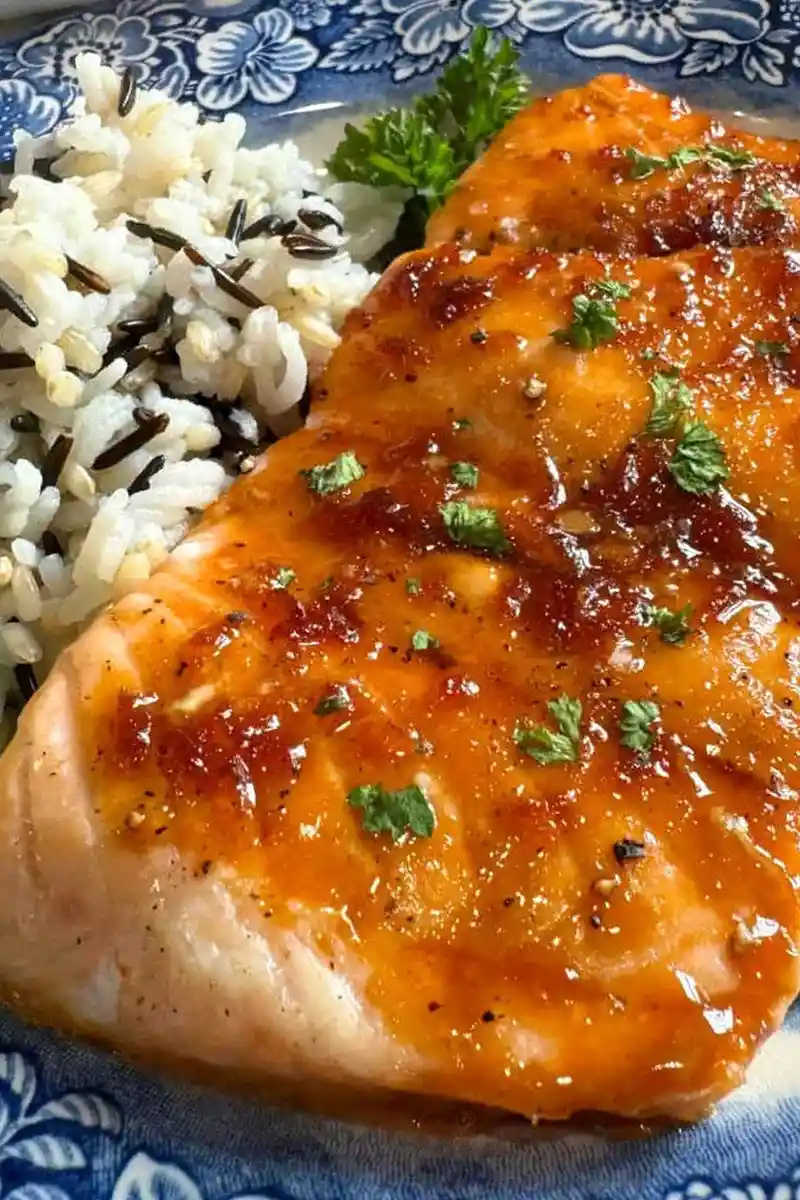
List of ingredients
- 4 THAWED salmon filets, patted dry
- 1/2 cup real maple syrup
- 1/4 cup soy sauce or liquid aminos
- 1 tablespoon sesame oil
- 1 tablespoon grated ginger root (or 1 teaspoon ground ginger powder)
- 1/4 teaspoon garlic powder
- 1/4 teaspoon ground black pepper
- 1/4 teaspoon salt
- Optional Garnishes: chopped parsley, cracked black pepper, coarse ground salt
step-by-step instructions
- Step: Thaw salmon filets if frozen.
- Step: Preheat your oven to 400 degrees F and line a baking sheet with parchment paper.
- Step: Pat salmon filets dry and place them on the baking sheet 1-2 inches apart.
- Step: In a small saucepan, whisk together maple syrup, soy sauce, sesame oil, ginger, garlic powder, salt, and pepper.
- Step: Simmer the glaze over low heat for 10-12 minutes, whisking frequently until thickened.
- Step: Remove glaze from heat.
- Step: Use a pastry brush to spread the glaze evenly over the salmon filets and sprinkle with coarse salt and pepper.
- Step: Bake at 400 degrees F for 12-15 minutes, or until the internal temperature reaches 150 degrees F.
- Step: Remove from oven, garnish with parsley if desired, and serve warm.
Refining your baking technique
Ensuring consistent internal temperature
Using an instant-read meat thermometer is the most reliable way to prevent undercooked or overcooked salmon. Place the probe into the thickest part of the filet, avoiding the skin or bone, to check for that ideal 150-degree finish. Consistent temperature monitoring allows for the best texture regardless of the specific size or shape of your fish cuts.
Adapting for varying filet thicknesses
Salmon filets can vary significantly in thickness, which directly impacts the required baking time. Thin, tail-end pieces will cook much faster than thick, center-cut loins, so group similar sizes together on the baking sheet. If you have mixed sizes, remove the smaller, thinner pieces from the oven first to avoid drying them out while waiting for the thicker cuts to finish.
Selecting the right parchment paper
Using high-quality parchment paper is essential for this recipe because of the sugar content in the maple syrup. The glaze can become sticky during the high-heat baking process, and a non-stick surface ensures you can transfer the salmon to a serving platter without tearing the delicate, caramelized exterior. Avoid using wax paper, as it is not designed to withstand high oven temperatures.
Flavor enhancements and customization
Swapping glaze components
If you prefer a different aromatic profile, consider substituting the ginger with finely minced garlic or a touch of citrus zest. The maple syrup can be swapped for honey or agave nectar, though each will change the viscosity and caramelization point of the final sauce. Adjust the soy sauce ratio if you prefer a less salty result, perhaps using a lower-sodium variety or liquid aminos as a milder alternative.
Adding textural contrast
While the salmon is soft and flaky, adding a crunchy element right before serving can elevate the entire dish. Toasted sesame seeds offer a nutty crunch that pairs perfectly with the sweet ginger notes, while thinly sliced green onions add a fresh, crisp bite. Crushed roasted cashews or peanuts can also be sprinkled on top to introduce a savory, buttery contrast to the sweet maple glaze.
Adjusting the spice profile
The original recipe uses ginger and black pepper for a balanced profile, but those who enjoy heat can easily adjust this. A pinch of red pepper flakes stirred into the glaze before simmering will infuse the entire sauce with a subtle heat. Alternatively, a drop of chili oil added at the very end of the cooking process provides a bright, sharp kick that cuts through the sweetness of the syrup.
Kitchen management for success
Preparing the glaze in advance
You can prepare the maple glaze up to three days before you plan to cook the salmon. Store the finished, cooled glaze in an airtight glass jar in the refrigerator and reheat it gently on the stove or in the microwave until it is pourable before applying it to the fish. This makes an even faster dinner for busy weeknights, as you only need to assemble and bake when ready to eat.
Managing leftovers effectively
If you have leftover glazed salmon, store it in a sealed container in the refrigerator to keep it from absorbing other food odors. It will remain high in quality for up to 3 days, making it perfect for cold salads or quick lunches the next day. Reheating gently in the oven at 350 degrees Fahrenheit prevents the fish from becoming rubbery, ensuring the texture remains close to the original cook.
Utilizing the glaze for secondary meals
The maple-ginger glaze is versatile enough to be used beyond salmon. You can use any extra glaze on roasted root vegetables like carrots or parsnips, or even as a finishing sauce for grilled tofu or chicken breasts. The combination of sweet and salty notes complements a wide range of proteins and vegetables, making it a valuable addition to your culinary repertoire.
Frequently asked questions
Can I use frozen salmon for this recipe?
While it is best to thaw the fish completely for even cooking, you can bake partially frozen filets if necessary. You must increase the cooking time by about 5 to 10 minutes to account for the internal ice, but note that the texture may be slightly less consistent than starting with thawed filets.
Is there a way to make the glaze thicker?
The glaze thickens naturally as it simmers due to the reduction of the maple syrup. If you find it remains too thin, simmer it for an additional two to three minutes on low heat, watching it constantly to ensure the sugars do not burn or crystalize.
What is the benefit of patting the fish dry?
Patting the fish dry with paper towels removes excess surface moisture that would otherwise steam the fish rather than sear it. Dry fish allows the maple syrup and soy glaze to adhere directly to the protein, resulting in a more intense flavor and a better aesthetic crust.
Why should I use a meat thermometer instead of timing?
Oven temperatures, the initial temperature of the fish, and the exact thickness of the filets all influence the cooking rate. A thermometer provides an objective measure of doneness, guaranteeing that your salmon is cooked to your preference every time, regardless of variables that timing alone cannot account for.
Can this recipe be prepared for a larger crowd?
This recipe scales perfectly, and you can easily double or triple the ingredients for a gathering. Use a larger baking sheet or multiple sheets, but ensure the salmon filets are spaced at least one inch apart to allow for proper airflow and heat circulation throughout the oven.
Print
Easy Oven-Baked Glazed Salmon
- Total Time: 25 minutes
- Yield: 4 servings 1x
- Diet: Pescatarian
Description
This easy recipe makes 4 of the the tastiest glazed salmon filets ever, in under 30 minutes from start to serving! Double the glaze recipe for a crowd!
Ingredients
- 4 THAWED salmon filets, patted dry
- 1/2 cup real maple syrup
- 1/4 cup soy sauce or liquid aminos
- 1 tablespoon sesame oil
- 1 tablespoon grated ginger root (or 1 teaspoon ground ginger powder)
- 1/4 teaspoon garlic powder
- 1/4 teaspoon ground black pepper
- 1/4 teaspoon salt
- Optional Garnishes: chopped parsley, cracked black pepper, coarse ground salt
Instructions
- Step: Thaw salmon filets if frozen.
- Step: Preheat your oven to 400 degrees F and line a baking sheet with parchment paper.
- Step: Pat salmon filets dry and place them on the baking sheet 1-2 inches apart.
- Step: In a small saucepan, whisk together maple syrup, soy sauce, sesame oil, ginger, garlic powder, salt, and pepper.
- Step: Simmer the glaze over low heat for 10-12 minutes, whisking frequently until thickened.
- Step: Remove glaze from heat.
- Step: Use a pastry brush to spread the glaze evenly over the salmon filets and sprinkle with coarse salt and pepper.
- Step: Bake at 400 degrees F for 12-15 minutes, or until the internal temperature reaches 150 degrees F.
- Step: Remove from oven, garnish with parsley if desired, and serve warm.
Notes
Baking times vary based on fillet thickness: Thin (10-12 minutes), Medium (12-15 minutes), Thick (15-18 minutes). Salmon is cooked through when it reaches 145°F-150°F internal temperature.
- Prep Time: 12 minutes
- Cook Time: 13 minutes
- Category: Easy Dinner
- Method: Baking
- Cuisine: American
Nutrition
- Serving Size: 1 filet
- Calories: 615 kcal
- Sugar: 25 g
- Sodium: 1297 mg
- Fat: 32 g
- Saturated Fat: 6 g
- Unsaturated Fat: 23 g
- Trans Fat: 0 g
- Carbohydrates: 29 g
- Fiber: 0 g
- Protein: 52 g
- Cholesterol: 143 mg