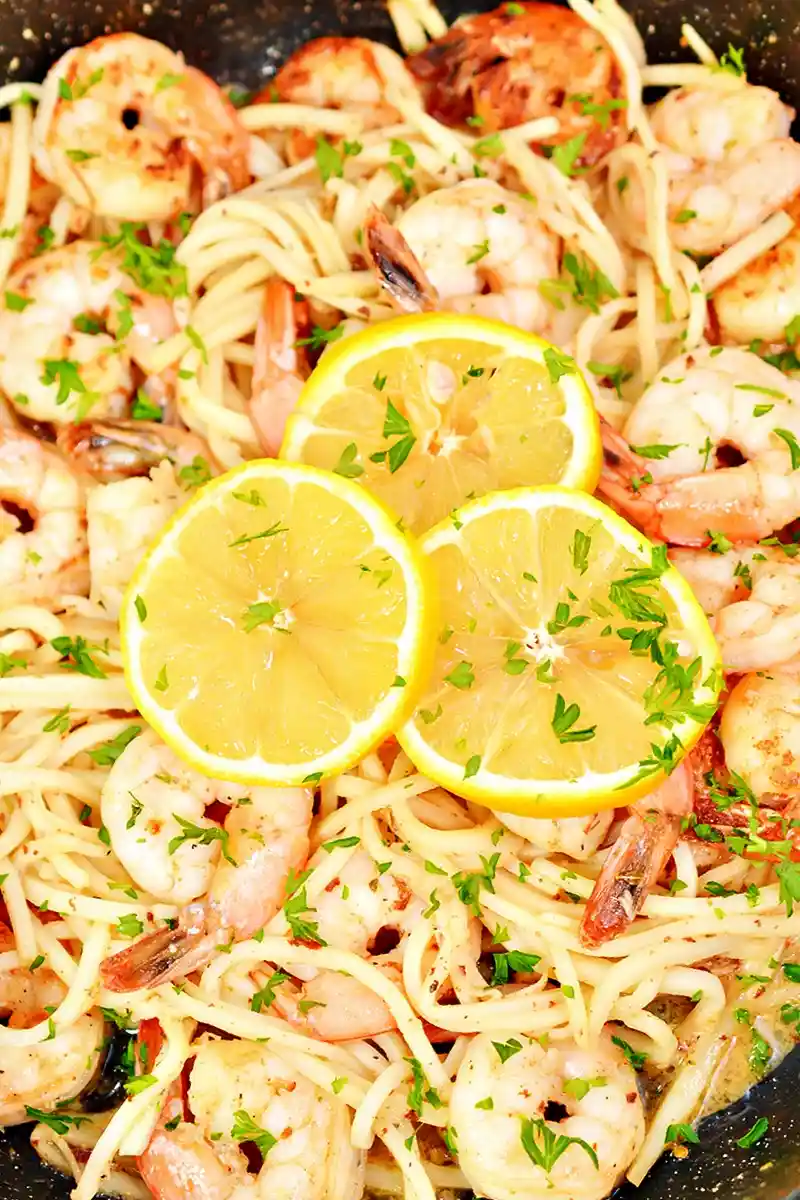
This quick low-carb shrimp scampi features a rich garlic butter sauce and palm noodles for a satisfying meal. It is an excellent option for those following a ketogenic diet and can be prepared in under 40 minutes.
List of ingredients
- 1 can Palmini Linguini Noodles – rinsed and drained thoroughly.
- 1 pound Shrimp – peeled, deveined, and tails removed.
- 4 tbsp Butter – unsalted for precise salt control.
- 1 tbsp Olive Oil – used to prevent butter from burning.
- 4 tsp Garlic – freshly minced for maximum flavor.
- 1/4 cup Vegetable Broth – provides depth and replaces wine.
- 1 tbsp Lemon Juice – freshly squeezed for brightness.
- 1/4 tsp Italian Seasoning – a blend of dried herbs.
- 2 tbsp Parsley – fresh and chopped for garnish.
- Salt and pepper – to taste.
step-by-step instructions
- Sear the shrimp: Heat the olive oil and 2 tablespoons of butter in a large skillet over medium-high heat. Add the shrimp to the pan and season with salt and pepper, sautéing for several minutes until they are opaque and cooked through, then remove them from the skillet and set aside.
- Sauté the aromatics: Reduce the stove heat to medium and add the remaining 2 tablespoons of butter and the minced garlic to the same skillet. Sauté the garlic for approximately 30 seconds, ensuring it does not brown or burn.
- Create the sauce: Whisk in the vegetable broth, Italian seasoning, and fresh lemon juice. Stir well to combine the flavors and simmer briefly.
- Cook the noodles: Add the drained palmini noodles to the skillet. Sauté them in the sauce until about half of the liquid has been absorbed by the noodles.
- Combine and serve: Return the cooked shrimp to the skillet and toss gently to coat them in the sauce. Garnish with fresh parsley and lemon slices before serving.
Optimizing Your Shrimp Selection
Choosing Frozen vs Fresh Shrimp
Fresh shrimp are often preferred for their texture, but high-quality flash-frozen shrimp are a practical alternative. When buying frozen, look for bags that do not contain added sodium tripolyphosphate, which can give shrimp a rubbery texture after cooking.
How to Properly Devein Shrimp
Deveining involves removing the digestive tract from the back of the shrimp. Use a small paring knife to make a shallow slit along the back and lift out the dark vein to ensure a clean taste and professional presentation.
Thawing Frozen Shrimp Safely
The safest way to thaw shrimp is in the refrigerator overnight. If you are short on time, place the shrimp in a sealed bag and submerge them in a bowl of cold water, changing the water every 30 minutes until thawed.
Exploring Low-Carb Base Alternatives
Preparing Zucchini Noodles
If using zucchini noodles, salt them lightly in a colander for 15 minutes to draw out excess moisture. Pat them dry with a paper towel before adding them to the sauce to prevent the scampi from becoming watery.
Using Cauliflower Rice
Cauliflower rice provides a different texture and absorbs the garlic butter sauce well. Sauté the cauliflower rice separately for 5 minutes before adding it to the pan to ensure the grains are tender and not raw.
Working with Konjac Noodles
Konjac or shirataki noodles have a very neutral taste but can have a distinct scent. Rinse them thoroughly under cold water for two minutes and briefly boil them in plain water before adding them to the scampi sauce.
Serving Over Sautéed Spinach
Fresh baby spinach is a nutrient-dense alternative that wilts quickly in the pan. Add the spinach at the very end of the cooking process, just before returning the shrimp, so the leaves remain vibrant green.
Enhancing the Scampi Sauce
Selecting the Right Butter
Unsalted butter is recommended so you can control the total sodium level of the dish. If using salted butter, omit the additional salt during the shrimp searing process to avoid an overly salty sauce.
Using Freshly Squeezed Lemon
Fresh lemon juice provides a bright, acidic contrast to the rich butter that bottled juices cannot replicate. The natural oils from the lemon zest can also be added for a more intense citrus aroma.
Choosing the Best Garlic
Freshly minced garlic contains allicin, which provides a sharper flavor than pre-minced jarred garlic. To prevent burning, mince the garlic finely and add it only when the pan is at a medium heat.
Adding Red Pepper Flakes for Heat
For those who prefer a spicy kick, add a pinch of crushed red pepper flakes when sautéing the garlic. This infuses the butter with a subtle heat that complements the lemon and shrimp.
Professional Cooking Techniques
Avoiding Rubbery Shrimp
Shrimp cook extremely fast and become tough if overdone. Remove them from the heat as soon as they form a ‘C’ shape; if they curl into a tight ‘O’ shape, they are likely overcooked.
Emulsifying the Butter Sauce
To keep the sauce creamy and prevent it from separating, maintain a consistent medium heat. Whisk the broth and lemon juice vigorously into the butter to create a stable emulsion that clings to the noodles.
Deglazing the Pan
After searing the shrimp, small brown bits called fond remain on the skillet. Adding the vegetable broth deglazes the pan, lifting those flavorful caramelized bits and incorporating them into the final sauce.
Serving and Pairing Ideas
Best Low-Carb Side Vegetables
Roasted asparagus or steamed broccoli are excellent pairings for shrimp scampi. The earthiness of these vegetables balances the acidity of the lemon and the richness of the butter sauce.
Garnishing for Visual Appeal
Freshly chopped parsley adds a pop of color and a fresh, herbaceous note. Placing thin lemon slices on the plate also signals the flavor profile to the diner and provides extra juice for drizzling.
Plating for Family Style Service
For a family meal, serve the scampi on a large warmed platter. This prevents the butter sauce from cooling and solidifying too quickly while the dish is being passed around the table.
Storage and Preservation
Refrigerating Leftovers
Store the shrimp and noodles in an airtight glass container in the refrigerator for up to three days. Ensure the shrimp are fully covered in sauce to prevent them from drying out during storage.
Preventing Shrimp from Drying Out
When storing, consider adding an extra tablespoon of butter or broth. Shrimp can lose moisture in the fridge, and extra sauce helps maintain their plump texture upon reheating.
Reheating Methods
Avoid the microwave if possible, as it can overcook the shrimp quickly. Instead, reheat the scampi in a skillet over low heat with a splash of water or broth to loosen the sauce.
Make-Ahead Preparations
Prepping Ingredients in Advance
You can mince the garlic, chop the parsley, and peel the shrimp several hours before cooking. Store these components in separate containers in the fridge to speed up the assembly process.
Storing the Sauce Separately
If preparing for a party, make the garlic butter sauce base and store it in a jar. Reheat the sauce and add the freshly cooked shrimp and noodles just before serving for the best texture.
Preparing Noodles Ahead
Rinse and drain the palmini noodles ahead of time and store them in a sealed container. This ensures they are completely free of excess water, which helps the sauce thicken more effectively during the final sauté.
Troubleshooting Common Issues
Fixing a Watery Sauce
If the sauce is too thin, continue to simmer it on medium heat for a few extra minutes before adding the shrimp back. This allows the water in the broth to evaporate, concentrating the flavor.
Correcting Over-Salted Sauce
If the sauce becomes too salty, add a small amount of additional lemon juice or a splash of unsweetened cream. The acid or fat helps neutralize the perception of excess salt on the palate.
Handling Undercooked Garlic
If the garlic tastes too raw, it means the pan wasn’t hot enough or the sauté time was too short. Ensure the butter is bubbling slightly before adding the garlic to ensure a mellow, cooked flavor.
Frequently Asked Questions
Can I use frozen shrimp?
Yes, frozen shrimp work perfectly. Just ensure they are completely thawed and patted dry with a paper towel before searing to ensure they brown rather than steam.
Is Palmini healthier than pasta?
Palmini noodles, made from hearts of palm, are significantly lower in carbohydrates and calories than wheat pasta. They provide a similar texture while remaining compatible with ketogenic diets.
How do I stop the sauce from separating?
Keep the heat at a steady medium and avoid boiling the sauce aggressively. Stirring frequently helps the butter and vegetable broth stay emulsified throughout the cooking process.
Print
Easy Low-Carb Shrimp Scampi
- Total Time: 35 minutes
- Yield: 4 servings 1x
- Diet: Keto
Description
This easy keto shrimp scampi has an irresistible cream sauce that will feed your family. Serve it with zoodles or cauliflower rice.
Ingredients
- 1 can Palmini Linguini Noodles (rinsed and drained)
- 1 pound Shrimp (peeled, deveined, and tails off)
- 4 tbsp Butter (unsalted)
- 1 tbsp Olive Oil
- 4 tsp Garlic (minced)
- 1/4 cup vegetable broth
- 1 tbsp Lemon Juice (fresh)
- 1/4 tsp Italian Seasoning
- 2 tbsp Parsley (fresh chopped, for garnish)
Instructions
- Step 1: Heat the olive oil and 2 Tbsp butter in a skillet over medium high heat.
- Step 2: Add the shrimp to the heated skillet and saute with salt and pepper to taste for several minutes until the shrimp is cooked through. Remove and set aside.
- Step 3: Turn the heat down to medium on the stove, and add the remaining butter and minced garlic to the same skillet.
- Step 4: Saute for 30 seconds.
- Step 5: Whisk in the vegetable broth, Italian seasoning and lemon juice.
- Step 6: Add the palmini noodles to the skillet and saute in the sauce until about half of the liquid is absorbed.
- Step 7: Return the shrimp to the skillet, toss to coat in the sauce and serve with parsley and lemon slices for garnish.
Notes
The shrimp scampi will stay fresh in an airtight container in the refrigerator for up to 3 days. If the sauce solidifies, heat it up to make it creamy again.
- Prep Time: 10 minutes
- Cook Time: 25 minutes
- Category: dinner
- Method: Sauteing
- Cuisine: Italian-American
Nutrition
- Serving Size: 1 serving
- Calories: 215 kcal
- Sugar: 2 g
- Sodium: 410 mg
- Fat: 16 g
- Saturated Fat: 10 g
- Unsaturated Fat: 6 g
- Trans Fat: 0 g
- Carbohydrates: 6 g
- Fiber: 3 g
- Protein: 22 g
- Cholesterol: 155 mg