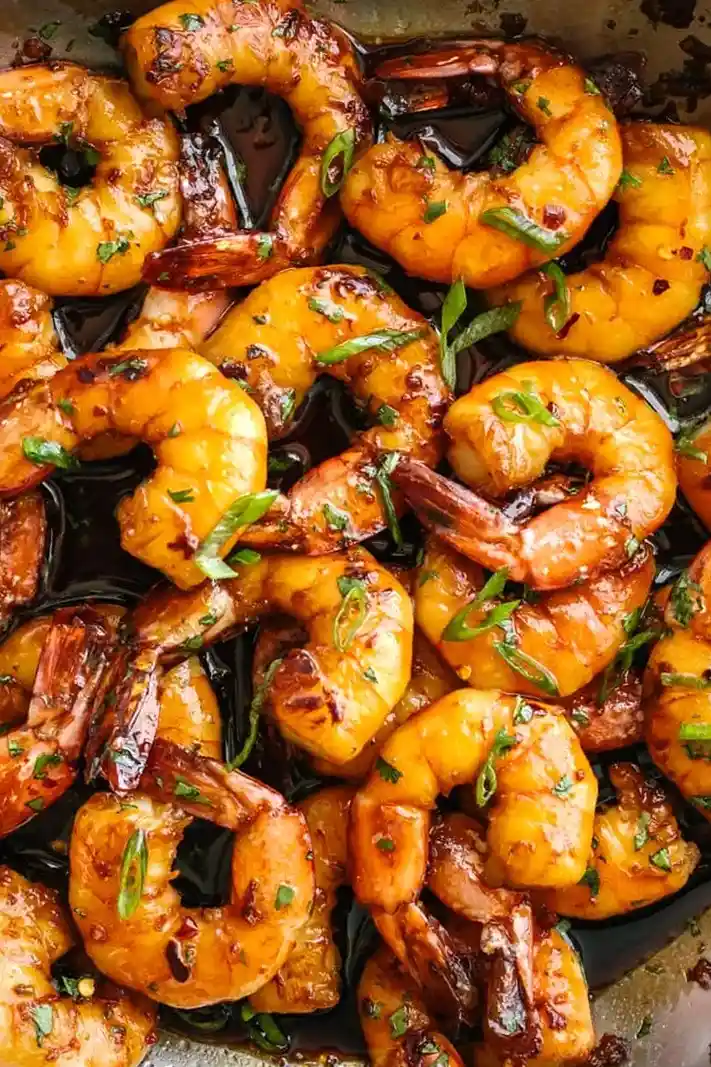
This honey garlic shrimp recipe offers a perfect balance of savory and sweet flavors in a quick, twenty-minute timeframe. It serves as an ideal weeknight dinner solution that requires minimal cleanup and delivers professional-grade results. Using fresh aromatics and a simple glaze, this dish transforms basic pantry staples into a restaurant-quality meal.
List of ingredients
- 1/3 cup honey
- 1/4 cup tamari soy sauce (or coconut aminos)
- 4 garlic cloves, minced
- 1 teaspoon freshly grated ginger
- 1/4 teaspoon crushed red pepper flakes
- 1 tablespoon olive oil
- 1 pound raw shrimp, peeled and deveined
- 1 tablespoon finely chopped cilantro or parsley
- 1 green onion, thinly sliced
step-by-step instructions
- Step: In a small bowl, stir together the honey, soy sauce, garlic, ginger and red pepper flakes.
- Step: Place the shrimp into a separate bowl and pour 1/3 of the sauce on top. Toss to coat the shrimp, then marinate for 15-20 minutes.
- Step: Heat the oil in a pan on medium-high heat.
- Step: Add the shrimp (discarding any leftover marinade) and cook for 1 to 2 minutes on each side, until pink and just barely cooked through.
- Step: Pour the remaining 2/3 sauce into the pan and bring to a simmer, stirring with the shrimp as it slightly reduces and warms through, for about a minute.
- Step: Turn off the heat, stir in the cilantro or parsley, and top with sliced green onions before serving.
Refining Your Cooking Technique
Achieving the Perfect Sear
To get a beautiful golden color on your shrimp, ensure the pan is sufficiently hot before adding them. If the pan is too cool, the shrimp will release moisture and boil in their own juices rather than caramelizing, which prevents the development of the signature sticky texture. Dry the shrimp thoroughly with paper towels after washing to encourage better browning.
Preventing Tough Seafood
Shrimp are highly sensitive to heat and can turn rubbery in a matter of seconds if overcooked. Focus on the visual cue of the shrimp turning from translucent to opaque; as soon as they curl into a loose “C” shape, they are typically ready to come off the heat. If they curl into a tight “O” shape, they are likely past the point of ideal tenderness.
Balancing Sauce Consistency
If you prefer a thicker glaze, allow the sauce to bubble and reduce for an extra thirty seconds without the shrimp in the pan, or keep them moving so the heat distributes evenly. Honey has a high sugar content, so keep a close eye on the sauce during the final stage to ensure it does not scorch or burn against the bottom of the pan.
Customizing Your Flavor Profile
Selecting Your Soy Substitute
If you follow a strict gluten-free diet, tamari is an excellent choice as it is traditionally brewed without wheat. If you prefer to avoid soy entirely, coconut aminos offer a similar dark, rich color with a slightly sweeter profile that complements the honey exceptionally well. Adjust the quantity by a teaspoon if you find the coconut aminos significantly sweeter than your standard soy sauce.
Adjusting the Spice Level
The heat level in this recipe is designed to be approachable, but you can tailor it to your personal preference easily. Increase the crushed red pepper flakes to half a teaspoon for a more noticeable kick, or add a pinch of cayenne powder for a different kind of heat. If you are serving children, feel free to omit the red pepper flakes entirely, as the honey and ginger provide plenty of flavor on their own.
Creative Serving Suggestions
Building a Balanced Bowl
These shrimp work beautifully when paired with a starch to soak up the excess glaze. Consider serving them over steamed jasmine rice, nutty brown rice, or even quinoa for added protein. For those looking for lighter options, cauliflower rice or sautéed zucchini noodles are excellent low-carb alternatives that maintain the integrity of the sauce.
Incorporating Fresh Greens
To add texture to your plate, include a side of quickly sautéed cruciferous vegetables. Bok choy, snap peas, or thin ribbons of cabbage are perfect because they cook in the same time frame as the shrimp. These vegetables provide a necessary earthy contrast to the sweetness of the honey-garlic glaze.
Low Carb Lettuce Wraps
For a refreshing and light meal, serve the shrimp inside butter leaf or iceberg lettuce cups. This preparation works best if the shrimp are chopped into smaller, bite-sized pieces before being glazed. Top the wraps with bean sprouts, shredded carrots, and a little extra lime juice for a vibrant, crunch-forward dining experience.
Storage and Maintenance
Managing Leftover Seafood
While the texture of freshly cooked shrimp is optimal, leftovers can be kept for up to three days when stored in an airtight glass container in the refrigerator. Ensure the shrimp have cooled to room temperature before sealing the container to prevent condensation, which can make the glaze watery. Always store the shrimp separately from any raw vegetable sides to keep everything fresh.
Reheating Without Overcooking
The biggest challenge with reheating shrimp is avoiding the dreaded rubbery texture that comes from prolonged microwave exposure. If you must use a microwave, reheat at fifty percent power in thirty-second intervals, stirring in between. A better approach is to gently warm the shrimp in a small non-stick pan over low heat with a teaspoon of water, which helps steam the shrimp back to life without drying them out.
Freezing Considerations
It is generally recommended to consume this dish fresh rather than freezing it, as the texture of the shrimp will deteriorate upon thawing and reheating. If you must freeze the dish, do so without adding the garnishes, and plan to use it within one month. Thaw the shrimp in the refrigerator overnight before gently reheating them on the stovetop.
Common Kitchen Questions
Can I use pre-cooked shrimp for this?
Using pre-cooked shrimp is possible but requires a change in your process to avoid toughness. If you use pre-cooked shrimp, you should simply warm them through in the sauce for thirty seconds rather than sautéing them first. The glaze will still coat them well, but you will miss the caramelized sear that raw shrimp develop when cooked in the pan.
How do I know when the ginger is properly grated?
Using a microplane or the finest side of a box grater is essential for ginger in this recipe. You want the ginger to virtually melt into the sauce so you get the flavor in every bite without encountering large, stringy chunks. If you find your ginger is particularly fibrous, peel it with the edge of a metal spoon before grating to remove the outer skin easily.
Is there a way to make this sauce more savory?
If you find the sauce too sweet, you can balance it by adding a teaspoon of rice vinegar or a small splash of toasted sesame oil. The acid from the vinegar cuts through the sugar, while the sesame oil adds a deeper, toasted nutty aroma that rounds out the overall flavor profile of the dish.
Print
Easy Honey Garlic Shrimp
- Total Time: PT26M
- Yield: 4 servings 1x
- Diet: Pescatarian
Description
Honey garlic shrimp are a delicious savory-sweet dinner idea. They are quick, easy, and perfect for a flavorful weeknight meal.
Ingredients
- 1/3 cup honey
- 1/4 cup tamari soy sauce (or coconut aminos)
- 4 garlic cloves, minced
- 1 teaspoon freshly grated ginger
- 1/4 teaspoon crushed red pepper flakes
- 1 tablespoon olive oil
- 1 pound raw shrimp, peeled and deveined
- 1 tablespoon finely chopped cilantro or parsley
- 1 green onion, thinly sliced
Instructions
- Step: In a small bowl, stir together the honey, soy sauce, garlic, ginger and red pepper flakes.
- Step: Place the shrimp into a separate bowl and pour 1/3 of the sauce on top. Toss to coat the shrimp, then marinate for 15-20 minutes.
- Step: Heat the oil in a pan on medium-high heat.
- Step: Add the shrimp (discarding any leftover marinade) and cook for 1 to 2 minutes on each side, until pink and just barely cooked through.
- Step: Pour the remaining 2/3 sauce into the pan and bring to a simmer, stirring with the shrimp as it slightly reduces and warms through, for about a minute.
- Step: Turn off the heat, stir in the cilantro or parsley, and top with sliced green onions before serving.
Notes
Use tamari or coconut aminos to keep the recipe gluten-free. Serve over rice or with steamed vegetables for a complete meal.
- Prep Time: PT2M
- Cook Time: PT4M
- Category: Dinner
- Method: Stovetop
- Cuisine: Asian
Nutrition
- Serving Size: 1 serving
- Calories: 245 kcal
- Sugar: 24 g
- Sodium: 940 mg
- Fat: 5 g
- Saturated Fat: 1 g
- Unsaturated Fat: 4 g
- Trans Fat: 0 g
- Carbohydrates: 25 g
- Fiber: 1 g
- Protein: 25 g
- Cholesterol: 286 mg