This shrimp fried rice is a quick and efficient meal that brings the flavors of a Chinese restaurant into your home kitchen. It combines protein, vegetables, and rice for a balanced one-pan dinner.
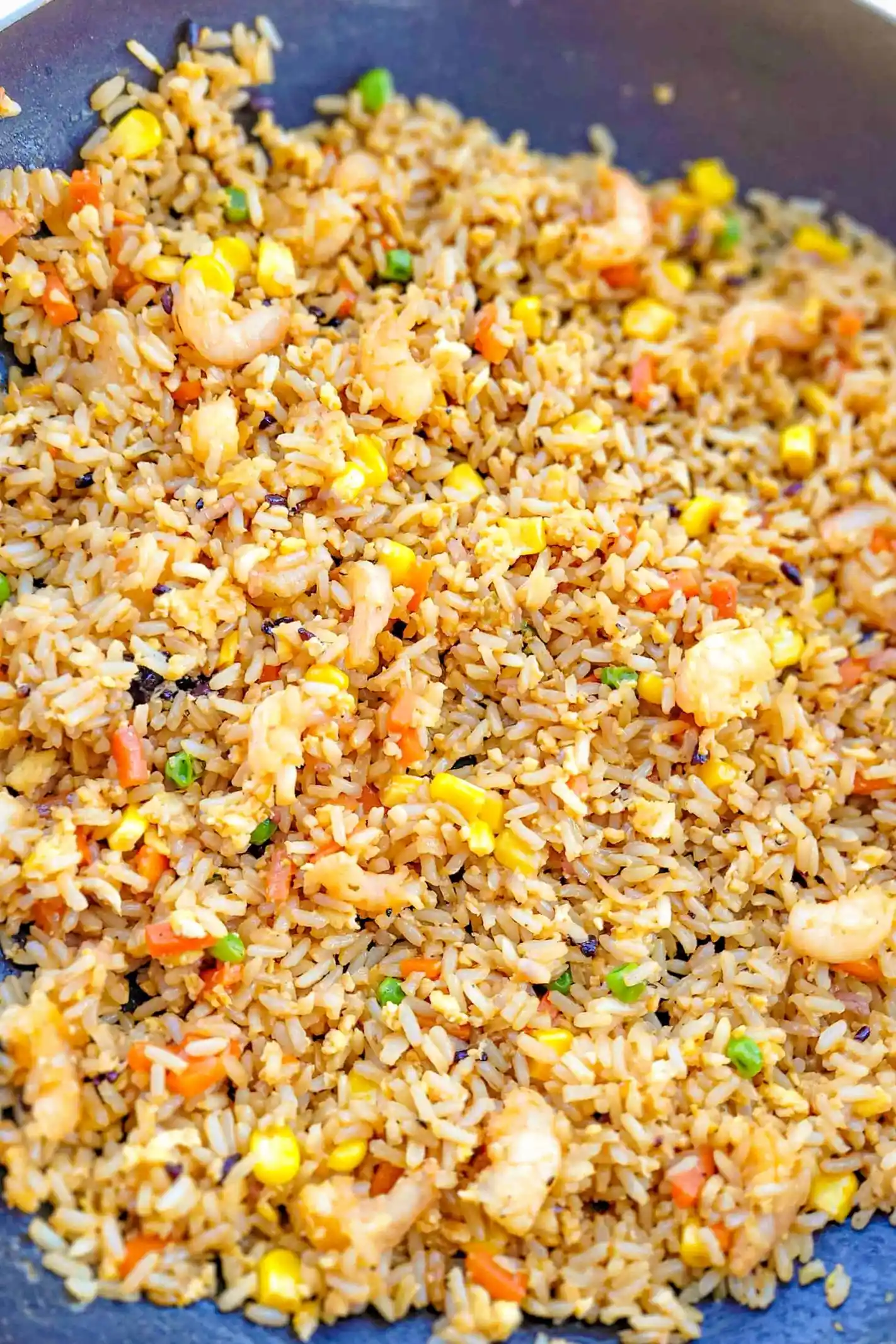
List of ingredients
- 1 1/2 cup long grain rice – serves as the main base.
- 3 cups water – used for boiling the rice.
- 1 12 oz bag thawed shrimp – cleaned and deveined.
- 1 10 oz bag mixed vegetables – frozen peas and carrots are recommended.
- 1/2 small onion, minced – provides an aromatic foundation.
- 1 tbsp crushed garlic – adds pungent flavor.
- 3 eggs – beaten for added protein and texture.
- Salt and pepper – used for basic seasoning.
- Soy sauce – adds essential saltiness and deep color.
step-by-step instructions
- Boil Water: Pour water into a large pot and bring to a high boil over high heat.
- Toast the Rice: While waiting for the water, add 1 tbsp oil to a large skillet. Cook the long grain rice over medium heat for 5-7 minutes, stirring constantly until the grains turn slightly golden.
- Simmer Rice: Transfer the toasted rice into the boiling water. Reduce the heat to a simmer and cook for 18-22 minutes until the water is absorbed.
- Cool and Store: Remove the pot from heat and let the rice cool slightly. Transfer it to a sealed container and refrigerate for at least 6 hours before proceeding.
- Sear Shrimp: Melt 2 tbsp butter in a large, deep-edged pan over medium heat. Add the shrimp and cook for about 2 minutes per side until the tails curl and the edges are golden.
- Remove Protein: Transfer the cooked shrimp to a plate lined with paper towels to remove excess oil.
- Cook Vegetables: In the same pan, add the mixed vegetables. Sauté over medium heat until they soften, then stir in the minced onion and crushed garlic. Add more butter if the pan becomes too dry.
- Scramble Eggs: Push the cooked vegetables to one side of the pan. Pour the beaten eggs into the empty space and scramble them until fully cooked.
- Combine Ingredients: Mix the scrambled eggs back into the vegetables. Add the chilled rice and the cooked shrimp to the pan.
- Final Seasoning: Stir everything together until the rice is heated through. Season with salt, pepper, and your preferred amount of soy sauce before serving.
Rice Preparation Techniques
The Importance of Chilled Rice
Using rice that has been refrigerated for several hours is critical for the correct texture. Freshly cooked rice contains too much moisture, which leads to clumping and a mushy consistency during the frying process. Chilled rice allows the grains to remain distinct and firm.
Preventing Rice Clumping
Cold rice has undergone a process where the starches crystallize, making the grains less sticky. If you are in a rush, you can spread fresh rice on a baking sheet and place it in the freezer for 15-30 minutes. This mimics the drying effect of the refrigerator.
Achieving the Golden Toast
Sautéing the dry rice in oil before boiling is a professional technique that adds a layer of nuttiness to the dish. This step creates a slight crust on the grain, which helps the rice resist breaking down when it is eventually fried with the other ingredients.
Managing Water Ratios
Ensure the rice absorbs all the water during the simmering process to avoid excess moisture. If the rice is still too wet after the cooking time, drain any remaining liquid before transferring it to the refrigerator. This ensures the grains stay separate.
Optimizing Shrimp and Vegetables
Avoid Overcooking Shrimp
Shrimp can become rubbery and tough if cooked for too long. The best visual indicator for doneness is when the shrimp curl into a ‘C’ shape and turn opaque. Once they reach this stage, remove them from the heat immediately.
Managing Frozen Vegetables
You can add frozen mixed vegetables directly to the pan, but it is helpful to break up any large clumps first. Sautéing them until they are soft ensures that no frozen pockets remain in the final dish. This also allows the natural sugars in the vegetables to caramelize slightly.
Using Fresh Aromatics
Adding minced onion and crushed garlic toward the end of the vegetable sauté prevents them from burning. Garlic has a high sugar content and can turn bitter if exposed to high heat for too long. Cooking them just until fragrant provides the best flavor profile.
Enhancing the Sear
Using a deep-edged skillet or a wok allows you to toss the ingredients efficiently. Ensuring the pan is hot before adding the butter and shrimp creates a better sear. This prevents the shrimp from steaming in their own juices.
Customizing the Flavor Profile
Alternative Protein Swaps
While shrimp is the primary protein, you can substitute it with diced chicken breast or strips of beef. For a plant-based version, firm tofu cubes work well. Ensure any substitute protein is cooked separately and added back at the end to avoid overcooking.
Adding Sweet Elements
To create a variation similar to pineapple fried rice, add diced fresh or canned pineapple during the final stir-fry step. The sweetness of the pineapple balances the salty soy sauce. This is a popular way to add a tropical twist to the dish.
Adjusting Vegetable Ratios
The 10 oz bag of mixed vegetables is a baseline, but you can add sliced bell peppers, snap peas, or shredded cabbage for more crunch. Simply add the harder vegetables first and the softer ones later to ensure everything is cooked evenly.
Exploring Soy Sauce Alternatives
If you prefer a different salt profile, you can mix in a small amount of oyster sauce or liquid aminos. These additions provide a deeper umami flavor and a thicker glaze. Always add these liquids gradually to avoid making the rice too soggy.
Storage and Preservation Methods
Proper Refrigeration
Store leftover shrimp fried rice in an airtight container to prevent it from drying out. It will remain fresh in the refrigerator for up to one week. Keep the container sealed to prevent the rice from absorbing other odors from the fridge.
Reheating for Texture
The best way to reheat fried rice is in a skillet over medium heat with a teaspoon of oil or butter. This restores the ‘fried’ texture better than a microwave. If using a microwave, add a splash of water and cover the dish to create steam.
Freezer Storage Tips
While refrigeration is preferred, fried rice can be frozen in portions for later use. Use freezer-safe bags and squeeze out as much air as possible to prevent freezer burn. Thaw the rice in the refrigerator overnight before reheating in a pan.
Common Cooking Challenges
Solving Mushy Texture
Mushy rice usually occurs when fresh rice is used or when too much soy sauce is added too quickly. To prevent this, always use cold rice and add soy sauce one tablespoon at a time. This allows you to control the moisture level of the dish.
Balancing Salt Levels
Because soy sauce varies in saltiness, always taste the rice before adding extra salt. If the dish becomes too salty, you can add a small amount of sugar or a squeeze of lime juice to balance the flavor. Adding more steamed vegetables can also dilute the saltiness.
Preventing Egg Overcooking
Eggs can become dry and rubbery if they are scrambled for too long. Cook them over medium-high heat and remove them from the heat as soon as they are set but still slightly moist. They will continue to cook when mixed with the hot rice.
Frequently Asked Questions
Can I use brown rice?
Yes, you can use brown rice, but be aware that it has a chewier texture and requires a longer boiling time. You should still follow the cooling and refrigeration process to ensure the grains do not clump during frying.
What soy sauce alternative can I use?
Tamari is a great alternative for those seeking a different flavor profile. Coconut aminos can also be used for a slightly sweeter, lower-sodium option that maintains the dark color of the dish.
How do I prevent the eggs from overcooking?
The key is to scramble them quickly in a hot pan and move them immediately. By pushing the vegetables to the side, you create a dedicated space for the eggs to cook rapidly and evenly without sticking to the other ingredients.
Do I have to use butter?
Butter adds a rich flavor, but you can substitute it with vegetable oil or sesame oil. Sesame oil, in particular, adds a toasted aroma that is very common in authentic Chinese fried rice.
Print
Easy Chinese-Style Shrimp Fried Rice
- Total Time: 40 minutes
- Yield: 6 servings 1x
- Diet: General
Description
A delicious and easy Chinese-style shrimp fried rice featuring shrimp and mixed vegetables. For the best results, use chilled leftover rice to prevent clumping.
Ingredients
- 1 1/2 cup long grain rice
- 3 cups water
- 1 tbsp oil
- 1 12 oz bag thawed shrimp
- 2 tbsp butter
- 1 10 oz bag mixed vegetables
- 1/2 small onion, minced
- 1 tbsp crushed garlic
- 3 eggs
- salt and pepper for seasoning
- soy sauce
Instructions
- Boil: Bring water to a boil in a large pot.
- Sauté Rice: Sauté rice in 1 tbsp oil in a large skillet over medium heat for 5-7 minutes until golden.
- Simmer Rice: Transfer sautéed rice to boiling water, simmer for 18-22 minutes until water is absorbed, then cool and refrigerate.
- Cook Shrimp: Melt 2 tbsp butter in a large pan over medium heat and cook shrimp until curled and golden, then remove and set aside.
- Sauté Vegetables: Cook mixed vegetables in the same pan until soft, then add minced onion and crushed garlic.
- Scramble Eggs: Move vegetables to the side of the pan and scramble beaten eggs in the empty space.
- Combine: Mix eggs with vegetables and stir in the cooked shrimp and chilled rice.
- Season: Season with salt, pepper, and soy sauce to taste.
Notes
Using cold, leftover rice is essential to achieve a restaurant-style texture. If using fresh rice, let it cool completely in the fridge for at least 6 hours first.
- Prep Time: 20 minutes
- Cook Time: 20 minutes
- Category: Main Course
- Method: Stir-fry
- Cuisine: Chinese
Nutrition
- Serving Size: 1 serving
- Calories: 201 kcal
- Sugar: 2 g
- Sodium: 550 mg
- Fat: 6 g
- Saturated Fat: 3 g
- Unsaturated Fat: 3 g
- Trans Fat: 0 g
- Carbohydrates: 26 g
- Fiber: 2 g
- Protein: 11 g
- Cholesterol: 65 mg