Discover the bold, comforting flavors of New Orleans with this simple pan-seared chicken dish bathed in a rich, spiced cream sauce. This recipe relies on a precise blend of seasonings and golden-brown pan drippings to create a restaurant-quality meal in your own kitchen in just thirty minutes. It is the perfect solution for busy weeknights when you want something flavorful, hearty, and elegant without the need for complex techniques or long marinating times.
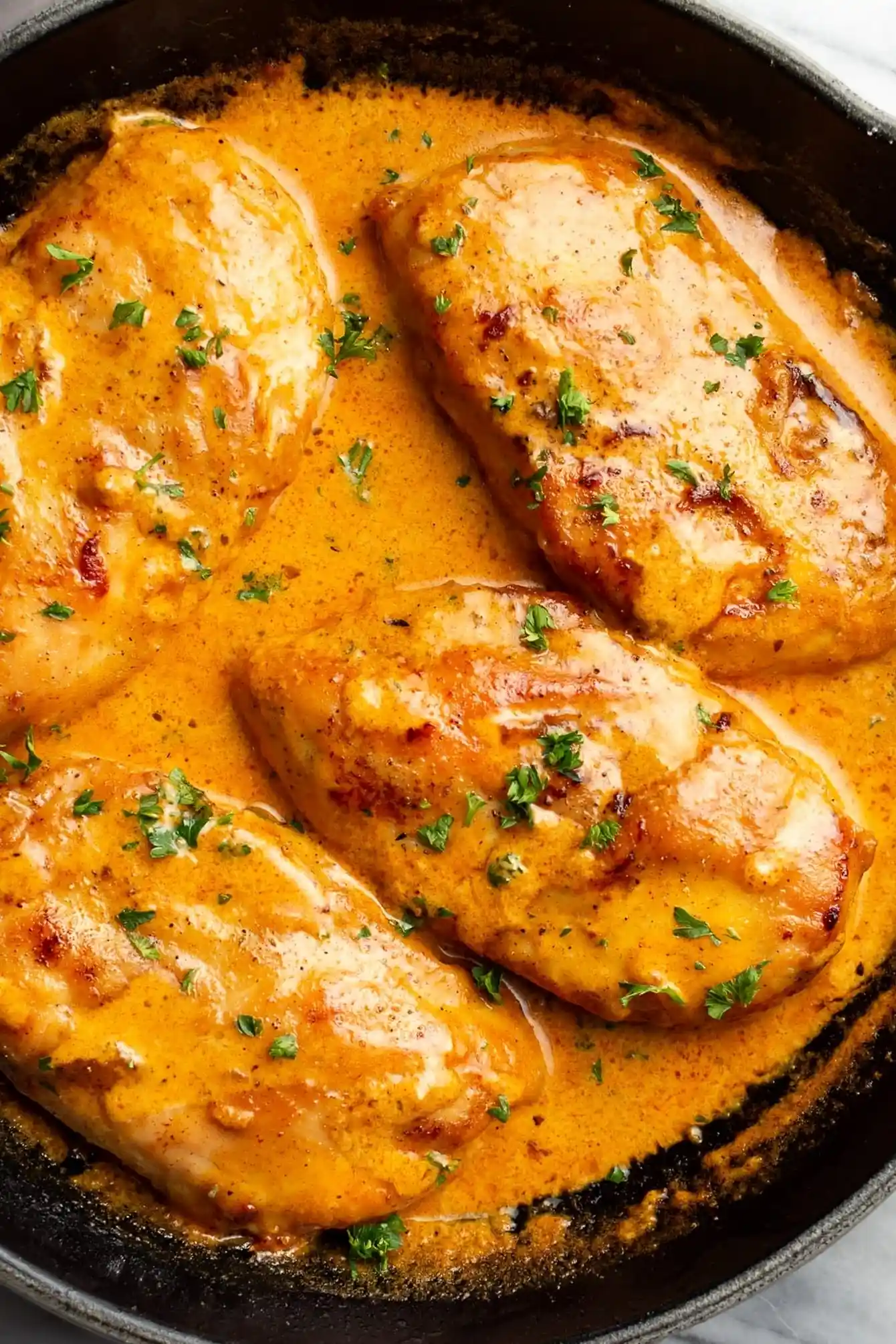
List of ingredients
- 2 large chicken breasts (cut in half lengthwise)
- 1/2 teaspoon garlic powder
- Salt & pepper (to taste)
- Flour (for dredging)
- 2 tablespoons butter
- 1 tablespoon olive oil
- 1 cup heavy/whipping cream
- 1/2 teaspoon smoked paprika
- 1/2 teaspoon onion powder
- 1/2 teaspoon chili powder
- 1/4 teaspoon cayenne pepper
- 1/8 teaspoon Italian seasoning
- Fresh parsley (chopped, to taste, optional)
step-by-step instructions
- Step: Prep your chicken (cut it in half lengthwise so you have 4 thinner cutlets). Sprinkle both sides of each piece of chicken with the garlic powder and salt & pepper. Coat each piece in flour.
- Step: Add the butter and oil to a skillet over medium-high heat. Once the pan is hot, cook the chicken for 4-5 minutes/side until it’s nice and golden. Take the chicken out of the pan and set it aside.
- Step: Stir in the cream and scrape up the brown bits from the bottom of the pan so they’re incorporated into the sauce.
- Step: Add the remaining spices and whisk them in until you’ve got a smooth sauce.
- Step: Add the chicken back into the pan and cook it for 5 minutes or so until the chicken is cooked through and the sauce has thickened up a bit. Season with more salt & pepper if necessary and serve with parsley sprinkled over top if desired.
Refining Your Pan-Seared Technique
Achieving the Perfect Golden Crust
To ensure your chicken develops a beautiful, professional-looking sear, ensure the skillet is thoroughly preheated before adding the chicken. If the pan is not hot enough, the flour coating will absorb the fat rather than crisping up, leading to a soggy texture. Once you place the chicken in the pan, resist the urge to move it for at least three minutes, as this allows the proteins to bond and release naturally from the surface.
Managing Pan Heat for Consistent Results
Chicken cutlets are delicate and can overcook quickly due to their thin profile. Monitor the edges of the meat closely as they turn white, which indicates it is time to flip. If you notice the brown bits on the bottom of the pan turning black rather than a deep mahogany, reduce your heat slightly to prevent a burnt flavor from affecting your cream sauce.
Importance of Resting the Chicken
While the instructions suggest returning the chicken to the pan to finish, allowing the chicken to rest for a few minutes before final plating helps the juices redistribute throughout the meat. This simple pause in the workflow ensures that each bite of your chicken remains tender rather than stringy or dry. If the sauce thickens too quickly while the chicken rests, keep a small amount of warm water or broth on hand to loosen it back to a smooth, pourable consistency.
Customizing Your Culinary Experience
Tailoring the Spice Level
The heat in this dish is primarily derived from the cayenne pepper and chili powder. If you prefer a milder version, you can reduce the cayenne by half or replace it with a pinch of sweet paprika for color without the sharp bite. Conversely, if you enjoy significant heat, you can add an extra pinch of crushed red pepper flakes into the cream during the simmering stage to intensify the spicy profile.
Texture and Thickness Adjustments
If you find that your cream sauce is thinner than you prefer after the simmer, you can whisk in a teaspoon of flour mixed with a tablespoon of cold water—a technique known as a slurry—to quickly thicken it. Ensure the sauce reaches a light bubble after adding the slurry to cook out the raw flour taste. Alternatively, simply simmering the sauce for an additional minute or two without the chicken will naturally reduce the liquid and thicken the texture through evaporation.
Serving and Presentation Suggestions
Selecting Ideal Side Dishes
Because the sauce is quite rich and indulgent, it pairs best with side dishes that can absorb the flavor. Garlic mashed potatoes are a classic, as the starchy base perfectly complements the Cajun cream. If you prefer pasta, choose a shape with enough surface area to hold the sauce, such as fettuccine or penne, rather than long, thin strands which might slip through the coating.
Adding Fresh Elements
The intensity of the cream and the heat of the spices benefit significantly from a contrasting fresh element. A simple green salad tossed in a sharp vinaigrette helps to cleanse the palate between bites of the creamy chicken. You may also consider adding a squeeze of fresh lemon juice just before serving; the acidity acts as a bright counterpoint that cuts through the heaviness of the dairy.
Storage and Handling Guidelines
Proper Refrigeration Procedures
If you have leftovers, allow the sauce and chicken to cool to room temperature before transferring them into an airtight container. Because this dish relies on a dairy-based sauce, it is highly sensitive to temperature fluctuations; ensure it is placed in the coldest part of your refrigerator within two hours of cooking. It will remain safe and flavorful for up to three days, though the cream may separate slightly during storage.
Reheating Leftovers Carefully
When you are ready to eat the leftovers, avoid using a high-heat microwave setting, as this can cause the fat in the cream to separate and make the sauce look grainy or oily. Instead, reheat the chicken and sauce in a small saucepan over medium-low heat, stirring frequently. If the sauce has tightened up too much in the fridge, add a tablespoon of milk or water to restore the silky texture before it reaches serving temperature.
Frequently Asked Questions
Can I substitute half-and-half for heavy cream?
You can use half-and-half, but the sauce will be significantly thinner and lack the velvety, luxurious finish of heavy cream. To compensate for the lower fat content, you will need to simmer the sauce longer to reduce the volume or stir in a small amount of cornstarch mixed with water to reach your preferred thickness.
Is it necessary to dredge the chicken in flour?
Dredging is highly recommended as it serves two functions: it creates the golden-brown crust and provides the necessary thickening agent for the sauce. Without the flour coating, the liquid in the pan would remain thin and watery, failing to coat the chicken properly. If you are avoiding gluten, you can use a high-quality gluten-free all-purpose flour blend as a direct replacement with the same results.
What is the best way to determine when the chicken is done?
The most reliable method is to use an instant-read meat thermometer to ensure the internal temperature of the chicken has reached 165 degrees Fahrenheit. Because the chicken is cut into thin cutlets, it will cook quite rapidly, so checking the temperature after about four minutes per side is a good safety precaution to prevent overcooking the meat.
Can this recipe be prepared ahead of time?
While this dish is best served immediately, you can prepare the chicken cutlets and the spice mixture earlier in the day to save time. Keep the seasoned, dredged chicken in the refrigerator until you are ready to cook, and store your spices in a small bowl. This prep work allows you to move directly to the searing stage, meaning the final cooking time will be reduced to under fifteen minutes.
How do I know if the sauce has broken?
A broken cream sauce appears separated, where the fat has pooled on top of the liquid or looks curdled. This usually happens if the sauce is boiled too vigorously or cooked over heat that is too high. If your sauce begins to look separated, remove it from the heat immediately, add a tablespoon of cold liquid, and whisk vigorously to emulsify the fat and cream back together.
Print
Easy Chicken Lazone
- Total Time: 30 minutes
- Yield: 4 servings 1x
- Diet: Low sugar
Description
Get a taste of New Orleans with this easy and simple Chicken Lazone recipe! It has tender pan-fried chicken that’s drenched in a flavorful Cajun cream sauce.
Ingredients
- 2 large chicken breasts (cut in half lengthwise)
- 1/2 teaspoon garlic powder
- Salt & pepper (to taste)
- Flour (for dredging)
- 2 tablespoons butter
- 1 tablespoon olive oil
- 1 cup heavy/whipping cream
- 1/2 teaspoon smoked paprika
- 1/2 teaspoon onion powder
- 1/2 teaspoon chili powder
- 1/4 teaspoon cayenne pepper
- 1/8 teaspoon Italian seasoning
- Fresh parsley (chopped, to taste, optional)
Instructions
- Step: Prep your chicken (cut it in half lengthwise so you have 4 thinner cutlets). Sprinkle both sides of each piece of chicken with the garlic powder and salt & pepper. Coat each piece in flour.
- Step: Add the butter and oil to a skillet over medium-high heat. Once the pan is hot, cook the chicken for 4-5 minutes/side until it’s nice and golden. Take the chicken out of the pan and set it aside.
- Step: Stir in the cream and scrape up the brown bits from the bottom of the pan so they’re incorporated into the sauce.
- Step: Add the remaining spices and whisk them in until you’ve got a smooth sauce.
- Step: Add the chicken back into the pan and cook it for 5 minutes or so until the chicken is cooked through and the sauce has thickened up a bit. Season with more salt & pepper if necessary and serve with parsley sprinkled over top if desired.
Notes
If using small chicken breasts, just keep them intact. I like cutting the larger ones so they cook quickly and evenly. If spice isn’t your thing, use less cayenne.
- Prep Time: 10 minutes
- Cook Time: 20 minutes
- Category: Main Course
- Method: Pan-frying
- Cuisine: Cajun
Nutrition
- Serving Size: 1 chicken breast cutlet with sauce
- Calories: 430 kcal
- Sugar: 2 g
- Sodium: 197 mg
- Fat: 34 g
- Saturated Fat: 18 g
- Unsaturated Fat: 12 g
- Trans Fat: 0.2 g
- Carbohydrates: 5 g
- Fiber: 0.4 g
- Protein: 26 g
- Cholesterol: 155 mg