This hearty one-pan meal combines savory ground beef, black beans, and melted cheese for a quick dinner solution. It is a convenient way to get the flavors of a burrito without the effort of rolling individual wraps.
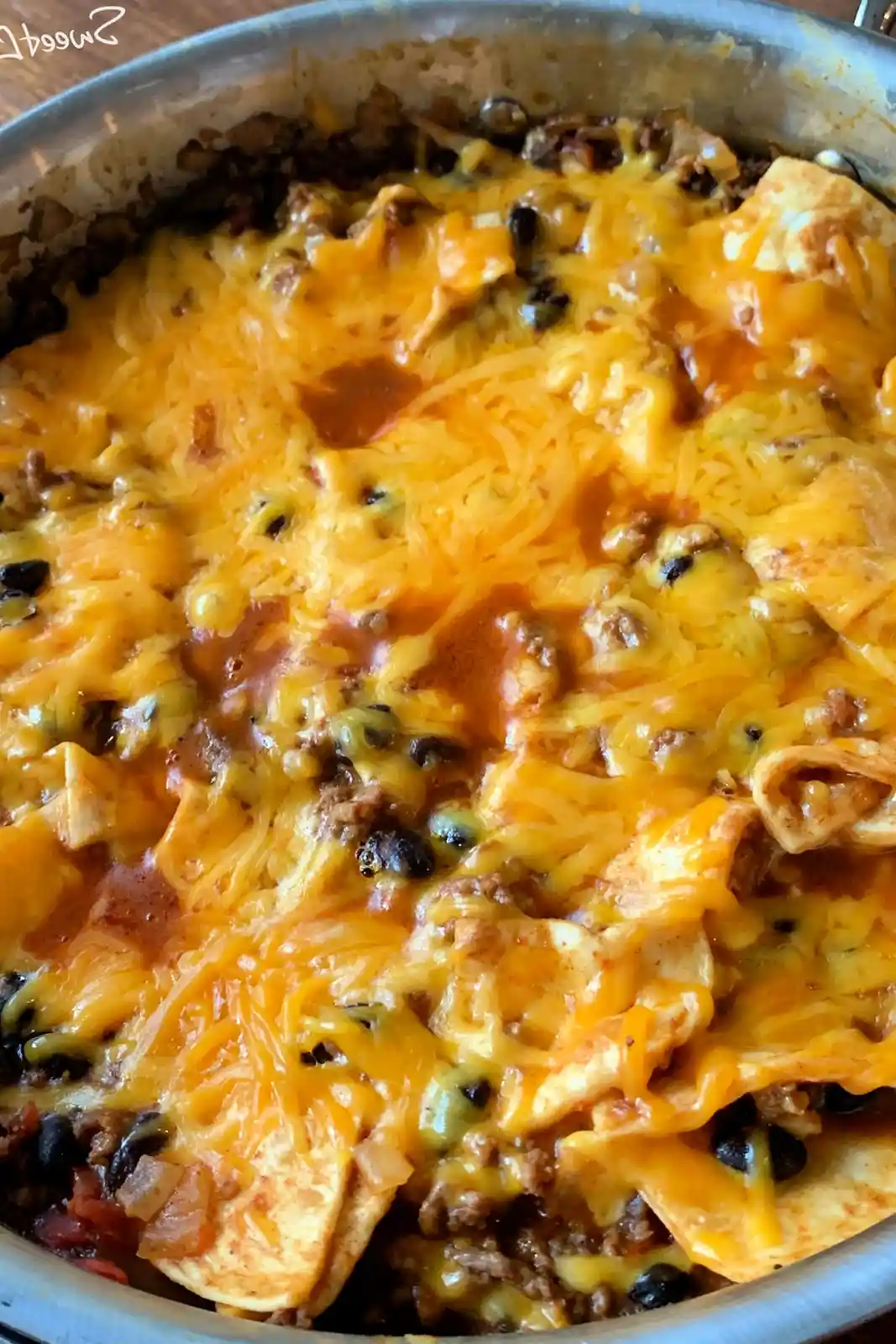
List of ingredients
- 1 pound lean ground beef – provides the protein base.
- 1 cup onion, chopped – adds aromatic depth.
- 1 ounce taco seasoning (1 ounce packet) – for a consistent spice blend.
- 1 can Rotel original or 1 cup salsa – adds acidity and heat.
- 1 can black beans (15 ounce can), drained and rinsed – for texture and fiber.
- 1 cup water – helps create the sauce consistency.
- 2 cups shredded mild cheddar cheese, divided in half (or a Mexican cheese blend) – for richness and binding.
- 4 6-inch flour tortillas, cut into 1-inch strips – provides the classic burrito element.
step-by-step instructions
- Brown the Meat: In a large skillet, cook the ground beef and chopped onions over medium to medium-high heat. Continue cooking until the beef is thoroughly browned with no pink remaining, which usually takes about 10 minutes. Drain the excess fat from the pan.
- Simmer the Sauce: Stir in the Rotel (or salsa), drained black beans, taco seasoning, and water. Mix well and cook until the sauce begins to thicken. Once thickened, reduce the heat to low.
- Fold in Fillings: Stir in 1 cup of the shredded cheese and the flour tortilla strips. Fold them into the beef mixture evenly so they are well distributed.
- Melt the Topping: Spread the remaining 1 cup of cheese evenly over the top. Do not stir the top layer. Cover the skillet with a lid for 5 minutes, or until the cheese is completely melted.
- Finish and Serve: Serve the skillet as is or customize it with toppings like chopped tomatoes, sliced avocado, green onions, jalapeños, hot sauce, or sour cream. A drizzle of fresh lime juice and a sprinkle of cilantro are recommended additions.
Professional Cooking Tips
Selecting the Right Ground Beef
Using lean ground beef, such as 90% lean, reduces the amount of grease that needs to be drained. If you use a higher fat percentage, ensure you drain the pan thoroughly to prevent the sauce from becoming oily.
Mastering the Browning Process
Avoid overcrowding the skillet to ensure the beef browns rather than steams. Cook the meat in a single layer and let it sear for a few minutes before stirring to develop a deeper flavor.
Managing Liquid Consistency
If the sauce appears too thick after adding the water, you can add an extra splash of beef broth or water. If it is too thin, simmer it uncovered for a few extra minutes before adding the cheese.
Perfecting Tortilla Texture
Cut the tortillas into uniform strips to ensure they cook evenly. Folding them in at the end prevents them from becoming overly soggy while still allowing them to absorb the savory flavors of the sauce.
Ingredient Substitutions
Alternative Protein Choices
Ground turkey or ground chicken can be used as a leaner substitute for beef. The cooking time remains similar, though you may need to add a teaspoon of oil if using very lean poultry.
Salsa Variations for Rotel
If you do not have Rotel, any chunky salsa works well. Use a mild salsa for a family-friendly version or a salsa verde for a tangier, more acidic flavor profile.
Swapping Bean Types
Pinto beans or kidney beans are excellent alternatives to black beans. Ensure they are rinsed thoroughly to remove excess sodium and canning liquid.
Choosing Different Cheeses
While mild cheddar is standard, Monterey Jack provides a creamier melt. A pre-shredded Mexican blend often includes Asadero or Pepper Jack for added complexity.
Corn Tortilla Option
You can use corn tortillas instead of flour for a different texture and a gluten-free alternative. Corn strips will hold their shape slightly better than flour strips.
Customization and Variations
Incorporating Fresh Vegetables
Diced bell peppers or corn kernels can be added during the browning phase with the onions. This increases the nutritional value and adds a slight sweetness to the dish.
Adjusting the Spice Level
For more heat, add diced fresh jalapeños or a pinch of cayenne pepper. If the dish is too spicy, stir in a spoonful of Greek yogurt or sour cream before serving.
Low-Carb Modifications
To reduce carbohydrates, omit the flour tortilla strips entirely. You can replace them with sliced zucchini or simply serve the beef mixture over a bed of cauliflower rice.
Adding Hearty Grains
Stirring in a cup of cooked brown rice or quinoa along with the beans adds more bulk. This makes the meal more filling and changes the texture to something closer to a burrito bowl.
Serving Suggestions
Fresh Topping Combinations
Contrast the richness of the cheese with fresh, crisp toppings. Diced red onions, shredded romaine lettuce, and diced Roma tomatoes provide a refreshing balance.
Creamy Element Additions
A dollop of sour cream or sliced avocado adds a creamy texture that complements the spiced beef. For a dairy-free option, use a scoop of guacamole.
Citrus and Herb Finishes
Squeeze fresh lime juice over the skillet just before serving to brighten the heavy flavors. Finely chopped cilantro adds a fresh, herbal note that is characteristic of Mexican cuisine.
Side Dish Pairings
Serve this skillet with a side of Mexican street corn (elote) or a simple cabbage slaw. A side of sliced cucumbers with lime and salt also cleanses the palate between bites.
Storage and Reheating
Refrigeration Guidelines
Store leftover skillet portions in an airtight container in the refrigerator. The dish will remain fresh and safe to eat for 3 to 4 days.
Freezing Instructions
This meal can be frozen, although the tortilla strips may lose their texture. Freeze in a freezer-safe container for up to two months and thaw in the fridge overnight before reheating.
Best Reheating Methods
For the best results, reheat in a skillet over medium heat with a tablespoon of water to loosen the sauce. Alternatively, use a microwave on medium power, stirring halfway through.
Preventing Rubberiness During Reheat
Avoid overheating the dish in the microwave, as this can make the cheese rubbery. Heat until just warm, then let it sit for one minute to distribute the heat evenly.
Make-Ahead Strategy
Pre-prepping Ingredients
Chop the onions and cut the tortilla strips a day in advance. Store them in separate containers to reduce the active prep time on the day of cooking.
Cooking the Base Early
You can brown the beef, onions, and simmer the sauce up to two days before serving. Store this mixture in the fridge and simply add the cheese and tortillas when you are ready to eat.
Timing the Assembly
The final cheese melting step should always happen immediately before serving. This ensures the cheese is gooey and the tortillas haven’t become too soft.
Troubleshooting Common Issues
Fixing a Watery Sauce
If the mixture is too liquid, simmer it on medium-high heat without a lid for 3 to 5 minutes. This allows the excess water to evaporate and the taco seasoning to thicken the sauce.
Preventing Burnt Cheese
Always reduce the heat to low before adding the top layer of cheese. Using a lid traps the steam, which melts the cheese efficiently without burning the bottom of the meat.
Balancing Overly Salty Flavors
Taco seasoning packets can vary in salt content. If the dish tastes too salty, stir in a small amount of unsalted tomato puree or a squeeze of lime juice to balance the flavor.
Correcting Dry Meat
If the beef seems dry, stir in a small amount of beef broth or water during the simmering phase. Ensure you do not overcook the meat during the initial browning stage.
Frequently Asked Questions
Can I make this in a slow cooker?
Yes, you can cook the beef, onions, beans, and sauce on low for 6-8 hours. However, you must transfer the mixture to a skillet or oven-safe dish to add the tortillas and melt the cheese at the end.
Is this recipe freezer-friendly?
The beef and bean base freezes very well. It is recommended to add the tortilla strips and the final layer of cheese fresh after reheating for the best texture.
How do I make it spicier?
Increase the heat by using a hot variety of salsa or adding chopped chipotle peppers in adobo sauce. You can also top the finished dish with sliced fresh serrano peppers.
What is the best skillet to use?
A large cast-iron skillet is ideal because it distributes heat evenly and can transition from the stove to the oven. A heavy-bottomed non-stick skillet also works well for easy cleanup.
Print
Easy Cheesy Beef Burrito Skillet
- Total Time: 30 minutes
- Yield: 4 servings 1x
- Diet: General
Description
Loaded with beef, beans and cheese – a one-pan meal the whole family will love! Just a few ingredients and 30 minutes to make this hearty, delicious meal.
Ingredients
- 1 pound lean ground beef
- 1 cup onion, chopped
- 1 ounce taco seasoning
- 1 can Rotel original (or 1 cup salsa)
- 1 can (15 ounce) black beans, drained and rinsed
- 1 cup water
- 2 cups shredded mild cheddar cheese, divided in half
- 4 6-inch flour tortillas, cut in 1-inch strips
Instructions
- Step: In a large skillet, brown ground beef and onions over medium to medium-high heat until beef is thoroughly cooked with no pink remaining – approximately 10 minutes. When ready, drain fat.
- Step: Add Rotel, black beans, taco seasoning and water, stir until well blended. Cook until sauce thickens, then reduce heat to low.
- Step: Add 1 cup cheese and tortilla strips, folding into beef mixture evenly.
- Step: Add remaining 1 cup of cheese on top – DO NOT STIR – spreading evenly, then cover skillet for 5 minutes until cheese is completely melted.
- Step: Serve as is or top with your favorite burrito fixings – chopped tomatoes, sliced avocado, chopped onion/green onion, jalapeños, hot sauce, sour cream and more.
Notes
This recipe is easily adaptable: substitute beef with ground turkey or chicken, and black beans with pinto beans. If you don’t have Rotel, use 1 cup of salsa. You can also add peppers or corn to the beef mixture.
- Prep Time: 10 minutes
- Cook Time: 20 minutes
- Category: Dinner, Main Course
- Method: Skillet
- Cuisine: American, Mexican
Nutrition
- Serving Size: 1 serving
- Calories: 580 kcal
- Sugar: 8 g
- Sodium: 1150 mg
- Fat: 32 g
- Saturated Fat: 14 g
- Unsaturated Fat: 15 g
- Trans Fat: 0 g
- Carbohydrates: 38 g
- Fiber: 7 g
- Protein: 34 g
- Cholesterol: 95 mg