This cheesy baked rotini is a simple, budget-friendly meal perfect for feeding a large group. It combines pasta, marinara, and cottage cheese for a comforting result with minimal effort.
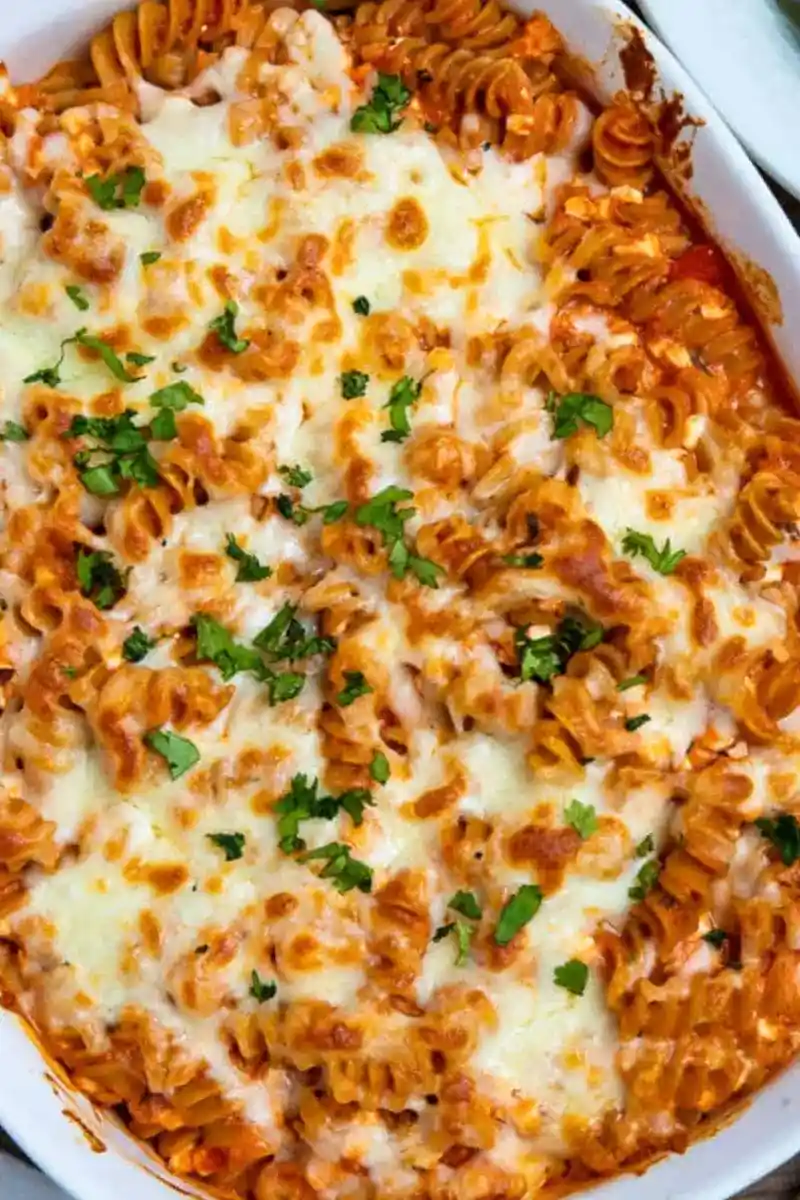
List of ingredients
- 16 ounces rotini noodles – provides a sturdy base that holds sauce.
- 28 ounces spaghetti sauce or marinara – the primary flavor base.
- 16 ounces cottage cheese (full-fat or reduced-fat, not fat-free) – adds creamy texture and protein.
- 1 cup mozzarella cheese, shredded (used for the mixture) – creates a gooey consistency.
- 1 large egg, whisked – acts as a binder for the cheeses.
- 1 cup mozzarella cheese, shredded (used for topping) – creates the golden brown crust.
step-by-step instructions
- Preheat: Set your oven to 350℉ (175℃) to ensure it is fully heated before baking.
- Boil Pasta: Bring a large pot of water to a rapid boil. Add 1 tablespoon of kosher salt and the rotini noodles. Cook for 1-2 minutes less than the package directions suggest so the pasta remains just shy of al dente. Drain the pasta, but be sure to reserve ½ cup of the cooking liquid.
- Combine Ingredients: In a large mixing bowl, combine the cooked rotini with the 28 ounces of spaghetti sauce, the reserved ½ cup of cooking liquid, 16 ounces of cottage cheese, and 1 cup of shredded mozzarella. Stir the mixture thoroughly and let the pasta cool slightly. Stir in the whisked large egg.
- Assemble: Pour the completed pasta mixture into a large 9×13 pan or a 3-quart casserole dish. Evenly spread the remaining 1 cup of shredded mozzarella cheese across the top.
- Bake: Bake for 30 minutes, or until the cheese is bubbly and the entire casserole is warmed through.
Pasta Selection and Preparation
Why Rotini is the Best Choice
Rotini noodles are ideal for baked dishes because their spiral shape creates more surface area for the sauce to cling to. This ensures that every bite is flavorful and prevents the sauce from pooling at the bottom of the dish. The thickness of the noodle also helps it maintain its structure during the second cooking phase in the oven.
Using Penne or Rigatoni Alternatives
If rotini is unavailable, penne or rigatoni are excellent substitutes. These tubular pastas have hollow centers that trap the marinara and melted cheese inside, providing a similar experience. Ensure you follow the same undercooking rule to prevent them from becoming too soft after baking.
The Importance of Undercooking the Pasta
Cooking the pasta for 1-2 minutes less than the package instructions is critical. The noodles continue to absorb moisture from the sauce and cottage cheese while in the oven. If you cook them fully on the stove, they will likely turn mushy and lose their texture during the final bake.
Saving the Pasta Water for Texture
Reserving a small amount of the starchy pasta water helps emulsify the sauce and the cheeses. The starch acts as a bridge between the water-based sauce and the fats in the cheese. This results in a smoother, more cohesive consistency that adheres better to the noodles.
Ingredient Customizations
Choosing the Right Marinara Sauce
Since this recipe has few ingredients, the quality of the spaghetti sauce significantly impacts the final taste. Look for a marinara with a balanced acidity and a low amount of added sugars. Using a sauce with roasted garlic or basil can add complexity without requiring extra prep work.
Selecting the Best Cottage Cheese
Always use full-fat or reduced-fat cottage cheese rather than fat-free versions. Fat-free cottage cheese contains more water and lacks the stability needed for baking, which can lead to a watery casserole. The fat in the standard versions provides a richer mouthfeel and a better bind.
Using Freshly Grated Mozzarella
While pre-shredded cheese is convenient, grating your own mozzarella leads to a superior melt. Pre-shredded cheeses are coated in cellulose or potato starch to prevent clumping in the bag. These additives can hinder the cheese from melting into a smooth, gooey layer.
Adding Ground Beef for Protein
To make the dish heartier, you can add cooked ground beef. Brown the beef in a skillet and drain the excess fat before stirring it into the pasta mixture. This adds a savory depth and increases the protein content per serving.
Incorporating Turkey Sausage Alternatives
For a different flavor profile, use cooked and crumbled turkey sausage. Ensure the sausage is fully browned before adding it to the mixing bowl. This provides a spicy, salty contrast to the creamy cottage cheese.
Adding Fresh Spinach or Zucchini
You can increase the vegetable content by stirring in fresh baby spinach or sautéed diced zucchini. Spinach can be added raw as it will wilt during the baking process. Zucchini should be sautéed first to remove excess moisture and prevent the dish from becoming soggy.
Seasoning with Garlic and Oregano
If you prefer a more robust flavor, add one teaspoon each of garlic powder and dried oregano. Stir these spices into the sauce before combining it with the pasta. This enhances the traditional Italian profile of the dish.
Cooking and Assembly Secrets
Preventing the Egg from Scrambling
It is important to let the cooked pasta cool slightly before stirring in the whisked egg. If the pasta is boiling hot, the egg may cook instantly upon contact, creating small scrambled bits. Stirring the egg in last ensures it acts as a binder without changing the texture of the sauce.
Ensuring Even Sauce Distribution
Use a large mixing bowl rather than mixing directly in the baking pan. This allows you to fold the ingredients together more effectively, ensuring that the cottage cheese and mozzarella are evenly distributed. It also prevents the noodles from breaking under the pressure of stirring in a cramped space.
Choosing the Correct Baking Dish
A 9×13 inch rectangular pan or a 3-quart casserole dish is the best choice. If the dish is too shallow, the sauce may bubble over the edges. If it is too deep, the pasta may not heat through evenly, leaving the center cold while the edges overcook.
Achieving the Perfect Cheese Crust
To get a golden-brown top, ensure the mozzarella is spread evenly across the entire surface. If you prefer a crispier crust, you can turn on the broiler for the last 2-3 minutes of cooking. Watch the oven closely during this time to prevent the cheese from burning.
Storage and Meal Prep
Refrigerating Leftover Pasta
Allow the pasta bake to cool completely before transferring it to an airtight container. This prevents condensation from forming inside the container, which can make the cheese gummy. Store the leftovers in the refrigerator for up to three days.
Best Practices for Microwaving
When reheating, place a portion of the pasta on a microwave-safe plate and cover it with a damp paper towel. The moisture from the towel steams the pasta and prevents the cheese from becoming hard or rubbery. Reheat in 60-second intervals until warmed through.
Freezing the Assembled Casserole
You can prepare this dish in advance and freeze it before baking. Use a freezer-safe baking dish and cover the top with two layers of aluminum foil to prevent freezer burn. The casserole can be stored in the freezer for up to two months.
Baking Directly from the Freezer
To cook from frozen, remove only one layer of foil and bake at 350℉ for 60 minutes. After an hour, remove the remaining foil and bake for another 10-15 minutes. This allows the center to heat through while the top becomes bubbly and brown.
Refrigerating for Overnight Baking
If you are preparing the meal for the next day, assemble it and cover it with plastic wrap. Keep it in the refrigerator for up to 24 hours. When ready to bake, let the dish sit at room temperature while the oven preheats, then bake for 45-50 minutes.
Troubleshooting and FAQ
Why is my pasta bake watery?
Wateriness is usually caused by using fat-free cottage cheese or overcooking the noodles. Fat-free cheese releases more liquid when heated, and overcooked pasta can break down and release excess starch and water. Stick to full-fat cheese and undercook the pasta as directed.
Can I make this recipe egg-free?
Yes, you can simply omit the egg from the mixture. The egg serves as a binder to give the casserole a more stable, sliceable structure. Without it, the dish will be slightly looser and more like a traditional pasta with sauce, but it will still taste great.
What can I use instead of cottage cheese?
Ricotta cheese is the best substitute for cottage cheese. It provides a similar creamy texture and flavor profile. Since ricotta is denser, you may find the casserole has a slightly firmer consistency after baking.
How do I prevent the cheese from burning?
If the cheese is browning too quickly before the pasta is hot, cover the dish loosely with aluminum foil. This reflects some of the heat away from the surface while allowing the center to continue cooking. Remove the foil for the last few minutes to crisp the top.
Can I use whole wheat pasta?
Whole wheat or gluten-free rotini can be used in this recipe. Be mindful that whole wheat pasta often requires slightly different cooking times and can absorb more sauce. You may need to add an extra splash of pasta water or a tablespoon of sauce to maintain moisture.
Print
Easy Baked Rotini Pasta
- Total Time: 40 minutes
- Yield: 8 servings 1x
- Diet: Vegetarian
Description
Made with only 5 key ingredients, and minimal effort, this easy baked rotini recipe delivers a cheesy, gooey, kid-friendly meal that can feed a large crowd on a budget.
Ingredients
- 16 ounces rotini noodles
- 28 ounces spaghetti sauce (or marinara)
- 16 ounces cottage cheese (full-fat, or reduced-fat)
- 2 cups mozzarella cheese, shredded (divided)
- 1 large egg, whisked
Instructions
- Preheat: Preheat oven to 350℉ (175℃).
- Boil: Bring a large pot of water to a rapid boil. Once boiling, add in 1 tablespoon of kosher salt and the rotini noodles. Cook the noodles for 1-2 minutes less than the package suggests–just shy of al dente, stirring occasionally. Drain pasta, reserving ½ cup of the cooking liquid.
- Mix: Place the cooked rotini in a large mixing bowl. Add 28 ounces spaghetti sauce, along with ½ cup of reserved cooking liquid, 16 ounces cottage cheese, and 1 cup mozzarella cheese (shredded). Stir to combine and slightly cool the cooked pasta. Stir in the whisked 1 large egg.
- Assemble: Pour the pasta mixture into a large 9×13 pan or 3-quart casserole dish and top with the remaining 1 cup mozzarella cheese (shredded).
- Bake: Bake for 30 minutes, or until the cheese is bubbly and the casserole is warmed through.
Notes
Rotini Noodles: Whole wheat, regular, or gluten-free rotini noodles can be used. In place of rotini feel free to use ziti, rigatoni, or penne. Add Meat: Feel free to add ground beef, beef or turkey sausage, or beef pepperoni for a heartier dish. Cheese: Use a mixture of mozzarella and parmesan or an Italian-blend. Cottage Cheese: Avoid fat-free cottage cheese to prevent wateriness; ricotta is a suitable substitute. Storage: Store in an airtight container in the refrigerator for up to 3 days. Freeze: Assemble and freeze for up to 2 months; bake from frozen at 350°F for 60 minutes covered, then 10-15 minutes uncovered.
- Prep Time: 10 minutes
- Cook Time: 30 minutes
- Category: Main Course
- Method: Baking
- Cuisine: American, Italian
Nutrition
- Serving Size: 1 serving
- Calories: 400 kcal
- Sugar: 8 g
- Sodium: 1034 mg
- Fat: 10 g
- Saturated Fat: 5 g
- Unsaturated Fat: 5 g
- Trans Fat: 0 g
- Carbohydrates: 54 g
- Fiber: 3 g
- Protein: 22 g
- Cholesterol: 52 mg