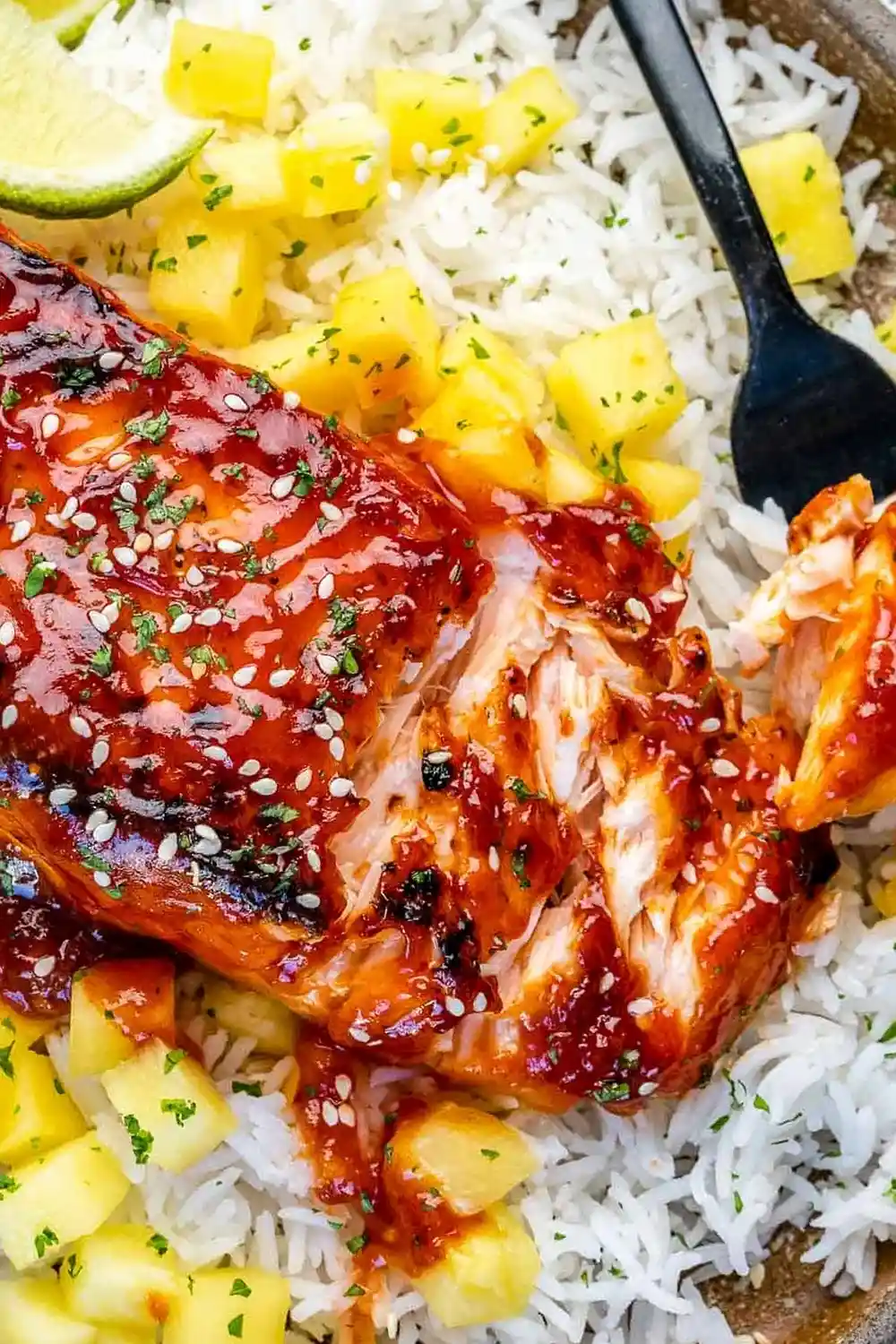
This pan-seared BBQ salmon is a quick and flavorful meal ready in under 30 minutes. It combines a homemade sweet and savory glaze with perfectly cooked fillets for a balanced weeknight dinner.
List of ingredients
- 24 ounces salmon fillets (four 6-ounce fillets) – use skin-on for better structure during cooking.
- 1 tablespoon olive oil – used for searing to prevent sticking.
- Kosher salt and pepper – added to taste for basic seasoning.
- 2 teaspoons sesame seeds – used as a final garnish for texture.
- 1/2 cup ketchup – provides the tomato base for the sauce.
- 1/4 cup honey – adds natural sweetness and helps the glaze thicken.
- 2 tablespoons apple cider vinegar – adds a tangy acidity to balance the honey.
- 1 teaspoon Worcestershire sauce – adds a deep, savory umami flavor.
- 1/2 teaspoon garlic powder – provides a subtle aromatic base.
- 1/2 teaspoon onion powder – adds depth to the sauce profile.
- 1/2 teaspoon chili powder – introduces a mild warmth.
- 1/2 teaspoon cayenne pepper – adds a touch of heat; adjust based on preference.
- Cooked rice – optional base for serving.
- Pineapple chunks – optional topping for a tropical flavor profile.
step-by-step instructions
- Prepare the BBQ Glaze: In a medium mixing bowl, combine the ketchup, honey, apple cider vinegar, Worcestershire sauce, garlic powder, onion powder, chili powder, and cayenne pepper. Whisk the mixture thoroughly until smooth and set it aside.
- Sear the Salmon: Heat one tablespoon of olive oil in a large non-stick pan over medium heat. Season the salmon fillets quickly with kosher salt and pepper. Place the fillets in the pan and cook for 2-3 minutes per side until they develop a golden-brown crust.
- Prepare the Broiler: While the salmon is searing in the pan, turn on your oven’s broiler to the high setting to prepare for the final charring step.
- Simmer with Sauce: Pour the prepared BBQ sauce into the pan with the salmon. Allow the sauce to simmer for 3-4 minutes, using a spoon to continuously baste the fillets so they are fully coated.
- Broil for Texture: Transfer the pan to the oven under the broiler for 2-3 minutes. Watch closely until the salmon is lightly charred and the flesh flakes easily with a fork.
- Final Garnish and Serve: Remove the pan from the oven and sprinkle the fillets with sesame seeds. Serve the salmon over a bed of cooked rice and accompany with pineapple chunks.
Technical Secrets for the Perfect Sear
Patting the Fish Dry for a Better Crust
Surface moisture is the enemy of a professional sear. When salmon fillets are wet, the heat of the pan is spent evaporating that water before it can brown the meat, which often results in steamed fish.
Use a clean paper towel to press firmly on all sides of the fillets. Ensure that no droplets of water remain on the skin or the flesh before adding any oil or seasoning.
Performing this step immediately before seasoning prevents the salt from drawing out too much moisture. If you salt the fish too early, it will weep water, negating the drying process.
Selecting the Optimal Pan
A heavy-bottomed non-stick pan or a cast-iron skillet is ideal for this recipe. These materials distribute heat evenly, which prevents hot spots that can burn the honey in the BBQ sauce.
Avoid using thin aluminum pans, as they tend to warp and create uneven cooking surfaces. This can lead to some parts of the fillet being overcooked while others remain raw.
Ensure the pan is large enough so the fillets are not crowded. Overcrowding lowers the temperature of the pan, leading to moisture release and preventing a crisp exterior.
Managing Heat to Prevent Overcooking
Salmon is a delicate protein that can quickly transition from moist to dry. Maintaining a steady medium heat during the searing process ensures the interior cooks evenly without burning the outside.
Use a meat thermometer to check for doneness, aiming for an internal temperature of 145°F. If you do not have a thermometer, the fish should flake easily when pressed with a fork.
The final broiling step is brief and intended only for caramelization. Keep a close eye on the oven to ensure the sugars in the BBQ sauce do not burn.
Ingredient Substitutions and Customizations
Swapping Salmon for Other Proteins
If you prefer a different fish, cod or halibut are excellent alternatives. These white fish have a milder flavor and firm texture that holds up well to the sweet BBQ glaze.
For a non-seafood option, chicken breasts can be used. Note that chicken requires a longer searing time and should be cooked through completely before adding the sauce.
When using chicken, slice the breasts into thinner cutlets. This ensures they cook at a speed closer to that of the salmon and prevents the sauce from burning during the longer cook time.
Alternative Sweeteners for the Glaze
Maple syrup can be substituted for honey in a 1:1 ratio. Maple syrup provides a deeper, woodsy sweetness that pairs exceptionally well with the acidity of the apple cider vinegar.
For those avoiding honey, brown sugar is another viable option. Brown sugar adds a molasses-like depth and helps the sauce thicken and cling to the fish more effectively.
If you prefer a less sweet sauce, reduce the amount of honey or maple syrup by half and increase the apple cider vinegar slightly to maintain the balance.
Tropical Fruit Variations
While pineapple chunks are the classic pairing, fresh mango is a fantastic alternative. Mango offers a buttery texture and a different kind of sweetness that complements the cayenne pepper.
Pomegranate seeds can be added as a garnish for a burst of tartness. This creates a sharp contrast to the rich BBQ sauce and the fatty oils of the salmon.
For a more savory twist, try pairing the salmon with grilled peaches. The charred fruit enhances the smoky notes of the homemade BBQ glaze.
Serving Suggestions and Pairings
Grain Base Alternatives
While white rice is the recommended base, quinoa is a nutrient-dense alternative. Quinoa adds a nutty flavor and a slight crunch that contrasts with the moist salmon.
Brown rice or wild rice blends provide more fiber and a heartier texture. These grains hold up well under the weight of the BBQ sauce and the fillets.
For a low-carb option, use cauliflower rice or zucchini noodles. Sauté these lightly in olive oil and garlic before plating the salmon on top.
Vegetable Side Dish Pairings
Roasted honey-glazed carrots mirror the sweetness of the BBQ sauce and provide a vibrant color to the plate. Roast them at 400°F until tender and caramelized.
Steamed broccoli or sautéed spinach offer a fresh, bitter contrast to the rich glaze. A squeeze of fresh lemon juice over the greens helps cleanse the palate between bites.
Garlic roasted potatoes are a great choice for a more filling meal. The starchiness of the potato absorbs any excess BBQ sauce left on the plate.
Plating for Visual Appeal
To achieve a restaurant-style presentation, create a neat mound of rice in the center of the plate using a small bowl as a mold.
Place the salmon fillet diagonally across the rice. Arrange the pineapple chunks around the edges of the rice to create a colorful frame for the fish.
Finish the dish with a sprinkle of fresh chopped parsley or thinly sliced green onions. The green color pops against the reddish-brown glaze of the BBQ salmon.
Storage and Reheating Instructions
Proper Refrigeration Methods
Store leftover BBQ salmon in an airtight glass container to prevent the fish from absorbing other odors in the fridge. Glass is preferred over plastic to avoid staining from the sauce.
Allow the salmon to cool slightly before sealing the container. This prevents excess steam from building up, which can make the exterior of the fish soggy.
The salmon will remain fresh and safe to eat for up to 3 days when stored at a consistent temperature of 40°F or below.
Best Practices for Reheating
Avoid using high heat when reheating salmon, as it can make the fish rubbery. The best method is to use a microwave on medium power in short 30-second intervals.
Alternatively, place the salmon in a covered baking dish with a tablespoon of water or extra sauce. Heat in the oven at 275°F until warmed through to preserve the moisture.
If using a pan, heat it over low heat with a tiny bit of butter. Cover the pan with a lid to trap the steam and heat the fillet gently.
Freezing and Long-Term Storage
Salmon can be frozen for up to 2 months. To prevent freezer burn, wrap the cooked fillets tightly in aluminum foil and then place them in a heavy-duty freezer bag.
When ready to eat, thaw the salmon slowly in the refrigerator overnight. This prevents the cell structure of the fish from breaking down, which maintains the texture.
Reheat thawed salmon using the oven method described above. Do not boil or fry frozen salmon, as this will ruin the delicate BBQ glaze.
Troubleshooting Common Issues
Preventing the BBQ Sauce from Burning
Because the sauce contains honey and ketchup, it has a high sugar content that can burn quickly. Always keep the pan at a medium heat and never leave the pan unattended.
If you notice the sauce thickening too rapidly or sticking to the pan, stir in a teaspoon of water or vegetable broth. This thins the sauce and prevents scorching.
Ensure the sauce is added only after the salmon is mostly cooked. Adding it too early means the sugars will be exposed to heat for too long.
Solving Sticking Problems
If the salmon sticks to the pan, it is usually because the pan was not hot enough when the fish was added. The protein needs a high initial heat to create a release layer.
Resist the urge to flip the salmon too early. Once a proper crust has formed, the fish will naturally release itself from the surface of the pan.
Using a high-quality non-stick pan or ensuring a generous coating of olive oil can mitigate this issue. Always use a flexible fish spatula to lift the fillets gently.
Balancing an Overly Spicy Sauce
If the cayenne pepper or chili powder makes the sauce too spicy, you can balance the heat by adding more honey or a pinch of brown sugar.
A squeeze of fresh lime juice can also neutralize excess heat. The citric acid cuts through the spice and brightens the overall flavor profile.
If the sauce is still too hot, serve the salmon with a dollop of Greek yogurt or sour cream on the side. The dairy helps coat the tongue and reduce the burn.
Frequently Asked Questions
Should I rinse the salmon before cooking?
No, you should not rinse salmon. Rinsing seafood can spread bacteria across your kitchen surfaces. The heat of the pan will kill any harmful bacteria on the fish.
Do I need to eat the salmon skin?
Eating the skin is optional. While the skin is healthy and flavorful, many people prefer to remove it after cooking. Keep the skin on during the searing process to protect the flesh from direct heat.
Can I make this recipe without a broiler?
Yes, you can skip the broiling step. Instead, continue basting the salmon in the pan for an extra 2 minutes. You will lose the charred appearance, but the flavor will remain the same.
Is it possible to use a different oil?
Yes, avocado oil is a great substitute for olive oil. Avocado oil has a higher smoke point, which is beneficial if you prefer a very high-heat sear.
Can I use frozen salmon fillets?
Yes, but they must be completely thawed and patted dry before cooking. Cooking frozen salmon directly in the pan will release too much water and prevent the fish from searing.
How do I know when the salmon is perfectly done?
The salmon is done when the thickest part of the fillet feels firm to the touch and flakes easily with a fork. The internal temperature should be exactly 145°F.
Print
Easy and Moist BBQ Salmon
- Total Time: 25 minutes
- Yield: 4 servings 1x
- Diet: General
Description
Crispy and moist salmon fillets smothered with homemade BBQ sauce and served over rice and pineapple.
Ingredients
- 24 ounces salmon fillets (4, 6 ounce fillets)
- 1 tablespoon olive oil
- kosher salt and pepper, to taste
- 2 teaspoons sesame seeds
- 1/2 cup ketchup
- 1/4 cup honey
- 2 tablespoons apple cider vinegar
- 1 teaspoon Worcestershire sauce
- 1/2 teaspoon garlic powder
- 1/2 teaspoon onion powder
- 1/2 teaspoon chili powder
- 1/2 teaspoon cayenne pepper
- cooked rice
- pineapple chunks
Instructions
- Step: In a medium mixing bowl, combine all BBQ sauce ingredients (1/2 cup ketchup, 1/4 cup honey, 2 tablespoons apple cider vinegar, 1 teaspoon Worcestershire sauce, 1/2 teaspoon garlic powder, 1/2 teaspoon onion powder, 1/2 teaspoon chili powder, and 1/2 teaspoon cayenne pepper) and whisk well. Set aside until ready to use.
- Step: Heat 1 tablespoon olive oil in a large non-stick pan over medium heat. Quickly season the 24 ounces salmon fillets with a pinch of kosher salt and pepper. Add them to the hot pan and cook for 2-3 minutes per side, or until nicely golden.
- Step: Meanwhile, preheat the broiler.
- Step: Add the BBQ sauce to the pan, and allow it to simmer for 3-4 minutes, spooning it all over the salmon.
- Step: Broil for 2-3 minutes, or until salmon is lightly charred and flaky. Remove from the oven and sprinkle with 2 teaspoons sesame seeds.
- Step: Serve over cooked rice with pineapple chunks, if desired, and enjoy!
Notes
Use salmon with skin or skinless. You may substitute salmon with another fish or chicken breast. Mango can be used instead of pineapple. Store leftovers in a sealed container for up to 3 days.
- Prep Time: 10 minutes
- Cook Time: 15 minutes
- Category: Main Course
- Method: Pan-searing and Broiling
- Cuisine: American
Nutrition
- Serving Size: 1 fillet
- Calories: 383 kcal
- Sugar: 24 g
- Sodium: 949 mg
- Fat: 15 g
- Saturated Fat: 2 g
- Unsaturated Fat: 13 g
- Trans Fat: 0 g
- Carbohydrates: 27 g
- Fiber: 1 g
- Protein: 35 g
- Cholesterol: 94 mg