This plant-based soup combines the sweetness of leeks with the heartiness of lentils and chickpeas. It is a quick meal that takes less than 25 minutes when using pre-cooked lentils. The addition of coconut milk provides a rich, creamy texture and a balanced flavor profile.
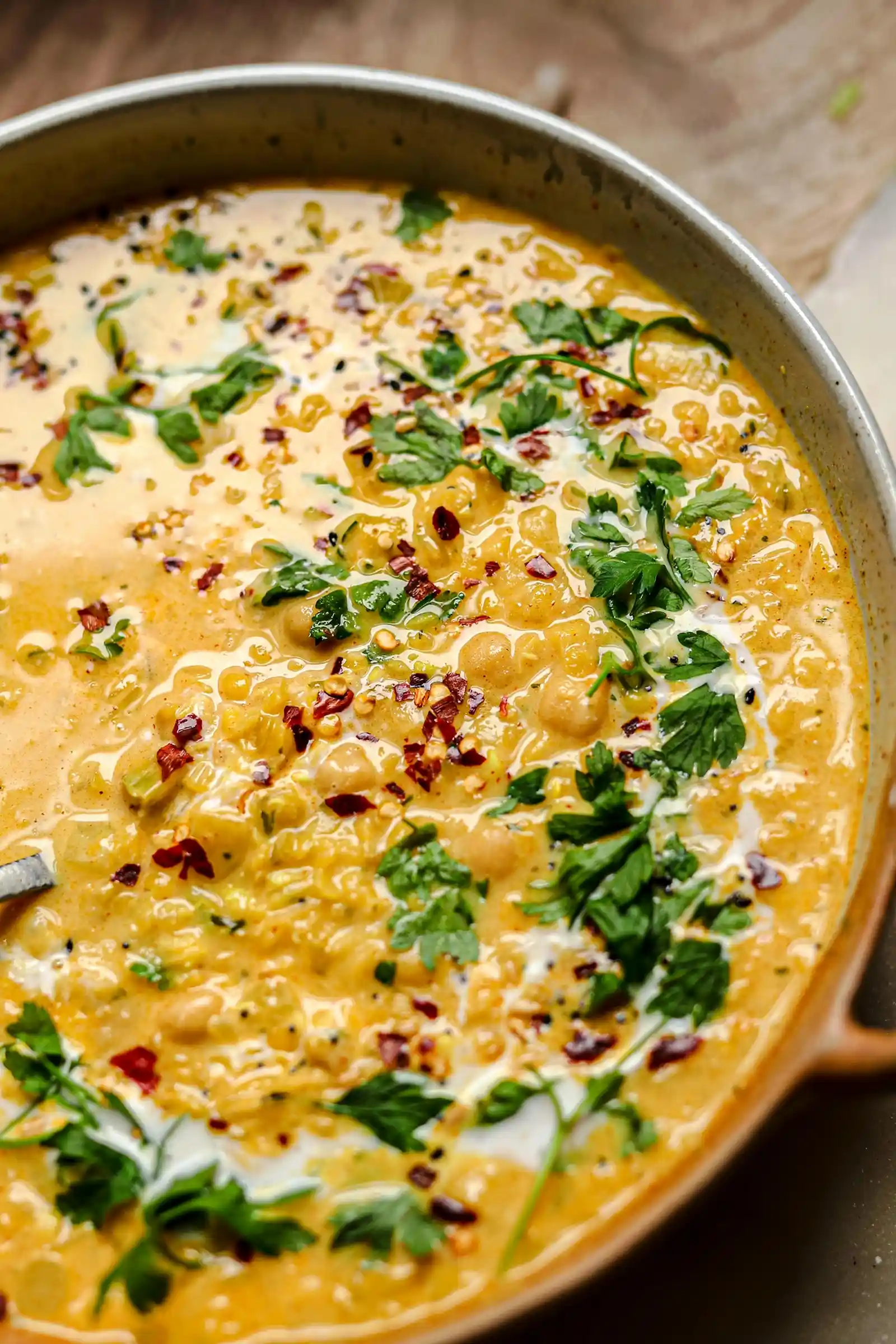
List of ingredients
- 200 g pack precooked lentils (or substitute with 150 g uncooked red split lentils) – provides the main protein and base.
- 1 large leek (base and green end, finely diced) – adds a mild, sweet onion flavor.
- 4 large cloves garlic (finely chopped) – provides aromatic depth.
- Large thumb sized piece of ginger (finely chopped) – adds warmth and zest.
- 1 green or red chilli (finely chopped) – introduces controllable heat.
- 400 g tin of chickpeas (240 g drained) – adds texture and additional protein.
- 400 ml full fat coconut milk – creates a creamy, rich consistency.
- 550 ml veg stock (made with water and a stock cube) – the liquid base for simmering.
- 1 tsp paprika (smoked or hot) – adds earthiness or spice.
- 1/2 tsp cumin – provides a nutty, warm aroma.
- 1/2 tsp turmeric – adds color and a mild bitter note.
- 1 tsp curry powder (optional) – enhances the overall curry flavor.
- 1 tbsp plant based butter or olive oil – used for sautéing the aromatics.
- Salt and pepper – for final seasoning.
- Fresh coriander, chilli flakes, and coconut cream – for garnishing.
step-by-step instructions
- Sauté Aromatics: Finely chop the leeks, chilli, and ginger. Heat 1 tablespoon of plant-based butter or olive oil in a large pot over medium heat and fry these ingredients for approximately 6 minutes.
- Add Garlic and Spices: Mince the garlic and add it to the pot, cooking for a few minutes. Stir in the drained chickpeas and the dried spices (paprika, cumin, turmeric, and optional curry powder).
- Simmer Base: Pour in the vegetable stock and add the precooked lentils. Let the mixture simmer for 5 minutes to allow the flavors to merge.
- Incorporate Coconut Milk: Add the coconut milk and maintain a low-medium heat. Do not let the coconut milk reach a rolling boil to prevent it from separating.
- Final Seasoning: Taste the soup and add salt and pepper according to your preference.
- Serving: Ladle into bowls and garnish with fresh coriander, chilli flakes, ground pepper, and a teaspoon of the thick coconut cream from the top of the tin.
Adapting the Lentil Base
Using Dried Red Split Lentils
If you do not have pre-cooked lentils, soak 150 g of dried red split lentils in a pan of water for 15 to 20 minutes. Drain and rinse them thoroughly before adding them to the pot. Because dried lentils absorb more liquid, add an extra 300 to 400 ml of vegetable stock to maintain the correct consistency.
Substituting with Brown or Green Lentils
Brown or green lentils hold their shape better than red lentils, which tend to break down. If using these varieties, ensure they are pre-cooked or simmer them for a longer duration before adding the coconut milk. These varieties will give the soup a chunkier, more rustic texture.
Using Yellow Split Peas
Yellow split peas can be used as a replacement for lentils for a thicker, porridge-like consistency. These require a longer cooking time and more liquid than red lentils. Simmer them in the vegetable stock until tender before incorporating the coconut milk.
Expanding the Vegetable Content
Adding Root Vegetables
Diced carrots or parsnips add natural sweetness and more nutritional value to the soup. Sauté them along with the leeks at the beginning of the process. Ensure they are cut into small, uniform cubes so they cook through within the simmering time.
Incorporating Fresh Greens
Stir in a handful of fresh spinach or chopped kale during the last two minutes of cooking. The residual heat will wilt the greens without overcooking them. This adds color and a boost of iron to the final dish.
Adding Bell Peppers
Finely diced red or yellow bell peppers can be fried with the leeks and garlic. They provide a sweet contrast to the earthy spices and add visual variety to the soup. Sauté them until they are slightly softened before adding the chickpeas.
Including Diced Zucchini
Zucchini can be added during the simmer phase to add volume without altering the flavor profile significantly. Cut the zucchini into small cubes to ensure they integrate well with the lentils. This is a great way to use up seasonal produce.
Customizing Flavor and Spice
Adjusting the Heat Level
For a milder soup, remove the seeds from the chilli or use a mild green variety. To increase the heat, add a pinch of cayenne pepper or extra chilli flakes during the spice-tossing stage. You can also increase the amount of chopped fresh chilli during the initial sauté.
Using Garam Masala
Replacing the curry powder with garam masala provides a more complex, aromatic flavor. Garam masala is typically added toward the end of cooking to preserve its volatile oils. Stir it in just before adding the coconut milk for a stronger aroma.
Varying the Paprika Type
Smoked paprika gives the soup a deep, woody flavor reminiscent of outdoor grilling. Hot paprika increases the spice level while maintaining a traditional pepper taste. You can use a blend of both to achieve a balanced smoky and spicy profile.
Adding Fresh Citrus
Squeeze a wedge of fresh lime or lemon over the soup just before serving. The acidity cuts through the richness of the full-fat coconut milk and brightens the earthy spices. This creates a more balanced taste on the palate.
Texture and Consistency Tips
Preventing Coconut Milk Separation
Keep the heat on a low-to-medium setting once the coconut milk is added. Boiling coconut milk too vigorously can cause the fats to separate, resulting in an oily appearance. A gentle simmer ensures a smooth, emulsified texture.
Achieving a Creamier Texture
For a thicker consistency, take a small portion of the finished soup and blend it in a food processor or with an immersion blender. Stir the puree back into the main pot. This thickens the base without needing additional starch or flour.
Managing Soup Thickness
If the soup becomes too thick due to the lentils absorbing liquid, stir in small amounts of vegetable stock or water. Continue adding liquid until the desired consistency is reached. Do this slowly to avoid diluting the spices too much.
Sautéing Leeks for Maximum Flavor
Fry the leeks until they are translucent and slightly golden but not browned. Overcooking leeks can make them bitter, while undercooking them leaves a sharp, raw taste. Medium heat is ideal for achieving the correct sweetness.
Serving and Pairing Suggestions
Best Bread Pairings
Serve this soup with toasted sourdough or a crusty baguette to scoop up the thick lentils. Garlic bread or warm naan are also excellent options that complement the curry flavors. Brush the bread with melted plant-based butter for extra richness.
Serving with Grains
For a more filling meal, ladle the soup over a scoop of steamed basmati rice or quinoa. The grains absorb the flavorful broth and make the dish more substantial. This turns the soup into a hearty stew-like meal.
Creative Garnish Ideas
Beyond coriander and chilli flakes, try adding toasted pumpkin seeds or slivered almonds for crunch. A drizzle of extra virgin olive oil or a few drops of sriracha can add an extra layer of flavor. Freshly cracked black pepper adds a sharp finish.
Storage and Preservation
Refrigeration Guidelines
Store any leftover soup in an airtight container in the refrigerator for up to 4 days. Ensure the soup has cooled down slightly before sealing the lid to prevent excessive condensation. Stir well before reheating as the lentils may settle at the bottom.
Freezing Method
This soup freezes well for up to 3 months. Use freezer-safe containers or heavy-duty freezer bags, leaving a small amount of space at the top for expansion. Avoid freezing if you have added fresh greens like spinach, as they may lose their texture upon thawing.
Thawing and Recovery
Thaw the soup in the refrigerator overnight before reheating. If you are in a hurry, you can defrost it using the defrost setting on your microwave. Always stir the soup thoroughly after thawing to reintegrate the coconut milk.
Reheating Instructions
Stovetop Reheating
Place the soup in a pot over medium-low heat. Stir frequently to prevent the bottom from scorching. Add a splash of water or vegetable stock if the soup has thickened too much during storage.
Microwave Reheating
Transfer the soup to a microwave-safe bowl and cover it with a lid or microwave-safe wrap. Heat in 1-minute intervals, stirring in between each session. This ensures the soup heats evenly and prevents hot spots.
Adding Freshness After Reheating
Reheating can dull the flavors of fresh herbs and citrus. Always add fresh coriander and a squeeze of lime after the soup has been heated. This restores the vibrant taste and aroma of the original dish.
Troubleshooting Common Issues
Dealing with Bitter Spices
If the turmeric or curry powder makes the soup taste bitter, add a small amount of maple syrup or brown sugar. A pinch of sweetness neutralizes bitterness without making the soup taste like a dessert. Add the sweetener in very small increments.
Fixing Bland Flavors
If the soup lacks depth, increase the salt or add a teaspoon of soy sauce or nutritional yeast. These ingredients provide umami, which enhances the existing savory flavors. Ensure you taste the soup after every addition.
Correcting an Overly Spicy Soup
To reduce the heat from the chilli, stir in an extra tablespoon of coconut milk or a dollop of plant-based yogurt. The fats in the dairy alternative help neutralize the capsaicin in the chilli. Adding more vegetables can also dilute the spice level.
Frequently Asked Questions
Can I use light coconut milk?
Yes, you can use light coconut milk to reduce the calorie count. However, the soup will be thinner and less creamy. You may need to simmer the soup slightly longer or use the blending technique to regain some thickness.
How do I clean leeks properly?
Slice the leeks lengthwise first, then rinse them under running water to remove dirt trapped between the layers. Use a knife to gently scrape out any remaining grit. This ensures your soup is clean and free of sandy textures.
Which vegetable stock is best?
A low-sodium vegetable stock is recommended so you can control the salt level yourself. Look for stocks that use a mix of carrots, celery, and onion to complement the flavors in this recipe. Avoid stocks with heavy artificial flavorings.
Can I make this soup without garlic?
You can omit the garlic or replace it with 1/2 teaspoon of asafoetida (hing) for a similar savory profile. While garlic adds depth, the ginger and curry spices are strong enough to carry the flavor of the soup on their own.
Print
Curried Lentil and Leek Soup
- Total Time: 37 minutes
- Yield: 4 servings 1x
- Diet: Vegan
Description
A hearty lentil and leek curried soup recipe, plant based and easy to make. Using pre cooked lentils to keep the cooking time short, you can make this in less than 25 minutes from start to finish.
Ingredients
- 200 g pack precooked lentils
- 1 large leek, base and green end, finely diced
- 4 large cloves garlic, finely chopped
- Large thumb sized piece of ginger, finely chopped
- 1 green or red chilli, finely chopped
- 400 g tin of chickpeas (240 g drained)
- 400 ml full fat coconut milk
- 550 ml veg stock
- 1 tbsp plant based butter or olive oil
- 1 tsp paprika (smoked or hot)
- 1/2 tsp cumin
- 1/2 tsp turmeric
- 1 tsp curry powder
Instructions
- Sauté: Finely chop the leeks, chilli and ginger then add to a large pot with 1 tbsp of plant based butter or olive oil, fry on a medium heat for around 6 minutes.
- Aromatics: Mince the garlic then add to the pot, cook for a few minutes before adding the chickpeas and dried spices.
- Simmer: Toss together then add in the vegetable stock, precooked lentils and simmer for 5 minutes before adding the coconut milk.
- Season: Leave on a low-medium heat (do not let the coconut milk bubble), taste testing along the way, season with salt and pepper.
- Serve: Serve with fresh coriander, chilli flakes, pepper and a tsp of the coconut cream from the tin.
Notes
If using dried red split lentils (150g) instead of precooked: soak them in water for 15-20 minutes, drain and wash before adding to the soup. Add an extra 300-400ml of vegetable stock as the uncooked lentils will absorb more water.
- Prep Time: 10 minutes
- Cook Time: 27 minutes
- Category: Soup
- Method: Simmering
- Cuisine: Indian-inspired
Nutrition
- Serving Size: 1 bowl
- Calories: 380 kcal
- Sugar: 9 g
- Sodium: 750 mg
- Fat: 22 g
- Saturated Fat: 17 g
- Unsaturated Fat: 5 g
- Trans Fat: 0 g
- Carbohydrates: 32 g
- Fiber: 12 g
- Protein: 14 g
- Cholesterol: 0 mg