This recipe delivers authentic Japanese-style fried chicken that is light and exceptionally crispy. It is an ideal appetizer or main course that relies on a potato starch coating for its signature texture.
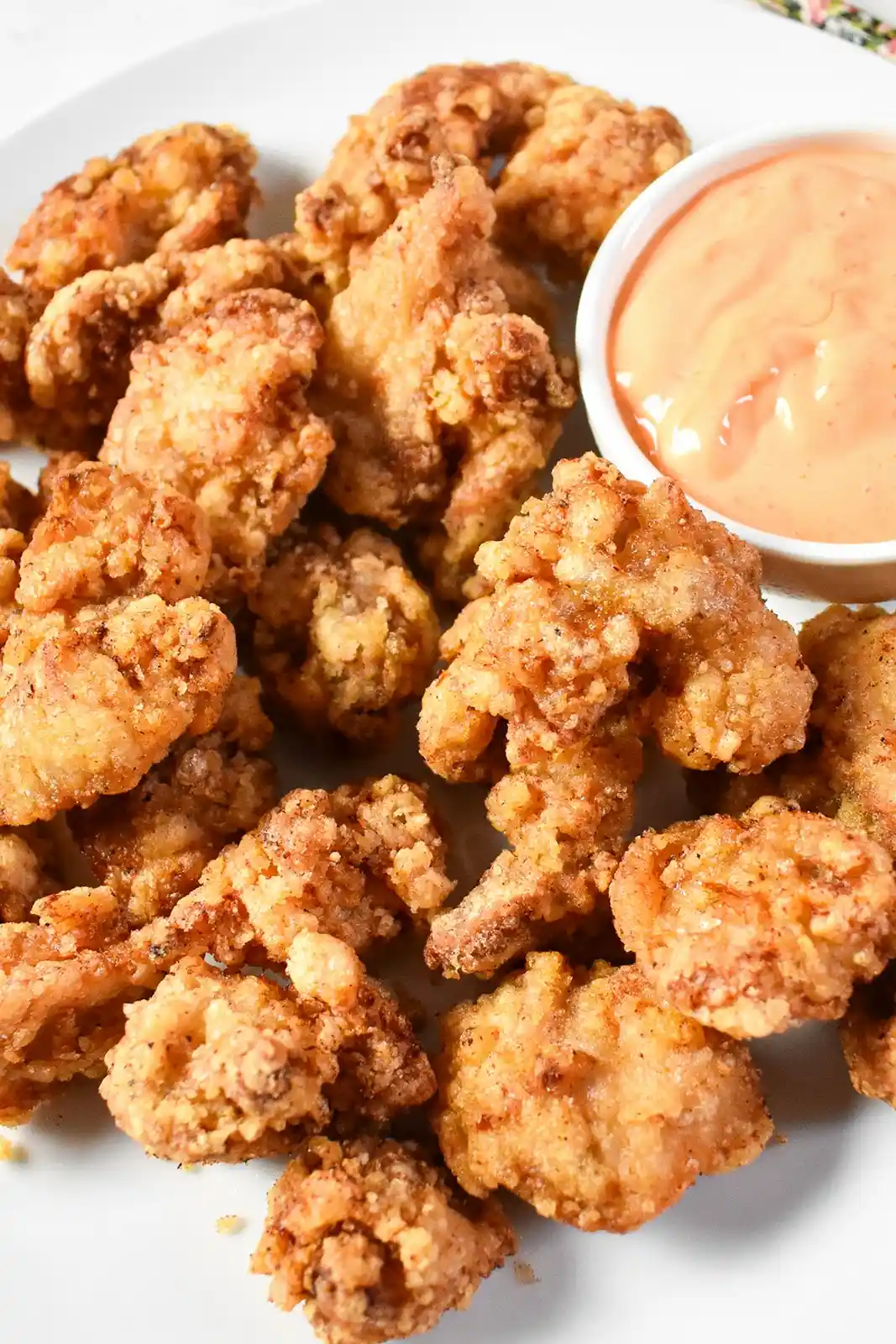
List of ingredients
- 350g chicken thighs (skinless and boneless) – provides the best moisture and flavor.
- ½ tsp salt – enhances the savory profile.
- ½ tsp black pepper – adds a subtle heat.
- 2 tsp garlic purée – provides a pungent, aromatic base.
- 2 tsp ginger purée – adds a traditional zesty Japanese flavor.
- 1 tsp caster sugar – balances the saltiness of the soy sauce.
- 2 tbsp light soy sauce – used for seasoning and color.
- 2 tbsp rice wine vinegar – adds a necessary tang to the marinade.
- 75g potato starch – essential for the light, crispy exterior.
- Vegetable oil for cooking – enough to fully cover the chicken pieces.
- 70g mayonnaise – the base for the creamy dipping sauce.
- 15g sriracha sauce – adds a spicy kick to the mayo.
step-by-step instructions
- Prepare and marinate the chicken: Cut the chicken into small pieces and add them to a bowl. Mix in the salt, black pepper, garlic purée, ginger purée, sugar, soy sauce, and rice wine vinegar. Ensure all pieces are thoroughly coated.
- Refrigerate: Cover the bowl or place the mixture in a zip lock bag. Refrigerate for approximately 2 hours to allow the flavors to penetrate the meat.
- Apply the coating: Remove the chicken from the fridge and add the potato starch. Mix well until every piece is evenly coated, then let the chicken set aside for 10 minutes.
- Heat the oil: Pour vegetable oil into a heavy duty pan. Heat over medium to high heat until the oil begins to sizzle.
- Fry the chicken: Carefully add chicken pieces to the pan, leaving enough space between each piece to prevent sticking and ensure even cooking. Fry for about 7 minutes per batch, turning occasionally, until the chicken is golden brown and cooked through.
- Drain and rest: Transfer the cooked chicken to a plate lined with kitchen towels to absorb excess oil. Repeat the frying process for any remaining batches.
- Prepare the sauce: In a small bowl, combine the mayonnaise and sriracha. Mix well until smooth and serve immediately with the chicken.
Technical Guides for Maximum Crispiness
Use Potato Starch Instead of Cornstarch
Potato starch is the traditional choice for Karaage because it produces a lighter, thinner, and crispier crust than cornstarch. While cornstarch is a viable alternative, it results in a harder, crunchier texture that is more typical of Western-style fried chicken. For the most authentic Japanese result, stick to potato starch.
Maintain Consistent Oil Temperature
Maintaining a medium-high heat is critical to ensure the chicken crisps quickly without absorbing too much oil. If the oil is too cool, the starch will soak up the fat, resulting in a greasy texture. If it is too hot, the exterior will burn before the chicken is cooked through internally.
Avoid Overcrowding the Frying Pan
Adding too many pieces of chicken at once drops the oil temperature rapidly, which prevents the starch from searing immediately. By frying in smaller batches with ample space between pieces, you ensure the oil stays hot enough to create a crisp seal. This method prevents the chicken from steaming rather than frying.
Protein Selection and Preparation Tips
Why Boneless Skinless Thighs Are Preferred
Chicken thighs contain a higher fat content than breasts, which keeps the meat juicy during the high-heat frying process. Breast meat tends to dry out quickly and can become rubbery if overcooked by even a minute. Thighs provide a richer flavor and a more tender interior that contrasts well with the crispy shell.
Ensure Uniform Piece Sizing
Cutting the chicken into uniform, bite-sized pieces is essential for even cooking. If some pieces are significantly larger than others, the smaller ones will overcook while the larger ones remain raw in the center. Aim for pieces roughly 1 inch in size for the best results.
The Role of the 10-Minute Rest Period
Allowing the starch-coated chicken to rest for 10 minutes before frying allows the starch to hydrate and adhere more firmly to the meat. This prevents the coating from flaking off in the hot oil. This short pause ensures a seamless, integrated crust that stays attached to the chicken.
Marinade Optimization and Flavor Balance
The Importance of the Two-Hour Chill
Refrigerating the chicken for at least two hours allows the salt and acids in the soy sauce and vinegar to break down the muscle fibers. This process not only seasons the meat deeply but also tenderizes it. For those with more time, marinating for up to 6 hours can further intensify the garlic and ginger notes.
Using Fresh Aromatics vs Purées
While garlic and ginger purées are convenient, you can substitute them with freshly grated aromatics for a sharper taste. When grating fresh ginger, use a fine grater to avoid large woody chunks that can burn in the oil. Freshly grated garlic provides a more pungent punch than store-bought purées.
Adjusting the Sweetness and Acidity
The caster sugar in the marinade is not intended to make the chicken sweet, but rather to balance the salinity of the soy sauce. If you prefer a tangier profile, you can slightly increase the rice wine vinegar. This acidity helps cut through the richness of the fried exterior and the creamy mayonnaise sauce.
Serving Suggestions and Pairings
Traditional Japanese Accompaniments
Karaage is traditionally served with a side of steamed short-grain white rice and a mound of finely shredded raw cabbage. The cabbage provides a refreshing, crunchy contrast to the fried chicken. A small wedge of fresh lemon is also commonly served to be squeezed over the chicken just before eating.
Alternative Dipping Sauce Ideas
While sriracha mayo is a popular choice, you can vary the sauce by adding a teaspoon of toasted sesame oil for nuttiness. Alternatively, a simple mixture of soy sauce, mirin, and a pinch of sugar makes a savory glaze. For those who prefer no mayo, a side of ponzu sauce provides a bright, citrusy alternative.
Plating for Party Appetizers
When serving as a party food, arrange the chicken on a platter with the sauce in a central dipping bowl. Garnish with sliced scallions or toasted sesame seeds for a professional look. Serving the chicken while hot is essential to maintain the structural integrity of the potato starch coating.
Storage and Reheating Instructions
Refrigeration and Shelf Life
Leftover chicken karaage can be stored in an airtight container in the refrigerator for up to two days. To prevent the chicken from becoming soggy, allow it to cool completely before sealing the container. This prevents steam from being trapped inside, which would soften the crust.
Best Reheating Method Using an Air Fryer
An air fryer is the most effective tool for reheating Karaage as it circulates hot air to restore the crispness. Heat the chicken at 350°F (175°C) for 3 to 5 minutes. This method removes excess oil and brings back the original crunch without overcooking the meat.
Oven Reheating Technique
If you do not have an air fryer, use a conventional oven preheated to 375°F (190°C). Place the chicken on a wire rack over a baking sheet to allow air to circulate around the entire piece. Heat for 5 to 8 minutes until the exterior is sizzling and crisp again.
Why to Avoid the Microwave for Reheating
Avoid using a microwave to reheat fried chicken, as it traps moisture within the starch coating. This results in a rubbery, soggy texture that ruins the appeal of the dish. The microwave heats the water molecules inside the meat, which then migrate outward and soften the crust.
Make-Ahead and Meal Prep Advice
Advance Marination Strategy
You can prepare the chicken and marinade up to 24 hours in advance. Place the seasoned chicken in a sealed bag and keep it in the coldest part of the refrigerator. Do not add the potato starch until you are ready to fry, as the starch will turn into a thick paste if left to sit too long in the marinade.
Freezing Marinated Chicken
The marinated chicken can be frozen in a zip lock bag for up to a month. Thaw the chicken completely in the refrigerator overnight before proceeding to the starch-coating and frying steps. Ensure the meat is fully thawed to avoid uneven cooking and cold centers.
Common Troubleshooting and Fixes
Fixing a Soggy Coating
If your chicken is coming out soggy, the most likely cause is oil that is not hot enough or overcrowding the pan. Ensure the oil is sizzling before adding the meat and fry in smaller batches. Additionally, always drain the chicken on a wire rack or kitchen towels immediately after frying.
Preventing the Coating from Peeling
Coating peel often happens if the chicken is too wet when the potato starch is added or if the chicken was not rested. Ensure you mix the starch thoroughly so every nook and cranny is covered. The 10-minute resting period is non-negotiable for a secure bond between the meat and the crust.
Managing Burnt Exteriors with Raw Interiors
If the chicken is browning too quickly but remaining raw inside, your oil temperature is too high. Lower the heat to medium and ensure your chicken pieces are not too large. Using a meat thermometer to check for an internal temperature of 165°F (74°C) is the safest way to ensure doneness.
Frequently Asked Questions
Can I use chicken breast instead of thighs?
Yes, you can use chicken breast, but be aware that it cooks much faster and dries out more easily. Reduce the frying time by 1-2 minutes and ensure the pieces are cut slightly larger to prevent them from overcooking.
What is a good substitute for rice wine vinegar?
Apple cider vinegar or white wine vinegar are the best substitutes as they provide a similar acidic profile. Use the same measurement of 2 tablespoons to maintain the balance of the marinade.
Do I need to double-coat the chicken in starch?
No, a single coating of potato starch is sufficient for authentic Karaage. Double-coating can make the crust too thick and heavy, detracting from the light, crispy nature of the dish.
Can I bake this recipe instead of frying it?
While you can bake the coated chicken at 400°F (200°C) on a parchment-lined tray, the result will not be as crispy as deep-frying. For a middle ground, use an air fryer with a light spray of oil to achieve a similar effect to frying.
Is it possible to make the sauce less spicy?
To reduce the heat, simply decrease the amount of sriracha and increase the amount of mayonnaise. You can also add a small pinch of sugar or a drop of honey to the sauce to mellow out the spice.
Print
Crispy Japanese Chicken Karaage with Sriracha Mayo
- Total Time: 17 minutes
- Yield: 4 servings 1x
- Diet: General
Description
This Japanese fried chicken also known as chicken karaage is light, crispy and so delicious which makes it the perfect weekend treat.
Ingredients
- 350g chicken thighs (skinless and boneless)
- ½ tsp salt
- ½ tsp black pepper
- 2 tsp garlic purée
- 2 tsp ginger purée
- 1 tsp caster sugar
- 2 tbsp light soy sauce
- 2 tbsp rice wine vinegar
- 75g potato starch
- Vegetable oil for cooking
- 70g mayonnaise
- 15g sriracha sauce
Instructions
- Marinate: Cut the chicken into small pieces and add them to a bowl. To the bowl with the chicken, add the salt, black pepper, garlic purée, ginger purée, sugar, soy sauce and rice wine vinegar. Mix well so the chicken is coated with the ingredients. Cover and refrigerate for around 2 hours.
- Coat: Remove the chicken from the fridge then pour in the potato starch and mix well. Once all the chicken is coated, set aside for 10 minutes. Add the oil to a heavy duty pan and heat on a medium to high heat until slightly sizzling.
- Fry: Add as many pieces of chicken to the pan as you can ensuring there is space between each piece. Cook until the chicken is golden in colour and has cooked through which should take around 7 minutes per batch. While cooking, occasionally turn the chicken to evenly cook. Once cooked, place the chicken on a plate lined with kitchen towel to absorb any excess oil. Repeat the process until all the chicken is cooked then set aside while you make the sauce.
- Sauce: Combine the mayonnaise with the sriracha and mix well.
Notes
Store any leftover Japanese fried chicken in the fridge and use within 2 days.
- Prep Time: 10 minutes
- Cook Time: 7 minutes
- Category: Buffet, Party
- Method: Frying
- Cuisine: Japanese
Nutrition
- Serving Size: 1 serving
- Calories: 324 kcal
- Sugar: 2.1 g
- Sodium: 890 mg
- Fat: 19.6 g
- Saturated Fat: 3.1 g
- Unsaturated Fat: 16.5 g
- Trans Fat: 0 g
- Carbohydrates: 19.1 g
- Fiber: 0.6 g
- Protein: 16.4 g
- Cholesterol: 90 mg