This pan-seared salmon brings together the vibrant brightness of fresh citrus with a deep, savory sweetness that caramelizes into a glossy finish. By cooking the fillets in a reduction of orange juice, honey, and garlic, you achieve a restaurant-quality meal in under twenty minutes. It is a straightforward yet elegant dish that relies on high-heat searing to create crisp, golden edges while keeping the center of each fillet succulent and tender.
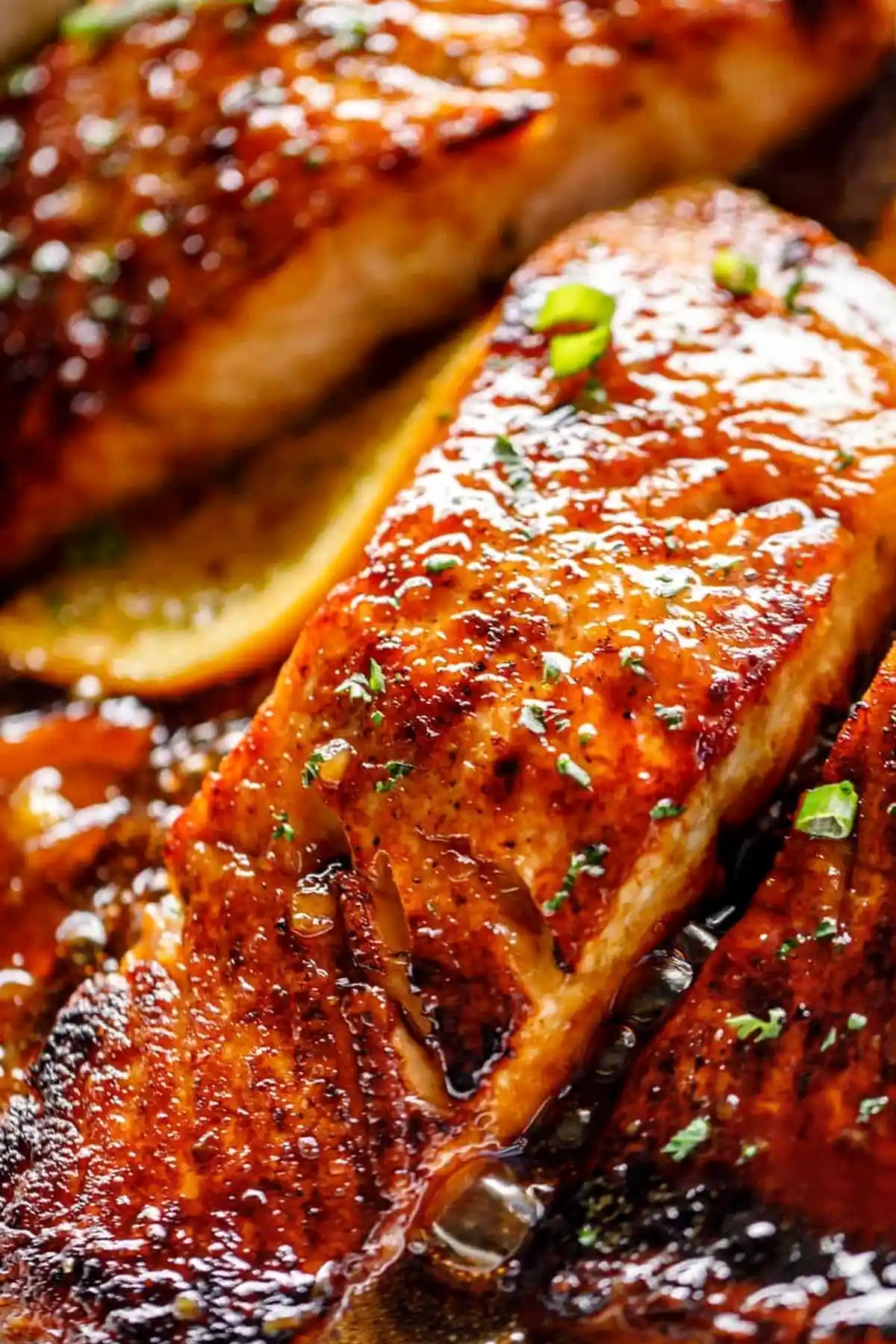
List of ingredients
- 1 tablespoon olive oil
- 2 teaspoons butter
- 4 salmon fillets (6-ounce fillets)
- 1/4 cup fresh orange juice
- 3 tablespoons honey
- 2 tablespoons low-sodium soy sauce
- 4 cloves garlic, crushed or minced
- 1 pinch salt
- 1 pinch cracked pepper
- 1/2 orange, sliced to serve
step-by-step instructions
- Sear: Heat butter or oil in a pan or skillet over medium-high heat. Sear salmon skin-side up for 3-4 minutes. Flip and sear for 2 minutes.
- Reduce: Pour in the orange juice and allow to reduce to half the quantity (about 1 minute). Add the garlic and cook until fragrant (30 seconds).
- Glaze: Move the salmon to the sides of the pan and add in the honey and soy sauce, stirring well. Bring to a simmer until reduced to a nice syrup (30 seconds to 1 minute), and coat the salmon evenly.
- Serve: Remove from heat once cooked to your liking. Season with salt and pepper to taste and drizzle with the remaining sauce.
Keys to achieving the perfect sear
Why drying the fish matters
Before you place your salmon into the hot pan, ensure the surface of each fillet is thoroughly patted dry with paper towels. Excess moisture on the exterior of the fish creates steam, which prevents the Maillard reaction necessary for developing that prized golden-brown crust. A dry surface allows the fat to make direct contact with the proteins immediately upon hitting the heat.
Selecting the right pan material
Using a heavy-bottomed stainless steel or cast iron skillet is preferable for this recipe. These materials retain heat more effectively than lightweight non-stick pans, ensuring that the temperature does not drop significantly when the room-temperature salmon is added. This stability in temperature is the difference between a golden, crispy crust and fish that is limp or pale.
Managing the heat levels
The transition from searing to glazing requires careful temperature regulation. Maintain a steady medium-high heat during the initial sear to set the exterior, but be prepared to lower the flame slightly if you notice the garlic browning too rapidly during the reduction phase. If the pan feels too aggressive, simply lift it off the burner for a few seconds to prevent the honey from scorching.
Refining your glaze for better consistency
Timing the reduction process
The secret to a sticky, professional-looking glaze lies in the concentration of the orange juice and honey. Reducing the orange juice before adding the honey allows you to achieve the right viscosity without accidentally overcooking the delicate fish. Always watch the bubbles; as the mixture transitions from large, watery bubbles to smaller, tighter ones, the syrup is reaching its ideal concentration.
Preventing sauce separation
If you find that your glaze is not emulsifying properly, whisking the butter into the sauce at the very end can help tie the citrus and soy together. The milk solids in the butter provide a creamy element that helps the sauce cling to the salmon rather than sliding off onto the plate. Keep the movement consistent and gentle to maintain a smooth, mirror-like finish on the liquid.
Common serving and pairing concepts
Selecting the best starch bases
The sauce produced in this recipe is quite flavorful and slightly sweet, which pairs beautifully with neutral grains. Steamed jasmine rice or fluffy basmati rice act as sponges for the excess glaze. If you prefer noodles, thin vermicelli or rice noodles are excellent choices as they coat easily in the syrupy sauce without becoming clumpy or heavy.
Adding fresh vegetable contrast
Because the salmon is rich and glazed, pairing it with something crisp or bitter provides a necessary flavor balance. Steamed broccoli, blanched asparagus, or a simple shaved fennel and arugula salad provide a crisp, clean profile. The slight bitterness in green vegetables cuts through the sweetness of the honey, making every bite feel balanced and refreshing.
FAQs
Can I prepare the fillets in an oven-safe pan?
Yes, if you are using an oven-safe skillet, you can finish the salmon under the broiler for the final 2 minutes. This provides a charred, caramelized finish on the top of the glaze that is difficult to achieve on the stovetop alone. Just ensure your handle is heat-resistant before placing it in the oven.
What should I do if the honey burns?
Honey is sensitive to high heat and can turn bitter quickly if scorched. If you notice any black specks or a burnt smell, remove the pan from the heat source immediately and discard the sauce. It is safer to start the glaze fresh than to serve a bitter sauce, as the quality of the honey-orange flavor is the hallmark of this dish.
How can I tell if the salmon is cooked through?
The most reliable way to check for doneness is to use a fork to gently flake the thickest part of the fillet. If the flesh separates easily along its natural lines and appears opaque rather than translucent, it is ready. For those who prefer exactness, an internal temperature of 125-130°F is ideal for keeping the fish moist.
Is there a way to make this saltier?
If you prefer a more savory profile, increase the soy sauce by a half tablespoon or add a tiny splash of fish sauce during the reduction stage. The fish sauce adds a fermented complexity that deepens the savory base of the glaze. Taste the liquid in the pan after the initial reduction before deciding if extra salt is required.
Storage and reheating best practices
Managing leftovers for freshness
Leftover salmon should be stored in an airtight container in the refrigerator as soon as it has cooled to room temperature. It will remain safe and flavorful for up to two days. When storing, it is helpful to keep a small amount of the sauce in a separate container so you can add a fresh drizzle before consuming, preventing the fish from drying out.
Properly reheating without drying out
Reheating salmon is a delicate process because the fish is already cooked. Avoid the microwave if possible, as it tends to make the texture rubbery. Instead, place the fillets in a small pan with a teaspoon of water or vegetable broth, cover with a lid, and warm over low heat for about 3-5 minutes. This gentle steam warms the center without further cooking the delicate protein layers.
Print
Crispy Honey Orange Glazed Salmon
- Total Time: 20 minutes
- Yield: 4 servings 1x
- Diet: Pescatarian
Description
Crispy Honey Orange Glazed Salmon fillets are pan-fried in the most beautiful honey-orange-garlic sauce, with a splash of soy for added flavour!
Ingredients
- 1 tablespoon olive oil
- 2 teaspoons butter
- 4 salmon fillets (6-ounce fillets)
- 1/4 cup fresh orange juice
- 3 tablespoons honey
- 2 tablespoons low-sodium soy sauce
- 4 cloves garlic, crushed or minced
- 1 pinch salt
- 1 pinch cracked pepper
- 1/2 orange, sliced to serve
Instructions
- Sear: Heat butter or oil in a pan or skillet over medium-high heat. Sear salmon skin-side up for 3-4 minutes. Flip and sear for 2 minutes.
- Reduce: Pour in the orange juice and allow to reduce to half the quantity (about 1 minute). Add the garlic and cook until fragrant (30 seconds).
- Glaze: Move the salmon to the sides of the pan and add in the honey and soy sauce, stirring well. Bring to a simmer until reduced to a nice syrup (30 seconds to 1 minute), and coat the salmon evenly.
- Serve: Remove from heat once cooked to your liking. Season with salt and pepper to taste and drizzle with the remaining sauce.
Notes
To get those charred and crispy edges, broil or grill the salmon in the last 2 minutes of cooking if using an oven-safe pan or skillet.
- Prep Time: 10 minutes
- Cook Time: 10 minutes
- Category: Dinner
- Method: Pan-fried
- Cuisine: American
Nutrition
- Serving Size: 1 fillet with sauce
- Calories: 362 kcal
- Sugar: 16 g
- Sodium: 390 mg
- Fat: 16 g
- Saturated Fat: 3 g
- Unsaturated Fat: 12 g
- Trans Fat: 0 g
- Carbohydrates: 18 g
- Fiber: 1 g
- Protein: 35 g
- Cholesterol: 99 mg