Achieving perfectly crispy chicken skin without breading or frying is entirely possible with the right technique. These oven-baked chicken thighs deliver succulent, tender meat enveloped in a golden, crackling exterior, making them an ideal choice for busy weeknight dinners. By utilizing high-heat roasting, you can transform simple pantry staples into a restaurant-quality meal with minimal active prep time.
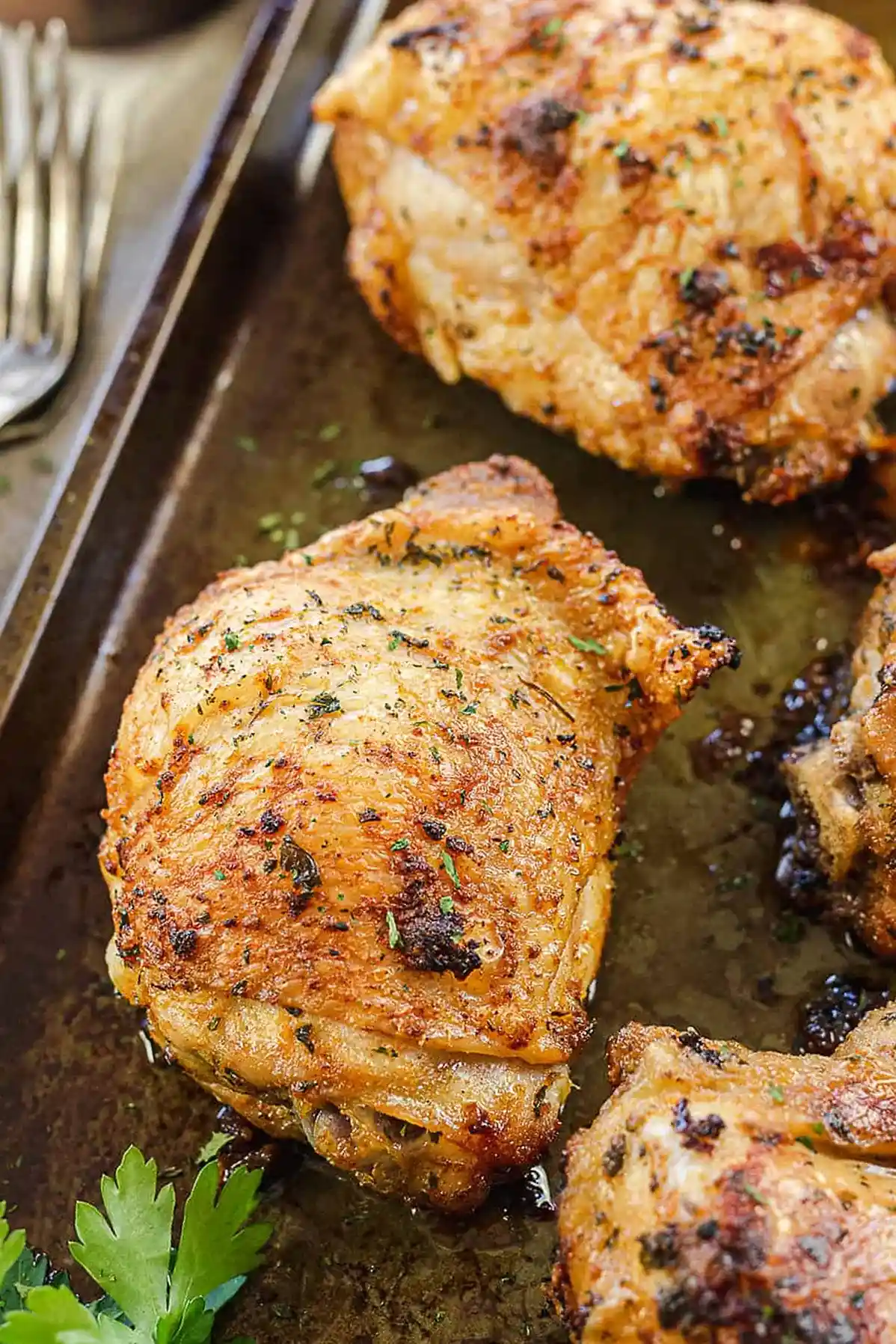
List of ingredients
- 3 pounds bone-in chicken thighs
- 2 tablespoons avocado oil
- 1 teaspoon paprika
- 1 teaspoon garlic powder
- 1 teaspoon onion powder
- 1 teaspoon salt
- 1/2 teaspoon cracked pepper
- 1 teaspoon chopped parsley
step-by-step instructions
- Step: Preheat oven to 400 degrees. Spray a baking sheet with non-stick spray.
- Step: Add all of the ingredients except for the parsley to a large zip top bag and seal. Smush the chicken around in the bag to coat in the seasoning.
- Step: Arrange chicken on the baking sheet and bake for 35-45 minutes or until a thermometer reads 165 degrees.
- Step: Sprinkle chicken with parsley just before serving.
Keys to achieving golden crispy skin
Importance of proper drying
Before applying the oil and seasonings, ensure that you pat the chicken skin completely dry with paper towels. Excess moisture on the surface of the skin will cause the chicken to steam rather than sear, which prevents the skin from becoming truly crispy. Taking these extra thirty seconds to dry the skin thoroughly is the most effective way to guarantee a crunchier final result.
High temperature roasting
Baking at 400 degrees Fahrenheit is essential for rendering the fat from the skin efficiently. If the temperature is too low, the chicken may cook through, but the skin will remain soft or rubbery. This temperature strikes the perfect balance between cooking the meat until it is tender and allowing the skin to render and caramelize properly.
Space management on the baking sheet
Avoid crowding the chicken thighs on your baking sheet, as placing them too close together creates moisture pockets that prevent airflow. Providing enough space between each thigh allows hot air to circulate freely around every piece, which is critical for consistent browning across the entire batch. If you have a large amount of chicken, use two separate baking sheets rather than overloading one.
Selecting the right ingredients
Why bone-in, skin-on is preferred
Using bone-in, skin-on chicken thighs provides superior flavor and texture compared to skinless or boneless varieties. The skin acts as a protective barrier that keeps the meat moist during the extended baking time required for larger cuts. Additionally, the fat contained within the skin helps to flavor the meat from the outside in as it renders during the cooking process.
Flavor variations with dry rubs
While the base recipe uses a classic combination of garlic, onion, and paprika, you can easily adapt the flavor profile to suit your preferences. Consider adding dried oregano or thyme for an herbal note, or include a dash of cayenne pepper if you enjoy a touch of heat. Ensure that any additional dried spices you incorporate are finely ground to ensure they adhere evenly to the oil-coated skin.
Practical approaches for serving
Complementary side dish pairings
Because the chicken has a rich and savory profile, it pairs wonderfully with acidic or fresh vegetable side dishes. Roasted green vegetables like asparagus or broccoli provide a satisfying contrast to the richness of the chicken skin. Alternatively, a refreshing garden salad with a sharp vinaigrette helps to cut through the fat, providing a balanced dining experience.
Handling and presentation
For the best presentation, sprinkle the fresh parsley over the chicken immediately after removing it from the oven. The residual heat will slightly soften the herbs, releasing their essential oils and brightening the visual appeal of the dish. If you are serving a crowd, arrange the thighs on a large platter rather than serving them directly from the baking sheet.
Storage and reheating specifics
Maintaining texture during storage
Store leftover chicken in an airtight container within the refrigerator for up to four days. To maintain the best quality, avoid storing the chicken while it is still steaming hot, as the trapped condensation will cause the crispy skin to soften quickly. Once the chicken has reached room temperature, move it to the refrigerator to prevent bacterial growth.
Effective reheating techniques
To restore the crispiness of the skin during reheating, place the chicken in a preheated oven at 375 degrees Fahrenheit for about ten to fifteen minutes. Avoid using a microwave for reheating, as this will result in rubbery skin and uneven heating. A toaster oven is also a highly effective tool for small batches, offering enough power to crisp the skin while warming the center.
Frequently asked questions
Why did my chicken skin not crisp up properly?
The most common cause for soft skin is excess moisture remaining on the surface before baking or overcrowding the pan. Ensure the chicken is patted dry thoroughly with paper towels and that there is at least an inch of space between each piece on the baking tray to allow for proper heat circulation.
Can I use dried herbs instead of fresh parsley?
Yes, you can use dried herbs, but they should be added during the seasoning phase rather than at the end. If you prefer to use dried parsley, add it to the zip-top bag with the other spices so it can toast slightly during the cooking process, as dried herbs do not provide the same fresh, vibrant finish as fresh herbs.
What should I do if the skin is browning too fast?
If your oven runs hot and the skin starts to darken prematurely before the internal temperature hits 165 degrees, you can loosely tent the chicken with aluminum foil. This action reflects some of the direct heat away from the skin while allowing the meat to continue cooking through to the center.
Is it necessary to use a wire rack?
While not required for this recipe, using a wire rack placed over your baking sheet can improve airflow around the bottom of the chicken. If you have one, this is an excellent way to achieve a crispier result on the underside of the thighs, though simply placing them directly on the sheet is perfectly adequate for achieving a delicious, crispy top.
Can this recipe be doubled?
Yes, this recipe is easily doubled as long as you have enough baking sheet capacity to keep the chicken in a single, uncrowded layer. If you are using two separate shelves in your oven, remember to rotate the position of the baking sheets halfway through the cooking time to ensure even browning across both trays.
Print
Crispy Baked Chicken Thighs
- Total Time: 40 minutes
- Yield: 4 servings 1x
- Diet: Keto
Description
Crispy skin, juicy meat, and so easy! This chicken thigh recipe is a weeknight favorite in our house.
Ingredients
- 3 pounds bone-in chicken thighs
- 2 tablespoons avocado oil
- 1 teaspoon paprika
- 1 teaspoon garlic powder
- 1 teaspoon onion powder
- 1 teaspoon salt
- 1/2 teaspoon cracked pepper
- 1 teaspoon chopped parsley
Instructions
- Step: Preheat oven to 400 degrees. Spray a baking sheet with non-stick spray.
- Step: Add all of the ingredients except for the parsley to a large zip top bag and seal. Smush the chicken around in the bag to coat in the seasoning.
- Step: Arrange chicken on the baking sheet and bake for 35-45 minutes or until a thermometer reads 165 degrees.
- Step: Sprinkle chicken with parsley just before serving.
Notes
There are generally about 8 chicken thighs in 3 pounds of chicken. We count on 2 chicken thighs per person when serving. It’s easy to mix up the seasonings. Use your favorite spice blend or create your own. The cook time will vary based on the size of the chicken thighs. We find it best to use a meat thermometer to check for doneness. It should read 165 degrees in the thickest part of the thigh without touching the bone.
- Prep Time: 5 minutes
- Cook Time: 35 minutes
- Category: Chicken
- Method: Baking
- Cuisine: American
Nutrition
- Serving Size: 2 chicken thighs
- Calories: 796 kcal
- Sugar: 0 g
- Sodium: 1122 mg
- Fat: 54 g
- Saturated Fat: 15 g
- Unsaturated Fat: 39 g
- Trans Fat: 0 g
- Carbohydrates: 2 g
- Fiber: 0 g
- Protein: 80 g
- Cholesterol: 435 mg