This one-pan chicken dish combines succulent, pan-seared breasts with a velvety, herb-infused tomato sauce for a satisfying meal that is ready in under thirty minutes. It is an ideal solution for busy evenings when you want a restaurant-quality dinner without the complexity of multiple pots or long preparation times. The balance of acidity from the tomatoes and the richness of the cream creates a flavor profile that pairs beautifully with various side dishes.
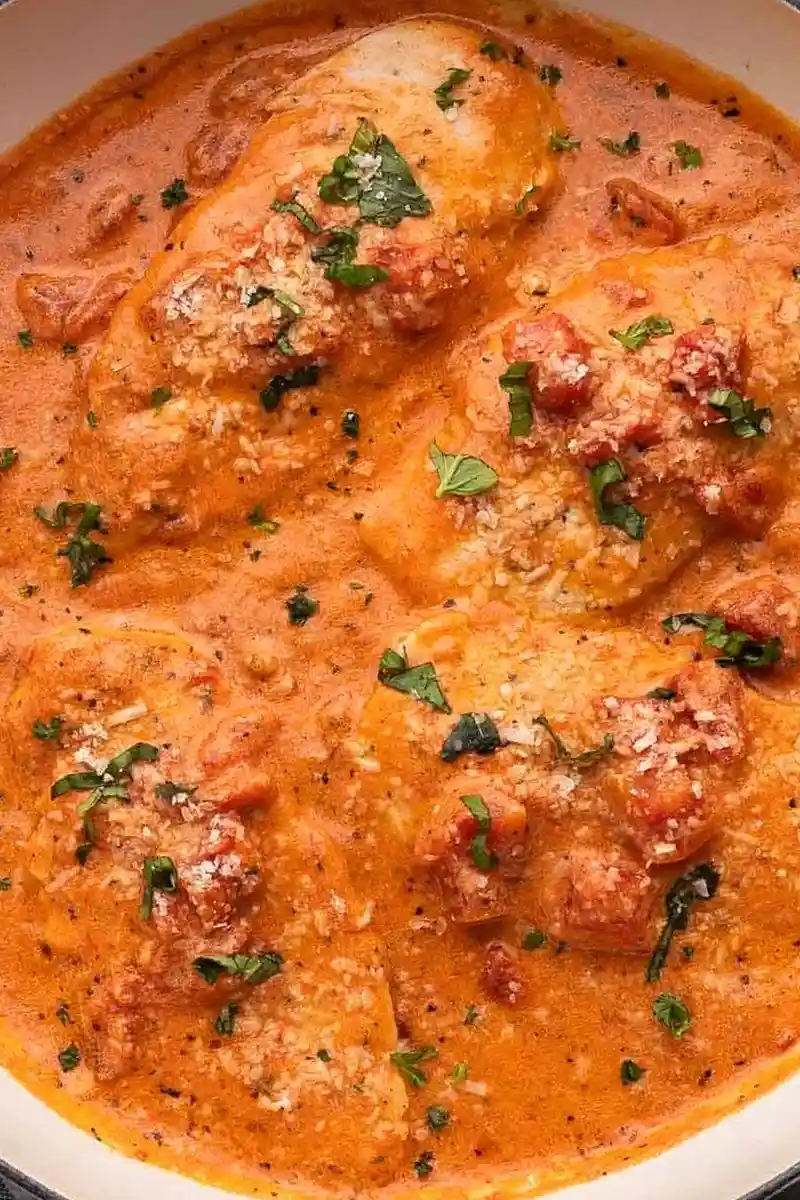
List of ingredients
- 1 tablespoon canola oil
- 2 boneless skinless chicken breasts (roughly 1 lb or 454 grams)
- salt and pepper to taste
- 1 tablespoon minced garlic
- ¾ teaspoon salt
- ½ teaspoon dried basil
- ¼ teaspoon black pepper
- 1 pinch crushed red pepper flakes
- 398 ml canned diced tomatoes with Italian herbs
- ¾ cup tomato pasta sauce
- ¾ cup whipping cream
- 1 tablespoon corn starch
- 2 tablespoons freshly chopped basil
- freshly grated Parmesan for garnish as desired
step-by-step instructions
- Step: Halve chicken breasts the long way, so that you have two thin pieces of chicken breast.
- Step: Heat oil in a large skillet over medium-high heat. Season chicken breasts with salt and pepper.
- Step: Brown chicken breasts on each side for about 2-4 minutes per side.
- Step: Remove chicken breasts from the pan and keep covered.
- Step: Add the garlic, salt, basil, pepper and pepper flakes if using. Cook 1 minute.
- Step: Add diced tomatoes and tomato sauce. Scrape any browned bits off the bottom of the pan with a wooden spoon.
- Step: Whisk together the cream and corn starch and add to the pan. Stir to combine.
- Step: Add the chicken breasts back to the pan. Bring to a low simmer, then reduce the heat to medium-low and cover. Cook until chicken breasts reach an internal temperature of 165 degrees F and the sauce has thickened slightly. Serve.
Refining Your Searing Technique
Achieving the Perfect Golden Crust
To get a beautiful sear, ensure the skillet is properly preheated before adding the oil and chicken. Pat the chicken dry with paper towels before seasoning, as excess moisture on the surface can cause steaming rather than browning. Once placed in the pan, resist the urge to move the chicken until a crust has naturally formed and the pieces release easily from the metal.
Managing Pan Temperature for Aromatic Garlic
Garlic has a very low smoke point and can become bitter if browned too quickly. If your skillet is extremely hot after searing the chicken, let it cool for thirty seconds before adding the garlic. Cooking it gently in the residual heat and tomato juices ensures you get the maximum flavor extraction without a burnt taste.
Understanding Sauce Texture and Consistency
The Role of the Cornstarch Slurry
The cornstarch acts as a thickening agent that reacts with the heat of the cream and tomato sauce to create a glossy finish. Always whisk the cornstarch into cold or room-temperature cream before adding it to the hot skillet to prevent clumps from forming. Adding a thick, smooth slurry ensures the final sauce clings to the chicken rather than running off the plate.
Balancing Acidity with Dairy
The combination of tomatoes and heavy cream is a classic culinary technique for balancing harsh acidity. If you find your specific brand of tomatoes or marinara is particularly acidic, you can increase the amount of cream by an additional tablespoon to mellow the flavor. Taste the sauce after the initial simmer and add a tiny pinch of sugar if you prefer a sweeter profile.
Strategic Ingredient Swaps
Choosing Alternative Creamy Bases
While heavy cream provides the most luxurious result, you can use half-and-half or a high-fat dairy-free alternative if preferred. Keep in mind that lighter liquids contain less fat, so the sauce may not thicken as aggressively or feel as rich on the palate. Adjust your cornstarch ratio slightly if using a lower-fat liquid to achieve your desired consistency.
Customizing the Tomato Base
If you prefer a chunkier sauce, look for fire-roasted diced tomatoes rather than standard Italian-herbed varieties. If you find your tomato sauce is too thick, simply thin it out with a splash of vegetable broth. This allows you to control the exact viscosity of the final dish while adding extra savory notes.
Practical Storage and Reheating Approaches
Maintaining Quality in the Refrigerator
Store any leftover chicken and sauce in a shallow, airtight container to encourage even cooling. The sauce will continue to thicken slightly as it sits in the refrigerator, which is common with cornstarch-based mixtures. When stored correctly, this dish remains flavorful and safe for up to four days.
Effective Reheating for Best Results
To reheat, it is best to place the chicken and sauce back into a skillet over low heat. If the sauce has become too thick, add a tablespoon or two of vegetable broth or water to bring it back to a pourable consistency. Avoid high heat during reheating, as the cream can break and separate, resulting in a slightly oily texture.
Frequently Asked Questions
Can I prepare the chicken ahead of time?
Yes, you can prep the chicken by slicing it into cutlets and seasoning it up to three hours before cooking. Keep the raw chicken covered in the refrigerator until you are ready to sear it in the skillet.
What should I serve as a side dish?
This sauce is excellent when paired with neutral starches like roasted potatoes, steamed green beans, or long-grain rice. If you prefer pasta, choose a shape like penne or fusilli, which has enough surface area to catch the creamy tomato sauce effectively.
Can I add vegetables to the sauce?
Certainly, you can sauté thin slices of zucchini, mushrooms, or bell peppers in the skillet before adding the garlic. These vegetables will absorb the sauce beautifully and add a nutritious crunch to the meal.
Is it possible to freeze the leftover sauce?
While you can freeze the chicken, dairy-heavy sauces sometimes undergo texture changes during thawing and reheating. If you plan to freeze the meal, try to separate the sauce from the chicken or stir it vigorously while warming to help re-emulsify the cream and starch components.
How do I know when the chicken is fully cooked?
The most reliable method is using an instant-read meat thermometer inserted into the thickest part of the breast. When it reaches 165 degrees Fahrenheit, the chicken is fully cooked and safe for consumption.
Print
Creamy Tomato Basil Chicken Breasts
- Total Time: PT25M
- Yield: 4 servings 1x
- Diet: Low carb
Description
These Creamy Tomato Basil Chicken Breasts are an easy, one-pan dish that’s ready in just 25 minutes. The juicy chicken breasts are cooked in a rich, creamy tomato sauce that’s packed with flavor!
Ingredients
- 1 tablespoon canola oil
- 2 boneless skinless chicken breasts (roughly 1 lb or 454 grams)
- salt and pepper to taste
- 1 tablespoon minced garlic
- ¾ teaspoon salt
- ½ teaspoon dried basil
- ¼ teaspoon black pepper
- 1 pinch crushed red pepper flakes
- 398 ml canned diced tomatoes with Italian herbs
- ¾ cup tomato pasta sauce
- ¾ cup whipping cream
- 1 tablespoon corn starch
- 2 tablespoons freshly chopped basil
- freshly grated Parmesan for garnish as desired
Instructions
- Step: Halve chicken breasts the long way, so that you have two thin pieces of chicken breast.
- Step: Heat oil in a large skillet over medium-high heat. Season chicken breasts with salt and pepper.
- Step: Brown chicken breasts on each side for about 2-4 minutes per side.
- Step: Remove chicken breasts from the pan and keep covered.
- Step: Add the garlic, salt, basil, pepper and pepper flakes if using. Cook 1 minute.
- Step: Add diced tomatoes and tomato sauce. Scrape any browned bits off the bottom of the pan with a wooden spoon.
- Step: Whisk together the cream and corn starch and add to the pan. Stir to combine.
- Step: Add the chicken breasts back to the pan. Bring to a low simmer, then reduce the heat to medium-low and cover. Cook until chicken breasts reach an internal temperature of 165 degrees F and the sauce has thickened slightly. Serve.
Notes
You can use a lighter cream or milk for this recipe, but the sauce will be a little less rich and not quite as thick. Ensure chicken reaches 165 degrees F internal temperature.
- Prep Time: PT5M
- Cook Time: PT20M
- Category: Main Course
- Method: Stovetop
- Cuisine: American
Nutrition
- Serving Size: 1 serving
- Calories: 322 kcal
- Sugar: 4 g
- Sodium: 903 mg
- Fat: 25 g
- Saturated Fat: 11 g
- Unsaturated Fat: 13 g
- Trans Fat: 0 g
- Carbohydrates: 11 g
- Fiber: 2 g
- Protein: 15 g
- Cholesterol: 97 mg