Create a luxurious dinner with this rich and savory chicken dish featuring a velvety cream sauce. It combines the tang of sun-dried tomatoes with the saltiness of parmesan for a restaurant-quality meal at home.
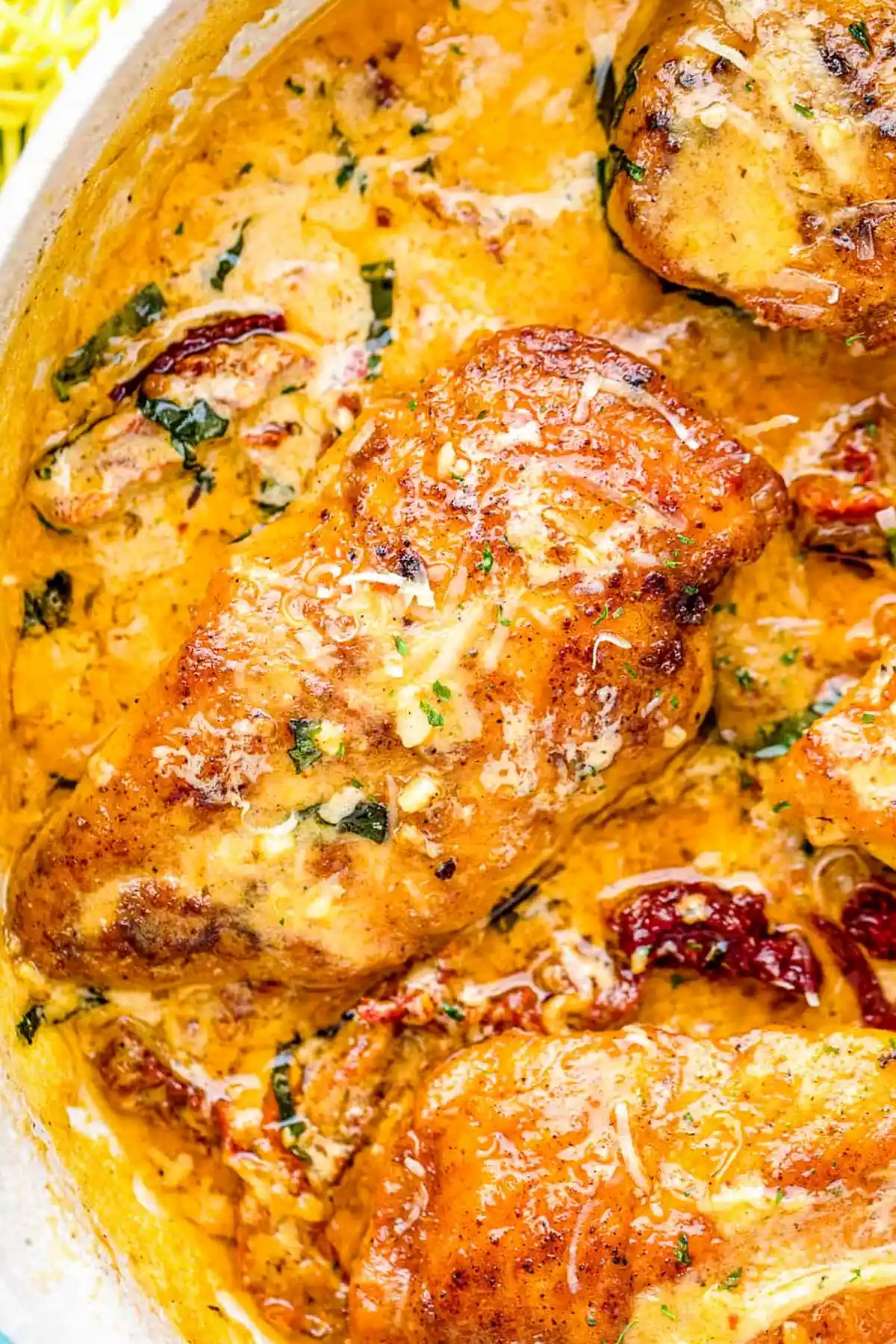
List of ingredients
- 2 large chicken breasts (boneless and skinless)
- 1/2 cup all-purpose flour – used for dredging the chicken.
- 1/2 teaspoon salt – for basic seasoning.
- 1/2 teaspoon pepper – adds a slight spice.
- 1/2 teaspoon garlic powder – enhances the savory depth.
- 1/2 teaspoons paprika – provides a warm color and flavor.
- 2 tablespoons butter – for rich sautéing.
- 2 tablespoons oil – prevents butter from burning.
- 2 tablespoons minced garlic – for a pungent aroma.
- 1 cup chicken broth – forms the base of the sauce.
- 1 cup heavy cream – creates the creamy texture.
- 1 cup parmesan (grated) – adds saltiness and thickness.
- 1/2 teaspoon red pepper flakes – for a hint of heat.
- 1/2 teaspoon dried oregano – adds earthy herbal notes.
- 1/4 teaspoon dried thyme – complements the chicken.
- 1/3 cup sundried tomatoes (chopped) – provides a sweet and tart contrast.
- fresh basil and grated parmesan for garnish – for a fresh finish.
step-by-step instructions
- Prepare the coating: In a shallow dish, mix together the flour, salt, pepper, garlic powder, and paprika.
- Sear the chicken: Heat the oil and butter in a large skillet over medium-high heat. Add the coated chicken breasts and cook for 3-4 minutes on each side, or until they are golden brown and cooked through.
- Rest the meat: Remove the chicken from the skillet and set aside.
- Build the sauce base: In the same skillet, add the minced garlic and cook for 1-2 minutes, or until fragrant. Stir in the chicken broth and heavy cream, deglazing the pot as you stir.
- Combine flavors: Add the parmesan cheese, red pepper flakes, oregano and thyme, and stir together on a low to medium heat.
- Thicken the sauce: Finally, add the sun dried tomatoes to the skillet and stir until the sauce is well combined. Continue stirring and on a low simmer for 5 minutes as the sauce thickens and bubbles.
- Final simmer: Add the chicken back in for 10 more minutes, spooning the sauce over the chicken, until heated through.
- Garnish and serve: Garnish with fresh chopped basil and grated parmesan and serve warm over your favorite pasta, rice or potatoes.
Pro Tips for Perfect Execution
Use a Meat Thermometer for Precise Doneness
To ensure the chicken remains juicy, use an instant-read thermometer to check the internal temperature. Remove the breasts from the heat exactly when they reach 165°F. This prevents the meat from becoming dry or rubbery during the searing process.
Avoid Burning the Minced Garlic
Garlic can turn bitter if it browns too quickly in the hot pan. Keep the heat at medium and stir constantly during those two minutes of sautéing. If the pan seems too hot, add a tiny splash of oil to regulate the temperature.
Achieve a Golden Brown Crust
Shake off any excess flour from the chicken breasts before placing them in the skillet. Too much flour can clump and prevent a clean sear. Ensure the butter and oil are shimmering before adding the meat to get that professional golden color.
Deglaze the Pan Thoroughly
When you add the chicken broth and cream, use a wooden spoon to scrape up the brown bits stuck to the bottom of the pan. These browned particles, known as fond, contain concentrated flavor. Incorporating them into the sauce adds significant depth to the final dish.
Control the Sauce Consistency
If the sauce bubbles too aggressively, lower the heat immediately to prevent the cream from separating. A gentle simmer is all that is needed to thicken the parmesan and cream. If the sauce becomes too thick, stir in a tablespoon of extra broth to loosen it.
Ingredient Substitutions and Swaps
Switching Chicken Breasts for Thighs
For a richer flavor and naturally juicier meat, you can use boneless, skinless chicken thighs. Thighs are more forgiving and less likely to overcook than breasts. You generally do not need to slice them in half since they are already thinner.
Replacing Heavy Cream for Lighter Options
If you prefer a lighter sauce, you can substitute half-and-half or whole milk. Note that the sauce will be thinner and less velvety than the version made with heavy cream. You may need to simmer the sauce slightly longer to achieve a similar thickness.
Using Different Cooking Oils
While olive oil is traditional for this flavor profile, avocado oil or vegetable oil work equally well. Avocado oil is particularly useful if you prefer a higher smoke point for searing. The choice of oil will not significantly alter the final taste of the sauce.
Substituting Different Cheeses
If you do not have parmesan, Pecorino Romano is a great alternative for a saltier punch. Gruyere or a mild Provolone can also be melted into the sauce for a different cheesy profile. Always use finely grated cheese to ensure it melts smoothly without clumping.
Swapping Sun-Dried Tomatoes for Fresh Ones
You can use fresh cherry tomatoes if sun-dried ones are unavailable. Sauté the fresh tomatoes until they burst and release their juices before adding the liquids. Keep in mind that fresh tomatoes are more acidic and less concentrated than the dried version.
Adjusting the Herb Blend
If you lack thyme or oregano, a pinch of Italian seasoning blend is a convenient replacement. Dried basil can be used in the sauce, though fresh basil is best reserved for the final garnish. Adjust the red pepper flakes based on your preferred spice level.
Serving and Pairing Ideas
Pairing with Pasta Varieties
Fettuccine, linguine, or penne are excellent choices for this dish as they hold onto the creamy sauce well. Toss the cooked pasta directly into the skillet with the sauce before serving. This allows the noodles to absorb the flavors of the garlic and parmesan.
Serving Over Grains and Rice
White basmati or jasmine rice provides a neutral base that lets the rich sauce shine. For a nuttier flavor, try brown rice or quinoa. Spoon plenty of the thickened sauce over the grains to keep the meal moist.
Using Potato-Based Sides
Creamy mashed potatoes or a baked potato are hearty options that pair perfectly with the sauce. Alternatively, roasted potato wedges provide a crisp texture that contrasts with the velvety chicken. The sauce acts as a rich gravy for the potatoes.
Adding Green Vegetable Accompaniments
Steamed broccoli, sautéed spinach, or roasted asparagus add a fresh, healthy balance to the meal. The bitterness of greens helps cut through the richness of the heavy cream. Sautéing the vegetables in the same pan after removing the chicken is a great time-saver.
Complementary Breads
Warm garlic bread or toasted ciabatta are perfect for soaking up any remaining sauce on the plate. A simple baguette with butter also works well. Ensure the bread is toasted enough to provide a crunch against the soft texture of the chicken.
Storage and Preservation
Refrigerating Leftovers
Place the chicken and sauce in an airtight container and store it in the fridge for up to three days. Ensure the container is completely sealed to prevent the chicken from absorbing other fridge odors. Let the dish cool slightly before sealing to avoid excess condensation.
Storing Pasta and Chicken Separately
If you are meal-prepping, store the cooked pasta in one container and the chicken with sauce in another. Pasta tends to absorb the sauce over time, which can leave the chicken dry and the noodles mushy. Recombine them only during the reheating process.
Freezing the Dish
While cream-based sauces can sometimes separate during freezing, this dish can be frozen for up to two months. Thaw the container in the refrigerator overnight before reheating. Be prepared to stir in a splash of milk or broth to restore the sauce’s emulsion.
Reheating Guidelines
Stovetop Reheating Method
The stovetop is the best way to maintain the texture of the sauce. Place the chicken and sauce in a small pan over low heat. Add a tablespoon of water or broth and stir gently until the sauce is creamy and the chicken is hot.
Microwave Reheating Tips
Heat the chicken in a microwave-safe dish, covering it with a damp paper towel to retain moisture. Heat in 30-second intervals, stirring in between. This prevents the sauce from breaking or becoming oily due to uneven heating.
Fixing Sauce Consistency After Cooling
It is normal for the sauce to thicken significantly in the refrigerator. When reheating, the sauce may look curdled or too thick. Stirring in a small amount of warm heavy cream or milk will bring back the original smooth consistency.
Troubleshooting Common Issues
Fixing a Sauce That is Too Thin
If your sauce has not thickened enough after simmering, let it bubble for another few minutes on medium-low heat. You can also stir in an extra tablespoon of grated parmesan cheese. The cheese acts as a natural thickener as it melts into the cream.
Dealing with Sauce Separation
If the sauce looks oily or separated, it is likely because the heat was too high. Reduce the heat and whisk vigorously to re-emulsify the fat and the liquid. Adding a small knob of cold butter and stirring it in can also help stabilize the sauce.
Preventing Flour from Peeling Off
If the flour coating falls off the chicken, it may be because the meat was too damp when dredged. Pat the chicken breasts completely dry with paper towels before dipping them in the flour. Press the flour firmly into the meat with your hands for a better bond.
Managing Overcooked Chicken
If the chicken becomes too dry during the initial sear, don’t panic. The final step of simmering the chicken in the sauce for 10 minutes helps rehydrate the meat. Be sure not to over-simmer in the final stage to avoid further drying.
Frequently Asked Questions
Why is it called Marry Me Chicken?
The name comes from the idea that the dish is so delicious that anyone who eats it will want to marry the cook. It became a viral sensation on social media platforms like TikTok and Instagram due to its rich flavor and impressive presentation.
How do I get the flour to stick to the chicken?
The flour should adhere to the natural moisture of the chicken breast. If you find it isn’t sticking, you can lightly brush the meat with a tiny amount of oil before dredging. Ensure you shake off the excess flour so it doesn’t burn in the pan.
Can I make this dish in a slow cooker?
While this recipe is designed for a skillet, you can adapt it for a slow cooker. Sear the chicken first on the stove, then place it in the crockpot with the other ingredients except the cream and cheese. Stir those in during the last 30 minutes of cooking.
Is the red pepper flake essential?
The red pepper flakes provide a subtle heat that balances the richness of the cream and cheese. However, they are not essential. You can omit them entirely or replace them with a pinch of cayenne pepper for a different type of heat.
Print
Creamy Sun-Dried Tomato Chicken
- Total Time: 35 minutes
- Yield: 4 servings 1x
- Diet: General
Description
Generously seasoned chicken is doused in a gorgeous cream sauce making this Marry Me Chicken dish one of the best chicken meals you’ll ever eat.
Ingredients
- 2 large boneless and skinless chicken breasts
- 1/2 cup all-purpose flour
- 1/2 teaspoon salt
- 1/2 teaspoon pepper
- 1/2 teaspoon garlic powder
- 1/2 teaspoon paprika
- 2 tablespoons butter
- 2 tablespoons oil
- 2 tablespoons minced garlic
- 1 cup chicken broth
- 1 cup heavy cream
- 1 cup microbial-rennet parmesan (grated)
- 1/2 teaspoon red pepper flakes
- 1/2 teaspoon dried oregano
- 1/4 teaspoon dried thyme
- 1/3 cup chopped sundried tomatoes
- Fresh basil and microbial-rennet parmesan for garnish
Instructions
- Step 1: In a shallow dish, mix together the flour, salt, pepper, garlic powder, and paprika.
- Step 2: Heat the oil and butter in a large skillet over medium-high heat. Add the coated chicken breasts and cook for 3-4 minutes on each side, or until they are golden brown and cooked through.
- Step 3: Remove the chicken from the skillet and set aside.
- Step 4: In the same skillet, add the minced garlic and cook for 1-2 minutes, or until fragrant. Stir in the chicken broth and heavy cream, deglazing the pot as you stir. Then add the parmesan cheese, red pepper flakes, oregano and thyme, and stir together on a low to medium heat.
- Step 5: Finally, add the sun dried tomatoes to the skillet and stir until the sauce is well combined. Continue stirring and on a low simmer for 5 minutes as the sauce thickens and bubbles.
- Step 6: Add the chicken back in for 10 more minutes, spooning the sauce over the chicken, until heated through.
- Step 7: Garnish with fresh chopped basil and grated parmesan and serve warm over your favorite pasta, rice or potatoes.
Notes
Store leftovers in an airtight container in the fridge for up to 3 days. To maintain quality, store pasta separately from the chicken and sauce.
- Prep Time: 10 minutes
- Cook Time: 25 minutes
- Category: Main Course
- Method: Pan-searing
- Cuisine: American
Nutrition
- Serving Size: 1 serving
- Calories: 506 kcal
- Sugar: 6 g
- Sodium: 986 mg
- Fat: 41 g
- Saturated Fat: 22 g
- Unsaturated Fat: 16 g
- Trans Fat: 0.3 g
- Carbohydrates: 22 g
- Fiber: 2 g
- Protein: 14 g
- Cholesterol: 100 mg