Prepare a rich and comforting meal with this creamy fish chowder. This recipe balances tender white fish and soft potatoes in a savory, silky broth. It is an ideal choice for a filling dinner that tastes like it came from a professional seafood kitchen.

List of ingredients
- 3 pounds meaty firm white fish, cut into 1-inch cubes – use cod, halibut, or haddock.
- 2 pounds potatoes, cut into 3/4-inch cubes – Yukon Gold or red potatoes are recommended.
- 3 thick beef bacon slices – provides a smoky flavor without pork.
- 3 tablespoons unsalted butter – for sautéing aromatics.
- 2 cups diced onion – adds a foundational savory sweetness.
- 3/4 cup small diced celery – provides essential aromatic depth.
- 1/2 cup white grape juice mixed with a teaspoon of lemon juice – a non-alcoholic substitute for dry white wine.
- 1 bay leaf – adds a subtle herbal background.
- 6 small thyme sprigs – provides a fresh, earthy aroma.
- 24 oz clam juice – acts as a natural flavor enhancer.
- 2 cups chicken broth – low-sodium preferred to control salt levels.
- 2.5 teaspoons Old Bay seasoning – a classic seafood spice blend.
- 2 cups heavy cream, preheated in the microwave – ensures a smooth emulsion.
- black pepper – to taste.
step-by-step instructions
- Render the Beef Bacon Fat: In a heavy-bottom pot or Dutch oven over medium heat, cook the beef bacon for about 5 minutes or until crispy and golden brown. Transfer the bacon to a plate and set aside, keeping approximately 2 tablespoons of the rendered grease in the pot.
- Sauté the Aromatics: Add the unsalted butter, diced onion, and celery to the pot. Cook over medium heat, stirring occasionally for about 5 minutes, until the vegetables have softened but have not browned.
- Deglaze the Pot: Pour in the white grape juice and lemon mixture over medium-high heat. Stir constantly to scrape the browned bits from the bottom of the pan, continuing until the liquid has evaporated and reduced by half.
- Simmer the Base: Stir in the bay leaf, thyme sprigs, clam juice, chicken broth, Old Bay seasoning, and cubed potatoes. Bring the mixture to a boil, then immediately lower the heat. Cover the pot and simmer until the potatoes are almost tender (firm on the outside but soft inside), which usually takes about 10 minutes or slightly longer.
- Cook the Fish and Cream: Stir in the fish cubes and the preheated heavy cream. Cook uncovered on low heat for 8 to 10 minutes until the fish is opaque and cooked through. Adjust the seasoning with salt or black pepper as needed.
- Final Serve: Serve the chowder hot, garnished with the reserved crispy beef bacon bits. Alternatively, let the soup sit at room temperature for up to an hour to allow flavors to meld and the broth to thicken, then reheat on low heat without letting it boil.
Choosing the Best Fish for Your Chowder
Use Cod for a Mild Flavor
Cod is an excellent choice for this recipe because of its mild taste and flaky texture. It absorbs the flavors of the broth and Old Bay seasoning without overpowering the other ingredients. Ensure you buy thick loins to keep the cubes intact during simmering.
Select Halibut for Firmness
Halibut is a denser, meatier fish that holds its shape exceptionally well in hot liquids. This makes it ideal for those who prefer a chunkier, more substantial chowder. It provides a sophisticated flavor profile that pairs well with the richness of the heavy cream.
Opt for Haddock for Traditional Taste
Haddock offers a slightly sweeter flavor than cod and is a staple in classic New England-style soups. It has a similar flakiness but a distinct oceanic taste that complements the clam juice. It is readily available and generally very affordable.
Avoid Delicate White Fish
Avoid using fish like sole, flounder, or tilapia for this specific recipe. These varieties are too delicate and will likely disintegrate into the broth during the cooking process. This results in a grainy texture rather than the desired distinct cubes of fish.
Stay Away from Oily Fish
Tuna or salmon can be used in other soups, but for a traditional white fish chowder, oily fish are too strong. Their intense flavor can clash with the delicate balance of cream and thyme. Stick to lean white fish for the cleanest flavor profile.
The Role of Potatoes in Texture
Red Potatoes for Structural Integrity
Red potatoes have a waxy texture and lower starch content, which helps them maintain their cubic shape. If you prefer your potatoes to stay distinct and firm, this is the best option. They also add a slight pop of color to the finished dish.
Yukon Gold for a Balanced Feel
Yukon Gold potatoes are a medium-starch variety that offers a creamy interior while still holding together. They provide a buttery flavor that complements the heavy cream and butter in the recipe. These are often considered the gold standard for chowders.
Russet Potatoes for a Thicker Broth
Russet potatoes are high in starch and tend to break down more easily during the simmering process. Use these if you want a naturally thicker, heartier broth without adding flour. Keep in mind that the potatoes will be softer and less defined.
Maximizing Flavor and Liquid Bases
The Benefit of Clam Juice
Clam juice is rich in natural glutamates, which act as a flavor booster for the entire pot. It provides an authentic seaside taste that chicken broth alone cannot achieve. It serves as a professional shortcut to create a deep, complex seafood base.
Using Seafood Stock as a Substitute
If you cannot find clam juice, a high-quality seafood or fish stock is a suitable alternative. Ensure the stock is not overly salty, as the Old Bay seasoning already contains a significant amount of salt. This keeps the briney essence of the dish intact.
Adjusting the Broth Concentration
If you prefer a thinner soup, you can increase the amount of chicken broth by half a cup. Conversely, for a more concentrated flavor, simmer the broth and clam juice for an extra five minutes before adding the potatoes. This reduces the water content and intensifies the aromatics.
Advanced Cooking Techniques
The Importance of Preheating Cream
Adding cold heavy cream to a boiling pot can cause the dairy to curdle or separate. By preheating the cream in the microwave, you minimize the temperature shock. This ensures the broth remains silky and emulsified.
Effective Deglazing Method
Deglazing is the process of dissolving the browned food particles, known as the fond, from the bottom of the pot. Using the white grape juice mixture lifts these concentrated flavors into the soup. This adds a layer of complexity that makes the chowder taste restaurant-quality.
Maintaining Low Heat for Fish
Fish cooks very quickly and can become rubbery if boiled. By keeping the heat on low during the final stage, you gently poach the fish. This preserves the moisture and ensures the fish remains tender and juicy.
Dairy and Cream Alternatives
Substituting Half-and-Half
If you do not have heavy cream, half-and-half can be used as a replacement. Because it has a lower fat content, the soup will be slightly less rich. You may want to add an extra tablespoon of butter to compensate for the lost creaminess.
Using Evaporated Milk for Lighter Texture
Evaporated milk provides a creamy consistency without the heavy fat content of cream. It is more stable than regular milk and less likely to curdle. This is a great option for those who want a lighter version of the chowder.
Coconut Milk for a Dairy-Free Option
Full-fat canned coconut milk can replace the heavy cream for a dairy-free alternative. While it adds a slight coconut flavor, it provides the necessary richness and thickness. Pair this with a plant-based butter for a completely dairy-free experience.
Storage and Preservation
Refrigeration Guidelines
Allow the chowder to cool to room temperature before transferring it to an airtight container. Properly sealed, the soup will stay fresh in the refrigerator for 3 to 4 days. Avoid leaving it at room temperature for more than two hours to prevent bacterial growth.
Freezing Best Practices
While creamy soups can sometimes separate when frozen, this chowder can be stored in the freezer for up to 4 months. To prevent separation, freeze the soup in smaller portions. Thaw slowly in the refrigerator overnight before reheating.
Managing Liquid Separation
It is common for some liquid to separate from the solids during storage. When you are ready to eat, give the soup a gentle stir. The fat will reintegrate as the soup heats up, restoring the original creamy texture.
Reheating Instructions
The Stovetop Method
Place the leftover chowder in a saucepan over medium-low heat. Stir occasionally to ensure the fish does not stick to the bottom. If the soup has thickened too much, stir in a splash of milk or broth to loosen the consistency.
Microwave Reheating Tips
Use a microwave-safe bowl and heat the soup in 30 to 60 second intervals. Stir the liquid between each interval to ensure even heating. This prevents hotspots that could overcook the fish cubes.
Avoiding the Boil During Reheating
Never let the chowder reach a rolling boil during the reheating process. High heat can cause the cream to break and the fish to toughen. Keep the temperature just below a simmer for the best results.
Serving and Pairing Ideas
The Best Breads for Pairing
Serve this chowder with a toasted sourdough baguette or a crusty piece of rye bread. The acidity of sourdough cuts through the richness of the cream. Warm buttered rolls are also a classic accompaniment.
Fresh Garnish Options
Add a sprinkle of fresh chopped parsley or chives on top just before serving. These herbs add a bright, fresh contrast to the heavy flavors of the soup. A squeeze of fresh lemon juice can also brighten the overall taste.
Side Dish Suggestions
A crisp green salad with a light vinaigrette is the perfect side dish for this meal. The vinegar and fresh greens cleanse the palate between bites of the rich chowder. Steamed asparagus or sautéed spinach also pair well.
Troubleshooting Common Issues
What to do if Fish Falls Apart
If the fish is breaking into small pieces, you may have simmered it for too long or used a fish that was too delicate. Next time, add the fish in the last 8 minutes of cooking. To fix a current batch, stop stirring and let the soup sit undisturbed.
Fixing a Thin Broth
If the soup is too watery, you can mash a few of the cooked potato cubes against the side of the pot. This releases more starch into the liquid, naturally thickening the broth. Alternatively, simmer the soup uncovered for a few more minutes.
Reducing Excessive Saltiness
If the Old Bay and clam juice make the soup too salty, add a splash more unsalted chicken broth. You can also add a small amount of heavy cream or a peeled, halved potato to absorb some of the excess salt during simmering.
Frequently Asked Questions
Can I make this in a slow cooker?
Yes, you can sauté the aromatics first and then combine everything except the cream and fish in the slow cooker on low for 4-6 hours. Add the fish and preheated cream during the last 30 minutes of cooking to avoid overcooking the seafood.
How do I stop the cream from separating?
The best way to prevent separation is to preheat the cream and keep the soup at a low simmer. Avoid bringing the soup to a boil once the dairy has been added. Using heavy cream is also safer than using milk as it is more heat-stable.
Can I use frozen fish for this recipe?
Yes, you can use frozen fish, but it must be completely thawed and patted dry before cutting into cubes. Excess water from frozen fish can dilute the broth and affect the overall consistency of the chowder.
Is this recipe gluten-free?
This recipe is naturally gluten-free as it uses potatoes for thickening instead of a flour-based roux. Always check the label on your Old Bay seasoning and chicken broth to ensure there are no hidden gluten additives.
Print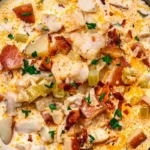
Creamy Seafood and Potato Chowder
- Total Time: 55 minutes
- Yield: 8 servings 1x
- Diet: General
Description
This hearty fish chowder soup delivers a big bowl of comfort but not too heavy. The broth is so creamy, silky, and rich in flavors. It has a perfect consistency, not too thick and not too thin, very similar to New England chowder.
Ingredients
- 3 pounds meaty firm fish or white fish, cut into 1-inch cubes
- 2 pounds potatoes (such as Yukon or red potatoes), cut into ¾-inch cubes
- 3 thick smoked turkey bacon slices
- 3 tablespoons unsalted butter
- 2 cups diced onion
- ¾ cup small diced celery
- ½ cup vegetable broth
- 1 bay leaf
- 6 small thyme sprigs
- 24 oz clam juice
- 2 cups chicken broth
- 2½ teaspoons Old Bay seasoning
- 2 cups heavy cream
- black pepper to taste
Instructions
- Render Turkey Bacon Fat: In a heavy-bottom pot or Dutch oven over medium heat, cook turkey bacon for 5 minutes or until crispy and golden brown. Transfer the bacon to a plate and set aside. Keep about 2 tablespoons of turkey bacon grease in the pot.
- Sauté Aromatics: Add butter, onion, and celery. Cook and stirring occasionally over medium heat for about 5 minutes or until softened but not browned.
- Deglaze the pan: Add vegetable broth, cook at medium-high heat, stirring to scrape the brown bits from the bottom of the pan, until it has evaporated and reduced in half.
- Simmer Vegetables: Add bay leaf, thyme, clam juice, broth, old bay seasoning, and potatoes. Bring to a boil then lower the heat. Cover the pot and cook until potatoes are almost done (firm on the outside but soft on the inside) for about 10 minutes or longer.
- Cook Fish: Add the fish fillets and preheated heavy cream into the pot. Cook, uncovered, on low heat for about 8-10 minutes. Adjust seasoning with salt/black pepper if needed.
- Serve: Serve and enjoy with crispy turkey bacon bits or allow the soup to chill at room temperature for up to an hour to enhance flavors. The broth will get thickened as it sits. Reheat at low heat just before serving. Do not let it boil.
Notes
Use meaty and firm fish like cod, haddock, or snapper. For a thicker broth, use Russet potatoes; for a firmer texture, use red potatoes.
- Prep Time: 15 minutes
- Cook Time: 40 minutes
- Category: Main Course
- Method: Simmering
- Cuisine: American
Nutrition
- Serving Size: 1 bowl
- Calories: 573 kcal
- Sugar: 6 g
- Sodium: 652 mg
- Fat: 30 g
- Saturated Fat: 18 g
- Unsaturated Fat: 12 g
- Trans Fat: 0 g
- Carbohydrates: 36 g
- Fiber: 4 g
- Protein: 39 g
- Cholesterol: 178 mg