This rich and velvety pasta dish combines seared salmon fillets with a smooth cream sauce and a vibrant blend of leafy greens. It is a nutritious, restaurant-quality meal that can be prepared in just 30 minutes.
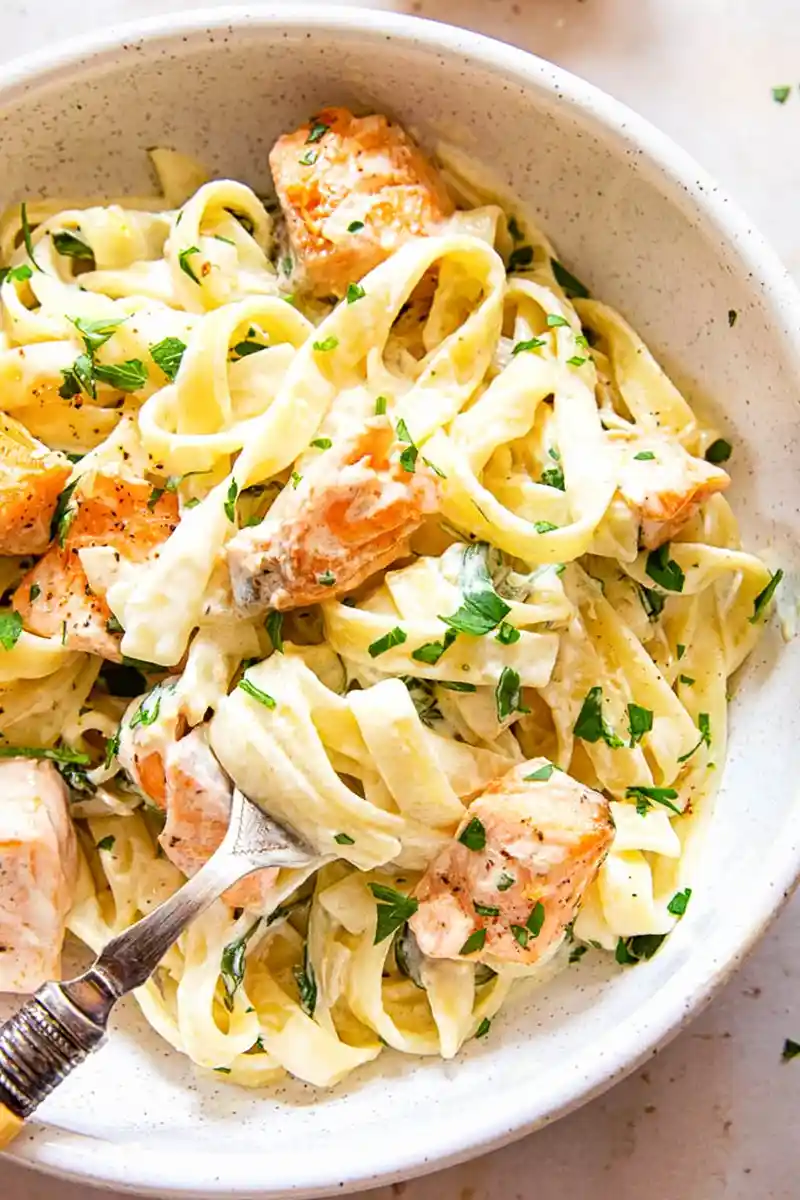
List of ingredients
- ½ kg/1 lbs pasta (such as tagliatelle, fettuccine, or linguine) – use a sturdy long shape.
- 1 shallot – finely chopped for a mild onion flavor.
- 1 clove garlic – minced to add aromatic depth.
- 1 tbsp butter – used for searing the salmon.
- 200g/7oz salmon fillet – skin removed and checked for bones.
- 125ml/1/2cup vegetable broth – used as a flavor base and to reduce.
- 250ml/1cup double/heavy cream – creates the rich, creamy texture.
- 80g/2cups mixed greens (spinach, arugula, watercress) – adds color and nutrients.
- 1/2 lemon – providing both zest and 1 tbsp of fresh juice.
- 1/4 tsp salt – or adjust according to your taste preference.
- 1 tbsp fresh parsley – chopped for a bright finish.
step-by-step instructions
- Boil the pasta: Cook the pasta in a large pot of salted boiling water according to the package instructions.
- Sear the salmon: While the pasta is cooking, remove the skin from the salmon fillet and check for any residual bones. Cut the fish into bite-sized pieces, season with salt and pepper, and sear on all sides in 1 tbsp of butter in a large frying pan until fully cooked (about 2-3 minutes). Remove the salmon to a separate plate.
- Sauté the aromatics: In the same pan, add 1 tbsp of olive oil along with the chopped shallots and minced garlic. Sauté over low heat for 1-2 minutes until softened.
- Reduce the liquid: Increase the heat to medium and pour in the vegetable broth. Let the liquid reduce by half over 5-7 minutes to concentrate the flavor.
- Prepare the cream sauce: Stir in the heavy cream and mixed greens. Add the salt, lemon zest, and lemon juice, mixing well until the greens are slightly wilted.
- Combine and serve: Add the drained pasta to the sauce and toss until evenly coated. Top the pasta with the seared salmon and chopped parsley before serving.
Expert Salmon Selection
Prioritize Wild-Caught Salmon
Wild-caught salmon generally offers a more intense flavor and a higher concentration of nutrients compared to farmed alternatives. Look for labels that specify the origin to ensure the fish was sourced sustainably. This choice enhances the overall richness of the pasta sauce.
The Benefits of Sockeye Salmon
Sockeye salmon, also known as red salmon, is prized for its deep red color and robust taste. It typically contains higher levels of omega-3 fatty acids, which contribute to a heart-healthy meal. Because its flavor is strong, it stands up well against the heavy cream in this recipe.
Using Wild Pink Salmon
If Sockeye is unavailable or too expensive, wild pink salmon is an excellent second choice. It has a milder flavor profile that appeals to those who prefer a less fishy taste. It is often more affordable while still providing the essential vitamins needed for a balanced diet.
Choosing Between Atlantic and Pacific Varieties
The best choice often depends on what is freshest and most locally available in your region. Pacific salmon varieties tend to be leaner, while Atlantic salmon often has a higher fat content. Either will work perfectly in this dish, provided the fish is fresh and high-quality.
Pasta Preparation Mastery
The Importance of Salted Water
Salting the boiling water is the only chance to season the pasta itself. This ensures the flavor penetrates the core of the noodle rather than just sitting on the surface. Use about one tablespoon of salt per liter of water for the best results.
Achieving the Perfect Al Dente Texture
Al dente means ‘to the tooth,’ indicating the pasta should have a slight firmness. Since the pasta will continue to cook when tossed in the hot sauce, drain it one minute before the package suggests. This prevents the noodles from becoming mushy or overcooked.
Selecting the Right Pasta Shape
Long, sturdy ribbons like tagliatelle or fettuccine are ideal because they hold onto the cream sauce efficiently. If you prefer short pasta, choose a thick shape like penne or rigatoni. Avoid very thin pastas that might break under the weight of the salmon pieces.
The Role of Reserved Pasta Water
Always save a small cup of the starchy pasta water before draining. If the final sauce feels too thick or clumpy, a splash of this water will emulsify the fats and liquids. This creates a smoother, glossier finish that clings better to the pasta.
Sauce and Searing Techniques
Searing Salmon for Maximum Flavor
To achieve a golden crust, use a large skillet over medium-high or high heat. If the pan is too cool, the salmon will release its moisture and steam instead of searing. This quick cooking method locks in the juices and adds a savory depth to the dish.
Concentrating the Broth Reduction
Allowing the vegetable broth to reduce for 5-7 minutes is a critical step for flavor development. As the water evaporates, the savory notes become more concentrated. This prevents the final sauce from tasting watery or diluted after the cream is added.
Properly Integrating Leafy Greens
Add the mixed greens toward the end of the sauce preparation to avoid overcooking them. Spinach and watercress wilt quickly, so they only need a minute or two of heat. This preserves their bright green color and maximizes their nutritional value.
Balancing Richness with Lemon
The addition of lemon zest and juice is essential to cut through the heaviness of the double cream. The acidity brightens the entire dish and highlights the delicate flavor of the salmon. Always add the juice at the end to keep the flavor fresh.
Customizations and Substitutions
Exploring Alternative Leafy Greens
While spinach, arugula, and watercress are recommended, you can experiment with other greens. Kale or Swiss chard are great options, though they may require a few extra minutes to soften. Fresh basil leaves added at the very end also provide a wonderful aromatic touch.
Adding Complementary Vegetables
To increase the vegetable content, consider adding frozen peas or steamed broccoli. Since broccoli takes longer to cook, steam it separately before tossing it into the sauce. These additions provide a nice textural contrast to the tender salmon.
Swapping the Protein Source
This cream sauce is highly versatile and works well with other proteins. Sautéed shrimp or sliced grilled chicken breast are excellent substitutes for salmon. Maintain the same searing technique to ensure the protein is caramelized and flavorful.
Incorporating Roasted Tomatoes
For a burst of sweetness and acidity, add roasted cherry tomatoes to the final mix. Roast them in the oven with a bit of olive oil and salt until they burst. This adds a visually appealing red pop and a complex flavor profile to the creamy base.
Serving and Pairing Advice
Using Fresh Herb Garnishes
Chopped parsley is used in the base recipe, but dill or chives also pair beautifully with salmon. Fresh herbs add a layer of brightness that balances the rich fats of the cream. Sprinkle them generously over the plated dish just before serving.
Cheese Pairing Suggestions
While not traditional in some seafood dishes, a grating of fresh Parmesan or Pecorino Romano adds a salty punch. These hard cheeses melt slightly into the sauce, increasing its thickness and savoriness. Use a fine grater for an even distribution.
Selecting Light Side Salads
Because the pasta is rich, pair it with a light, acidic salad to cleanse the palate. A Tuscan Panzanella or a classic Caprese salad with fresh mozzarella and basil works well. A simple lemon-dressed arugula salad is also a great choice.
The Perfect Bread Accompaniment
Warm garlic bread is a classic companion that helps soak up any remaining cream sauce. Brush a baguette with garlic butter and toast it in the oven until golden brown. This adds a crunchy element that complements the soft texture of the pasta.
Storage and Reheating Guidelines
Safe Refrigeration Practices
Store any leftovers in an airtight container in the refrigerator for up to three days. Ensure the pasta has cooled slightly before sealing to prevent excessive condensation. Keep the container tightly closed to prevent the cream sauce from absorbing fridge odors.
Reheating for Optimal Texture
Reheat the pasta on a stovetop over medium heat rather than in the microwave. Add a splash of water or vegetable broth to the pan to loosen the sauce. Stir gently to avoid breaking the salmon pieces and to restore the creamy consistency.
Why Freezing is Not Recommended
Freezing creamy pasta dishes often leads to a broken emulsion. Upon thawing, the sauce may separate or curdle, and the pasta texture becomes overly soft. It is best to prepare only what you need or enjoy the leftovers fresh within a few days.
Common Cooking Questions
Why did my cream sauce curdle?
Curdling usually happens if the heat is too high when the cream is added or if the sauce boils vigorously for too long. Keep the heat at a gentle simmer and stir constantly. Using high-quality heavy cream with a higher fat content also helps stabilize the sauce.
Why is my seared salmon tough?
Tough salmon is typically a result of overcooking. Since the pieces are bite-sized, they cook very quickly, often in under three minutes. Remove the salmon from the pan as soon as the center is just barely opaque to keep it moist.
How can I thicken the sauce further?
If you prefer a thicker consistency, let the sauce simmer for an additional two minutes before adding the pasta. Alternatively, stir in a tablespoon of grated Parmesan cheese or a small amount of cornstarch slurry. Reserved pasta water can also be used to adjust the viscosity.
Can I use low-fat cream in this recipe?
You can use a lower-fat alternative, but the sauce will not be as stable or rich. Low-fat creams are more prone to separating when exposed to the acidity of lemon juice. If using a substitute, stir it in very slowly over low heat.
Print
Creamy Salmon Pasta with Mixed Greens
- Total Time: 30 minutes
- Yield: 6 servings 1x
- Diet: Pescatarian
Description
This salmon pasta with a creamy sauce is enhanced with a bunch of spinach, arugula, and watercress greens for more flavor and a pop of color.
Ingredients
- ½ kg/1 lbs pasta such as tagliatelle, fettuccine or linguine
- 1 shallot
- 1 clove garlic
- 1 tbsp butter
- 200g/7oz salmon fillet, skin removed
- 125ml/1/2cup vegetable broth
- 250ml/1cup double/heavy cream
- 80g/2cups mixed greens such as spinach, arugula, watercress
- 1/2 lemon, zest and 1 tbsp juice
- 1/4 tsp salt
- 1 tbsp fresh parsley, chopped
Instructions
- Step 1: Cook the pasta in a large pot of salted boiling water according to package instructions.
- Step 2: While the pasta is cooking remove the skin from salmon fillet, check for residual bones, remove if any found and cut into bite-sized pieces. Season with salt and pepper and sear on all sides in 1 tbsp of butter in a large fryer pan until cooked all the way through. Remove to a separate plate.
- Step 3: To the same pan add 1 tbsp olive oil, chopped shallots and minced garlic and sauté over low heat for 1-2 minutes, turn the heat to medium and add vegetable broth and let it reduce for 5-7 minutes, then add the heavy cream and mixed greens with salt, lemon zest and lemon juice. Mix to combine, then add the drained pasta to the sauce and toss to combine, top with seared salmon, chopped parsley and serve.
Notes
Reserve some of the pasta water before draining to add later to the sauce for added flavor and creaminess. Use a large skillet over medium-high heat to ensure the salmon sears rather than steams.
- Prep Time: 10 minutes
- Cook Time: 20 minutes
- Category: Main Course
- Method: Searing
- Cuisine: European
Nutrition
- Serving Size: 1 serving
- Calories: 515 kcal
- Sugar: 3 g
- Sodium: 162 mg
- Fat: 21 g
- Saturated Fat: 11 g
- Unsaturated Fat: 10 g
- Trans Fat: 0 g
- Carbohydrates: 60 g
- Fiber: 3 g
- Protein: 18 g
- Cholesterol: 81 mg