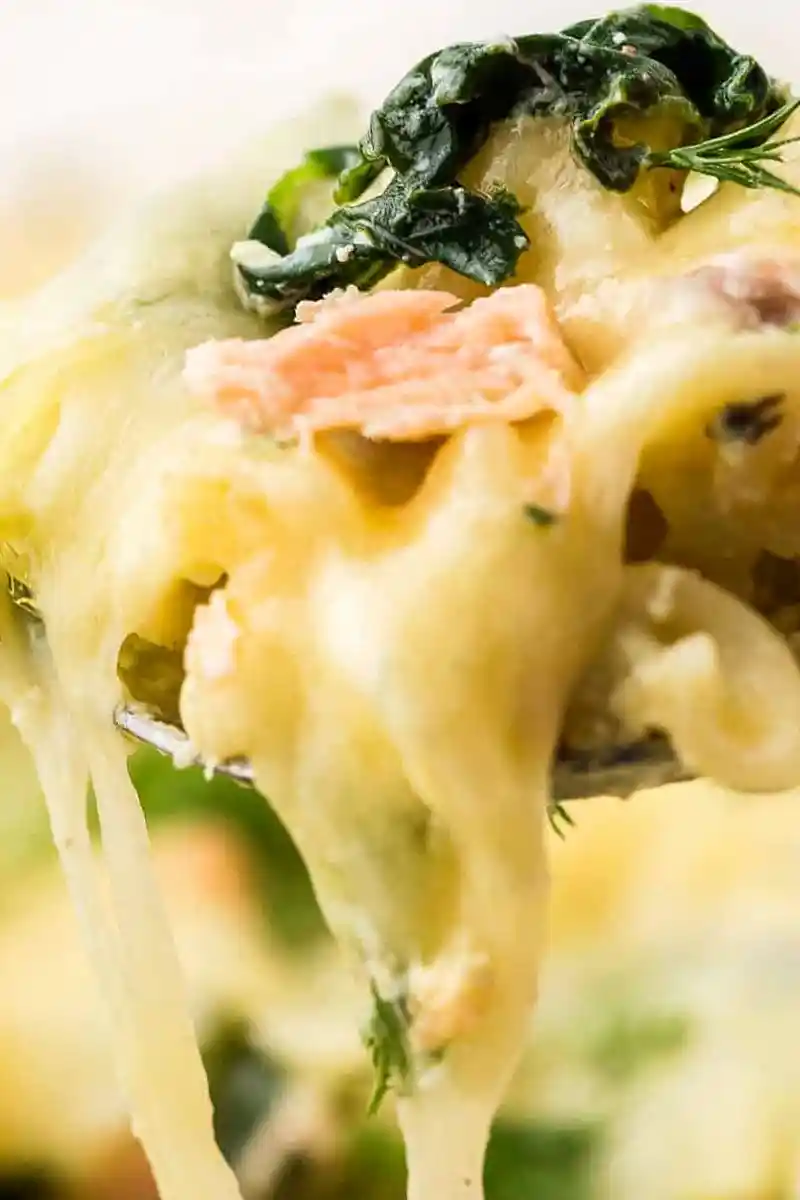
This creamy salmon casserole is a convenient meal for busy weeknights. It blends protein, vegetables, and cheese into one comforting baking dish.
List of ingredients
- 12 ounces pasta – any short shape like fusilli, rigatoni, or penne.
- 8 ounces salmon – frozen, skin removed, and sliced while frozen into 1/4 inch pieces.
- 16 ounces frozen spinach – partially thawed for easier mixing.
- 16 ounces cream cheese – brought to room temperature for a smooth sauce.
- 1½ cups half and half – adds richness and creaminess.
- 3 tablespoons lemon juice – provides a bright, citrusy balance.
- 3 cloves garlic – minced finely for aromatic flavor.
- 1½ tablespoons granulated chicken bouillon – adds savory depth.
- ½ teaspoon nutmeg – gives a subtle, warm hint of spice.
- 8 ounces Swiss cheese – shredded for a gooey topping.
step-by-step instructions
- Prepare the pasta: Cook the short pasta according to the package instructions, then set it aside.
- Preheat the oven: Set your oven to 400° Fahrenheit to ensure it is ready for baking.
- Create the cream sauce: In a large bowl, combine the room temperature cream cheese, half and half, lemon juice, chicken bouillon, minced garlic, and nutmeg. Use an electric hand mixer to beat the ingredients until the mixture is creamy and smooth.
- Combine the main components: Gently fold the partially thawed spinach, frozen salmon slices, and cooked pasta into the cream sauce. Season the mixture with salt and pepper to taste.
- Assemble the casserole: Transfer the combined mixture into a casserole dish and spread it evenly. Sprinkle the shredded Swiss cheese over the top.
- Bake: Bake the dish at 400° Fahrenheit for 30 to 35 minutes until the cheese is melted and bubbling.
Essential Cooking Tips
Choose the Right Pasta Shape
Short pasta shapes like fusilli, rotini, or penne are ideal because their ridges and holes capture the thick cream sauce. Avoid long noodles like spaghetti, as they are difficult to stir and do not distribute the salmon and spinach evenly. Ensure you cook the pasta al dente so it maintains its structure after baking.
Handle Frozen Salmon Correctly
Slicing the salmon while it is still frozen allows you to get uniform 1/4 inch pieces without the fish breaking apart. Once the salmon is incorporated into the sauce, it will thaw and cook perfectly during the baking process. This method ensures the fish remains tender and does not overcook into dry chunks.
Drain the Frozen Spinach Thoroughly
Frozen spinach holds a significant amount of water which can make the sauce runny if not managed. After partially thawing, squeeze the spinach with your hands or a kitchen towel to remove excess moisture. This keeps the casserole thick and creamy rather than watery.
Ensure Cream Cheese is Softened
Using room temperature cream cheese is critical for achieving a smooth, lump-free sauce. If the cream cheese is too cold, the electric mixer will struggle to incorporate it with the half and half. You can soften it quickly in the microwave for 15-20 seconds if needed.
Ingredient Substitutions and Variations
Alternative Cheese Options
While Swiss cheese provides a nutty flavor that complements salmon, Mozzarella is a great substitute for a milder taste and better stretch. Cheddar cheese can be used for a sharper, bolder flavor profile. You can also use a blend of these cheeses to customize the richness of the topping.
Substituting the Green Vegetables
If you prefer not to use spinach, frozen peas are an excellent alternative that pairs well with salmon and cream. Broccoli florets, chopped small, also work well in this recipe. Ensure any substitute vegetable is thawed and drained to prevent adding too much liquid to the dish.
Dairy Alternatives for the Sauce
For a slightly different richness, you can replace half and half with heavy cream for a thicker sauce or whole milk for a lighter version. If using milk, you may need to simmer the sauce briefly on the stove to thicken it before adding the other ingredients. Heavy cream will result in a more decadent, restaurant-style texture.
Bouillon and Seasoning Swaps
If you do not have granulated chicken bouillon, a vegetable bouillon or a concentrated seafood base can be used. To replace the nutmeg, a pinch of ground allspice or mace provides a similar warmth. Adjust the lemon juice based on your preference for acidity.
Serving Suggestions
Fresh Side Salad Pairings
A crisp side salad provides a refreshing contrast to the rich, cheesy nature of the casserole. A German-style cucumber salad with vinegar and dill is particularly effective at cutting through the creaminess. Adding cherry tomatoes or sliced radishes adds a pop of color and acidity to the meal.
Garlic Bread Accompaniments
Toasted garlic bread is perfect for scooping up any extra cream sauce left on the plate. You can prepare this by brushing a baguette with garlic butter and toasting it until golden brown. The crunch of the bread complements the soft texture of the pasta and salmon.
Non-Alcoholic Beverage Pairings
A chilled glass of iced tea with lemon balances the savory notes of the Swiss cheese. Sparkling water with a squeeze of lime is another excellent choice to cleanse the palate between bites. For a warmer option, a light herbal tea works well for a cozy dinner.
Storage and Preservation
Refrigerating Leftovers
Place leftover casserole in an airtight container and store it in the refrigerator immediately after cooling. Ensure the lid is tightly sealed to prevent the dairy from absorbing other odors in the fridge. The dish will remain fresh and safe to eat for 2 to 3 days.
Freezing the Casserole
This recipe freezes well if stored correctly to prevent freezer burn. Wrap the portion securely in plastic wrap, then add a layer of aluminum foil for extra protection. Label the package with the date, as it can be stored in the freezer for up to 3 months.
Proper Thawing Process
To maintain the texture of the sauce, thaw frozen portions in the refrigerator for 24 hours before reheating. Avoid thawing the dish quickly in the microwave, as this can cause the cream sauce to separate. Slow thawing ensures the ingredients reheat evenly.
Reheating Guidelines
Oven Reheating Method
For the best results, reheat the casserole in the oven at 350° Fahrenheit. Cover the dish with foil to prevent the cheese from burning while the center heats through. Bake until the dish is hot and bubbly, which usually takes about 15-20 minutes.
Microwave Reheating Tips
If you are in a rush, the microwave is a viable option for individual portions. Heat on medium power and stir halfway through to ensure there are no cold spots. Add a teaspoon of milk or water to the portion to restore the creaminess of the sauce.
Troubleshooting Common Issues
Preventing a Watery Casserole
If your casserole turns out too liquid, it is usually due to excess water from the frozen spinach or salmon. Always squeeze the spinach thoroughly after thawing. Additionally, ensure the pasta is drained completely before folding it into the sauce.
Avoiding Overcooked Salmon
Salmon can become dry if baked for too long or at too high a temperature. Stick to the 30-35 minute window at 400° Fahrenheit. Using frozen slices as directed helps the fish cook at a controlled pace within the creamy sauce.
Fixing a Lumpy Sauce
Lumps in the sauce occur when the cream cheese is not sufficiently softened before mixing. If you encounter lumps, you can use a whisk to beat the sauce more vigorously or pass the sauce through a sieve before adding the pasta. Alternatively, a quick pulse in a blender can smooth it out.
Addressing Bland Flavor
If the dish tastes bland, increase the amount of lemon juice or add a pinch more salt. The chicken bouillon provides the primary saltiness, so check the sodium level of your specific brand. A sprinkle of fresh dill or parsley on top can also enhance the overall flavor profile.
Frequently Asked Questions
Can I use fresh spinach instead of frozen?
Yes, you can use fresh spinach, but you must sauté it first until wilted and then squeeze out the excess liquid. Fresh spinach contains a lot of water that will release during baking, which can thin the sauce. Using about 5-6 ounces of fresh spinach is equivalent to 16 ounces of frozen.
Can I use fresh salmon fillets?
Fresh salmon can be used by cutting the fillets into 1/4 inch cubes. Be careful not to overbake the dish, as fresh salmon may cook slightly faster than frozen pieces. Fold the fresh cubes gently into the sauce to avoid breaking them.
What if I don’t have half and half?
You can make a substitute by mixing equal parts whole milk and heavy cream. If you only have milk, the sauce will be thinner; you can compensate by adding an extra tablespoon of cream cheese. Avoid using skim milk, as it may cause the sauce to break.
Can this be made in a slow cooker?
This recipe is designed for the oven to achieve a browned cheese topping, but you can slow cook the base. Combine everything except the cheese and bake for 4 hours on low. Transfer to an oven-safe dish, add the cheese, and broil for 5 minutes to brown the top.
Print
Creamy Salmon and Spinach Casserole
- Total Time: 50 minutes
- Yield: 6 servings 1x
- Diet: General
Description
This creamy, cheesy Salmon Casserole is a great recipe for a quick and easy weeknight dinner.
Ingredients
- 12 ounces pasta (fussili, rigatoni, or penne)
- 8 ounces salmon (frozen, skin removed, sliced into ¼ inch pieces)
- 16 ounces frozen spinach (partially thawed)
- 16 ounces cream cheese (room temperature)
- 1½ cups half and half
- 3 tablespoons lemon juice
- 3 cloves garlic (minced)
- 1½ tablespoons granulated chicken bouillon
- ½ teaspoon nutmeg
- 8 ounces Swiss cheese (shredded)
Instructions
- Prep: Cook pasta according to package instruction and set aside.
- Preheat: Preheat the oven to 400° Fahrenheit.
- Mix: In a large bowl, combine cream cheese, half & half, lemon juice, chicken bouillon, garlic, and nutmeg; beat with an electric hand mixer until creamy.
- Combine: Fold in spinach, salmon, and cooked pasta, then season with salt and pepper.
- Assemble: Transfer the mixture into a casserole dish and top with shredded cheese.
- Bake: Bake for 30-35 minutes at 400° Fahrenheit.
Notes
Optional: Garnish with fresh dill.
- Prep Time: 20 minutes
- Cook Time: 30 minutes
- Category: Main Course
- Method: Baking
- Cuisine: American
Nutrition
- Serving Size: 1 serving
- Calories: 778 kcal
- Sugar: 8 g
- Sodium: 1450 mg
- Fat: 47 g
- Saturated Fat: 24 g
- Unsaturated Fat: 23 g
- Trans Fat: 0 g
- Carbohydrates: 56 g
- Fiber: 6 g
- Protein: 35 g
- Cholesterol: 165 mg