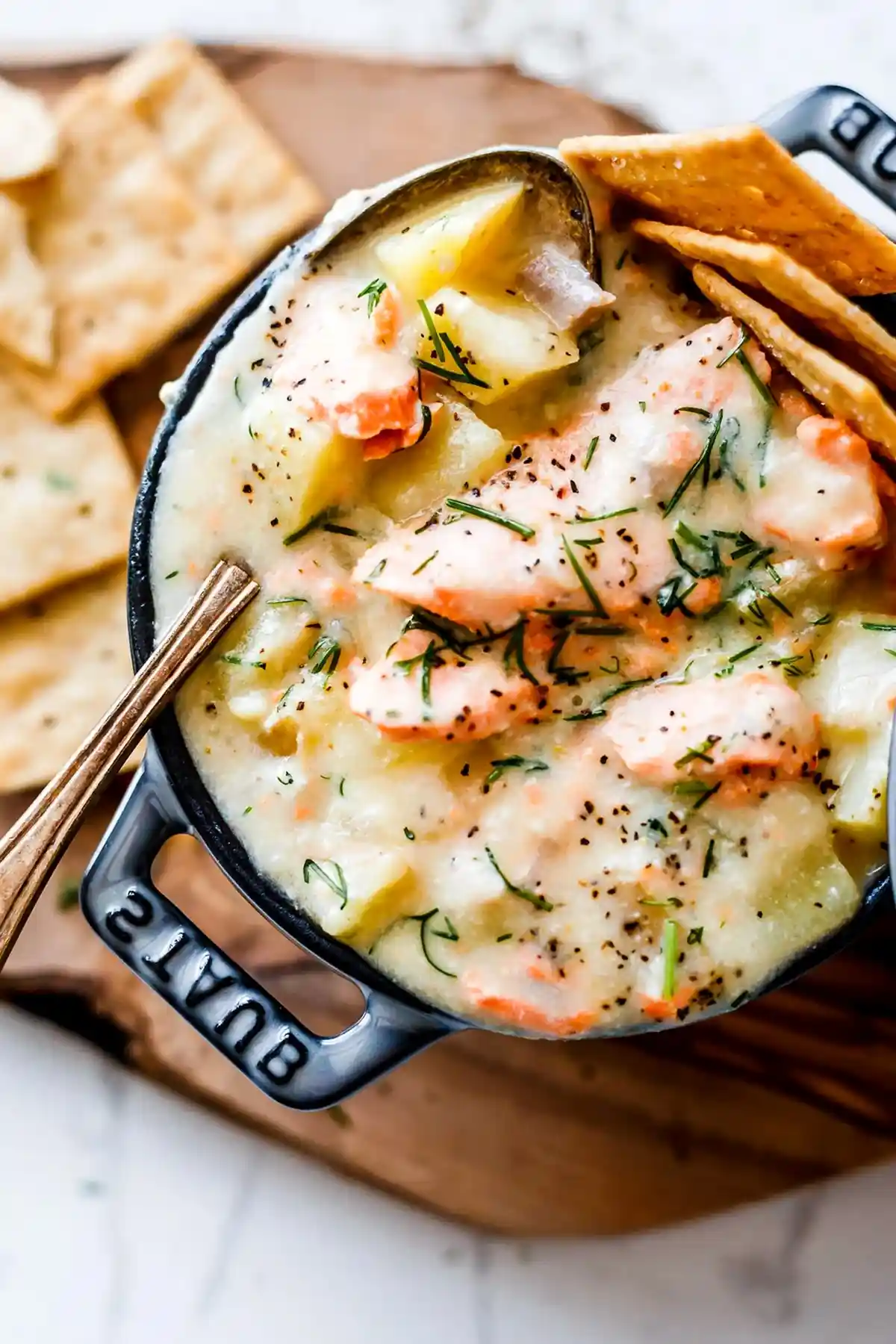
This hearty salmon chowder combines tender chunks of fish and golden potatoes in a rich, creamy base. It is a satisfying one-pot meal that provides a restaurant-style experience with minimal effort.
List of ingredients
- 2 tablespoons butter – used to sauté aromatics and create the roux.
- 1 medium onion – finely diced.
- 2 garlic cloves – minced or finely chopped.
- 1/4 cup flour – used as a thickening agent.
- 1/4 cup white grape juice mixed with 1 teaspoon lemon juice – a non-alcoholic substitute for dry white wine.
- 3 cups chicken broth – the primary savory liquid base.
- 3 medium golden potatoes – washed and cubed into bite-sized pieces.
- Salt and pepper – added to taste.
- 12 oz salmon fillets – skin removed, cut into chunks or kept whole for later breaking.
- 2/3 cup heavy whipping cream – for a smooth, rich consistency.
- 2 tablespoons dill – finely chopped and optional for garnish.
step-by-step instructions
- Sauté Aromatics: Melt the butter in a large pot over medium heat. Add the diced onion and sauté for 6-8 minutes until it reaches a golden color.
- Create the Roux: Stir in the minced garlic and cook for 1 minute. Add the flour and mix constantly for another minute until a thick paste forms.
- Build the Broth: Slowly pour in the white grape juice and lemon mixture while whisking. Gradually stir in the chicken broth, ensuring all flour lumps are fully dissolved.
- Cook Potatoes: Add the cubed potatoes to the pot and bring the mixture to a boil. Season with salt and pepper, then reduce the heat to low and simmer for 15 minutes.
- Poach Salmon: Stir in the salmon fillets and heavy whipping cream. Simmer for 8-10 minutes or until the salmon is cooked through.
- Final Touch: Use a spoon to gently break the salmon fillets into smaller chunks. Garnish with chopped dill before serving.
Procedures for Optimal Results
Selecting the Best Salmon Fillets
Choose wild-caught salmon, such as Sockeye or King salmon, for a more robust flavor and firmer texture. Ensure the skin is completely removed before cooking to avoid unwanted textures in the broth. If using frozen fillets, thaw them completely in the refrigerator before adding them to the pot.
Managing Potato Texture
Golden potatoes are ideal because they hold their shape well during simmering. To prevent the cubed potatoes from oxidizing and turning brown, store them in a bowl of cold water until you are ready to add them to the pot. This ensures a clean, bright color in the final chowder.
Perfecting the Roux Consistency
The combination of butter and flour creates a roux, which is essential for the thick consistency of a chowder. Cook the flour for at least one minute to remove the raw flour taste. Stir constantly to prevent the butter from browning too quickly or the flour from clumping.
Ingredient Substitutions and Adjustments
Alternatives to Heavy Cream
If you prefer a lighter version, you can substitute heavy whipping cream with half-and-half or whole milk. For a dairy-free option, use full-fat canned coconut milk or cashew cream. Note that these alternatives may slightly alter the flavor profile of the soup.
Broth Variations
While chicken broth is standard, vegetable broth is an excellent substitute for a different aromatic profile. You can also use a seafood stock to intensify the ocean flavors of the dish. Ensure the broth is low-sodium if you prefer to control the salt levels manually.
Using Different Fresh Herbs
Fresh dill is the traditional pairing for salmon, but chopped parsley or chives also work well. Parsley adds a clean, grassy note, while chives provide a mild onion-like zest. Avoid using woody herbs like rosemary, as they may overpower the delicate taste of the fish.
Serving and Pairing Suggestions
Best Bread Accompaniments
Serve this chowder with a side of warm, buttery sourdough bread or crusty French baguettes for dipping. Cornbread is another excellent choice, providing a sweet contrast to the savory cream base. Toasted crackers or salty oyster crackers can also add a nice crunch to each bite.
Fresh Side Dish Pairings
A crisp garden salad with a light vinaigrette helps balance the richness of the cream. Arugula with lemon and olive oil is particularly effective at cutting through the heavy fats of the chowder. Roasted asparagus or steamed broccoli can also provide a healthy vegetable balance to the meal.
Adding Extra Texture and Color
To make the dish more colorful, stir in a handful of frozen peas or corn kernels during the last five minutes of simmering. A sprinkle of smoked paprika on top of each bowl adds a subtle earthiness and a pop of color. A wedge of fresh lemon on the side allows guests to add a bright acidity to their serving.
Storage and Reheating Guidelines
Refrigeration Methods
Store leftover chowder in an airtight container in the refrigerator for up to three days. Ensure the soup has cooled slightly before sealing the container to prevent excessive condensation. Keep the container tightly sealed to stop the soup from absorbing other fridge odors.
Stovetop Reheating Process
Reheat the chowder slowly over low to medium heat on the stove. Stir occasionally to prevent the bottom from scorching. If the soup has thickened too much in the fridge, add a splash of milk or broth to restore the original consistency.
Microwave Reheating Tips
Place the chowder in a microwave-safe bowl and heat in short 1-minute intervals. Stir the soup thoroughly between each interval to ensure an even temperature. This prevents the cream from separating or creating hot spots that could overcook the salmon chunks.
Troubleshooting Common Issues
Fixing a Thin Broth
If the chowder is too thin after simmering, you can create a small additional roux in a separate pan with equal parts butter and flour. Whisk this mixture into the boiling soup and simmer for a few more minutes. Alternatively, mash a few of the cooked potato chunks directly into the broth to naturally thicken it.
Preventing Overcooked Salmon
Salmon can become dry and rubbery if simmered for too long. Always add the fish at the very end of the process and monitor the internal temperature. The salmon is done when it flakes easily with a fork and is opaque throughout.
Resolving Lumpy Flour Pockets
If flour lumps appear after adding the broth, use a whisk to vigorously stir the liquid. If the lumps persist, you can pass the broth through a fine-mesh strainer before adding the potatoes. Adding the liquid slowly while whisking is the best way to prevent this from happening.
Frequently Asked Questions
Can I use cooked salmon instead of raw fillets?
Yes, you can use leftover cooked salmon. Simply fold the cooked pieces into the chowder during the final 2-3 minutes of cooking just to heat them through. Avoid simmering cooked salmon for too long, as it will likely break apart and become dry.
Can this recipe be adapted for a slow cooker?
You can cook the potatoes and broth in a slow cooker on low for 6-8 hours. However, the roux must be made on the stove first and stirred in, and the cream and salmon should be added during the last 30 minutes of cooking to maintain the correct texture.
How do I make the chowder dairy-free?
Replace the butter with a plant-based butter alternative or olive oil. Use coconut milk or a cashew-based cream instead of heavy whipping cream to achieve a similar richness without the dairy.
What is the best way to remove salmon skin?
Place the fillet skin-side down on a cutting board. Insert a sharp knife between the skin and the flesh at one corner, then hold the skin taut and slide the knife along the length of the fillet. This removes the skin in one clean piece.
Print
Creamy Salmon and Potato Chowder
- Total Time: 45 minutes
- Yield: 4 servings 1x
- Diet: General
Description
Salmon Chowder Soup – made with salmon chunks, golden potatoes and delicious cream.
Ingredients
- 2 tablespoons butter
- 1 medium onion
- 2 garlic cloves, minced or finely chopped
- 1/4 cup flour
- 1/4 cup alcohol-free white wine alternative
- 3 cups chicken broth
- 3 medium golden potatoes, washed and cubed
- salt and pepper to taste
- 12 oz salmon fillets, skin removed
- 2/3 cup heavy whipping cream
- 2 tablespoons finely chopped dill (optional)
Instructions
- Step: Melt butter over medium heat in a pot and saute onion for 6-8 minutes or until golden.
- Step: Add garlic and saute for 1 minute, then add flour and mix for 1 minute.
- Step: Slowly pour in alcohol-free white wine alternative, whisking while pouring, then add chicken broth and mix until smooth.
- Step: Add potatoes, bring to a boil, season with salt and pepper, and simmer on low for 15 minutes.
- Step: Add salmon fillets and heavy whipping cream and simmer for 8-10 minutes until salmon is cooked through, breaking up fillets with a spoon.
- Step: Garnish with finely chopped dill and enjoy.
Notes
Remove salmon skin before cooking. To prevent potatoes from browning, keep them submerged in cold water until ready to use.
- Prep Time: 10 minutes
- Cook Time: 35 minutes
- Category: Soup
- Method: Stovetop
- Cuisine: American
Nutrition
- Serving Size: 1 serving
- Calories: 469 kcal
- Sugar: 4 g
- Sodium: 758 mg
- Fat: 26 g
- Saturated Fat: 14 g
- Unsaturated Fat: 10 g
- Trans Fat: 0.2 g
- Carbohydrates: 34 g
- Fiber: 4 g
- Protein: 23 g
- Cholesterol: 110 mg