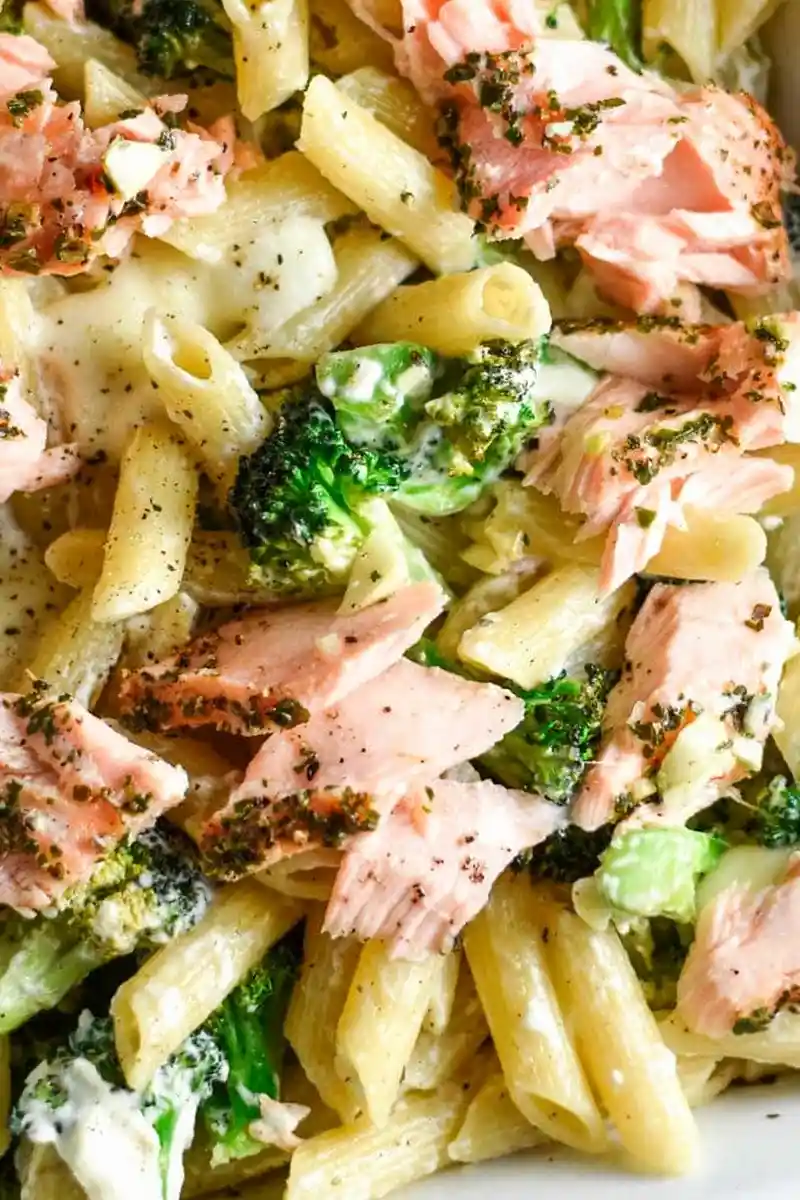
This efficient one-pan meal combines roasted proteins and vegetables with a creamy cheese sauce. It is designed for quick weeknight preparation while providing a balanced ratio of omega-3s and nutrients.
List of ingredients
- 10 oz pasta (penne, rigatoni, or rotini) – choose a shape that holds sauce well.
- 1/4 cup olive oil – used for roasting and sautéing.
- 12 oz broccoli florets – torn into uniform, bite-sized pieces for even cooking.
- 1 pound salmon – center-cut fillet of even thickness.
- 4 oz cream cheese – provides the base for the creamy sauce.
- 4 garlic cloves – minced finely for flavor distribution.
- 1 tablespoon Italian seasoning – a blend of dried herbs.
- 1/2-3/4 cup reserved pasta water – essential for emulsifying the sauce.
- 2-3 oz fresh mozzarella cheese – torn into small pieces for melting.
- Kosher salt and black pepper – for seasoning all components.
step-by-step instructions
- Prepare the oven and water: Preheat your oven to 425 degrees Fahrenheit. Fill a large pot with salted water and bring it to a rolling boil.
- Set up the baking pan: Use a 9×13 inch baking dish. Pour 2-3 tablespoons of olive oil into the pan and toss the broccoli florets in the oil until coated. Move the broccoli to one side of the dish.
- Position the salmon and cheese: Place the cream cheese block in the center of the pan. Pat the salmon fillet dry with paper towels and remove the skin if preferred. Place the salmon on the opposite edge of the pan from the broccoli.
- Season the components: Drizzle another 1-2 tablespoons of olive oil over the salmon and cream cheese. Sprinkle the Italian seasoning and minced garlic over the salmon and cheese, and toss the garlic into the broccoli. Season everything generously with kosher salt and black pepper.
- Bake: Place the pan in the oven and bake for 15-17 minutes. The salmon should be cooked through, and the broccoli should be tender with slightly browned edges.
- Cook the pasta: While the pan is roasting, boil the pasta according to the package directions. Before draining, reserve at least 1 cup of the starchy pasta water. Drain the rest of the pasta.
- Create the sauce: Remove the cooked salmon from the baking dish and set it aside on a plate. Pour about 1/2 cup of the reserved pasta water into the baking dish. Stir the roasted broccoli, melted cream cheese, and cooked pasta together until the sauce is well combined.
- Melt the mozzarella: Tear the fresh mozzarella into pieces and stir them into the pasta mixture. The residual heat should melt the cheese, but you can return the dish to the oven for 3 minutes if more melting is needed.
- Final Adjustments: Add additional pasta water if the sauce is too thick. Taste and adjust the salt and pepper as needed.
- Assemble and serve: Break the cooked salmon fillet into bite-sized chunks and distribute them over the top of the pasta. Serve immediately while warm.
Optimizing Ingredient Selection
Selecting the Right Salmon Cut
Choose a center-cut salmon fillet to ensure a consistent thickness across the entire piece. A thickness of 1 to 1.5 inches is ideal so the fish reaches the correct internal temperature at the same time the broccoli finishes roasting. If the fillet is too thin, it may overcook and become dry before the vegetables are tender.
Preparing Broccoli for Even Roasting
Break the broccoli florets into uniform pieces, approximately 3/4 to 1 inch in size. Large chunks will remain raw in the center, while tiny pieces may burn before the salmon is done. Consistency in size ensures that every piece achieves a tender texture with slightly crispy edges.
Choosing the Best Pasta Shape
Penne, rigatoni, or rotini are the best choices for this recipe because their ridges and hollow centers trap the cream cheese sauce. Avoid very thin pastas like spaghetti or angel hair, as they do not support the weight of the salmon chunks and broccoli florets well. Ensure the pasta is cooked al dente to maintain structure when stirred into the pan.
Evaluating Cream Cheese Quality
Use a full-fat cream cheese for the best emulsion and flavor profile. Avoid low-fat versions as they may separate or become grainy when exposed to the high heat of the oven. Brands without carrageenan often provide a smoother melt into the pasta water.
Customizing the Recipe
Using Boursin as a Substitute
You can replace the cream cheese with Boursin or another garlic-and-herb flavored cheese. If you choose a strongly seasoned cheese, reduce the amount of added Italian seasoning and minced garlic to prevent the dish from becoming overly salty. This substitution adds a more complex, gourmet flavor to the sauce.
Implementing Gluten-Free Pasta
This recipe is easily adapted for gluten-free diets by substituting traditional wheat pasta with brown rice or corn-based pasta. Be mindful that gluten-free pasta often has a narrower window of perfection and can become mushy quickly. Boil it for 1-2 minutes less than the package instructions to account for the stirring process.
Substituting Other Mild Fish
While salmon is the primary recommendation, other mild white fish like halibut or cod can work. Because these fish have different fat contents, you may need to add an extra tablespoon of olive oil to the fillet. Adjust the baking time based on the thickness of the fillet to avoid overcooking.
Incorporating Additional Vegetables
To increase the nutrient density, add diced zucchini or halved cherry tomatoes to the baking pan. Zucchini should be cut into thick half-moons to match the roasting time of the broccoli. Stir these in along with the broccoli during the initial setup phase.
Dairy-Free Cheese Alternatives
For a dairy-free version, use a plant-based cream cheese and a vegan mozzarella alternative. Note that plant-based cheeses often have different melting points and may require an additional 5 minutes in the oven to achieve a creamy consistency. Ensure the vegan cheese is stirred in while the pasta water is very hot.
Professional Cooking Tips
Managing Oven Temperatures
Keep the oven at 425 degrees Fahrenheit to achieve the roasting effect on the broccoli. A lower temperature will steam the vegetables instead of roasting them, resulting in a softer texture without the characteristic browned edges. Use an oven thermometer to verify the heat is accurate.
The Role of Reserved Pasta Water
Pasta water is crucial because the released starches act as a binder between the fats in the cheese and the water. This creates a silky, cohesive sauce that clings to the pasta rather than pooling at the bottom of the dish. Always reserve more water than you think you need.
Identifying Perfectly Cooked Salmon
The salmon is done when it reaches an internal temperature of 145 degrees Fahrenheit or when it flakes easily with a fork. Avoid overcooking the fish, as it will lose its moisture and become chalky. Remove the fish from the pan immediately once it reaches this state to stop the cooking process.
Enhancing the Final Flavor Profile
Adding a squeeze of fresh lemon juice over the final dish can brighten the richness of the cream cheese and salmon. A sprinkle of fresh chopped parsley or basil also adds a layer of freshness that complements the dried Italian seasoning. Taste for acidity before adding the lemon.
Storage and Reheating
Refrigeration Guidelines
Store leftovers in an airtight container in the refrigerator for up to 3 days. Ensure the pasta is completely cooled before sealing the container to prevent excess moisture buildup. This dish maintains its flavor well when chilled, making it a viable option for meal prep.
Best Reheating Methods
The best way to reheat this pasta is on a stovetop over low heat. Add a splash of water or a teaspoon of butter to the pan to loosen the sauce, which may have thickened in the fridge. Stir gently to avoid breaking up the salmon chunks too much.
Avoiding the Freezer
It is not recommended to freeze this dish, primarily due to the cream cheese and salmon. The emulsion in the sauce often breaks during the freezing and thawing process, resulting in a grainy texture. Additionally, the salmon can become tough and rubbery after being frozen a second time.
Serving Suggestions
Pairing with Fresh Salads
Since this is a rich and creamy meal, pair it with a light, acidic side salad. An apple and fennel salad with a vinaigrette provides a crisp contrast to the savory pasta. A simple arugula salad with lemon and olive oil also works well.
Adding Warm Bread
Serve the pasta with slices of toasted garlic bread or a warm baguette. The bread is useful for scooping up any remaining cream cheese sauce from the plate. Brush the bread with olive oil and a pinch of salt before toasting.
Troubleshooting Common Issues
Fixing a Sauce That Is Too Dry
If the sauce looks clumpy or does not coat the pasta evenly, gradually stir in more reserved pasta water one tablespoon at a time. Continue stirring until the sauce reaches a creamy, glossy consistency. If you have run out of pasta water, a tablespoon of milk or heavy cream can be used.
Handling Unmelted Mozzarella
If the mozzarella pieces remain whole after stirring, the pan has likely cooled too much. Return the baking dish to the 425 degree oven for 3 to 5 minutes. This quick blast of heat will melt the cheese without overcooking the pasta or vegetables.
Preventing Salmon from Sticking
To ensure the salmon does not stick to the baking dish, ensure the pan is well-greased with olive oil. Using a high-quality ceramic or glass baking dish generally reduces sticking. If the fish is stubborn, use a wide fish spatula to gently lift it from the edges.
Frequently Asked Questions
Can I cook the salmon separately?
Yes, if your baking dish is too small to fit everything comfortably, you can pan-sear or air-fry the salmon. For air-frying, use 400 degrees Fahrenheit for 9-11 minutes. Simply roast the broccoli and cream cheese in the oven as directed and add the separately cooked salmon at the end.
What is the best pasta for salmon?
Pasta with holes or ridges, such as penne or rotini, works best because it interacts well with creamy sauces. These shapes provide a structural balance to the soft texture of the cooked salmon. Avoid very thin noodles which may break under the weight of the broccoli.
Why do you add pasta water to the sauce?
The pasta water contains starch from the boiling process, which helps the cream cheese and olive oil emulsify into a smooth sauce. Without it, the fats may separate, leaving the pasta greasy rather than creamy. It acts as a natural thickener and seasoning agent.
Can I use a sheet pan instead of a baking dish?
A sheet pan works, but you will need to line it with parchment paper to prevent the cheese from sticking. The main disadvantage is that you will have to transfer the contents to a separate bowl or pot to stir in the pasta and water. A deep baking dish is more convenient for the final mixing step.
Print
Creamy Roasted Salmon and Broccoli Pasta
- Total Time: 20 minutes
- Yield: 4 servings 1x
- Diet: General
Description
This creamy salmon and broccoli pasta is so easy to make with simple ingredients all baked in one dish.
Ingredients
- 10 oz pasta like penne, rigatoni, or rotini
- 1/4 cup olive oil
- 12 oz broccoli florets, torn to be roughly the same size
- 1 pound salmon, center cut/even piece
- 4 oz cream cheese
- 4 garlic cloves, minced
- 1 tablespoon Italian seasoning
- 1/2–3/4 cup reserved pasta water
- 2–3 oz fresh mozzarella cheese
- kosher salt and black pepper
Instructions
- Step: Preheat oven to 425 degrees Fahrenheit. Meanwhile, prepare a large pot with salted water and bring to a boil.
- Step: In a 9×13 baking pan (or larger) add 2-3 tablespoons of olive oil and toss with the broccoli florets. Place them to one side. Add cream cheese to the center. Pat salmon dry and remove skin if you don’t want to deal with it after cooking. Place on the edge of the baking sheet. Drizzle an extra 1-2 tablespoons of olive oil over the salmon and cream cheese. Sprinkle with Italian seasoning and garlic, tossing the garlic with the broccoli florets as well. Season everything with kosher salt and black pepper.
- Step: Bake the salmon and broccoli for about 15-17 minutes or until salmon has cooked through and broccoli has softened with a few crispy edges. Meanwhile cook pasta according to package directions. Drain, but leave behind at least 1 cup of reserved pasta water.
- Step: Remove salmon from the baking dish and set aside. Pour in about 1/2 cup of reserved pasta water and stir together the broccoli, cream cheese, and pasta till well combined. Tear apart pieces of mozzarella and stir them in. It should melt from the residual heat, but if not, return the baking dish to the oven for another 3 minutes.
- Step: Add more pasta water if needed to get the right texture. Taste and adjust any seasonings. Break up the salmon into bite sized pieces and sprinkle it on top of the pasta. Serve warm!
Notes
For migraine diet friendly, use an Italian seasoning without onion. Cream cheese can be substituted with Boursin or goat cheese. For gluten free, use your favorite gluten free pasta.
- Prep Time: 5 minutes
- Cook Time: 15 minutes
- Category: Dinner
- Method: Baking
- Cuisine: American
Nutrition
- Serving Size: 1 serving
- Calories: 466 kcal
- Sugar: 3 g
- Sodium: 274 mg
- Fat: 29 g
- Saturated Fat: 8 g
- Unsaturated Fat: 19 g
- Trans Fat: 0 g
- Carbohydrates: 28 g
- Fiber: 5 g
- Protein: 34 g
- Cholesterol: 89 mg